Build Every Business Document Around One Visual Language Before It Reaches a Client
DesignBub provides stationery design services for businesses that need business cards, letterheads, envelopes, folders, invoices, quotations and digital office documents to feel consistent, practical and ready for real use.
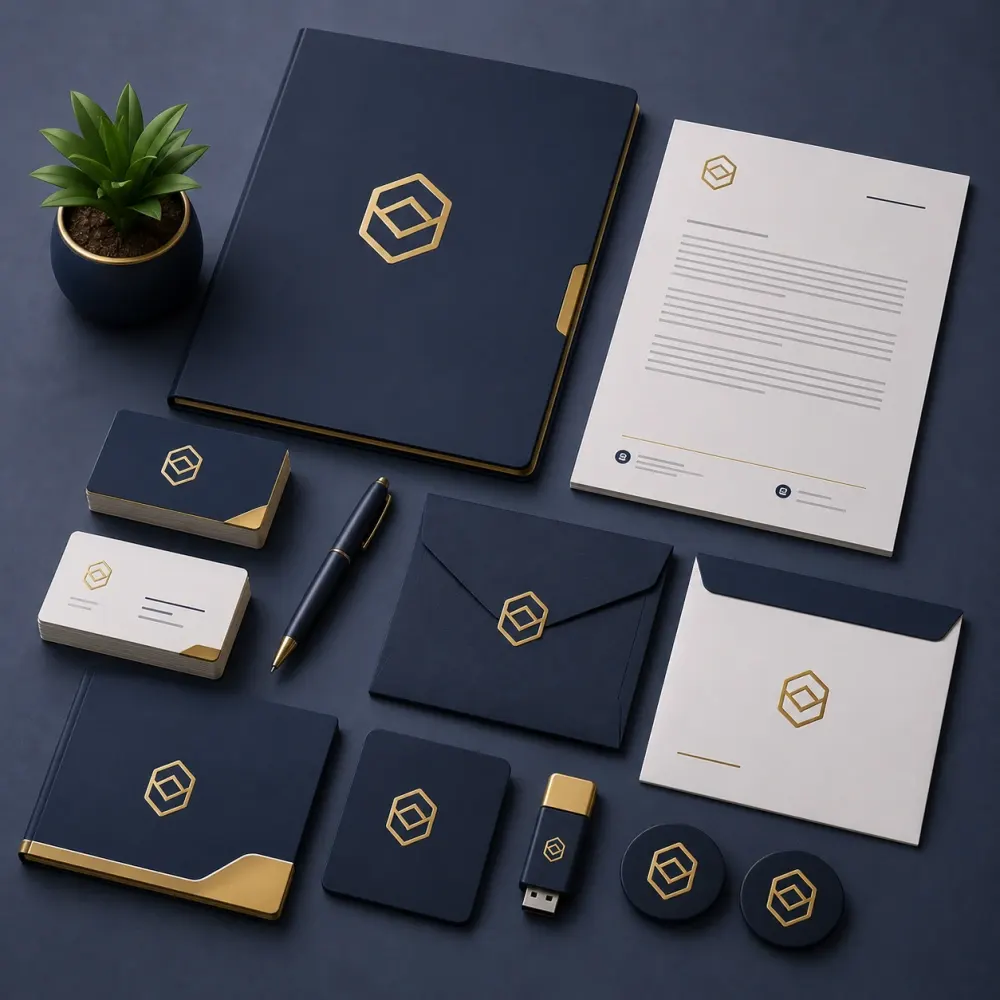
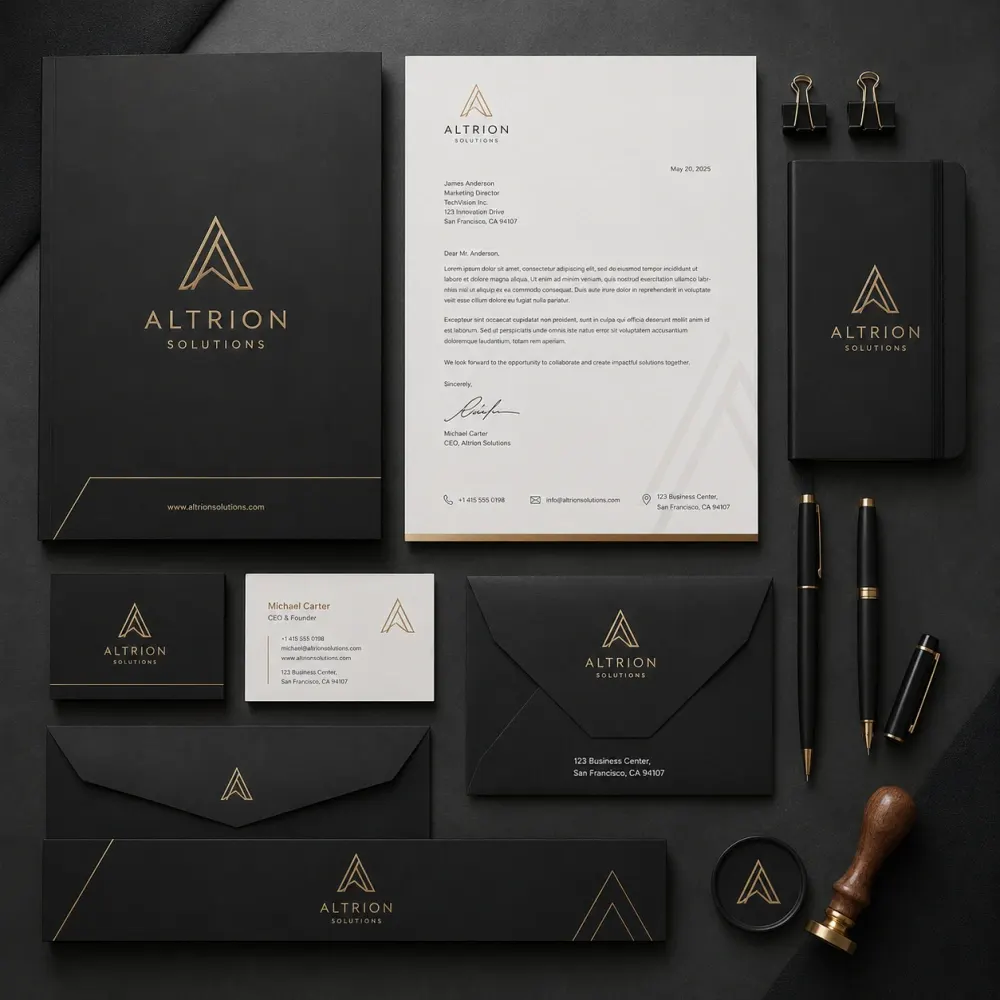
Clear layouts for the documents your team prints, sends, edits and uses every day.
Make everyday business communication look like it comes from one organized brand.
Stationery may look like a small part of a brand, but businesses use it in many everyday moments. A quotation can arrive on a letterhead. A proposal may sit inside a branded folder. A business card can be handed over after a meeting. An invoice can reach the customer weeks after the first conversation.
When these materials use different fonts, colors, spacing and logo treatments, the business starts to look less organized than it actually is. A coordinated system solves that problem by giving common documents a shared visual language.
DesignBub creates business stationery design for startups, established companies, professional firms, retailers, construction businesses, healthcare brands, hospitality companies and other organizations that need practical branded documents for daily use.
We start with how the company actually works. Which documents does the team use most often? Which items will be printed? Which ones need editable digital versions? Does the company have several offices, departments or staff members? Will employees create documents in Word, Google Docs or another system? Does the printer already have size and production specifications?
Those details matter because good stationery should stay useful after the designer hands over the files. A strong system does not simply place the logo in the corner of every page. It creates a repeatable way for the business to present information wherever formal communication happens.
Stationery design services built around the documents your business actually uses.
Professional stationery design services can include business cards, letterheads, envelopes, compliment slips, presentation folders, invoice layouts, quotation templates, notepads, email signatures and other branded office materials. The exact scope should follow the business rather than a fixed checklist.
A new consultancy may only need a business card, letterhead and email signature. A construction company may also need quotation sheets, invoice templates, folders and project document covers. A medical or legal office may need clean document layouts that keep names, addresses and contact details easy to find. A retail brand may need more visual stationery for order inserts and customer notes.
Where the business already has brand guidelines, we follow them. Where the logo exists but the supporting system is limited, we create practical rules for typography, spacing, colors and layout so future documents stay connected.
Business Card Design
Compact layouts that keep names, roles and contact details clear while matching the wider identity.
Letterhead Design
Print and digital letterheads with useful writing space, controlled margins and readable company information.
Envelope Design
Branded envelopes planned around real sizes, postal areas, windows and printer specifications.
Business Templates
Invoices, quotations and editable office documents that support daily work without losing the brand structure.
Use a small format without turning it into a miniature brochure.
A business card has very little space, so every detail matters. The card should make the person's name, role and contact information easy to find without trying to explain the entire company.
We decide what belongs on the front and what can move to the back. Some brands work well with a logo-led front and contact details on the reverse. Others need the person's name to lead. A company with several services may still be better served by one short category line instead of a long list.
Business card design also needs production awareness. Card size, bleed, safe areas, paper stock, foil, embossing, spot finishes and rounded corners can affect the layout. We prepare artwork around the confirmed printer specification and keep small text at a practical size.
The result should feel like a useful professional tool, not a crowded piece of advertising.
Keep the brand present without competing with the message on the page.
Letterhead design needs to support communication rather than compete with it. A letter may contain one paragraph or several pages, and the layout should still feel balanced in both situations.
We usually keep the company name, logo, address and contact information clear but quiet enough that the body copy remains the main focus. Margins matter because employees need enough room to type, sign and print documents without running into decorative elements.
A legal or financial document may need a more restrained letterhead than a creative studio. A company with several offices may need address variations while keeping the same visual structure.
We can prepare print-ready letterheads as well as editable Word or Google Docs versions when the project includes them. The editable template should remain easy for staff to use in normal office software.
Connect different document types without forcing one identical layout onto every item.
Corporate stationery design brings several business documents under one controlled system. The set may include business cards, letterheads, envelopes, folders, invoices, email signatures and other formal materials.
Consistency does not mean every item should look the same. A card has different proportions from an A4 letterhead. An envelope has folds and postal areas. A folder needs to work when it is held closed and opened. An invoice carries more data than a compliment slip.
We adapt the identity to each item while keeping the same typography, color, logo relationships, spacing and supporting graphic language. This approach helps the company look organized even when customers receive different documents from different departments.
Give the sender a clear identity without getting in the way of delivery information.
An envelope often creates the first physical impression before the recipient sees the document inside. The design should identify the sender without interfering with postal or courier information.
We plan logo placement, return address, recipient area and any supporting brand elements around the selected envelope size. Window envelopes need additional care because the window position affects the layout.
A standard office envelope may need a simple one-color treatment. A premium invitation or presentation package may support a more expressive design. We can prepare artwork for common formats or work from a printer template.
The final file should reflect the actual envelope size because scaling another stationery layout onto an envelope rarely produces a balanced result.
Make proposals and documents feel considered before the folder is opened.
Folders often carry proposals, contracts, brochures, certificates or sales documents. That makes them part of the presentation, not just packaging.
We design the front, back, spine and inside areas around the folder structure supplied by the printer. Pocket shapes, business card slots, folds and glue areas can affect the artwork.
A corporate folder may use a simple cover with strong branding. A real estate or construction company may use project photography. A professional service firm may prefer a restrained pattern or graphic system.
The final artwork should use the printer's approved dieline rather than a generic mockup. This keeps important graphics away from folds, cuts and glue zones.
Organize commercial information so customers can understand the document quickly.
Invoices and quotations carry practical information, so clarity comes first. The customer needs to find the company details, document number, date, items, prices, totals, payment information and notes without searching through decoration.
We create a hierarchy for those fields and apply the brand in a controlled way. A good invoice can look professional without using heavy backgrounds or large graphics that waste printing ink.
Quotation templates may allow more room for service descriptions, terms and approval details. Where the business needs editable templates, we design around the software the team uses. That may include Word, Google Docs, Excel, a PDF workflow or another agreed format.
The visual design should support daily editing instead of making routine changes difficult.
Treat the email signature as digital stationery rather than a large promotional banner.
An email signature appears in everyday communication, often more frequently than printed business cards. We keep it compact and easy to scan.
The person's name, role, company, phone number, website and other essential details should remain clear. Logos and social icons can support the design, but large banners and several images can make signatures heavy or inconsistent across email clients.
Email platforms also handle HTML differently. If implementation forms part of the project, we use practical structures and avoid effects that depend on browser-level support. A visual signature design and a working HTML signature are related but separate tasks, so we define the technical scope before delivery.
Keep branded office items practical enough for people to use every day.
Branded notepads work well for offices, events, staff kits and customer gifts. The design should leave most of the page available for writing.
We can place the logo, contact information, a light pattern or a small footer without overwhelming the usable space. Line spacing, grid layout and page size depend on how the notepad will be used.
A meeting pad may need areas for date, topic and action items. A simple desk pad may only need ruled lines. We prepare the artwork around the printer's binding and trim specifications so important elements do not sit too close to the edge.
Use branded structure to make repeated forms easier for staff and customers to complete.
Some companies use repeated forms that deserve the same attention as public-facing stationery. These may include order forms, service sheets, checklists, delivery notes, job cards, inspection forms or internal approval documents.
Good form design reduces confusion. Fields should follow a logical order. Labels should stay close to the information they describe. Writing areas should have enough space. Tables should not become dense simply because the business wants everything on one page.
We can apply the brand while keeping the form practical. For internal documents, efficiency often matters more than decorative styling.
Give formal documents a controlled visual structure without making them feel overdesigned.
Law firms, consultants, accountants, architects, engineers and other professional service companies often rely on formal documents. Their stationery needs to feel clear, controlled and credible.
We use strong typography, careful spacing and restrained brand elements. A letterhead should work with long written communication. A proposal folder should feel polished without distracting from the content. A business card should make the individual's role easy to understand.
For firms with several partners or offices, we can create controlled variations while keeping the same core system. The design supports consistency across everyday communication without making claims that the business has not confirmed.
Support quotations, tenders and business documents with a system that still prints cleanly.
Construction, engineering and industrial businesses use stationery across quotations, tenders, invoices, site communication and supplier relationships. These companies often need documents that carry more information than a simple office letter.
We can design business cards, letterheads, quotation templates, invoice layouts, folders and other business documents around the existing brand. The system can use project photography, structural graphics or simple industrial cues where they support the identity.
However, the documents still need to remain practical for printing, scanning and email sharing. We avoid heavy backgrounds that make photocopies difficult or reduce readability.
Choose text styles that work in both designed files and everyday office templates.
Typography creates consistency across the full stationery system. We define how names, roles, addresses, headings, body text, numbers and small labels should appear.
The existing brand typefaces guide the direction where suitable. For editable office documents, we also consider whether staff have access to the selected fonts. A beautiful font that nobody on the team can use may create problems in daily templates.
In those cases, we can choose a compatible office font for editable documents while preserving the main brand style in print-ready artwork. We also keep text readable at real size because tiny contact details can look elegant on screen and become difficult to read when printed.
Keep the identity consistent without locking the logo to one position on every item.
A logo does not need the same size and position on every piece of stationery. Business cards, letterheads, envelopes and folders all have different visual spaces.
We define a consistent relationship rather than one fixed coordinate. The logo may sit near the top of a letterhead, lead the front of a card and move to a corner on an envelope. What stays consistent is the sense of scale, clear space and alignment.
We avoid stretching or altering the logo to fill awkward areas. Where a compact symbol or secondary lockup exists, we can use it for smaller formats.
Prepare each stationery item around the actual production requirement.
Printed stationery needs accurate production setup. The printer may require bleed, crop marks, CMYK color, specific PDF standards or separate artwork for specialty finishes.
We prepare files around the confirmed production method. Business cards may need front and back files. Folders may require a dieline. Envelopes may need non-printable postal areas. Foil or spot finishes may need separate layers or plates.
The printer remains responsible for final prepress, output settings, stock, finishing and physical production. For important jobs, we recommend checking a proof before the complete print run. A design file can be correct while the physical result still changes because of paper and production conditions.
Let staff update everyday information without rebuilding the design.
Many businesses need to update names, dates, prices or document content after handoff. Editable stationery templates can support that workflow.
We can prepare selected items in Word, Google Docs, PowerPoint, Excel or another agreed format where practical. The editable version may use simpler layout rules than the print artwork because office software has different limitations.
We focus on preserving the main brand hierarchy while making normal editing easy. The team should not need a professional design application to change a quotation date, invoice item or employee name.
Carry the same identity into PDF documents and other screen-based business communication.
Not all stationery needs to be printed. Businesses increasingly use digital letterheads, PDF quotations, electronic invoices, proposal covers and email signatures.
Digital stationery should still feel connected to the printed materials. We can optimize layouts for screen use, clickable links and PDF sharing where appropriate.
A digital letterhead may use lighter graphics than a print version because file size matters. A PDF quotation can include links to the website or contact details. An email signature may use a compact version of the same identity. The format changes, but the visual language remains consistent.
Bring old documents back into one system without changing useful parts for no reason.
Businesses sometimes keep the same logo while their stationery becomes outdated. Old business cards may use previous contact details. Letterheads may have poor spacing. Different departments may use their own document styles. The invoice may no longer match the website or brand guidelines.
Stationery redesign can bring those items back into one system. We review what the company currently uses and identify which materials still work.
We do not rebuild everything automatically. A useful document structure can stay while the visual styling improves. Where old files are unavailable, we may need to recreate the artwork before preparing updated templates.
Move from a document list to a usable stationery system in clear stages.
We begin with the stationery list and the way the business uses each item. You share the logo, brand guidelines, company details, employee information, required formats, printer specifications and existing stationery where relevant.
Next, we organize the content. We confirm which details belong on each item and remove repeated information that does not help the user.
Then we develop the visual system. We apply typography, color, spacing, logo placement and supporting graphics across the main items. You review the selected direction and provide consolidated feedback.
After approval, we prepare the required print files, editable templates or digital exports. Before production, the business checks names, phone numbers, addresses, registration details and other factual information.
Document List
Confirm the stationery items, users, sizes and output formats.
Brand Review
Check logo files, colors, typography and existing document rules.
System Design
Build the layout direction across representative stationery pieces.
Adaptation
Extend the approved system to the remaining documents and variations.
Handoff
Package print-ready, editable and digital files according to scope.
Choose a starting package based on how many business documents need one consistent system.
Prices below are starting fees in USD for design work. Final cost can change when the project includes more items, advanced editable templates, multiple locations, custom illustrations or specialty print preparation.
Stationery Essentials
A focused three-item set for a business that needs its most common printed stationery aligned.
- Business card design
- Letterhead design
- Envelope design
- One approved visual direction
- Print-ready PDF files
- Standard editable source files
Business Stationery System
A practical print-and-digital system for businesses that use stationery across sales and daily office work.
- Business card, letterhead and envelope
- Email signature design
- Invoice or quotation template
- Editable letterhead template
- Two employee or office variations
- Print and digital export package
Corporate Stationery Suite
A wider system for teams that need more document types, controlled variations and production-ready handoff.
- Up to eight stationery items
- Presentation folder design
- Invoice and quotation layouts
- Email signature system
- Up to five staff or office variations
- Mini stationery usage sheet
- Print-ready and editable files
Need one specific stationery item?
These rates help with smaller requirements or add-ons to an existing brand system.
Scope note: Printing, paper, specialty finishes, physical proofs, delivery, premium fonts or stock assets, translation and third-party supplier costs are separate unless the quotation states otherwise. Printer-specific adjustments may also be quoted separately when production requirements change after approval.
Choose only the stationery items that support the way the business communicates.
Our stationery design services can cover business cards, letterheads, envelopes, compliment slips, folders, invoice templates, quotation layouts, notepads, email signatures and branded forms.
Projects can also include employee card variations, office address versions, digital letterheads, editable templates, document covers, thank-you cards and print-ready artwork.
The right scope depends on the organization. A small business may need three core items. A larger company may need a stationery system that supports several employees, locations and departments. We define the deliverables around the documents the business actually uses so the project remains useful after launch.
Combine brand consistency with the practical details that make documents usable.
Stationery design sits where brand identity meets everyday business communication. The work needs visual consistency, but it also needs practical document thinking.
DesignBub approaches stationery design services by looking at both. We consider what information belongs on each item, how staff will use the documents, which pieces need printing and which templates need regular editing.
We adapt the logo instead of forcing the exact same placement onto every format. We keep text readable. We prepare files around real production requirements where those specifications are available.
We also keep the scope clear. A strong stationery system can help the business present itself more consistently, but it cannot guarantee customer trust, sales or professional credibility by itself. The design supports the business; it does not replace the quality of the work and communication behind it.
Common questions before starting a business stationery project.
These answers cover common stationery design services questions about files, editable templates, employee variations, printing and project scope.
Stationery design services cover the visual design of branded business materials such as business cards, letterheads, envelopes, folders, invoices, quotations, notepads and email signatures.
Yes. We can create business card layouts with clear names, roles and contact details while following the brand identity and the confirmed printer specifications.
Yes. We can create print-ready letterheads and editable digital versions when the agreed project scope includes office templates.
Yes. We can design standard, window and custom envelope layouts around the confirmed size, postal areas and printer requirements.
Yes. We can build coordinated sets that may include business cards, letterheads, envelopes, folders, email signatures and other company documents.
Yes. We can organize invoices and quotations around practical information such as document numbers, dates, services, prices, totals, payment details and notes.
Yes. Selected stationery items can be prepared as editable Word templates when the layout is suitable for normal office use.
Yes. We can adapt suitable business documents for Google Docs or prepare a simplified structure that works more reliably inside the platform.
Yes. We can design compact branded email signatures. HTML implementation can be included when it forms part of the agreed technical scope.
Yes. We can create folder artwork around the printer’s confirmed dieline, pocket structure, folds and business card slot.
Yes. We can create branded notepad covers and inner page layouts while keeping enough practical writing space.
Yes. We can follow your approved logo, colors, typography and layout rules across the stationery system.
Yes. We can build a practical stationery direction around the logo and the brand assets you already have, even when a complete guideline document does not exist.
Yes. We can update old layouts, improve consistency and prepare new files while keeping any useful parts of the current system.
Yes. We can provide print-ready files according to the confirmed size, bleed, safe area and production requirements.
Editable source files can be included according to the selected package and agreed project scope.
Yes. We can create approved employee variations for business cards, email signatures and other personalized items.
Yes. We can adapt the same stationery system to multiple addresses, offices or business units while keeping the main identity consistent.
Yes. We can prepare additional language versions when translated copy is supplied or translation is included as a separate service.
Our standard service focuses on design and production artwork. Printing, paper, finishing, physical proofs, delivery and supplier charges remain separate unless they are specifically included in the quotation.
DesignBub stationery packages start at $99. Final cost depends on the number of items, employee variations, editable templates, custom graphics, print setup and any special production requirements.
Timing depends on the number of items, content readiness, feedback, printer specifications and whether editable templates are required. We confirm the schedule after reviewing the full stationery list.
Give every document the same brand discipline before it leaves the office.
DesignBub can organize the information, create the stationery design direction and prepare approved files for print or digital use. Start with the documents your team actually uses, then expand the system when the business needs more.