Professional Business Envelope Design Services
DesignBub creates practical branded envelope systems for everyday correspondence, formal documents, direct mail and invitations. We organize the logo, sender details, address area, window, flap and production requirements around the way the envelope will actually be printed and used.
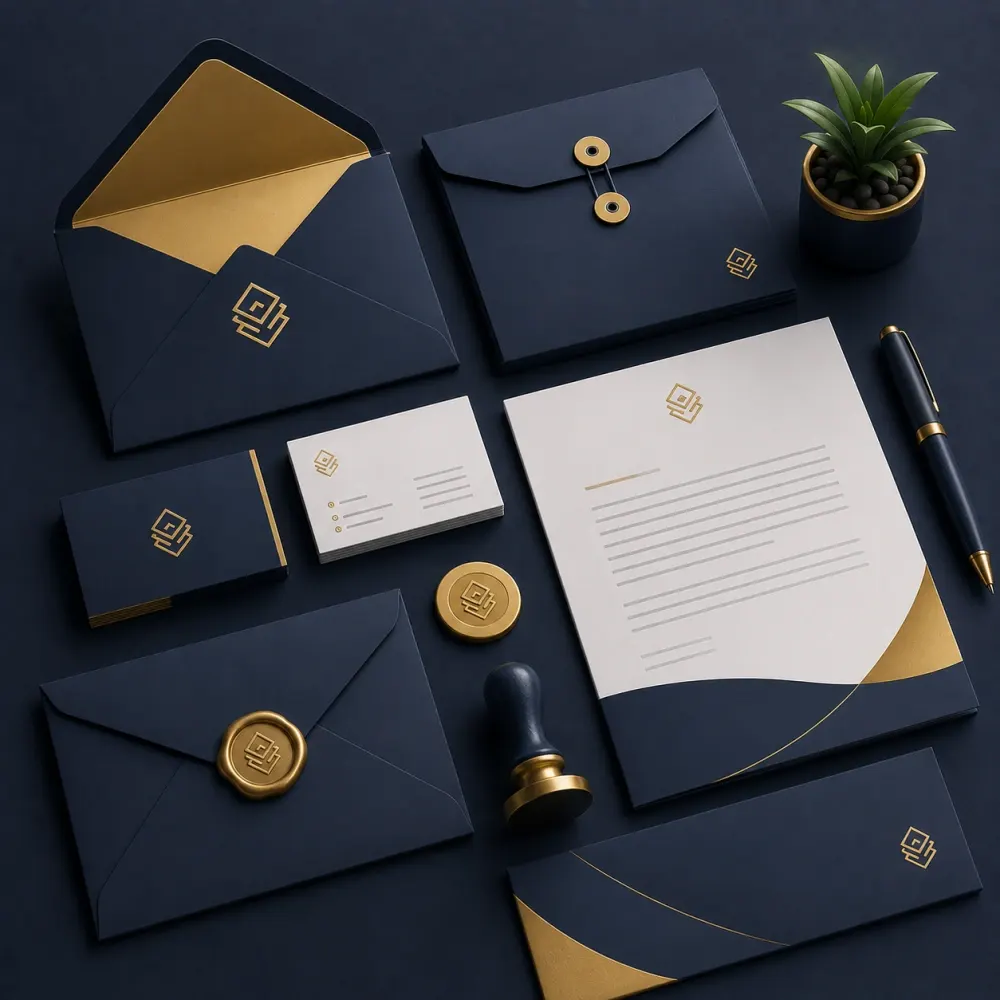
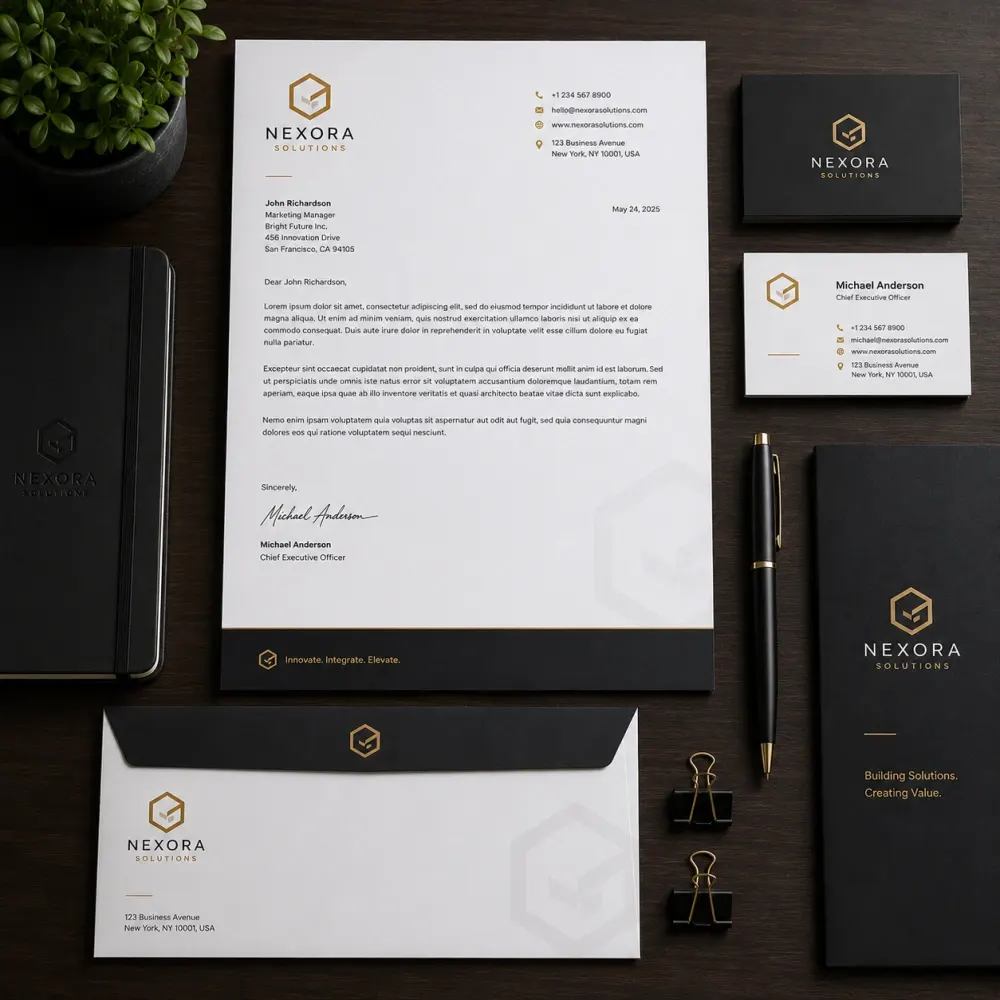
Logo placement, address zones, window clearance, flap artwork and printer-ready setup can be planned as one practical stationery system.
An envelope reaches the recipient before the document inside it does.
A customer may see the sender identity before opening a quotation. A supplier may notice the business name before reading a purchase order. A new employee may receive an offer or welcome pack in branded stationery. In each case, the envelope becomes the first physical piece of the communication.
DesignBub provides envelope design services for companies, professional firms, schools, healthcare organizations, agencies, property businesses, retailers and other organizations that want physical correspondence to feel connected to the wider brand.
We can design business envelopes, corporate envelopes, window envelopes, mailing envelopes, document envelopes, invitation envelopes and coordinated envelope sets in common or custom sizes. The project starts with the real production format rather than a decorative mockup. We ask which size the printer will produce, where the window sits, how the recipient address will appear, whether the flap needs artwork and which postal or courier areas must remain clear.
Those practical decisions define the layout before we add brand styling. The result should identify the sender clearly and still feel connected to the document inside.
What professional envelope design services can include.
The exact deliverables depend on the envelope size, window configuration, printing method and whether the project belongs to a wider stationery system.
Business Envelope Design
Branded everyday correspondence layouts with clear sender information, recipient space and production-ready artwork.
Window Envelope Layout
Artwork planned around the confirmed transparent window, document fold and addressing position rather than guessed measurements.
Envelope Flap Design
Back or flap artwork using a logo, color, pattern or short brand element when the print specification supports it.
Print-Ready Setup
Files prepared around confirmed dimensions, bleed, safe zones, folds, window areas and the printer's technical requirements.
Use the brand to solve the format instead of forcing a template onto it.
Custom envelope artwork starts with the identity and the way the envelope will be handled. A law firm may need a restrained layout with minimal color. A creative agency may use a bolder flap or graphic device. A luxury business may rely on typography, spacing and a quieter palette. A school or nonprofit may need a warmer visual direction.
Custom work does not mean covering every available surface. In many cases, a strong logo, careful alignment and a controlled use of color create a more distinctive result than a busy composition. We use the brand system to decide what belongs on the front, what can move to the reverse side and how much clear space the operational areas need.
This approach also makes the design easier to extend. If the business later needs another size or a different office address, the envelope can follow the same visual rules rather than starting again from a new template.
Routine correspondence still represents the company.
Businesses send quotations, invoices, notices, agreements, certificates and formal letters every day. The envelope around those documents may be simple, but it still carries the identity into a professional setting.
Business envelope layout should make the sender easy to recognize without competing with the recipient address. The logo needs enough presence to establish the brand. The return address should remain readable. Any line, pattern or color field should stay clear of postal marks, labels and window areas.
For smaller companies, the envelope can also help standardize a stationery system that has grown unevenly. We can coordinate the layout with a current business card, letterhead or quotation template so the same typefaces, colors and graphic details appear with greater consistency across the physical touchpoints.
Create a system that can handle departments, offices and multiple sizes.
Larger organizations often need more than one envelope. One department may send routine letters in DL format while another sends A4 documents in C4. Different branches may need their own return addresses. Finance, human resources and executive offices may also use slightly different information.
Corporate envelope systems works best when those variations follow one set of rules. We can define logo position, typography, sender-information hierarchy, spacing and color use so the system remains recognizable even when the size or office details change.
If the organization already has brand guidelines, we follow the approved logo clear space, fonts and color specifications. When the guidelines do not cover envelope applications, we extend the existing identity carefully instead of creating a separate visual style that only appears on stationery.
Connect the outside layer with the communication the recipient finds inside.
A branded envelope should relate to the letterhead or document without copying its layout. The envelope has fewer usable areas and stricter operational requirements, so it needs its own composition.
If the stationery uses a distinctive line, color block or pattern, we may simplify that device for the envelope. If the brand is primarily typographic, the layout can stay quiet and let the company name and contact information do most of the work. If the identity uses a strong color, the reverse flap may provide a better place for it than the address side.
Branded envelope artwork succeeds when recognition and function support each other. The recipient should understand who sent the item, staff should be able to address it without fighting the artwork and the printer should receive a file that respects the actual production template.
Design the correspondence as a sequence instead of two unrelated files.
Letterhead and envelope design often belong together because the recipient experiences them one after the other. The envelope creates the first impression. The letterhead continues the visual language once the document is opened.
The two pieces do not need identical compositions. A letterhead reserves most of the page for writing and may place contact information in a footer. An envelope needs an address zone, postage area and possibly a window. We create shared rules for typography, color, logo use and supporting graphics while adapting each item to its function.
This gives the correspondence a more complete identity and prevents the common situation where a recently redesigned letterhead sits inside an envelope that still uses an older logo or unrelated formatting.
The transparent window has to work with the document, not just the artwork.
Window envelopes add a technical constraint because the recipient address usually appears on the enclosed document rather than the outer surface. The folded letter has to place that address inside the transparent opening consistently.
We create window envelope layout around the printer or manufacturer template whenever one is available. Window position, size, flap, folds and seams can vary between envelope products. A layout based on estimated measurements may look correct in a mockup but fail during real insertion.
The design therefore leaves appropriate clearance around the window and keeps decorative elements from making the address harder to read. If the business also needs a matching non-window version, we preserve the visual relationship while adjusting the layout for the additional address space.
More freedom does not mean the front needs more content.
Non-window envelopes allow a recipient address to be printed, labeled or written directly on the outer surface. That provides greater flexibility, but the design still benefits from a clearly defined address zone.
We can position the sender identity in a predictable area and leave enough room for variable recipient information. A background graphic may support the brand, but it should not make printed address text or courier labels difficult to read.
Non-window formats work well for general business correspondence, invitation sets, certificates and documents that do not rely on a letter window. The final layout can be prepared around the actual addressing method the team plans to use.
Use the long horizontal format without crowding its limited height.
DL is a common business format and often carries an A4 letter folded into thirds. Its narrow proportion provides plenty of horizontal space but much less vertical room than larger document envelopes.
A useful DL envelope layout keeps the front controlled. The logo and sender information can occupy one defined zone while the recipient address remains visually separate. Window versions require additional clearance and alignment with the folded document.
If the business needs both window and non-window DL versions, we can build them from the same brand system instead of creating two unrelated compositions. That keeps routine office correspondence consistent while respecting the functional differences between the formats.
Give larger documents enough space without turning the envelope into a poster.
C5 envelopes often hold A5 documents or A4 sheets folded once. The larger surface can support a little more visual expression than DL, but the same principle applies: the design should organize the mailing information before it decorates the remaining space.
C5 envelope design can suit proposals, certificates, brochures, contracts and other documents that the sender does not want to fold into thirds. Window and non-window products use different measurements, so we recommend confirming the supplier template before final production.
The additional space can improve balance between the sender identity and recipient information. It does not require extra slogans, icons or contact details simply because the surface is larger.
Large document formats need stronger operational structure, not louder graphics.
C4 envelopes and similar document wallets can hold A4 sheets without folding. Companies often use them for contracts, certificates, reports, proposals and formal document packs.
The size gives the brand more room, but treating the front like a large advertisement can make the envelope less practical. We establish a clear sender area, recipient area and any required document reference or handling information before adding secondary graphics.
Where a team needs several document-envelope versions, we can define a repeatable template for departments or offices. This keeps the identity stable while allowing the practical information to change.
Plan for labels, postage and handling before the envelope enters distribution.
Mailing envelopes may move through office printers, labels, sorting equipment, couriers or postal systems. Artwork that ignores those steps can lose important information once a label covers it or a machine marks the surface.
Mailing envelope layout accounts for likely postage zones, courier labels and addressing areas. For bulk campaigns, the printer may also provide rules for machine insertion, variable data or full-bleed printing. We adapt the artwork once those requirements are known.
This production-aware approach protects the visual identity without pretending that the envelope exists only for a presentation mockup. The workflow remains part of the brief.
Use the outside of the campaign to introduce the message without misleading the recipient.
Direct mail gives the envelope a more promotional role. The outer surface may include a campaign line, teaser, graphic or offer cue that helps the recipient understand why the piece deserves attention.
We can coordinate direct-mail envelope artwork with the letter, leaflet, voucher or insert inside. The campaign becomes stronger when the pieces share typography, color and visual logic from the first touchpoint to the main message.
Design can support recognition and make the mailing feel intentional, but it cannot guarantee opening rates, replies or sales. Those outcomes also depend on the offer, list quality, copy, timing and distribution.
Use the reverse side for a detail the recipient notices after turning the envelope over.
The flap can carry a solid brand color, pattern, small logo, web address or short message. That extra surface can add personality without interfering with the address side.
Flap shapes vary. Square, wallet and pointed flaps create different areas, and adhesive or fold zones may limit where the printer can reproduce artwork reliably. When a printer supplies a dieline, we build the reverse artwork around it.
The flap should feel like part of the same concept as the front. It works best as a continuation of the identity rather than a second unrelated composition.
The screen can show the idea, but the print process decides how it appears physically.
Paper stock, ink coverage and printing method influence the final color. A bright digital color may reproduce differently on an uncoated cream envelope. A dark full-coverage design can require another production method from a simple one-color corporate layout.
We prepare artwork with the agreed color setup and printer specification. If the brand uses spot colors or Pantone references, the printer should confirm whether the selected process supports them. For highly sensitive color work, a physical proof provides stronger evidence than an on-screen preview.
We also keep the technical file separate from a presentation mockup. Mockups help stakeholders visualize the design; they do not replace production artwork built to the correct dimensions.
Let each item perform its own task while keeping the brand recognizable across the set.
An envelope often belongs to a wider stationery family that includes a letterhead, business card, folder, invoice, quotation or presentation folder. Coordinating those items creates a stronger identity than designing each one independently.
We can establish common rules for logo placement, margins, accent colors and typography while adapting each item to its function. The envelope does not need to copy the business card. The letterhead does not need to copy the envelope. They simply need to share enough visual decisions that the relationship feels intentional.
This is especially useful when a business has updated one stationery item and the rest still carry older branding. A focused envelope project can bring the correspondence back into the current system without forcing a complete rebrand.
Update the stationery when the business identity has moved on.
An old envelope may still show a previous logo, outdated office address, old typography or a visual style that no longer matches the website and documents inside it.
Envelope redesign services can correct those differences while preserving any practical elements that still work. We review spacing, logo size, sender information, address clearance, color, flap treatment and the relationship with current stationery.
If the business already has a new letterhead or business card, those pieces can guide the redesign. The objective is not to make the envelope more complicated. It is to make it current, accurate and visually connected to the identity people now see elsewhere.
Build the production file around the printer's template whenever one exists.
Print-ready envelope artwork needs confirmed dimensions, bleed, safe areas, window zones, folds and the correct color setup. Different printers may impose different tolerances or templates.
We prepare the approved design according to those requirements and can include editable source files where the project scope specifies them. The print vendor remains responsible for its machinery, stock, finishing and production tolerances.
Before a large print run, we recommend sending the final artwork to the printer for technical confirmation. That step helps identify production issues before they become expensive physical mistakes.
Start with the physical specification, then build the brand around it.
We first collect the envelope size, window or non-window configuration, flap style, printer template, return address, logo files and any existing stationery or brand guidelines. If the business needs several sizes, we define those formats before creating the visual direction.
Next, we map the functional zones. We reserve space for the recipient address, postage, window, return information and likely courier labels. Once those practical areas are clear, we apply typography, color and supporting brand elements.
The client reviews the design and provides consolidated feedback. We refine the approved direction within the agreed revision scope. Before export, the client confirms names, addresses, web details and other factual content.
We then prepare the print-ready files for the confirmed production method. This workflow keeps the project focused on an envelope that staff can actually use and a printer can actually produce.
What can be included in an envelope design project.
Our envelope design services can cover business envelopes, corporate envelopes, branded envelopes, letterhead envelopes, DL envelopes, C5 envelopes, C4 document envelopes, window envelopes, non-window envelopes, mailing envelopes, direct-mail envelopes and invitation envelopes.
A project can also include front-and-back layouts, flap artwork, return-address styling, stationery coordination, alternate office versions, custom patterns, print-safe spacing, editable source files and printer-ready exports.
The correct scope depends on the production need. A single one-color business envelope requires a different amount of work from a system with three sizes, window and non-window versions, several branches and special print finishing. We define those deliverables before design begins so the quotation stays tied to the actual work.
Starting prices for single envelopes and coordinated stationery systems.
These packages assume supplied brand assets, confirmed content and a standard printer template. Custom illustration, complex production finishes, extensive stationery redesign or unusual dielines may change the final quote.
Essential Envelope
For a business that needs one clean branded envelope layout built around a confirmed size and printer specification.
- 1 envelope size
- Front-side branded layout
- Return-address styling
- 2 revision rounds
- Print-ready PDF
- Editable source file
Business Envelope Set
For businesses that need coordinated everyday formats with more complete brand treatment across the envelope surfaces.
- Up to 2 envelope sizes or variants
- Front + back / flap treatment
- Window or non-window adaptation
- 3 revision rounds
- Print-ready files
- Organized editable source files
Stationery Envelope System
For companies that need a reusable envelope system across several document sizes, departments or office variations.
- Up to 3 envelope sizes
- Window + non-window system as required
- Front, reverse + flap rules
- Up to 3 office/address variants
- 4 revision rounds
- Print-ready + editable master files
Need one specific envelope task?
Starting USD fees. Final pricing depends on the supplied template, number of versions, production method and condition of existing brand files.
Scope note: prices cover design and agreed digital production files. Physical printing, paper, shipping, foil, embossing, specialist finishes, custom photography, paid fonts, premium stock assets, copywriting and third-party production charges are separate unless specifically included.
Envelope design rewards restraint because every usable area already has a job.
An envelope looks simple until the real constraints appear. The recipient address needs space. The postal or courier area needs space. A window may occupy the strongest visual position. The return address needs a consistent location. The printer may impose another set of technical limits.
DesignBub approaches envelope design services by solving those functional requirements first and then using the remaining space to express the brand clearly. We can work from established guidelines or coordinate the envelope with existing stationery.
We also separate presentation from production. A polished mockup can help the team approve the direction, while the printer-ready file follows the actual dimensions and template. That distinction keeps the design attractive in a portfolio and practical on the printing press.
The result should feel professional in the recipient's hand, easy for staff to address and straightforward for the print vendor to produce.
Common questions about envelope design services.
Answers covering formats, window layouts, production files, stationery matching, pricing and print preparation.
Envelope design services cover the visual layout and print preparation of branded envelopes for business, corporate, promotional or event use. Work can include logo placement, contact details, return address, window clearance, flap artwork and production-ready files.
Yes. We build the layout around your brand, actual envelope size and print requirements rather than applying a generic stationery template.
Yes. We can design window or non-window DL formats once the dimensions and printer specification are confirmed.
Yes. C5, C4 and other standard or custom sizes can be included according to the project scope.
Yes. We plan the artwork around the confirmed window dimensions and position so the recipient address remains visible when the document is folded and inserted.
Yes. We can coordinate the envelope with an existing letterhead, business card and stationery system so the pieces share consistent typography, color and brand details.
Yes. Front, reverse and flap artwork can be included when the production method supports those surfaces and the project scope covers them.
Yes. The flap can carry a logo, color, pattern or short brand element when the shape, adhesive area and printer specification allow it.
Yes. We prepare final files according to the confirmed envelope dimensions, bleed, safe areas, window zones and printer requirements.
Editable source files are included in the packages listed on this page and can also be defined in a custom quotation.
Yes. We can adapt an approved envelope system for different offices, branches or departments while keeping the visual rules consistent.
Yes. Invitation envelopes can use event-specific typography, color, monograms, patterns or other decorative treatments within the confirmed production limits.
Yes. We can update the logo, contact details, typography, spacing and overall brand treatment while keeping practical elements that still work.
Our standard service covers design and digital production files. Physical printing, paper, finishing and delivery are separate unless the project quotation specifically includes them.
Yes, when the printer provides the required technical specification. Specialist finishes often need separate artwork layers or spot-color setup.
DesignBub packages start at $99 for one envelope size, $199 for a coordinated two-format business set and $349 for a broader multi-format envelope system. Final pricing depends on the number of sizes, window requirements, versions, artwork complexity and production setup.
Timing depends on how quickly the brand assets, printer template, dimensions and final contact details are available. We confirm the project schedule after reviewing the required formats and production information.
Different search phrases often describe variations of the same stationery problem.
Projects may be described as professional envelope design, custom envelope design, business envelope design, corporate envelope design, branded envelope design, letterhead envelope design, mailing envelope design, direct mail envelope design, window envelope design, DL envelope design, C5 envelope design, C4 document envelope design, custom size envelope artwork, print-ready envelope artwork, envelope flap design, return-address layout, invitation envelope design, corporate stationery design, envelope redesign services or editable stationery templates.
We use those terms to understand the required format and purpose rather than repeating them without context. The final scope comes from the envelope size, print method, number of variants, brand system and the way staff or customers will actually use the finished piece.
Make the outside of the message feel as considered as everything inside it.
Send the envelope size, printer template, window or flap details, return address and existing brand assets. DesignBub can build a clear branded layout around the physical format and prepare the files for the agreed production workflow.