Vector Design
DesignBub redraws, rebuilds and creates vector artwork that stays sharp at any size — from a favicon to a shopfront. Send us a rough JPG, a scanned logo or a fresh idea, and we will return clean, editable AI, EPS, SVG and PDF files your printer, developer or sign maker can open and use straight away.
Smooth curves, tidy layers and files that open cleanly in the software your suppliers already use.
Vector work that stays sharp, from a favicon to a shopfront.
A few recent vector pieces — a bakery logo redraw, a travel icon set, an outdoor illustration, a shop sign, a drinks label and a vinyl decal set.
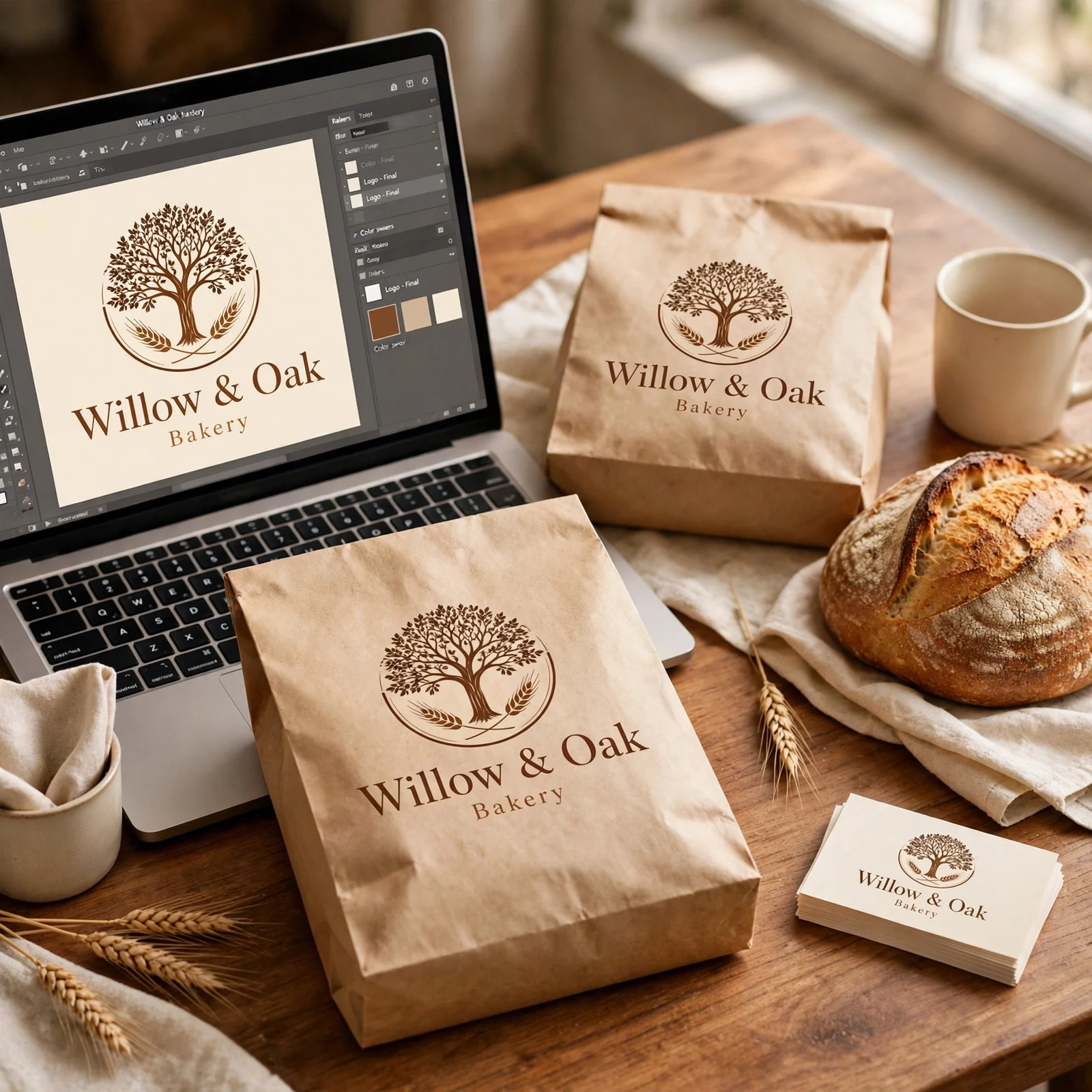

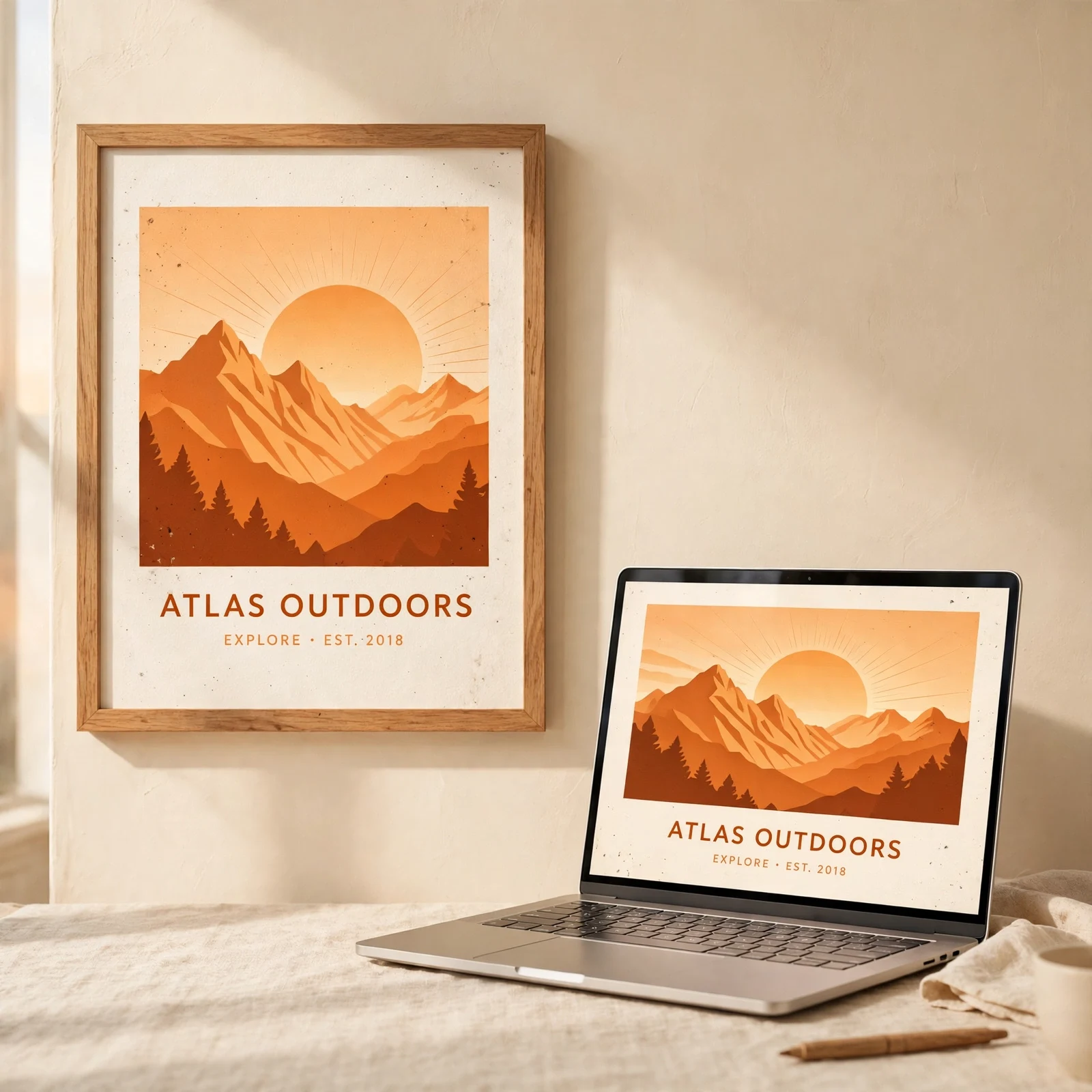



Sharp at a business-card size. Sharp at shopfront size. That is the whole point.
A picture that looks fine on a phone can fall apart the moment it grows. Enlarge a small JPG for a van livery, an exhibition wall or a window decal and the edges go soft, the curves turn stepped and the lettering starts to wobble. The fault is rarely the design itself — it is the file underneath it.
That is where our vector design services come in. We work for shop owners, printers, marketing teams, manufacturers and anyone who has ever been told “we need the vector version” and only has a screenshot to show for it. Old logos get rebuilt by hand, tired artwork gets cleaned up, and new illustrations are drawn as proper vectors from the first line.
We always ask where the artwork is going before we start drawing. A web icon, a vinyl-cut shop sign and an embroidered work shirt each need a different kind of file, even when the picture is the same. Planning around the destination saves the awkward moment when a lovely-looking file turns out to be useless for the job it was made for.
What a vector file actually is — in plain terms.
Vector design services cover making, remaking and tidying artwork that is built from paths rather than pixels. Instead of a fixed grid of coloured dots, the file stores the maths behind each curve, shape and line — which is why AI, EPS, SVG and vector PDF files can be resized again and again without losing their edge.
That makes vectors the sensible choice for anything that has to appear at more than one size: logos, icons, illustrations, labels, stickers, signage, diagrams and cutting files. A tidy vector also behaves properly in other people’s hands. An auto-traced mess, full of stray points and jagged edges, looks vector on the surface but fights everyone who tries to edit it.
So our test is simple: could another designer, printer or developer open the file, find what they need and get on with their job? Clean shapes, sensible grouping and the right export formats are what turn a picture into a working asset rather than a one-off favour.
One logo, a dozen sizes — and no more asking for “a bigger copy”.
A pixel image is only as good as the number of pixels it was born with. Fine at its original size, it starts to blur and block the moment you ask more of it. Vectors have no such ceiling, because their shapes are recalculated at every size rather than stretched.
For a growing business that difference shows up everywhere. The same mark might sit on a loyalty card, a website header, a delivery van, a trade-stand wall and a product box — all in the same week. With a proper vector graphic design master behind it, every supplier works from one reliable source instead of quietly redrawing your logo themselves.
Vectors are also far easier to live with. Colours can be swapped without starting over, one element can move without disturbing the rest, and fresh exports can be spun off whenever a new format is needed. That flexibility pays for itself the first time a rebrand, a new product line or a new supplier comes along.
Only got a JPG? We can still rebuild it properly.
The request we hear most often is raster to vector conversion: a client has a logo they love and only a JPG, a phone photo, a scan or a screenshot of it. We treat that file as a reference and rebuild the artwork as clean, editable vector paths.
How much work that takes depends on the picture. A simple two-colour mark might need a handful of precise shapes. A detailed crest, an old badge or a heavily compressed file can take far longer, and sometimes the honest answer is to simplify a little so the finished vector stays clean and usable.
Before we start, we agree whether you want a faithful copy or a tidied-up version. If the original has wobbly curves, uneven spacing or obvious digital damage, we can correct those areas — but only with your say-so. We never quietly redesign someone’s brand mark.
Your logo, redrawn true — just in a file that finally behaves.
A low-resolution logo causes trouble in places you would not expect. The printer asks for an AI file you do not have. The sign maker turns the job down because the JPG is too small. The logo goes fuzzy on the side of a van. Our logo vectorization service fixes the file without touching the identity.
We redraw the symbol, the wordmark, the lettering and the borders from the best reference you can give us, watching proportion, alignment and curve quality closely — small errors only get louder when the logo gets bigger.
Vectorising is not redesigning. The point is to protect the mark you already have and give it a stronger master file. If you can share the original typeface or brand notes, we will match the existing artwork even more closely.
Hand-drawn paths beat one-click tracing — here is why.
Vector tracing services can sound like a button you press, but the quality comes from what happens after the button. Automatic tools are handy for a rough start, yet they often leave hundreds of needless anchor points, shaky edges and shapes that nobody can sensibly edit.
For artwork that has to earn its keep, we rebuild the important forms by hand. Curves stay smooth, straight lines stay straight, circles look like circles and repeated elements actually repeat. Stray shapes and pointless points get removed along the way.
A vector redraw service really earns its fee when the source itself is damaged or badly built — old logos, scanned emblems, photographed artwork. There we use the original as a guide and reconstruct the visual relationships in a cleaner, stronger form.
Original vector illustration, drawn for the job it has to do.
Vector work is not only about converting old files. We also draw custom vector illustrations from a brief, a sketch or a visual direction — artwork that works just as well on a printed label as it does on a website, because the shapes and colours stay editable throughout.
Typical uses include packaging scenes, website graphics, infographics, social posts, editorial art, product explainers and marketing material. The style can run from simple line work to flat illustration, geometric scenes or richer layered artwork.
Detail is chosen for the final size, not for its own sake. A tiny label icon needs simpler shapes than a full editorial illustration, and a web graphic has to stay clear on every screen. The aim is an illustration that communicates quickly wherever people meet it.
Print-ready vectors, prepared with your printer in mind.
Print is where vectors quietly shine: logos, lettering and line graphics stay crisp at the exact output size. Our vector artwork services can support brochures, posters, stationery, labels, packaging, stickers, menus, banners and exhibition graphics.
We also think about how the piece will actually be made. Ordinary digital print tolerates effects that cut vinyl cannot. Screen printing may need controlled colour separation. A die-cut item needs its own cut path. Every supplier has their own rules for strokes, spot colours and safe zones.
If your printer or manufacturer has sent a template or a spec sheet, send it to us before we prepare the final artwork. Building around real instructions beats guessing and reworking the file later.
Big output shows every flaw — so we build for big from the start.
Enlarge artwork to several feet wide and every small imperfection steps into the spotlight. A curve that looked fine at two inches wide can look rough across a shopfront. That is why clean vector construction matters most for signage, vehicle branding, exhibition panels, wall graphics, window vinyl and hoardings.
We clean or rebuild the vector parts before production: logos, lettering, simple shapes and line art all benefit from true vector construction. Photographs stay raster, of course, so the best production file often pairs high-resolution imagery with clean vector elements.
Getting that balance right depends on the design and on how your vendor works. Our job is to make sure the vector elements stay scalable, organised and fit for the size they will actually be printed at.
SVGs that stay sharp on screen — and stay tidy under the bonnet.
SVG — Scalable Vector Graphics — is the format browsers love, because the artwork stays sharp at any screen size. It suits logos, icons, symbols, simple illustrations and other web assets beautifully.
Our SVG design services look after the inside of the file as well as the outside. A good SVG has no hidden objects, no thousands of stray anchor points, no accidental raster images and no tangled effects that make it a chore to manage.
If your developer needs a particular viewBox, grouping, element IDs or animation-ready structure, tell us before delivery. We will build the SVG to fit their workflow instead of handing them another clean-up job.
Icon sets that feel like one family, not a lucky dip.
An icon has a few millimetres to say something useful, so every shape has to earn its place. Our vector icon design service covers websites, apps, dashboards, presentations, packaging, signage and branded documents.
A set only works when it feels related. Stroke weight, corner treatment, fill style, proportion and level of detail should hold together across the whole family — one fussy icon next to five simple ones makes the whole system feel off.
We can work inside your existing brand style or set the direction for a brand-new set. For digital products we also test at the real display size, because the fine detail that looks lovely at full size often vanishes when the icon shrinks.
Packaging artwork that grows with the range, not against it.
A pack is a busy place: logo, typography, pattern, icons, illustration, legal text and production marks all sharing one small surface. Most of those elements work best as editable vectors, because the brand will need them again at different sizes and across new variants.
Our vector work can cover packaging illustrations, icon systems, patterns, clean-ups and redraws. When a printer supplies a dieline, we work inside it and keep the design elements clearly separated from the technical guides.
Vectors also make range extensions far easier. A master illustration or icon family can stretch across new flavours, categories or colourways while keeping the same shape quality — so the range grows without redrawing everything from scratch.
Artwork that survives the journey from screen to fabric and vinyl.
T-shirts, uniforms, caps, tote bags and decals all need artwork simplified for the way it will be made. The right file depends entirely on the method your vendor plans to use.
Screen printing usually wants controlled solid colours. Vinyl cutting needs closed, clean paths. Laser engraving prefers simplified fills or line work. Embroidery is a separate digitising step altogether, even when vector artwork is the visual starting point.
We prepare vector artwork for apparel and merchandise around the requirements your production vendor actually gives us. We never assume one file setup works for every machine, material or technique.
Cut-ready files: because a cutter follows paths, not appearances.
A cutter follows paths, not appearances. Duplicate lines, open shapes, tiny gaps, overlapping paths and needless nodes can all cause real problems on the machine, even when the artwork looks perfect on screen.
For suitable graphics we prepare cleaner vector files for vinyl cutting — decals, wall graphics, windows, signage and lettering. We simplify shapes, outline text where appropriate, remove surplus elements and organise the artwork for a clearer handover.
Your fabricator should still confirm machine limits, material behaviour, installation needs and final dimensions. Our work is the graphic file; the technical responsibility for the machine stays with the production vendor.
Already got a vector file that nobody can work with? We can tidy it.
Not every AI, EPS, SVG or PDF is a good vector file. We regularly receive artwork full of messy auto-tracing, duplicate objects, stray points, inconsistent strokes, excessive clipping masks and shapes that fight anyone who tries to edit them.
Our vector file cleanup service improves the construction while protecting the look: simplifying anchor points, rebuilding curves, aligning repeated elements, merging needless overlaps, organising layers and removing hidden objects that should never have been there.
How deep the clean-up goes depends on the destination. Artwork meant only for viewing does not need the same path preparation as a file heading to a cutter, engraver or manufacturer. We fix the problem the file actually has.
AI, EPS, SVG or PDF? Here is how to think about it.
Clients often ask which vector format they need, and the honest answer is that no single format fits every workflow. AI sits naturally with Adobe Illustrator and keeps editable structure. EPS is still common in print and production. SVG is the web and digital choice. PDF can hold true vector artwork and is widely used for sharing and production.
We supply the agreed vector file formats for your project, and we can add PNG or JPG previews for everyday office and marketing use while the vector master stays available for future editing and production.
If a printer, developer, sign company or manufacturer has asked for a specific format, tell us before handover. That is far more useful than receiving a pile of files your team will never open.
Automatic tracing is a starting point, not a finished file.
Automatic tracing can save time on the right source image, but it does not understand design intent. A tracing tool reads pixels. It cannot tell which curve should be perfectly smooth, which letter spacing was deliberate or which tiny mark is only a compression artefact.
Manual vectorization gives the designer control over anchor placement, symmetry, spacing and the relationships between shapes. Sometimes a mixed workflow works best: automation makes a rough start and manual refinement produces the finished result.
In the end the method matters less than the result. We pick the workflow by source quality, complexity, deadline and intended use — because a clean file with sensible geometry is worth far more than a technically-vector file stuffed with thousands of pointless points.
How your file goes from rough source to a clean vector master.
The process is deliberately plain: you always know what we need from you, what we are rebuilding and what will land in your inbox at the end.
Source Review
We look at the best image, sketch or existing file you have, and agree the final use, the formats you need and any production limits before anything is drawn.
Rebuild or Create
We redraw, clean, trace or illustrate the artwork using whichever method gives the best mix of accuracy and editability for that particular piece.
Geometry Refinement
We check curves, anchors, alignment, fills, strokes, overlaps and spacing, so the file stays clean when it is enlarged, recoloured or edited later.
Production Check
Where you have shared a vendor specification, we prepare the matching vector version around it — and flag anything the vendor still needs to confirm.
Revisions
You review the visible result and ask for changes inside the agreed scope, before the final export package is put together.
Final Handoff
You receive the agreed editable vector files, plus handy preview or raster exports for everyday use.
What to send us so we can start without guesswork.
The best starting point is simply the highest-quality source you have. For a conversion, send the largest JPG, PNG, scan, PDF, screenshot or existing artwork available — a clearer reference means less guesswork around small details.
For a redraw, tell us which parts must stay exactly as they are and which areas may be improved. For a custom illustration, share the subject, the style direction, the colours, examples you like and where the finished piece will appear.
If a printer, sign maker, developer, engraver or cutter has already given you technical specifications, include them from the start. Those requirements can shape path structure, colour setup, minimum detail size and export format.
Choose a vector package based on the complexity of the artwork.
These are DesignBub starting prices for clearly scoped vector work. Very detailed artwork, large batches or unusual production requirements may need a custom quotation once we have seen the source file.
Vector Conversion
For one simple logo, icon or clean graphic that needs a proper editable master file.
- 1 simple graphic or logo
- Manual vector recreation and cleanup
- AI, EPS, SVG and vector PDF
- Transparent PNG + JPG preview
- Basic color matching
- 2 revision rounds
- Typical delivery: 2–3 business days
Vector Production Pack
For medium-detail artwork, or a few simple assets together, that need a tidier, production-focused setup.
- 1 medium-detail artwork or up to 3 simple assets
- Detailed manual vectorization
- Organized editable layers and groups
- Primary + alternate color version
- Outline / single-color version
- Basic print or cut-file preparation
- AI, EPS, SVG, PDF + PNG/JPG
- 3 revision rounds
- Typical delivery: 3–5 business days
Custom Vector Illustration
For a custom illustration, a detailed redraw or multi-element artwork that needs creative development as well as careful vector construction.
- 1 custom vector illustration or complex redraw
- Creative direction before detailed execution
- Up to 2 initial visual directions
- Layered editable master artwork
- Production and digital export versions
- Color adaptation for agreed uses
- AI, EPS, SVG, PDF + raster previews
- 4 revision rounds
- Typical delivery: 5–7+ business days
Vector design package comparison
| Included | Vector Conversion | Production Pack | Custom Illustration |
|---|---|---|---|
| Starting price | $79 | $169 | $279+ |
| Best for | Simple logo / icon | Medium artwork / small asset set | Original or complex artwork |
| Manual vector construction | ✓ | ✓ | ✓ |
| Organized editable master | Standard | Detailed | Detailed layered |
| Color variants | Basic | Primary + alternate | Project-based |
| Production preparation | Basic | Print / cut-oriented | Based on agreed output |
| Initial creative directions | Recreation only | Recreation only | Up to 2 |
| Revisions | 2 rounds | 3 rounds | 4 rounds |
| Typical delivery | 2–3 days | 3–5 days | 5–7+ days |
Extra vector production support
Pricing covers design and vector artwork preparation. Printing, fabrication, embroidery digitizing, engraving, cutting, materials and vendor production charges are separate unless a quotation explicitly includes them.
How long will your vector artwork take?
The timeline comes down to complexity above all. A simple icon or clean logo redraw moves quickly; a detailed crest, a multi-colour illustration or a tricky conversion takes longer. Source quality matters too — a sharp reference lets us see the detail, while a tiny compressed image asks for far more interpretation.
Custom illustration adds concept decisions that a straight conversion does not. Revision rounds, the number of assets and any vendor specifications can shift the schedule as well. We confirm a realistic delivery window after seeing the actual artwork, rather than estimating from its physical dimensions alone.
Remember that a small badge can hide more reconstruction work than a large geometric graphic. Complexity, not size, decides the effort.
What actually sets the price of vector work?
The vector design cost depends on detail, source quality, final use and how much manual rebuilding is involved. A simple logo may need only a handful of clean paths, while a complex emblem can hold custom lettering, borders, fine internal shapes and several colour relationships.
Custom illustration includes creative development on top of the technical construction. Extra colourways, vendor-specific versions, large batches, heavy clean-up and urgent delivery can also move the price.
We price the real scope, not the physical size of the image. Sending the source before asking for a final quotation gives us a far more accurate picture of the work.
Choosing a vector partner: the questions worth asking.
A professional vector design company should think about appearance, geometry, editability, scale and the final production use — not only whether the file technically opens as a vector. Clean construction matters because the same asset may pass between designers, printers, sign makers, developers and other vendors.
When comparing a vector design agency, ask whether the artwork gets a manual review, which formats are included, whether the source stays editable, how revisions work and what happens when the reference is unclear. You should also know whether the quote covers faithful recreation, clean-up, creative redesign, illustration or vendor-specific preparation.
Vector questions, answered before you send the file.
Straight answers on source quality, file formats, production use and what the finished artwork will actually do for you.
A vector file stores artwork as paths, curves and shapes rather than pixels, so it stays sharp at any size. That matters whenever one logo or illustration has to work on a business card, a website, a van and a shop sign without being redrawn each time.
Yes. We rebuild suitable JPG or PNG artwork as editable vector shapes by hand. How much manual work is involved depends on the quality and complexity of the source image you send us.
Often, yes. We rebuild the visible shapes from the best reference available. If an important detail cannot be identified reliably, we will ask for another reference or your confirmation rather than guessing.
Depending on the package, deliverables can include AI, EPS, SVG and vector PDF, plus PNG or JPG previews for everyday use. If your printer or developer has asked for a specific format, tell us before handover and we will follow it.
Yes. We can simplify and organise suitable artwork for vinyl cutting, decals and large-format output, with clean closed paths and sensible structure. Your fabricator or printer should still confirm machine, material and final-size requirements.
One tidy vector master, ready for every printer, sign maker and screen.
You should not have to redraw the same logo, icon or graphic every time a supplier asks for a different file. Send us the best source you have, tell us where the artwork needs to work, and we will turn it into a clean, scalable vector asset you can keep using for years.