Merchandise Starter
$49 starting
For one original merchandise graphic adapted to one primary product.
- 1 original merchandise concept
- 1 primary product adaptation
- 1 colorway
- Production-ready artwork
- 1 presentation mockup
- 2 revision rounds
One idea, carried across a whole range. DesignBub builds branded merchandise systems — tees, hoodies, caps, mugs, totes, notebooks and stickers — where every product shares a visual language but gets artwork drawn for its own shape, surface and print method.
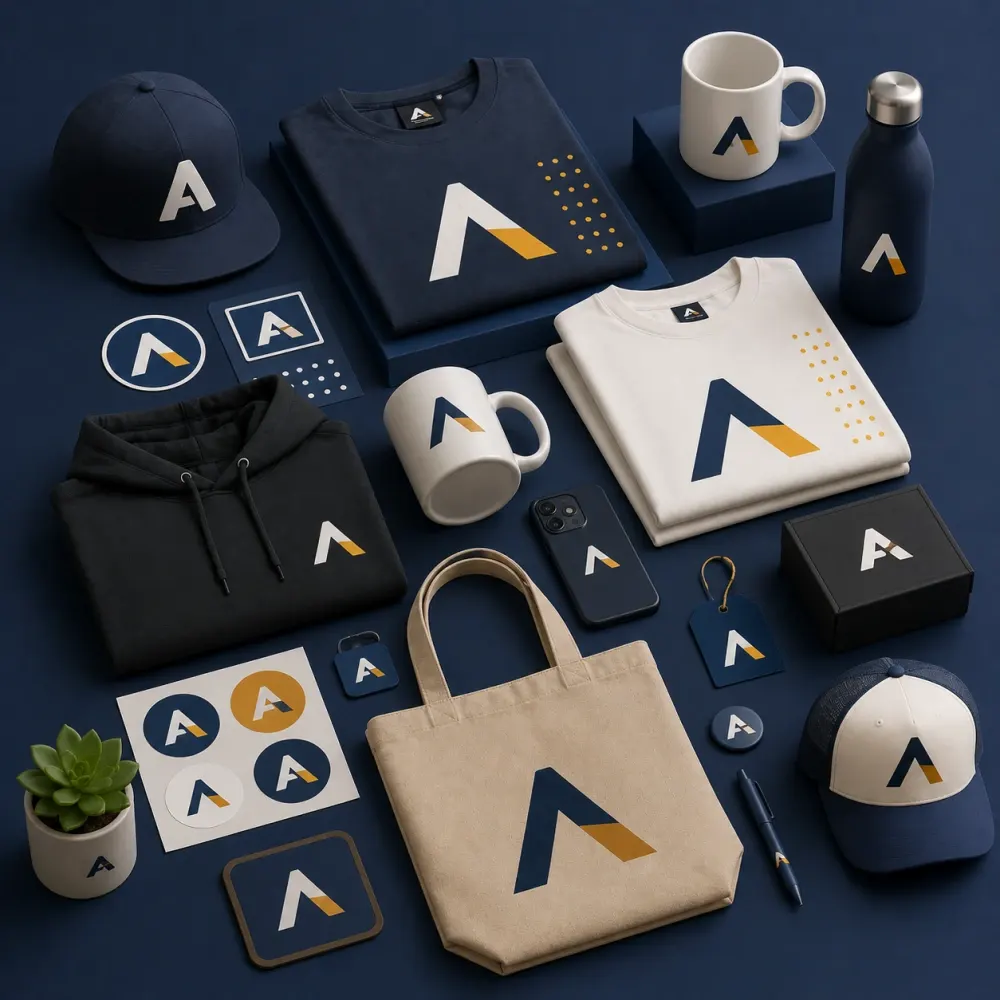
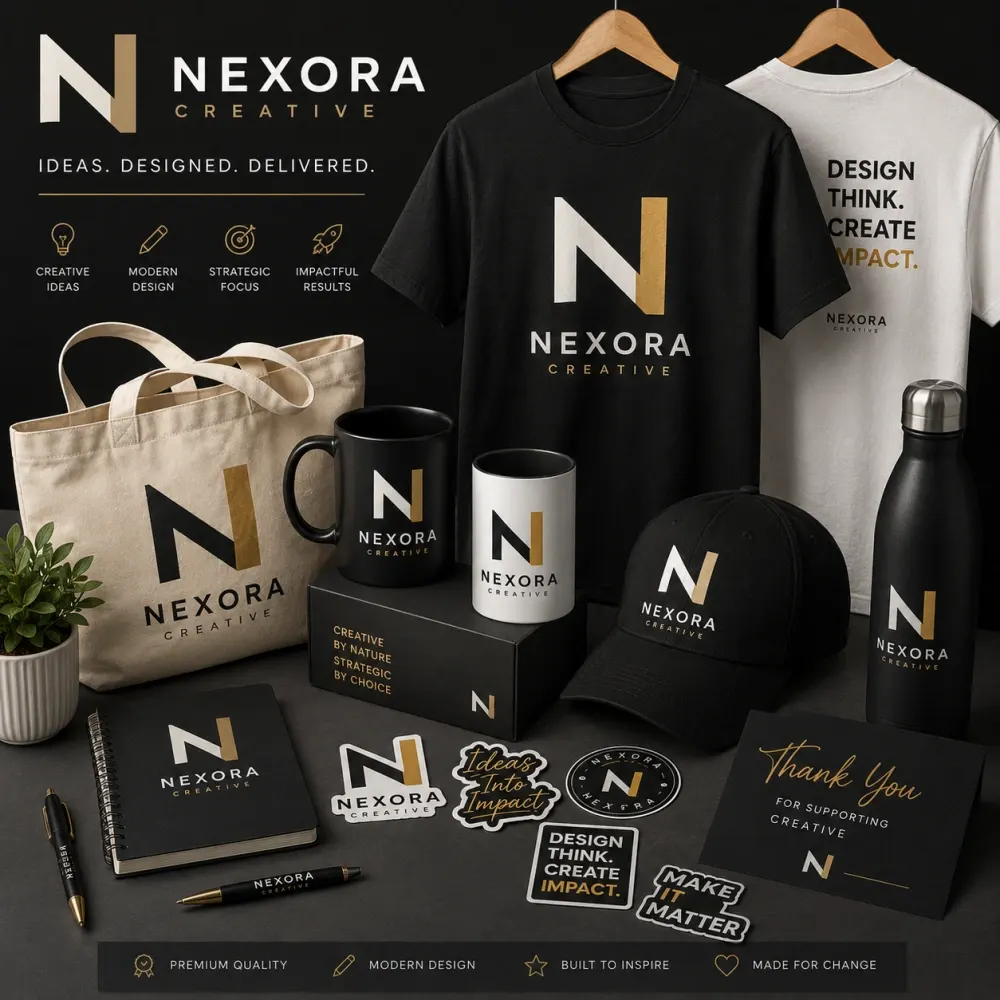
A range should feel like a collection, not a pile of unrelated giveaways — the same idea, reshaped for each product it lands on.
Merchandise is at its best when it outlasts the moment it was made for. The shirt stays in the wardrobe. The bottle stays on the desk. The tote comes back to the shop. The sticker stays on the laptop. That long second life is what makes a range worth building — and it only happens when the products feel like things people would choose, not things they were handed.
A logo stamped on everything does not make a range. A poster graphic shrinks badly onto a cap. Fine detail vanishes in embroidery. A mug curves away from the eye. A notebook offers far more room than a sleeve print. Every product in the range changes how the artwork has to behave, and a system that ignores that ends up looking like a set of accidents.
DesignBub designs merchandise systems for retailers, cafés, creators, sports clubs, schools, startups, event organisers and companies that need a coordinated set of products — apparel, drinkware, bags, stationery, stickers and staff items — built around one clear visual idea.
We begin with the whole list, not one product. Which items will be sold, which gifted, which worn by staff? What will each supplier print, embroider or engrave, and how many colours can each process hold? Those answers shape the system before a single mockup is drawn, so the range feels like a collection from the first item to the last.
Strong merchandise should feel like an extension of the brand — something a customer would pick up in a shop — not a spare logo placed on an empty object.
A range is a system, not a shopping list. We set the idea, build the artwork for each product, adapt it across the collection and prepare the files every supplier needs — so the tee, the mug and the notebook all feel like they came from the same brand.
One visual idea for the whole collection — the theme, the mood and the role each product plays in it — agreed before any artwork is adapted.
Original typography, illustration, patterns and logo treatments drawn for the products in your range, not borrowed from a poster or a social post.
The approved idea recomposed for every print area in the range — a cap is not a shrunken t-shirt, and a mug wrap is not a cropped poster.
Production files for each supplier and each decoration method in the range, prepared to their templates and imprint areas.
Recent merchandise systems — outdoor, coffee, festival, corporate, gym and kids — where every product shares the idea but gets artwork drawn for its own surface.

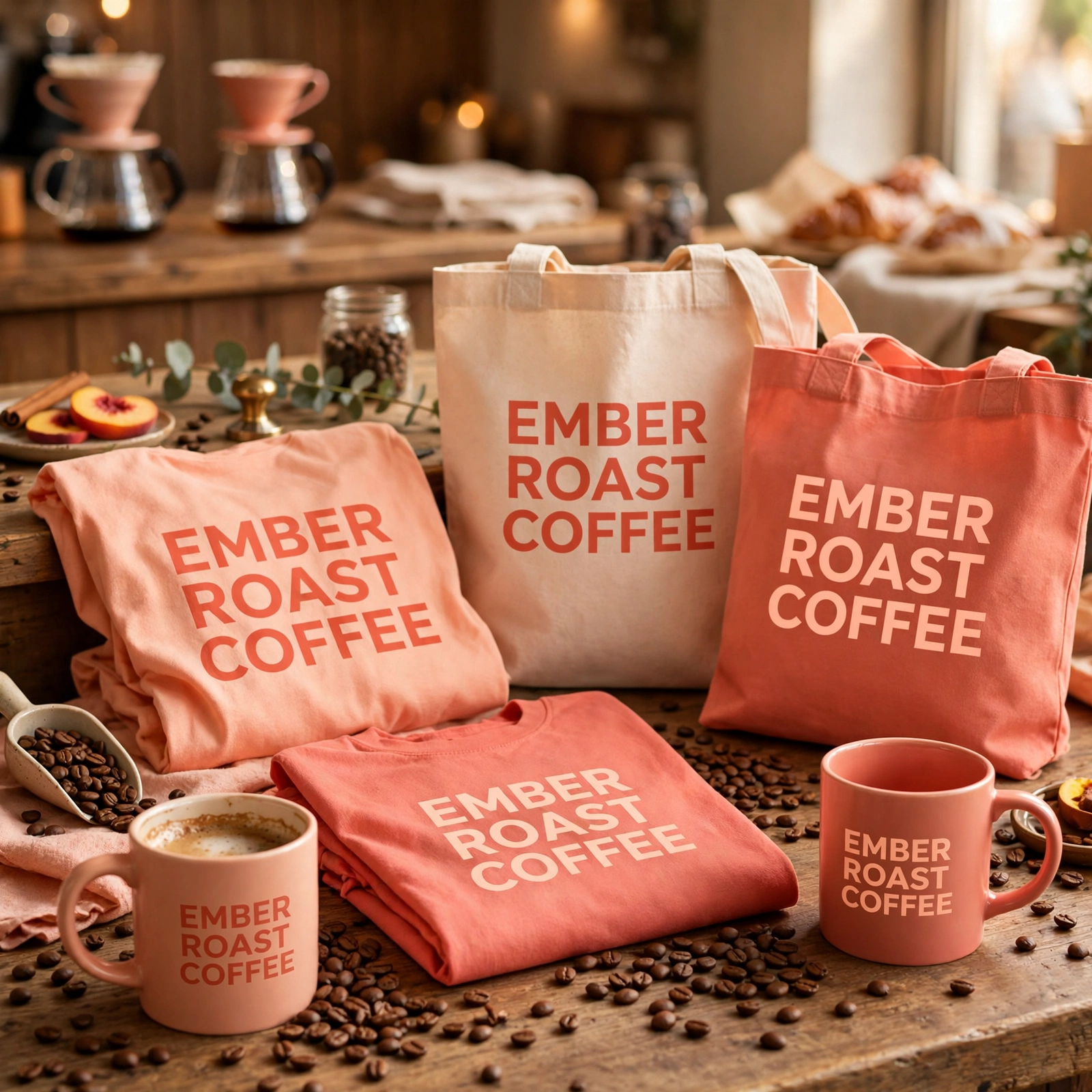
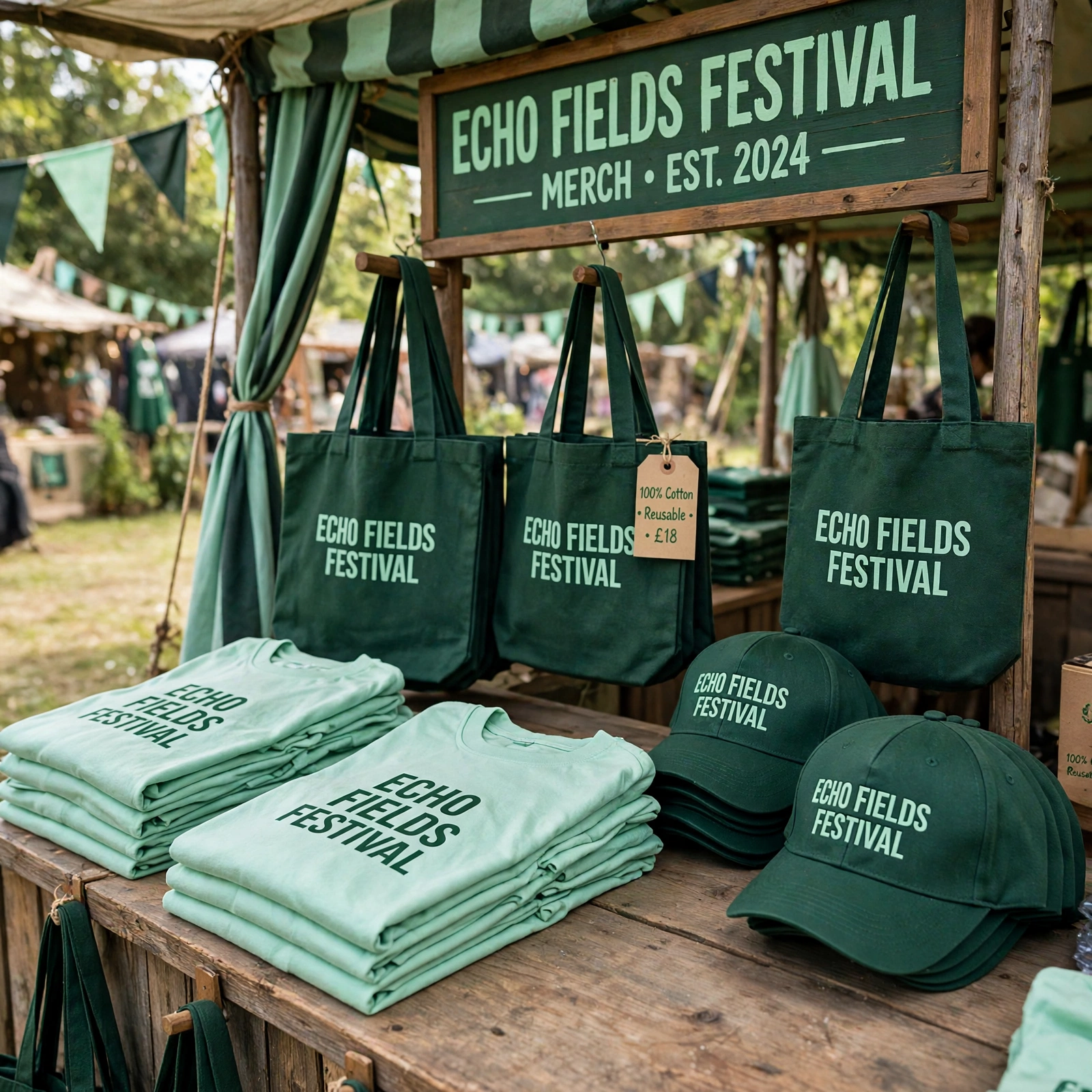
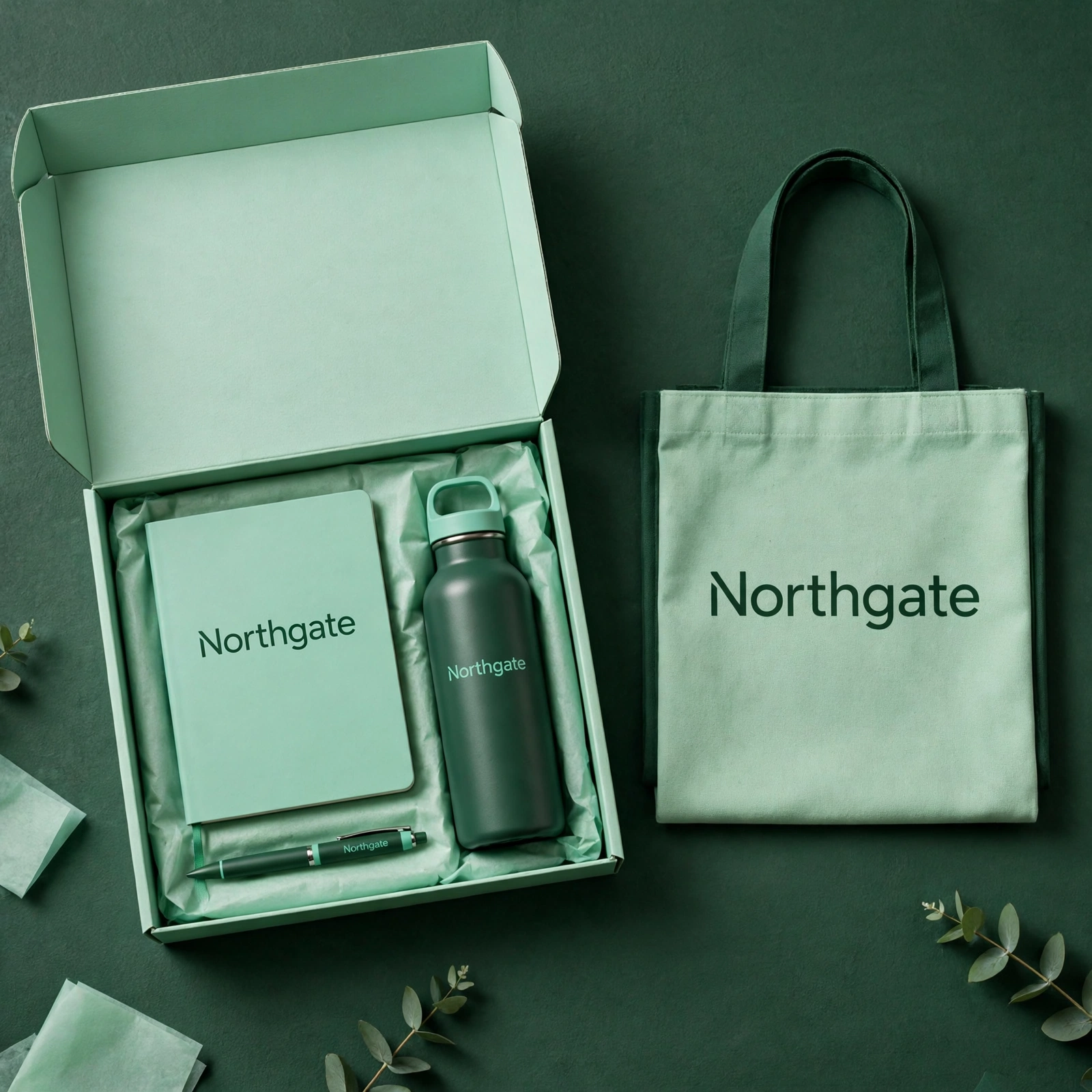
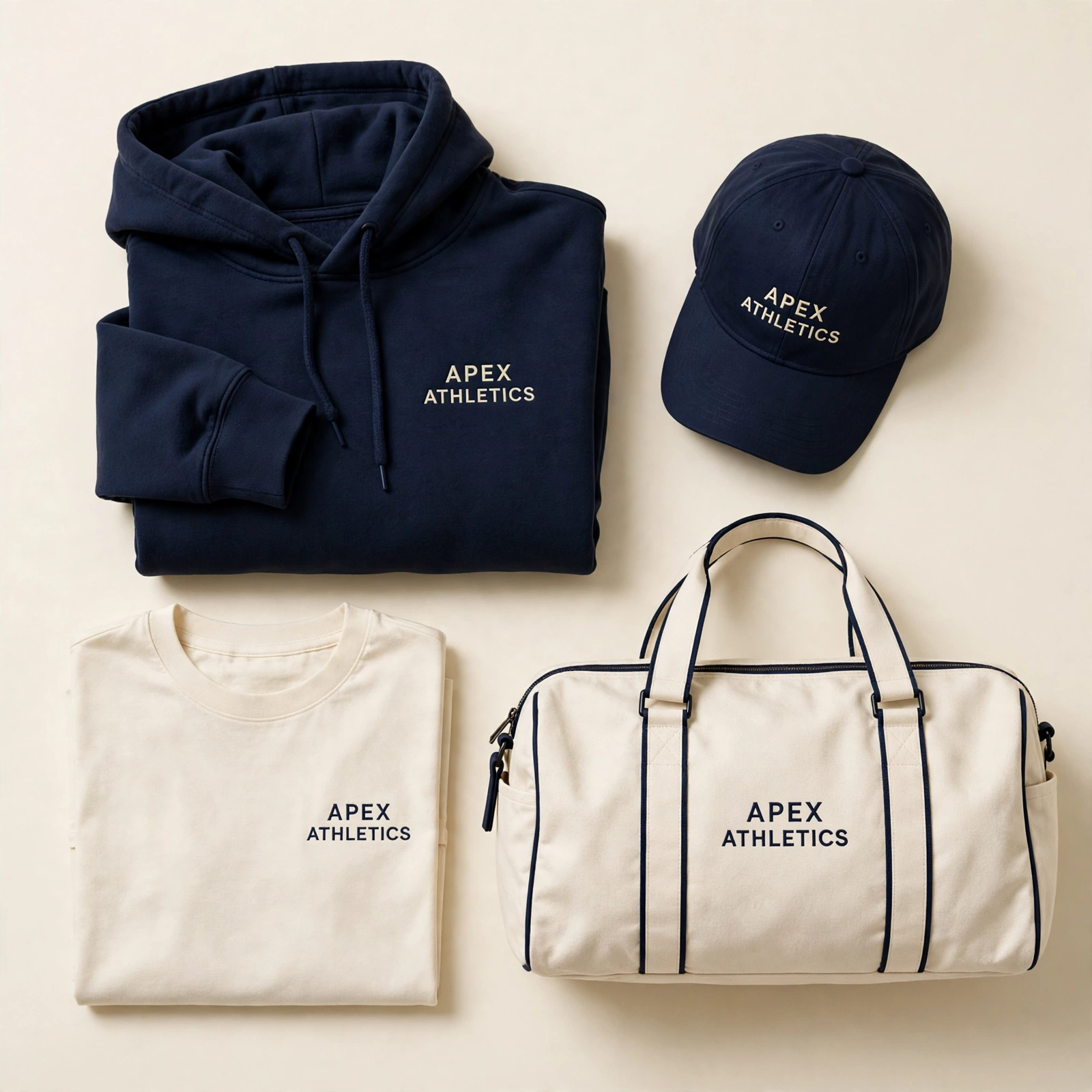
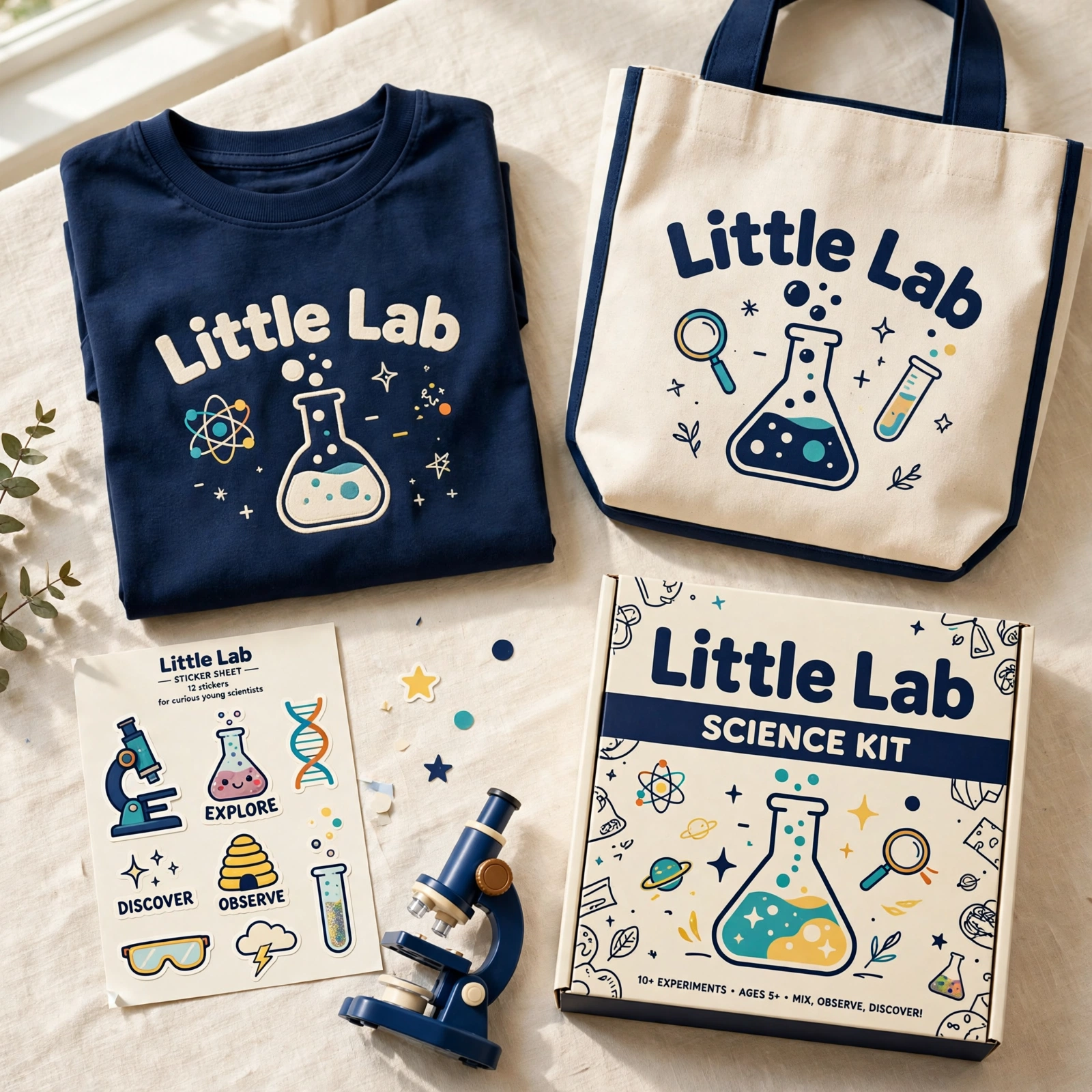
A range works when its purpose is settled before the drawing starts. Some items need to sell. Some reward loyal customers. Some make a team look consistent. Some carry an event. Some are premium gifts. Each purpose points the visual direction somewhere different, and a range that tries to do all of them at once usually does none of them well.
Retail products have to feel worth paying for. Staff items have to identify the wearer clearly. Conference items can carry a stronger event message. A premium client gift usually works better with quiet branding and careful placement. We sort those roles out with you first, then assign each product its job.
We also think about how long each item should stay relevant. A date-heavy design suits a one-off event. A reusable bottle or tote benefits from a lasting idea that still makes sense next year. Deciding that early keeps the range useful long after launch day.
A range does not need the full logo repeated identically on every item. It needs the brand to be recognisable in different ways: the symbol on a cap, the wordmark on a notebook, the colour system on a bottle, a pattern built from identity elements on a tote. Each product can speak in a different register as long as they share the same language.
That flexibility is what makes a range feel like real products. A cap might carry a small embroidered symbol. A tee might carry the big graphic with a subtle logo. A notebook might carry a pattern. A mug might carry one short line and a small mark. They belong together because they share type, colour, spacing and attitude.
Branded merchandise designed this way gives the identity room to breathe. It also makes the collection feel considered — a set of products somebody designed — rather than promotional material that only exists to display a company name.
Inside a merchandise system, the t-shirt is usually the hero product, but it still has to earn its place alongside the hoodie, the cap and the tote. Its graphic bends and folds with the fabric, so we plan print position, size and garment colour around how the shirt will actually be worn, not how it looks flat on a screen.
A small chest print can stay quiet while the back carries the big idea. A sleeve can hold a secondary element. Front and back can work as a pair. The tee’s artwork can be type-led, illustrated, symbol-led or campaign-led — what matters is that it shares the range’s visual language instead of becoming a one-off poster on cotton.
Production still shapes the artwork. Screen printing favours cleaner separations, DTG supports more detail, DTF has its own limits. The supplier confirms the printable area and method before manufacturing, and the tee’s files are prepared for exactly that. (For a standalone tee project, see our dedicated t-shirt design service.)
A hoodie is not a thicker t-shirt. The kangaroo pocket eats the lower front, the hood can cover part of a back graphic, and a zip splits any artwork that crosses the centre. Thicker fleece also softens fine detail that would survive on a tee. We plan the composition around the actual garment style before anything is drawn.
A pullover can carry a centred chest graphic, a sleeve print and a small back mark. A zip hoodie usually works better with separated front elements. A crewneck sweatshirt can take larger type or illustration without a hood getting in the way. Each style gets its own layout inside the same range direction.
We also check how the product looks worn, folded and photographed for a shop listing. A hoodie that only looks good flat on a mockup is not finished.
A cap offers the smallest decoration area in most ranges, which makes simplification the whole job. A full wordmark gets too wide, small text will not embroider cleanly, and fine lines close up in thread. A compact icon, monogram or short word usually carries a cap far better than the complete brand signature.
We design around the front, side and back positions the supplier actually offers. Embroidery needs shapes that stay clear at small scale; patches, heat transfer and print each open different options. When one idea has to work across several methods, we prepare the versions the range needs.
The goal is a cap somebody wants to wear — recognisable, clean and comfortable — not a tiny billboard squeezed onto a forehead.
Mugs, bottles and tumblers curve away from the eye, so the artwork is never visible all at once. A design can wrap around the product, sit on one face, or use two separate positions — and the right choice depends on how the item is held, filled and photographed.
A company mug might carry the logo on one side and a short line on the other. A retail tumbler might carry a repeat pattern. An event cup might need the date and the campaign name. We plan the layout around the hand and the shelf, not around a flat template.
Production matters here more than most. Sublimation, screen printing, engraving and UV printing each give a different result, so the artwork is prepared for the confirmed method and the supplier’s wrap template where one exists.
A tote inside a merchandise range has a different job from a tote on its own: it has to connect with the shirts, caps and drinkware around it while still being worth carrying. A large illustration, a graphic phrase or a strong pattern can give it that value, with a small logo supporting the idea rather than dominating it.
We consider bag colour, fabric texture, print area and handle placement, and we keep the tote’s artwork in the same visual language as the rest of the range — same type, same palette, same attitude — so the set feels like a set.
When a business needs a full retail bag system with multiple sizes and finishes, that becomes a dedicated bag and tote design project. Inside a wider range, the tote stays a team player.
Notebooks, planners, folders and desk accessories are used in work and study settings, so they usually benefit from a calmer hand. A strong cover can carry a pattern, a short phrase, a logo mark or a simple illustration — something that feels considered on a meeting table rather than loud in a crowd.
Interior pages can be designed too when the project calls for it, and for corporate kits the notebook can connect with pens, folders and presentation materials. For retail ranges the cover can be more expressive, as long as it still belongs to the same system.
We keep production limits in view — foil, embossing, print area and binding — and the final file follows the printer’s specification rather than relying on a mockup alone.
Stickers travel further than almost anything else in a range, because customers choose where to put them — laptops, bottles, notebooks, cases. That means each sticker has to feel complete on its own, not like a leftover scrap of a bigger design.
We create logo stickers, type-based designs, illustrated characters, icons, badges and small sets. Cut shape matters as well: a die-cut sticker needs breathing room around the artwork, and very thin edges or tiny isolated pieces can be difficult to produce reliably.
Artwork is prepared with suitable cut guidance once the printer confirms the format they need.
Event merchandise can make a conference, launch, festival or company gathering feel complete — but the best event ranges still work after the day ends. A shirt with the event name and year, a tote with the campaign theme, a cap with a simple icon, a notebook in the same colour system: each item connects to the event without becoming useless the next morning.
Sponsor logos can be added where required, with a clear hierarchy so they support the event identity instead of overwhelming it. Final names, dates, sponsor marks and approved wording should come from the organiser before production — we do not invent sponsors or attendance claims to make a design look stronger.
For recurring events, the range system can be reused with a fresh edition graphic each year, so the collection builds recognition over time.
Merchandise sold online has to work twice: once as a physical product and once as a small listing image. A customer may first meet the design as a thumbnail, so the graphic has to make sense at that size before it earns a click.
We design for ecommerce brands, creators and communities selling direct through their own shops — a hero graphic, supporting variations, mockups and product-ready visual assets, all inside one shared theme so the shop looks connected rather than assembled from leftovers.
The business stays responsible for descriptions, prices, stock, sizing and shipping. Design can make the products look worth buying; it cannot guarantee sales.
Creator merchandise starts from what the audience already recognises — a phrase, a symbol, an inside reference, a recurring theme or a visual style. The trick is turning that into products that still look good to somebody who has never heard of the creator, because that is what makes a range sell beyond the core fans.
We turn those ideas into wearable graphics and coordinated products, and we plan for growth: a visual system that can support future colours, seasonal releases and new products without repeating the exact same graphic every time.
A drop built on a system can keep expanding. A drop built on one graphic runs out of road fast.
Brands that produce merchandise regularly should not start from zero every time. A merchandise design system defines the rules — logo sizes, graphic styles, colour combinations, type treatments, placement — so each new item can be produced quickly without drifting off-brand.
That matters most for brands with staff items, event merchandise, customer gifts and retail products all happening through the year. The system keeps them connected even when different people commission them months apart.
A strong illustration can turn a plain tee into a collectible and give an event range a visual theme people remember. We create illustration-led merchandise when the scope includes original artwork — bold and simple for screen printing, more detailed where digital production allows it.
We also plan how the illustration travels. A large back print might use the full artwork while a sticker or a cap uses one extracted element. That kind of thinking is what makes a range feel designed rather than decorated.
Complex illustration needs more creative time than logo placement, so it is scoped separately from the basic range work.
Patterns adapt to almost any shape, which makes them ideal for a multi-product range. A repeat built from icons, initials, abstract forms or parts of the identity can run across fabric, notebooks, drinkware and bags, tying the collection together even when the hero graphics differ.
Scale is the decision that matters. A pattern that works on a mug may need to change on a large bag, and a dense pattern can fight with a logo if it is allowed to lead everywhere. We decide where the pattern leads, where it supports and where it stays in the background.
When the supplier has a fixed print area, we adjust the repeat or the crop so the finished product still feels balanced.
Screen printing rewards clear shapes and controlled colour counts. Direct-to-garment printing supports more colour and detail on suitable garments. DTF can handle detailed full-colour artwork depending on the supplier. A range often uses more than one of them, which means the same idea may need different artwork files for different products.
We do not choose a production method in the abstract. We prepare artwork around the confirmed process for each product — separations, underbase requirements, printable area and file format all vary, and the printer confirms the setup.
The printer stays responsible for final production settings. Our job is to make artwork that respects those limits and still looks strong once it is printed.
Embroidery changes artwork more than most clients expect. Thread has thickness. Very small type, thin lines and tiny gaps do not reproduce cleanly. Gradients usually need simplifying, and a detailed logo may need a reduced version before it can be stitched.
We prepare embroidery-friendly artwork and simplified versions where the range needs them. The embroidery supplier or digitiser still creates the machine-specific stitch file — that step belongs to production, not to the design file.
Stitch density, thread choice, backing and garment material all affect the physical result. We design with embroidery in mind, but we do not claim to control the final stitch quality when another supplier handles production.
A range usually appears in more than one colour. One graphic may need a light version for dark garments and a dark version for light products. A colourful design may need small changes so its important elements stay visible on every background.
We prepare approved colourways instead of assuming one file works everywhere. The product colour itself becomes part of the composition — a natural canvas tote feels different from a black hoodie, and a metal bottle changes how a printed colour appears.
Variations are planned around the actual products selected for production, not treated as a last-minute export task.
Mockups help a client see artwork on a product before manufacturing — useful for concept review, internal approval, presentations and ecommerce planning. We create realistic visual mockups from the approved design for the products in your range.
A mockup is still a simulation. Fabric, ink, embroidery, product colour and manufacturing can all change the physical result, so a mockup should never replace a supplier proof or sample when colour, texture or placement needs close control.
We keep presentation mockups and final production files separate, so each one does the job it is meant for.
Final production files depend on the supplier and the decoration method. A screen printer may ask for vector artwork with separated colours. A DTG supplier may need a high-resolution transparent file. An embroidery vendor needs clean vector artwork before digitising. A mug printer may supply a wrap template.
We prepare files to those confirmed requirements, keeping the artwork inside the confirmed print area for each product. Common outputs include PDF, AI, EPS, SVG and PNG, as agreed in the project.
The manufacturer stays responsible for machine setup, materials, final colour output and physical production.
Existing merchandise can drift out of date even when the identity still works. The artwork may feel too promotional, the logo may be oversized, or the products may no longer feel connected to each other. A redesign fixes those problems without changing the identity itself.
We review the current items, the audience and how the merchandise is used, then decide what to keep and what to replace. The new direction may use better placement, stronger graphics, improved colour combinations or a more consistent system across the range.
If the original source files are unavailable, some artwork may need to be recreated before production-ready files can be prepared.
These are starting prices for design work. Printing, blank products, embroidery, manufacturing, shipping, minimum order quantities, premium assets and supplier costs are separate unless a quotation states otherwise.
For one original merchandise graphic adapted to one primary product.
For a coordinated visual direction across up to three selected products.
For a wider branded range that needs reusable design rules and multiple applications.
Standalone prices help when the project does not need a full collection. Final pricing can change with artwork complexity, product count and supplier requirements.
Scope note: Prices cover design services only unless a written quotation says otherwise. Product sourcing, printing, embroidery digitizing, blank garments/items, manufacturing, sampling, shipping, taxes, platform fees and supplier charges are separate. Production results depend on the selected vendor, material, print method and proofing process.
We start with the list and the purpose. You share the products, the audience, the brand files, the supplier templates, the production methods and any references that explain the direction. We work out which items need original graphics and which can be carried by adaptations.
Next we build the creative direction — typography, illustration, placement, colour and supporting graphics — around the whole range rather than one product. You review the main concepts through clear mockups and send consolidated feedback.
We refine the selected direction within the agreed revision scope, then adapt the artwork across the remaining products and prepare production files from the supplier specifications available. Before manufacturing, the printer or supplier should confirm the final technical setup.
Our merchandise design services can cover T-shirts, hoodies, sweatshirts, caps, hats, mugs, drinkware, tote bags, notebooks, stickers, event merchandise, staff items, creator merch, sports merchandise and promotional products — as one coordinated system, not a pile of separate jobs.
A project can also include custom typography, illustration, patterns, product adaptations, colourways, mockups, print files and supplier-ready artwork. The scope follows the number of items and the amount of original creative work the range needs.
One logo-led tee is a smaller job than a complete retail collection. A three-item employee kit needs less adaptation than a creator drop with several garments, illustrations and colour versions. We define the deliverables around the actual collection.
Merchandise sits between brand identity and a physical product. The artwork has to look good, but it also has to survive printing, embroidery, curved surfaces, fabric texture and different product sizes. We consider those practical conditions from the start, not after the mockups are approved.
DesignBub approaches merchandise design services by looking at who will use each product, why it exists and how the supplier plans to make it. We can work inside an existing identity or create fresh supporting graphics around the brand.
We also keep production responsibilities clear. We prepare professional artwork and mockups from the supplier information available. The manufacturer controls material, printing, embroidery, product quality, physical colour and the final result. A good system helps the vendor — it cannot replace a physical proof when colour, texture or placement must be checked closely.
Scope, files, colourways and pricing for multi-product merchandise projects.
A single t-shirt design is one graphic for one garment. Merchandise design builds a coordinated system — one visual idea adapted across several products, with shared rules for colour, type and placement, and production files prepared for each supplier and decoration method in the range.
Our packages cover one product, up to three, or up to six, depending on the scope you choose. Larger ranges are quoted after we see the full product list, because each additional product needs its own adaptation, colourways and supplier files.
Rarely without changes. A graphic that works on a tee usually needs recomposing for a cap, a mug wrap or a sticker — different sizes, surfaces and print methods. We adapt the approved idea for each product instead of mechanically scaling one file.
We prepare embroidery-friendly vector artwork and simplified versions where needed. Machine-specific digitised stitch files are normally created by the embroidery supplier or a specialist digitiser, unless that is separately agreed.
DesignBub merchandise packages start at $49 for one product, $119 for a collection of up to three products, and $199 for a system of up to six. The final price depends on the number of products, original concepts, illustration, adaptations, mockups and production requirements.
Bring us one product, a staff kit, an event idea or a full collection that still needs a visual direction. We will build the system, adapt it across every item and hand over files each supplier can actually use.