Stationery Design
Your business sends dozens of documents a week — cards, letters, envelopes, invoices — and they should all sound like the same company. We build that consistency into one practical system your team can actually use.
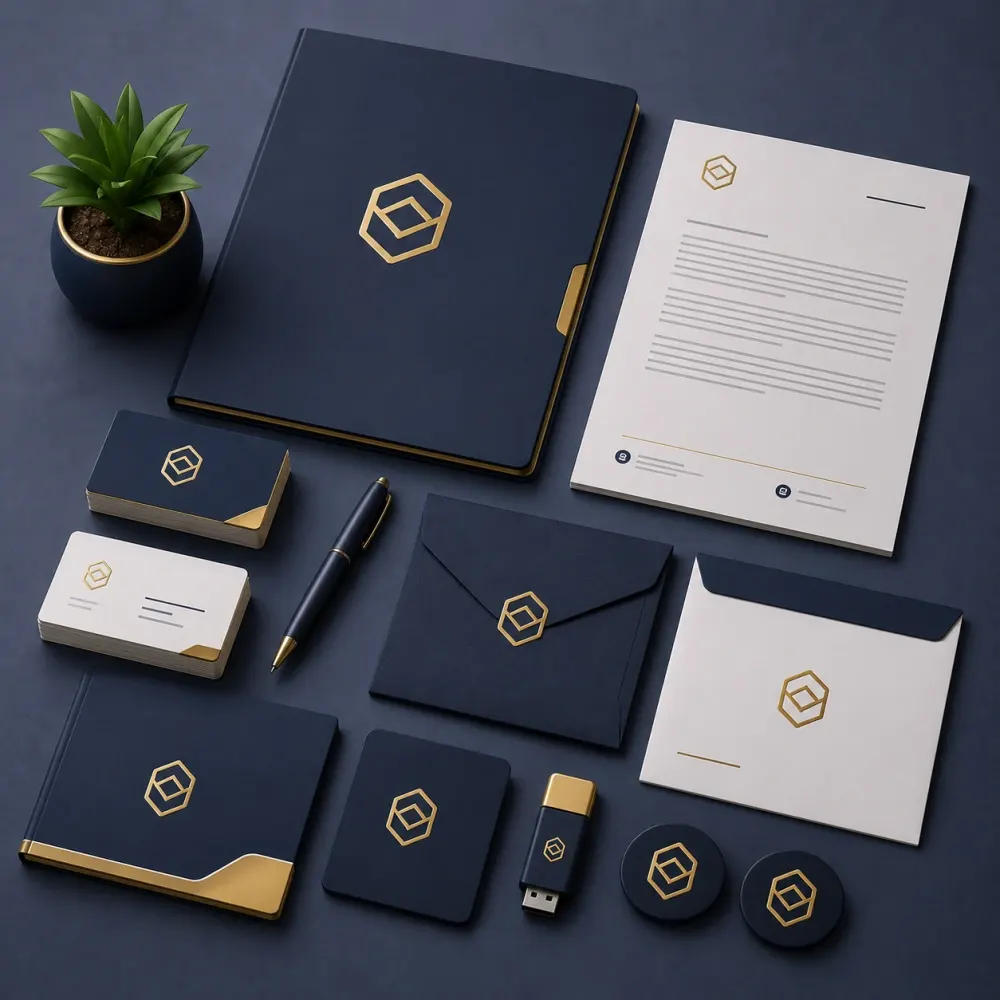
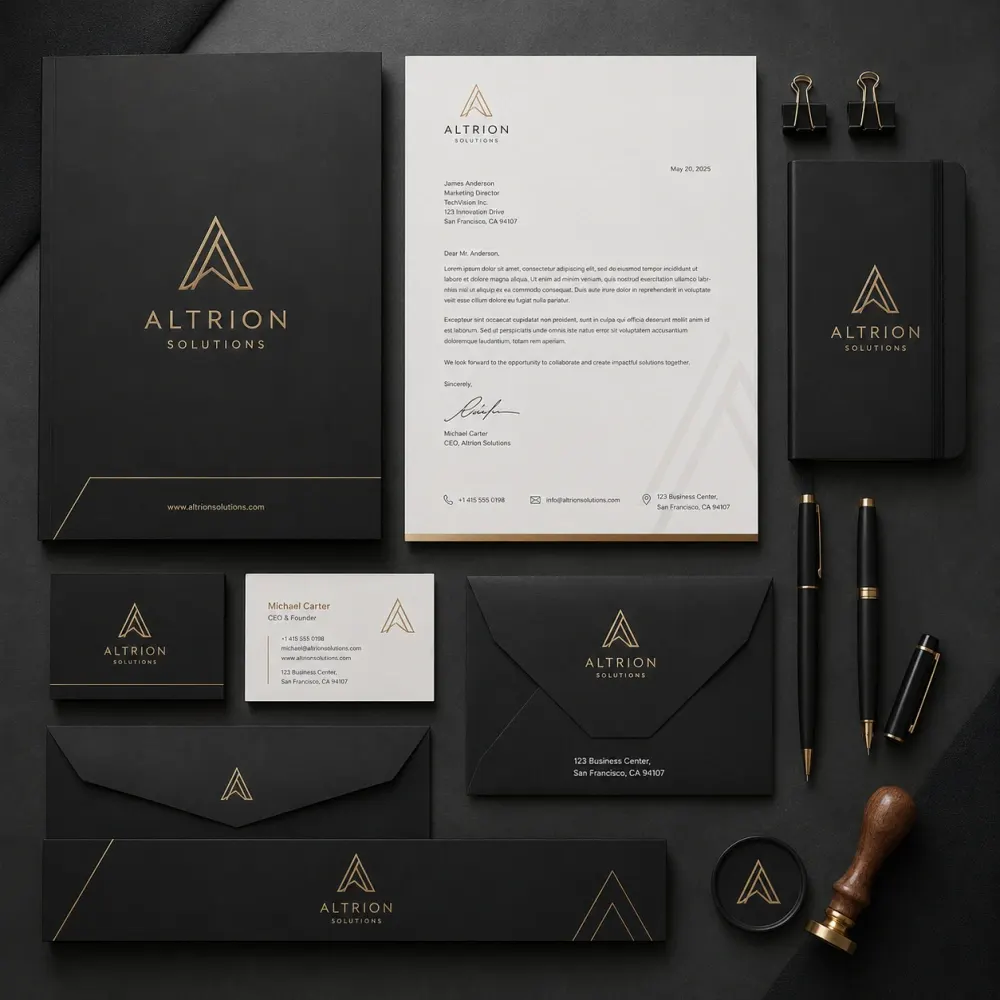
Clear layouts for the documents your team prints, sends, edits and uses every day.
One brand, every document, no mixed messages.
Stationery may look like a small part of a brand, but businesses use it in many everyday moments. A quotation can arrive on a letterhead. A proposal may sit inside a branded folder. A business card can be handed over after a meeting. An invoice can reach the customer weeks after the first conversation.
When these materials use different fonts, colours, spacing and logo treatments, the business starts to look less organised than it actually is. A coordinated system solves that problem by giving common documents a shared visual language.
DesignBub creates business stationery design for startups, established companies, professional firms, retailers, construction businesses, healthcare brands, hospitality companies and other organisations that need practical branded documents for daily use.
We start with how the company actually works. Which documents does the team use most often? Which items will be printed? Which ones need editable digital versions? Does the company have several offices, departments or staff members? Will employees create documents in Word, Google Docs or another system? Does the printer already have size and production specifications?
Those details matter because good stationery should stay useful after the designer hands over the files. A strong system does not simply place the logo in the corner of every page. It creates a repeatable way for the business to present information wherever formal communication happens.
We design the documents your business actually reaches for.
Professional stationery design services can include business cards, letterheads, envelopes, compliment slips, presentation folders, invoice layouts, quotation templates, notepads, email signatures and other branded office materials. The exact scope should follow the business rather than a fixed checklist.
A new consultancy may only need a business card, letterhead and email signature. A construction company may also need quotation sheets, invoice templates, folders and project document covers. A medical or legal office may need clean document layouts that keep names, addresses and contact details easy to find. A retail brand may need more visual stationery for order inserts and customer notes.
Where the business already has brand guidelines, we follow them. Where the logo exists but the supporting system is limited, we create practical rules for typography, spacing, colours and layout so future documents stay connected.
Cards your team can hand out with confidence
Compact layouts that keep names, roles and contact details easy to find, while matching the wider identity of the set.
Letterheads with room to write
Print and digital letterheads with generous writing space, controlled margins and company information that stays readable.
Envelopes planned around the post
Branded envelopes built around real sizes, postal areas, windows and the printer's own specification.
Invoices and quotes that stay on-brand
Invoice, quotation and editable office documents that support daily work without losing the brand structure.
Whole sets, designed to work together
Six stationery sets for businesses — an architecture studio, a café, a law firm, a hotel, a florist and a consultancy — card, letterhead and envelope in one system each.

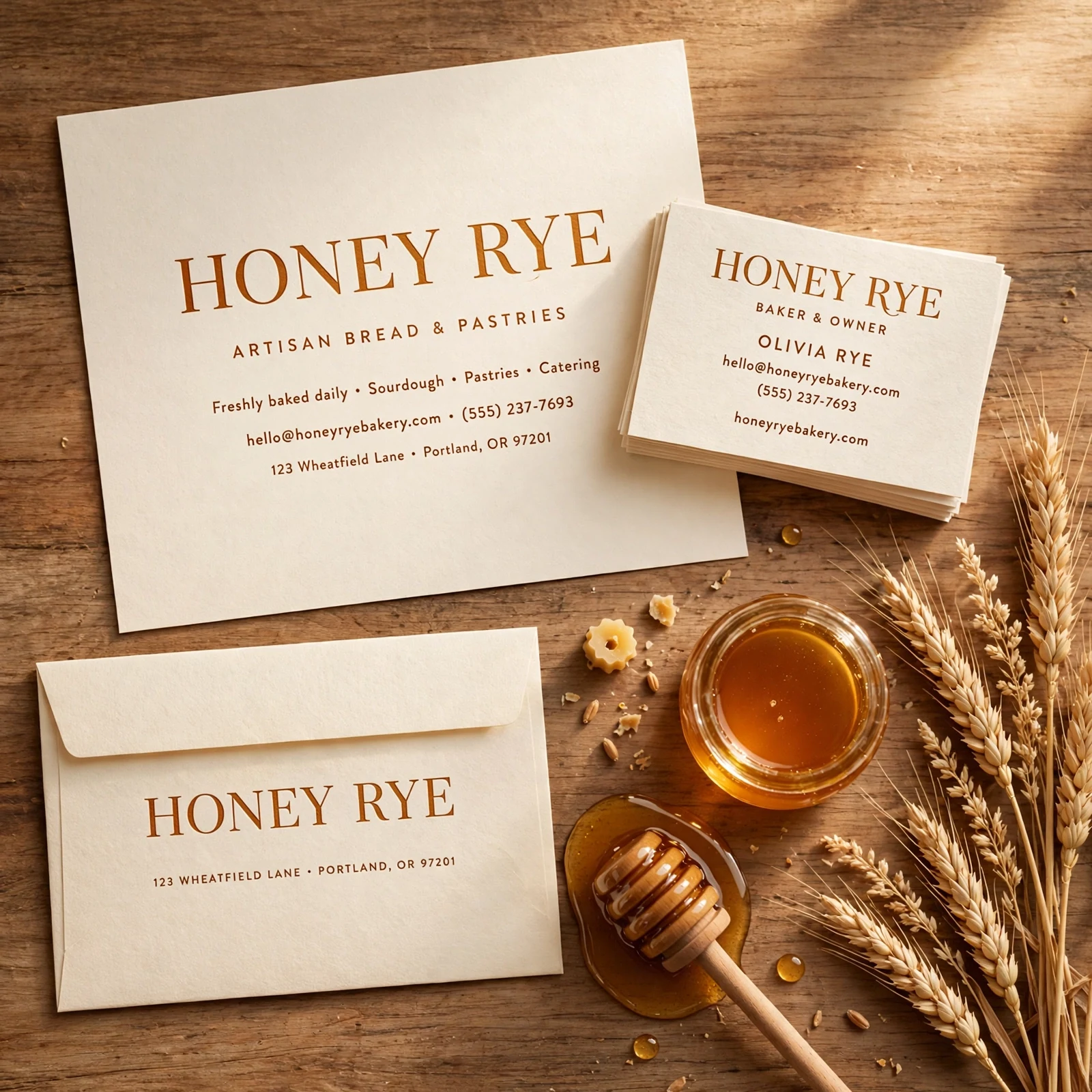
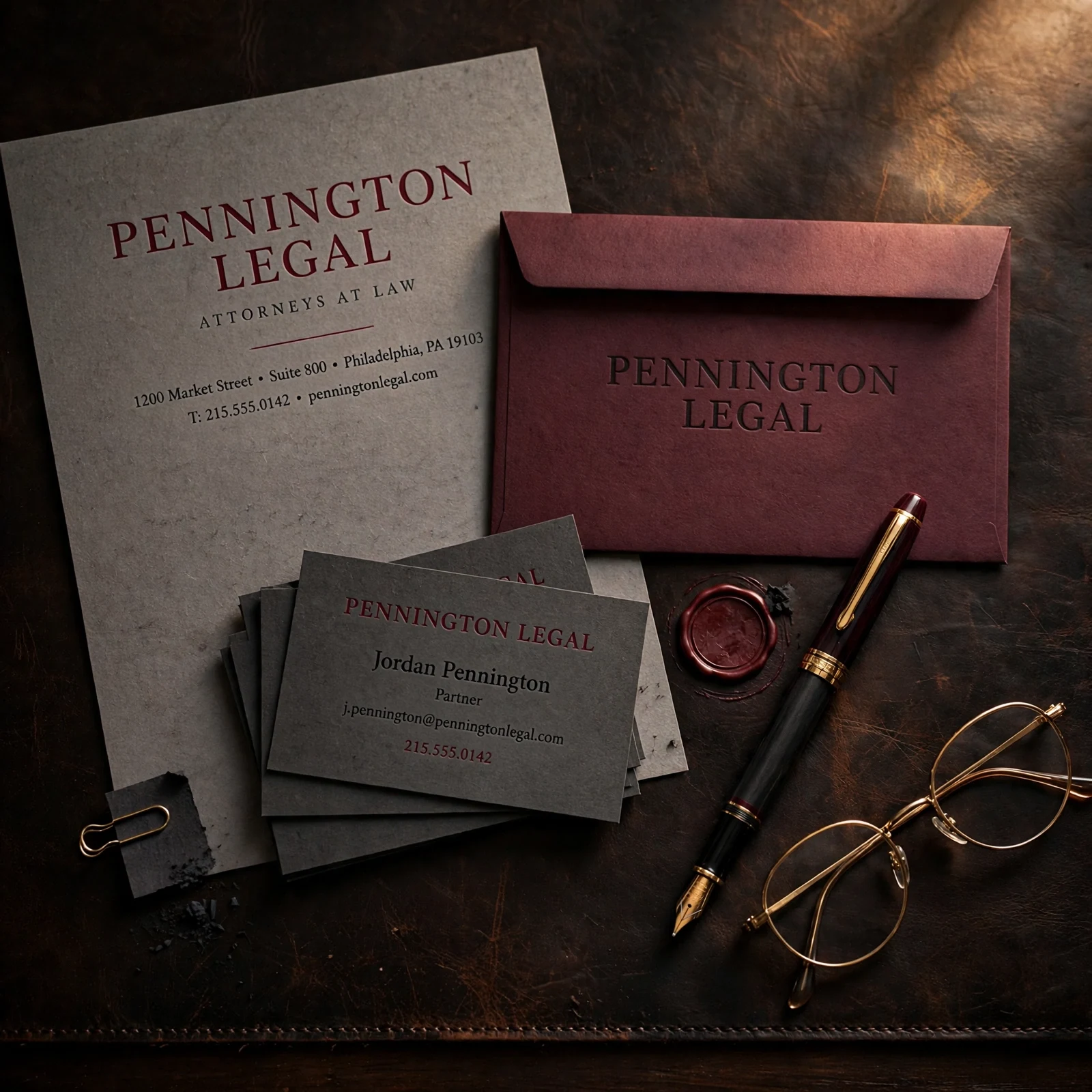


The business card: small format, strict discipline.
A business card has very little space, so every detail matters. The card should make the person's name, role and contact information easy to find without trying to explain the entire company.
We decide what belongs on the front and what can move to the back. Some brands work well with a logo-led front and contact details on the reverse. Others need the person's name to lead. A company with several services may still be better served by one short category line instead of a long list.
Business card design also needs production awareness. Card size, bleed, safe areas, paper stock, foil, embossing, spot finishes and rounded corners can affect the layout. We prepare artwork around the confirmed printer specification and keep small text at a practical size.
The result should feel like a useful professional tool, not a crowded piece of advertising.
The letterhead: present, never pushy.
Letterhead design needs to support communication rather than compete with it. A letter may contain one paragraph or several pages, and the layout should still feel balanced in both situations.
We usually keep the company name, logo, address and contact information clear but quiet enough that the body copy remains the main focus. Margins matter because employees need enough room to type, sign and print documents without running into decorative elements.
A legal or financial document may need a more restrained letterhead than a creative studio. A company with several offices may need address variations while keeping the same visual structure.
We can prepare print-ready letterheads as well as editable Word or Google Docs versions when the project includes them. The editable template should remain easy for staff to use in normal office software.
Corporate stationery: one system, many shapes.
Corporate stationery design brings several business documents under one controlled system. The set may include business cards, letterheads, envelopes, folders, invoices, email signatures and other formal materials.
Consistency does not mean every item should look the same. A card has different proportions from an A4 letterhead. An envelope has folds and postal areas. A folder needs to work when it is held closed and opened. An invoice carries more data than a compliment slip.
We adapt the identity to each item while keeping the same typography, colour, logo relationships, spacing and supporting graphic language. This approach helps the company look organised even when customers receive different documents from different departments.
The envelope: recognised at a glance, posted without a fight.
An envelope often creates the first physical impression before the recipient sees the document inside. The design should identify the sender without interfering with postal or courier information.
We plan logo placement, return address, recipient area and any supporting brand elements around the selected envelope size. Window envelopes need additional care because the window position affects the layout.
A standard office envelope may need a simple one-colour treatment. A premium invitation or presentation package may support a more expressive design. We can prepare artwork for common formats or work from a printer template.
The final file should reflect the actual envelope size because scaling another stationery layout onto an envelope rarely produces a balanced result.
The presentation folder: the proposal's first handshake.
Folders often carry proposals, contracts, brochures, certificates or sales documents. That makes them part of the presentation, not just packaging.
We design the front, back, spine and inside areas around the folder structure supplied by the printer. Pocket shapes, business card slots, folds and glue areas can affect the artwork.
A corporate folder may use a simple cover with strong branding. A real estate or construction company may use project photography. A professional service firm may prefer a restrained pattern or graphic system.
The final artwork should use the printer's approved dieline rather than a generic mockup. This keeps important graphics away from folds, cuts and glue zones.
Invoices and quotations: clarity before decoration.
Invoices and quotations carry practical information, so clarity comes first. The customer needs to find the company details, document number, date, items, prices, totals, payment information and notes without searching through decoration.
We create a hierarchy for those fields and apply the brand in a controlled way. A good invoice can look professional without using heavy backgrounds or large graphics that waste printing ink.
Quotation templates may allow more room for service descriptions, terms and approval details. Where the business needs editable templates, we design around the software the team uses. That may include Word, Google Docs, Excel, a PDF workflow or another agreed format.
The visual design should support daily editing instead of making routine changes difficult.
The email signature: small, sharp, everywhere.
An email signature appears in everyday communication, often more frequently than printed business cards. We keep it compact and easy to scan.
The person's name, role, company, phone number, website and other essential details should remain clear. Logos and social icons can support the design, but large banners and several images can make signatures heavy or inconsistent across email clients.
Email platforms also handle HTML differently. If implementation forms part of the project, we use practical structures and avoid effects that depend on browser-level support. A visual signature design and a working HTML signature are related but separate tasks, so we define the technical scope before delivery.
Notepads and office extras: branded, but writable.
Branded notepads work well for offices, events, staff kits and customer gifts. The design should leave most of the page available for writing.
We can place the logo, contact information, a light pattern or a small footer without overwhelming the usable space. Line spacing, grid layout and page size depend on how the notepad will be used.
A meeting pad may need areas for date, topic and action items. A simple desk pad may only need ruled lines. We prepare the artwork around the printer's binding and trim specifications so important elements do not sit too close to the edge.
Business forms: fewer mistakes, faster completion.
Some companies use repeated forms that deserve the same attention as public-facing stationery. These may include order forms, service sheets, checklists, delivery notes, job cards, inspection forms or internal approval documents.
Good form design reduces confusion. Fields should follow a logical order. Labels should stay close to the information they describe. Writing areas should have enough space. Tables should not become dense simply because the business wants everything on one page.
We can apply the brand while keeping the form practical. For internal documents, efficiency often matters more than decorative styling.
Professional services: calm, credible, controlled.
Law firms, consultants, accountants, architects, engineers and other professional service companies often rely on formal documents. Their stationery needs to feel clear, controlled and credible.
We use strong typography, careful spacing and restrained brand elements. A letterhead should work with long written communication. A proposal folder should feel polished without distracting from the content. A business card should make the individual's role easy to understand.
For firms with several partners or offices, we can create controlled variations while keeping the same core system. The design supports consistency across everyday communication without making claims that the business has not confirmed.
Construction and industrial: built for site and office.
Construction, engineering and industrial businesses use stationery across quotations, tenders, invoices, site communication and supplier relationships. These companies often need documents that carry more information than a simple office letter.
We can design business cards, letterheads, quotation templates, invoice layouts, folders and other business documents around the existing brand. The system can use project photography, structural graphics or simple industrial cues where they support the identity.
However, the documents still need to remain practical for printing, scanning and email sharing. We avoid heavy backgrounds that make photocopies difficult or reduce readability.
Typography: one voice in print and in Word.
Typography creates consistency across the full stationery system. We define how names, roles, addresses, headings, body text, numbers and small labels should appear.
The existing brand typefaces guide the direction where suitable. For editable office documents, we also consider whether staff have access to the selected fonts. A beautiful font that nobody on the team can use may create problems in daily templates.
In those cases, we can choose a compatible office font for editable documents while preserving the main brand style in print-ready artwork. We also keep text readable at real size because tiny contact details can look elegant on screen and become difficult to read when printed.
Logo placement: consistent logic, not one fixed spot.
A logo does not need the same size and position on every piece of stationery. Business cards, letterheads, envelopes and folders all have different visual spaces.
We define a consistent relationship rather than one fixed coordinate. The logo may sit near the top of a letterhead, lead the front of a card and move to a corner on an envelope. What stays consistent is the sense of scale, clear space and alignment.
We avoid stretching or altering the logo to fill awkward areas. Where a compact symbol or secondary lockup exists, we can use it for smaller formats.
Print-ready: every item set up for its own press run.
Printed stationery needs accurate production setup. The printer may require bleed, crop marks, CMYK colour, specific PDF standards or separate artwork for specialty finishes.
We prepare files around the confirmed production method. Business cards may need front and back files. Folders may require a dieline. Envelopes may need non-printable postal areas. Foil or spot finishes may need separate layers or plates.
The printer remains responsible for final prepress, output settings, stock, finishing and physical production. For important jobs, we recommend checking a proof before the complete print run. A design file can be correct while the physical result still changes because of paper and production conditions.
Editable templates: change a date, not the design.
Many businesses need to update names, dates, prices or document content after handoff. Editable stationery templates can support that workflow.
We can prepare selected items in Word, Google Docs, PowerPoint, Excel or another agreed format where practical. The editable version may use simpler layout rules than the print artwork because office software has different limitations.
We focus on preserving the main brand hierarchy while making normal editing easy. The team should not need a professional design application to change a quotation date, invoice item or employee name.
Digital stationery: the same company, on screen.
Not all stationery needs to be printed. Businesses increasingly use digital letterheads, PDF quotations, electronic invoices, proposal covers and email signatures.
Digital stationery should still feel connected to the printed materials. We can optimise layouts for screen use, clickable links and PDF sharing where appropriate.
A digital letterhead may use lighter graphics than a print version because file size matters. A PDF quotation can include links to the website or contact details. An email signature may use a compact version of the same identity. The format changes, but the visual language remains consistent.
Redesign: keep what works, fix what does not.
Businesses sometimes keep the same logo while their stationery becomes outdated. Old business cards may use previous contact details. Letterheads may have poor spacing. Different departments may use their own document styles. The invoice may no longer match the website or brand guidelines.
Stationery redesign can bring those items back into one system. We review what the company currently uses and identify which materials still work.
We do not rebuild everything automatically. A useful document structure can stay while the visual styling improves. Where old files are unavailable, we may need to recreate the artwork before preparing updated templates.
From a list of documents to a system your team can use.
We begin with the stationery list and the way the business uses each item. You share the logo, brand guidelines, company details, employee information, required formats, printer specifications and existing stationery where relevant.
Next, we organise the content. We confirm which details belong on each item and remove repeated information that does not help the user.
Then we develop the visual system. We apply typography, colour, spacing, logo placement and supporting graphics across the main items. You review the selected direction and provide consolidated feedback.
After approval, we prepare the required print files, editable templates or digital exports. Before production, the business checks names, phone numbers, addresses, registration details and other factual information.
List first, design second
We confirm every stationery item, who uses it, its size and its output format before anything is drawn.
Your brand, checked properly
Logo files, colours, type and existing document rules are reviewed so the system builds on what is already working.
One direction across the set
Layout, type, colour, spacing and logo placement are developed across representative pieces, not one item at a time.
Extended to every document
The approved system is rolled out to the remaining documents and variations, keeping the same rules throughout.
Files your team can use
Print-ready, editable and digital files are packaged by scope, with a clear note on what each file is for.
Start with the documents you use most — expand later.
The fees below are starting prices in USD for the design work. More items, advanced editable templates, multiple locations, custom illustration or specialty print preparation can move the final cost.
Stationery Essentials
A focused three-item set for a business that needs its most common printed stationery aligned.
- Business card design
- Letterhead design
- Envelope design
- One approved visual direction
- Print-ready PDF files
- Standard editable source files
Business Stationery System
A practical print-and-digital system for businesses that use stationery across sales and daily office work.
- Business card, letterhead and envelope
- Email signature design
- Invoice or quotation template
- Editable letterhead template
- Two employee or office variations
- Print and digital export package
Corporate Stationery Suite
A wider system for teams that need more document types, controlled variations and production-ready handoff.
- Up to eight stationery items
- Presentation folder design
- Invoice and quotation layouts
- Email signature system
- Up to five staff or office variations
- Mini stationery usage sheet
- Print-ready and editable files
Need one specific stationery item?
These rates help with smaller requirements or add-ons to an existing brand system.
Scope note: Printing, paper, specialty finishes, physical proofs, delivery, premium fonts or stock assets, translation and third-party supplier costs are separate unless the quotation states otherwise. Printer-specific adjustments may also be quoted separately when production requirements change after approval.
Only the items that support how you communicate.
Our stationery design services can cover business cards, letterheads, envelopes, compliment slips, folders, invoice templates, quotation layouts, notepads, email signatures and branded forms.
Projects can also include employee card variations, office address versions, digital letterheads, editable templates, document covers, thank-you cards and print-ready artwork.
The right scope depends on the organisation. A small business may need three core items. A larger company may need a stationery system that supports several employees, locations and departments. We define the deliverables around the documents the business actually uses so the project remains useful after launch.
Brand consistency, plus the practical details that make documents usable.
Stationery design sits where brand identity meets everyday business communication. The work needs visual consistency, but it also needs practical document thinking.
DesignBub approaches stationery design services by looking at both. We consider what information belongs on each item, how staff will use the documents, which pieces need printing and which templates need regular editing.
We adapt the logo instead of forcing the exact same placement onto every format. We keep text readable. We prepare files around real production requirements where those specifications are available.
We also keep the scope clear. A strong stationery system can help the business present itself more consistently, but it cannot guarantee customer trust, sales or professional credibility by itself. The design supports the business; it does not replace the quality of the work and communication behind it.
Stationery questions, answered before you commit.
Files, editable templates, employee variations, printing and project scope — the practical answers first.
It depends on your business, but a typical set covers business cards, letterheads and envelopes, with folders, invoice or quotation templates and email signatures added when your team actually uses them.
Yes, where the scope includes it. We prepare selected items as editable Word or Google Docs templates, using fonts and layouts your team can work with — so changing a date or a name does not mean reopening a design file.
Yes. Once the master system is approved, we produce controlled variations — different names and roles, or different office addresses — while the typography, colours and logo rules stay exactly the same.
Yes, we follow your approved logo, colours and type rules across the whole set. If you only have a logo and no guidelines, we build practical stationery rules around it so future documents stay consistent.
No. Our packages cover design and production artwork. Printing, paper, specialty finishes, proofs and delivery are separate, unless your quotation specifically includes them.
One system, every document, ready for Monday morning.
Start with the documents your team actually uses — we will organise the information, design the direction and hand over files ready for print or digital use, then expand the system when the business needs more.