">

Web Development Services for Businesses

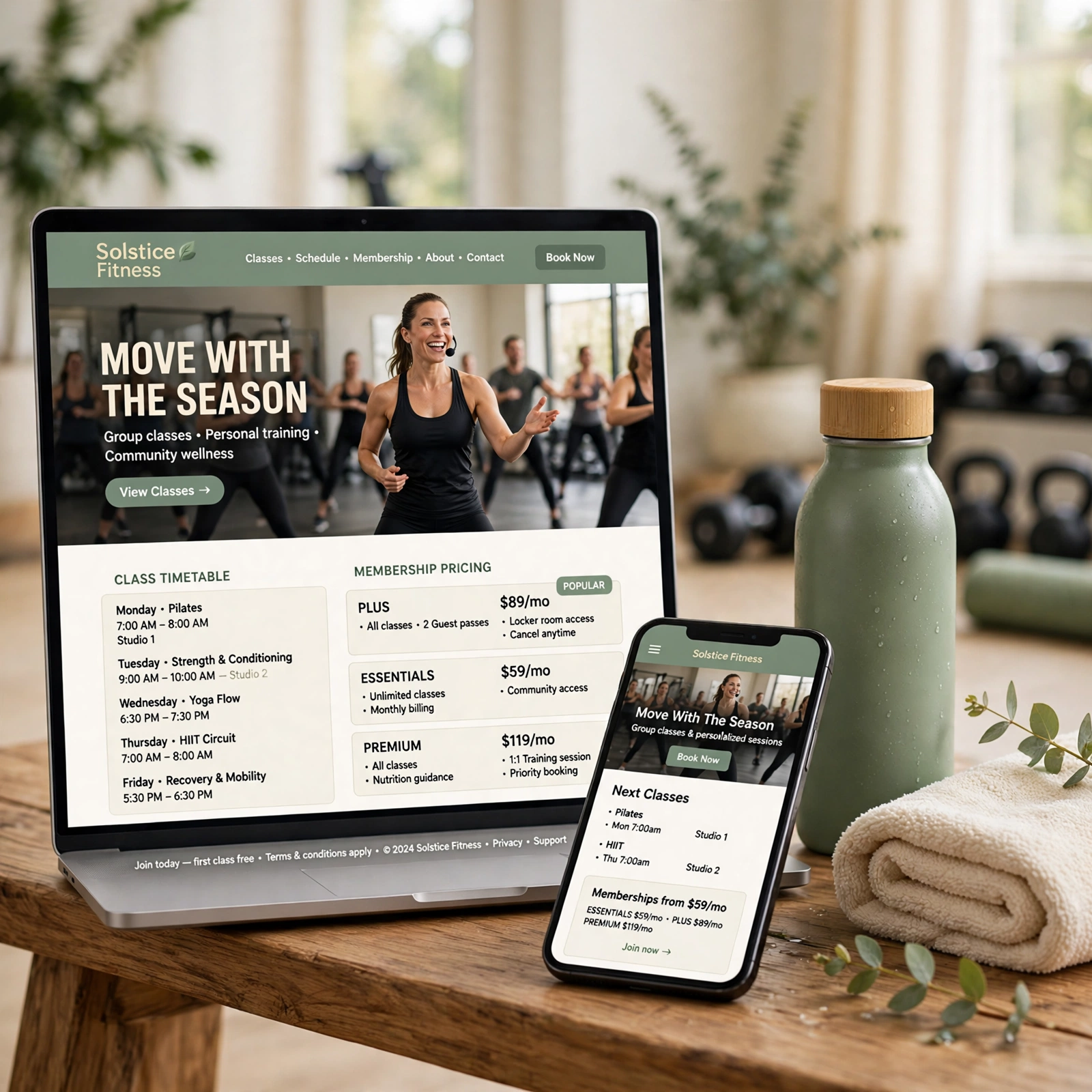
DesignBub builds websites for businesses that need more than a pretty homepage. WordPress, Shopify, WooCommerce, Webflow and custom websites, planned around your content, your customers and your goals, and built for speed, search and sales.

BespokeBuilt Around Your Brief
Four PlatformsWordPress, Shopify, WooCommerce, Webflow
Built to LastClear Structure, Easy to Manage
Web development services
Creative web design studio
Web Development

Websites that look right, load quickly and are easy for your team to manage.

Selected Brands in Our Portfolio
Asset 38 brand logo Asset 4 brand logo Asset 45 brand logo Asset 46 brand logo Asset 47 brand logo Decent Solar logo Dentesthetix logo Gazal Lounge logo GH Landscape logo Asset 38 brand logo Asset 4 brand logo Asset 45 brand logo Asset 46 brand logo Asset 47 brand logo Decent Solar logo Dentesthetix logo Gazal Lounge logo GH Landscape logo
Ghazoor logo Goodluck Trader logo Kingsley logo Lahoris logo MOI logo Naqaa Salt logo Nature Hug logo Netsole logo Ghazoor logo Goodluck Trader logo Kingsley logo Lahoris logo MOI logo Naqaa Salt logo Nature Hug logo Netsole logo
Nexcell Energy logo Roots logo Sheikh logo Shellbee logo Softcore logo Solvac Lifesciences logo Trendex logo Zameenex logo Nexcell Energy logo Roots logo Sheikh logo Shellbee logo Softcore logo Solvac Lifesciences logo Trendex logo Zameenex logo
Web Development Overview

A business rarely communicates through one page, so the website needs to work as a whole.

There is the homepage a visitor lands on, the service page that explains what you do, the product page that has to sell, the enquiry form, the case study, the blog article and the contact page. Individually, each page may seem simple. Together, they shape how the business is perceived.

When those pages use unrelated layouts, inconsistent navigation, different content structures and completely different behaviour on mobile, the business begins to feel less organised even when the underlying work is professional. That is the problem useful web development should solve before it worries about decoration.

DesignBub provides web development for companies, startups, agencies, entrepreneurs and growing brands that need a website to feel clear, consistent and appropriate for the people using it. Work can include business websites, ecommerce stores, landing pages, custom web applications, CMS builds, redesigns and ongoing support.

What the Service Covers

Different platforms suit different businesses, but the website should still feel like yours.

Professional web development can support one focused landing page or become a broader website across many touchpoints. A company may need one polished service page. Another may need a store, a blog and a booking flow for a launch. A growing team may already have a strong brand but struggle to keep their website consistent.

The work can involve page structure, platform choice, content modelling, template design, integrations and performance work. The exact combination depends on the website rather than a generic checklist.

Where a complete brand identity already exists, the website should respect it. Where the visual system is still limited, the project can create practical consistency around the supplied logo, colours and typography without pretending that a single website replaces full brand development.

Core Web Development Services

Web development for the everyday places where a business has to work online.

The services below share a technical foundation, but each one is built around its own audience, content and purpose.

01

Business Websites

Business websites need to explain what you do, build trust and guide visitors toward an enquiry. We plan service structures, case studies, resources and contact paths around the way your customers actually decide.

02

Ecommerce Websites

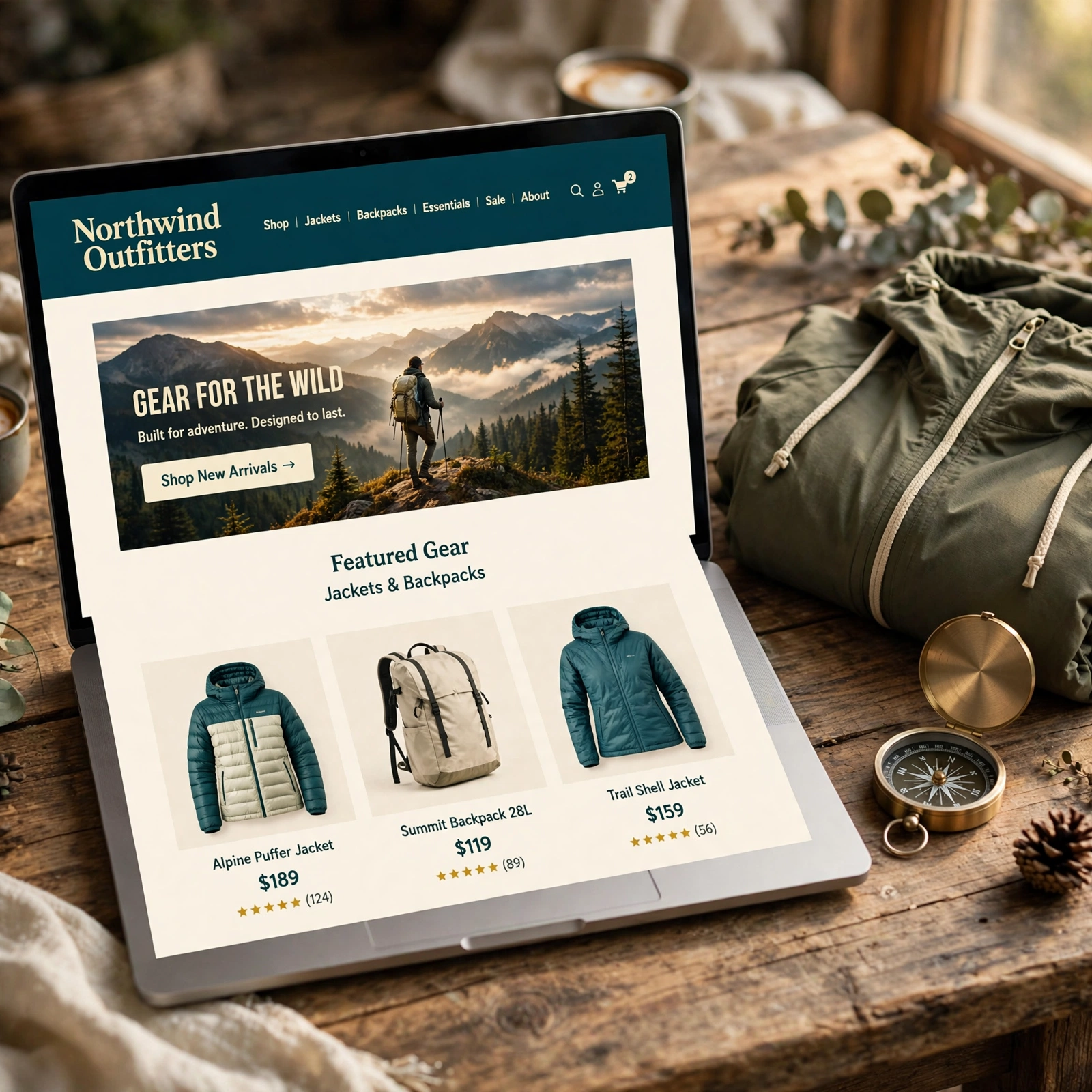
Ecommerce websites need to help people find products, compare options, trust the checkout and complete payment. We build storefronts, product templates, category pages and checkout flows around the catalogue and the order process.

03

Custom Web Applications

Some businesses need more than pages: a booking flow, a customer portal, a quote calculator or an internal tool. We plan those applications around the workflow they support, with clear data handling and a practical admin view.

04

Landing Pages and Campaign Sites

Campaign sites and landing pages have one job: make a single offer easy to understand and easy to act on. We build focused pages with the right information in the right order, and nothing competing for attention.

Responsive Web Design

Every screen size changes what the layout has to do.

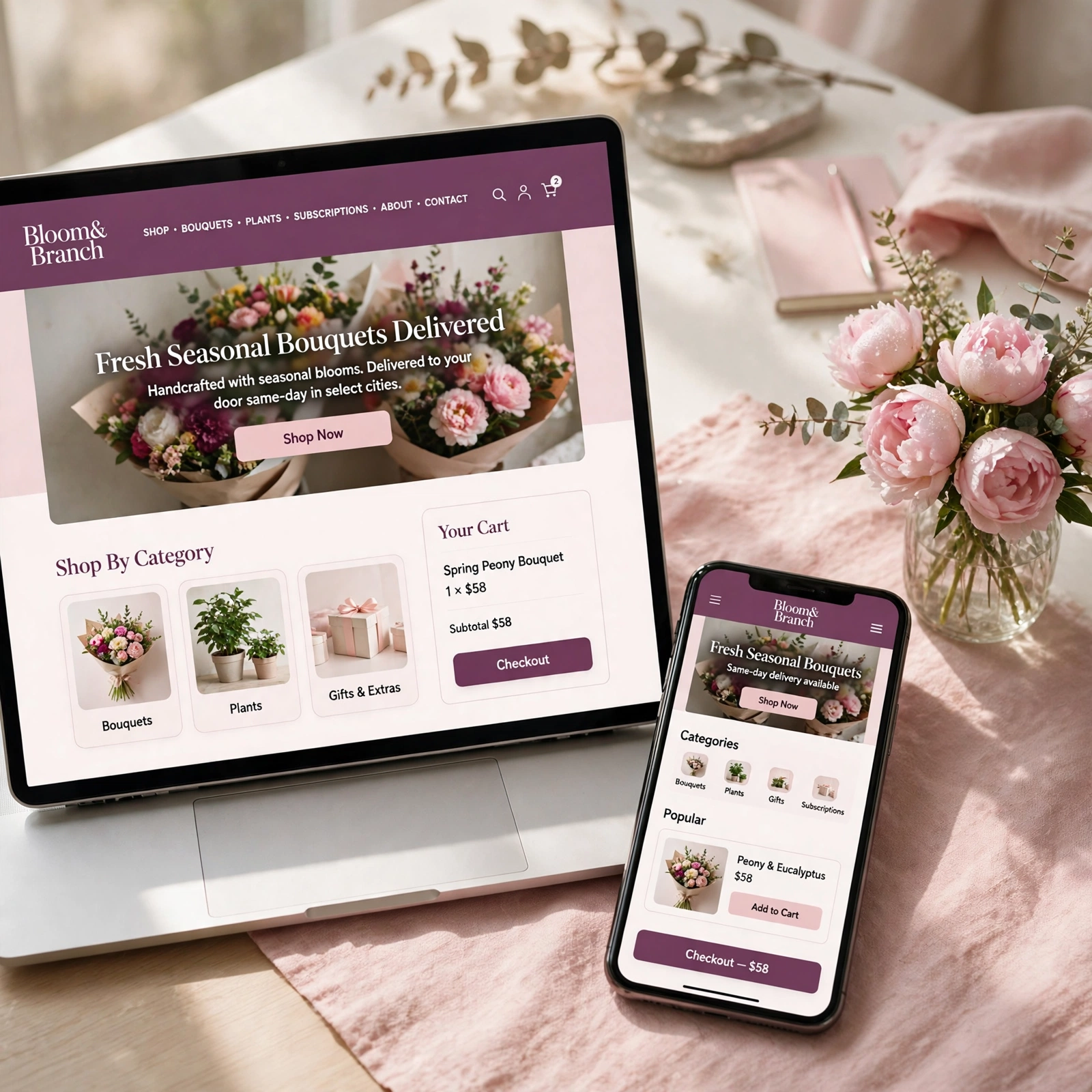
A website may be seen on a large monitor, a laptop, a tablet or a phone, and the same page has to feel considered on all of them. A layout that works beautifully on desktop can become unusable when it is simply squeezed onto a small screen.

Responsive development therefore requires real decisions at each size. Navigation changes, grids reflow, type scales adjust, images are cropped differently and forms are rebuilt for touch.

Images and content also need to behave. A large photograph that looks impressive on a desktop hero may dominate a phone screen, and a long desktop form may need to be broken into simpler steps.

We build and test at each breakpoint rather than assuming the desktop design will look after itself, so visitors get a site that feels made for the device they are holding.

Content Management

A website your team can update should not need a developer for every change.

Websites change constantly: new services, new case studies, new team members, new offers. If every small update needs a developer, the site slowly falls behind the business.

Content management work can include CMS setup, collections, reusable components, templates and editing guidance, so your team can publish confidently within the design system.

The editing experience does not need to expose every control. Recognition and consistency come from clear fields, sensible templates and a few well-chosen rules about what can change.

For teams that publish often, a well-planned CMS can make routine updates faster than emailing a developer, while keeping the site looking like itself.

Landing Pages and Campaigns

Campaign pages need room to test without breaking the website every time.

Advertising and email campaigns commonly need several versions of one idea. Placements use different messages, headlines change, offers change and the same campaign may be tested with more than one page.

Landing page development can support paid social, search, email and event campaigns. We establish a clear page direction first and then adapt it for each audience and offer.

That direction does not have to be loud. Some brands benefit from restrained pages, while others need stronger product, offer or price emphasis. The design should fit the message and the existing identity.

Development can make the offer easier to notice and understand, but a page alone cannot guarantee clicks, leads or sales. Targeting, budget, copy and the offer itself all influence campaign performance.

Lead Generation Websites

A website should turn interest into enquiries without feeling like a hard sell.

Visitors often need a compact explanation of services, approach and next steps before they are ready to talk. A website that only lists services without guiding the visitor leaves that decision to chance.

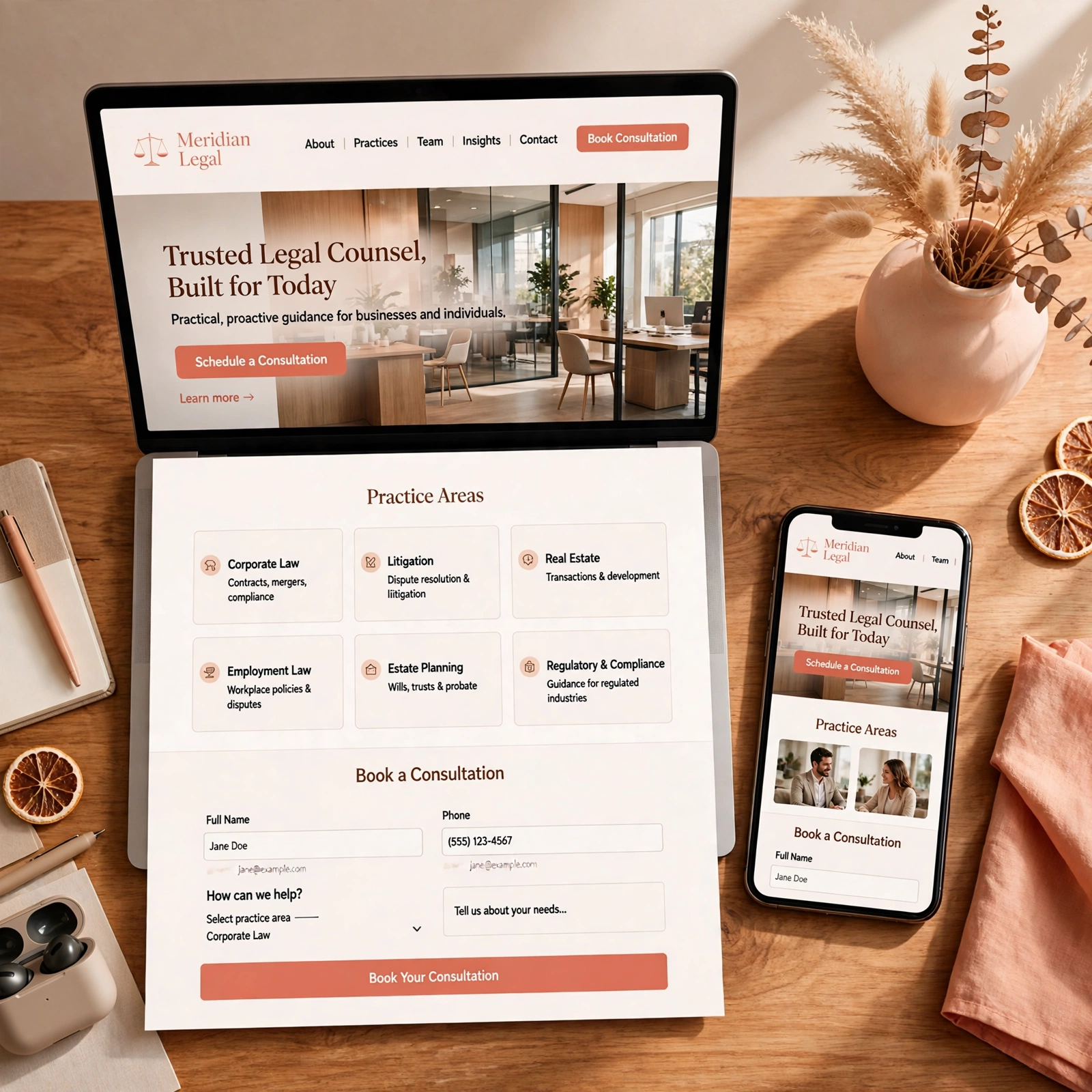
Lead generation pages can include service summaries, proof, process explanations, FAQs and clear enquiry paths. These pages need enough detail to answer practical questions while remaining easy to scan.

A comparison may need a structured layout. A service page may work better with three clear sections and one contact path. A case study may use selected results, images and a short process rather than a long company history.

The layout should reflect how the page will be used during a real decision, not simply how much content can fit on the screen.

Corporate and Multi-Page Websites

Longer websites need a structure that remains coherent after the first page.

Company websites, service hubs and resource libraries may include services, projects, team information, timelines, downloads and contact details. The challenge is keeping those content types connected across many pages.

Corporate website development can establish navigation, page templates, heading styles, content blocks and recurring components. The site does not need every page to look identical, but visitors should understand that the pages belong to the same website.

Variation can be useful. A strong homepage may carry more visual impact, while a detailed service section can become more structured. The shared system keeps that variation from turning into inconsistency.

Copywriting, research and fact verification are separate tasks unless specifically included. Web development organises approved content; it should not invent claims to make a page look more persuasive.

Multi-Page Websites and Site Architecture

More pages create more room, but also more opportunities to add pages nobody needs.

A larger website can explain a business in greater depth than a single page, but the extra space should not automatically become filler. The content still needs a sequence.

Site architecture work can begin by asking what belongs on the homepage, which subject needs its own page, what can be grouped and how the visitor should move from introduction to detail and contact.

The correct sequence depends on the use. A sales-led site is different from a resource library. A product site is different from a corporate overview. A website with search and filters behaves differently from one read top to bottom.

We build the structure around the real content rather than filling a predetermined page count simply because a template contains that many pages.

First Impressions and Above the Fold

The first screen decides whether the visitor stays.

A visitor may give a website only a few seconds. The headline, the imagery and the next step have to communicate before the visitor scrolls, or they may simply leave.

Above-the-fold design therefore requires stronger prioritisation. The main message should survive at a glance, while supporting information can become secondary.

Imagery also needs to earn its place. A large photograph that looks impressive on a desktop hero can slow the page down or push the message out of view on a smaller screen.

We plan the first screen around what the visitor needs to understand first, and we test it on real devices rather than judging it only on a design mockup.

Service Pages and Information Architecture

Some information becomes easier when it is structured instead of described repeatedly.

A process can become a sequence. A comparison can use a structured layout. A set of services can become easier to review when related options are grouped deliberately.

Information architecture combines clear structure with visual hierarchy. The objective is to make the meaning clearer, not to turn every service into decoration.

Service pages need accurate headings and honest descriptions. Related services should link to each other, and the visitor should always know where they are in the site.

We work from client-approved information. Research, technical detail or subject-matter review should be completed separately when a page is expected to support technical, legal, medical or financial claims.

Working With Your Existing Brand

Web development often starts after the identity work is finished.

Many businesses already have a logo, colours and typography before they need a website. The developer's job is then to use those assets intelligently rather than reinventing them without a reason.

We can work with supplied brand guidelines, logo rules, colour palettes, fonts, icon styles and image direction. Consistency does not mean repeating one layout everywhere. It means carrying recognisable decisions from one page to another.

A homepage and a service page can use different layouts while still feeling related through typography, spacing, colour and image treatment. A checkout can be restrained while a campaign page is more expressive, as long as the core brand logic remains visible.

If the existing assets are too fragmented to support practical use, we can identify where the problem moves beyond web development and into brand-identity work.

Websites for Startups

Early-stage businesses often need a website before they have an internal team.

A startup may need a launch page, service pages, recruitment content, social proof, event pages and a blog within a short period of growth.

The risk is that every urgent request gets solved independently. A landing page comes from one style, a service page from another and a campaign page from a third. The company slowly collects inconsistency.

Web development for startups benefits from a few repeatable rules early: shared templates, controlled colour use, clear navigation and consistent components. Those decisions can create useful continuity before the company invests in a larger system.

The goal is not to make a young business bureaucratic. It is to give the team a website foundation that makes the next page easier to build.

Editable Websites Your Team Can Update

Some websites are finished once. Others need to survive repeated updates.

Service lists, prices, case studies, event announcements and blog articles often change after the initial build is delivered. In those cases, a well-planned CMS can be more practical than a locked set of pages.

Editable website templates should define what can change safely and what should remain fixed. A photo area may be replaceable, while typography and spacing remain controlled. A headline can allow a realistic range of text without breaking the layout.

The editing workflow should also fit the team. A simple CMS may be appropriate for a non-technical team, while a more flexible setup may suit a team with marketing experience.

We discuss that workflow before building the site so editability is useful in practice rather than merely listed as a deliverable.

Launch Checks and Ongoing Care

A website is not finished when it looks correct in a browser.

Before launch, pages, links, forms, redirects, search settings, performance and mobile behaviour need to be checked against the real site, not just the design mockup.

We can prepare a site for launch using the agreed checks, including testing on representative devices and confirming that forms, tracking and integrations behave as expected.

Proofreading remains important because development tools cannot know whether a supplied phone number, price, date or address is correct. Client approval of factual content should happen before launch.

For larger or more complex sites, a staged launch can reveal issues that are much harder to judge in a development environment, and ongoing care can keep the site healthy afterwards.

Web Development Pricing

Website packages for businesses that need more than a single page.

These packages are built around standard graphic assets. Multi-page publications, packaging, complex illustration, motion, UI design and unusually technical production are quoted separately because their workload is different.

Focused Design Support

Essential Visual Pack

Starting at$199

For a small business need, launch task or short set of coordinated visuals.

  • Up to 3 standard single-layout assets
  • One visual direction based on supplied brand assets
  • Digital or print-ready exports as agreed
  • Two consolidated revision rounds
  • Source files for the approved artwork
Choose Essential Visual Pack
Multi-Channel Campaign

Campaign Design System

Starting at$899

For a broader campaign that needs a master direction and multiple coordinated outputs.

  • Up to 15 standard campaign assets
  • Master visual direction for the campaign
  • Multi-channel format adaptations
  • Reusable graphic elements where appropriate
  • Organized handoff for marketing or internal teams
Choose Campaign Design System
Standalone Starting Prices

Need one specific deliverable?

Useful when you do not need a multi-asset package.

Social Media / Ad Graphic$59+
Business Flyer or Poster$99+
Business Card Design$99+
One-Page Sales Sheet$129+
4-Page Brochure$249+
Infographic Design$199+
Editable Template Set$199+
Website / Campaign Banner$79+
Additional Size Adaptation$29+
Monthly Design Support$699+/mo

Prices shown are starting USD fees for web development work, and the final figure depends on page count, custom functionality, integrations, content volume, revision scope and launch requirements. Domain registration, hosting, premium plugins, stock photography, copywriting, translation and third-party service fees are separate unless the agreed scope specifically includes them.

Our Process

A website build that starts with your business, not with a template.

The steps scale up or down depending on whether the project is a focused landing page or a complete website with ecommerce and integrations.

01

Understand the Job

We clarify what the website has to do, who it is for, what visitors should understand and what action they should take next.

02

Plan the Structure

We agree the pages, content structure, platform and integrations before any building starts, so the site has a clear skeleton.

03

Design and Build

Approved designs are built responsively, with CMS controls, forms and agreed functionality implemented and checked as we go.

04

Test Properly

We test representative pages, journeys, forms and devices, because a problem found before launch is far cheaper than one found by a customer.

05

Launch and Support

Consolidated feedback is applied within scope, then the site is launched with checks, redirects and handoff guidance for your team.

Possible Deliverables

One web development service can support many kinds of business website.

The final list depends on the brief rather than an artificial bundle of items the project may never use.

Business Websites
Ecommerce Stores
Custom Web Applications
Landing Pages
WordPress Development
Shopify Development
WooCommerce Stores
Webflow Development
Website Redesigns
CMS Setup and Training
Speed Optimisation
Ongoing Maintenance
Why DesignBub

A website works harder when its pages stop feeling like separate accidents.

Web development becomes more useful when the homepage relates to the service pages, the checkout still feels like the same brand as the blog, and a landing page does not introduce a completely new set of rules just because the format changed.

DesignBub approaches web development with that wider relationship in mind. We can work from established brand guidelines or help create practical consistency from a smaller set of existing assets, and the content, the audience and the device shape the layout before decorative choices are added.

We also separate what development can influence from what it cannot promise. Clearer structure can make information easier to follow, consistent choices can support recognition, and proper technical setup can reduce avoidable problems. None of those points amount to a guarantee of sales, leads or search rankings.

The aim is more grounded: a website that feels intentional, is usable on every device, and is recognisably connected to the business behind it.

Web Development FAQs

Common questions before choosing a web development service.

These answers cover platforms, timescales, costs and managing your site after launch.

We build business websites, ecommerce stores, landing pages and custom web applications on WordPress, Shopify, WooCommerce and Webflow. Each project is scoped around your content, your customers and the platform that fits best.

It depends on what the website has to do. WordPress suits content-led sites and WooCommerce stores, Shopify suits dedicated ecommerce, and Webflow suits design-led business sites your team wants to edit visually. We recommend the platform after understanding your requirements, not before.

Timing depends on page count, content readiness, ecommerce needs, integrations and review cycles. A focused site can move quickly, while a larger build with custom functionality needs more time, and we confirm a schedule after the scope is agreed.

It depends on the platform, the number of templates, the content structure and any ecommerce or integration work. Each service page on this site shows starting packages, and we confirm a final price after reviewing your brief.

Both. We build new websites, and we also redesign or rebuild existing ones, keeping the content, URLs and integrations worth preserving while improving the structure, the design and the editing experience.

What This Page Covers

The web development topics this page covers, in plain terms.

The sections above explain the platforms, the kinds of websites we build, the process, the deliverables and the starting packages, so you can compare the options and choose the service that fits your business.

web development services
professional web development
custom website development
creative web agency
website design company
business website development
ecommerce website development
wordpress development services
shopify development services
woocommerce development
webflow development services
landing page development
corporate website design
website redesign services
custom web application development
website maintenance services
website speed optimisation
small business website development
startup website development
web development company
website development agency
website migration services
editable website templates
monthly website support
Bringing It Together

Build a website that still feels like your business, on every page.

Businesses do not communicate in one size. The same company may need a small landing page in the morning, a service page in the afternoon and a full store by the end of the quarter.

Those pages do not need identical layouts. They do need a recognisable relationship, so visitors always know whose website they are on.

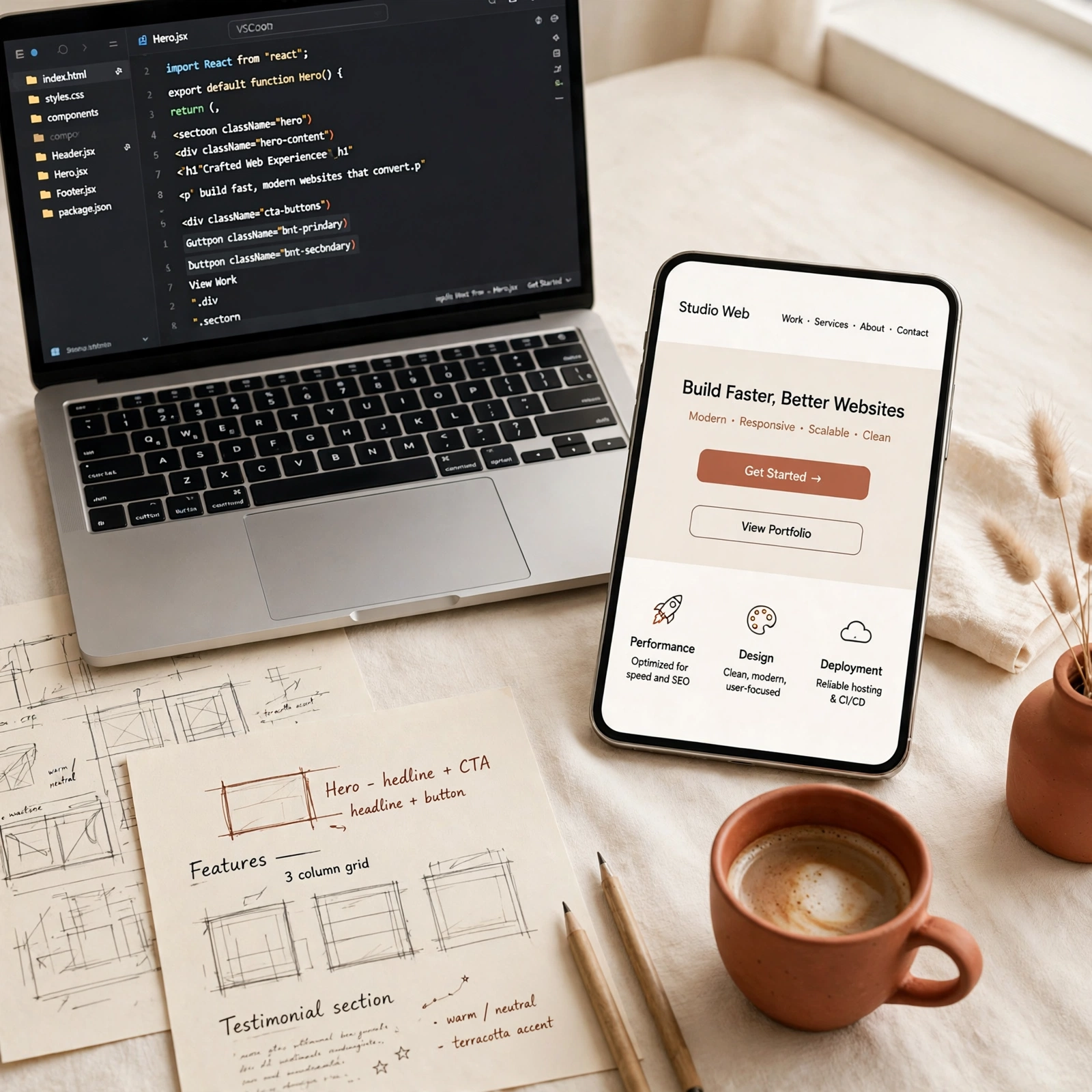
Typography can carry through. Colour can stay controlled. Navigation can feel familiar. Spacing and hierarchy can reflect the same decisions from the homepage to the checkout, and that is how individual pages begin to feel like one website instead of a folder full of unrelated designs.

DesignBub builds websites for businesses that need both the individual page and the wider consistency around it. You can come with a complete brand guide, a few existing assets, or an old site that needs rethinking.

We can start from the message, define what matters on each page, and build the website around the people who will actually use it.

Need a new website, a redesign or ongoing web support?

Send us your pages, content, brand assets and the goals the website has to meet. We can recommend the most sensible platform and package for your business.

WhatsApp DesignBubChat with us now