Vehicle Wrap Design
DesignBub designs vehicle wraps that are read in seconds from a moving road — clear branding for cars, vans, trucks, pickups and whole fleets, planned around the real body shape, the viewing distance and your installer’s template.
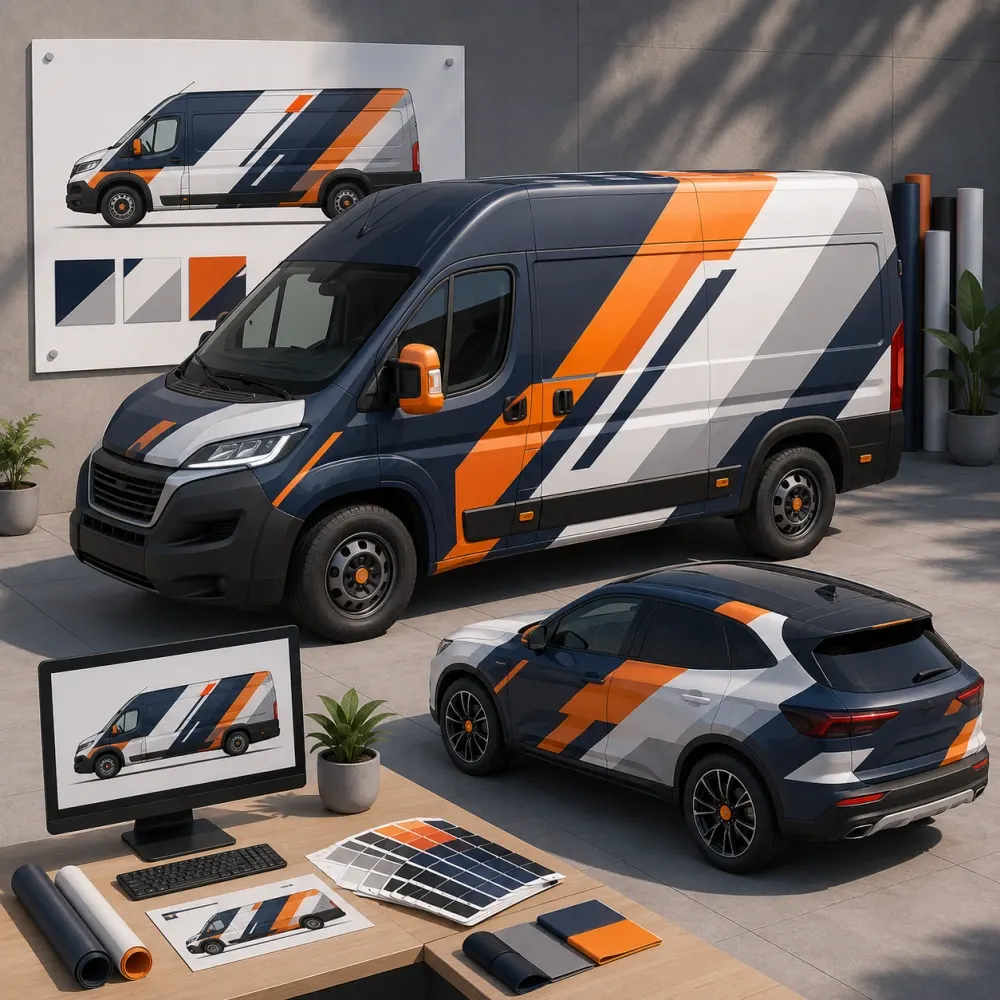
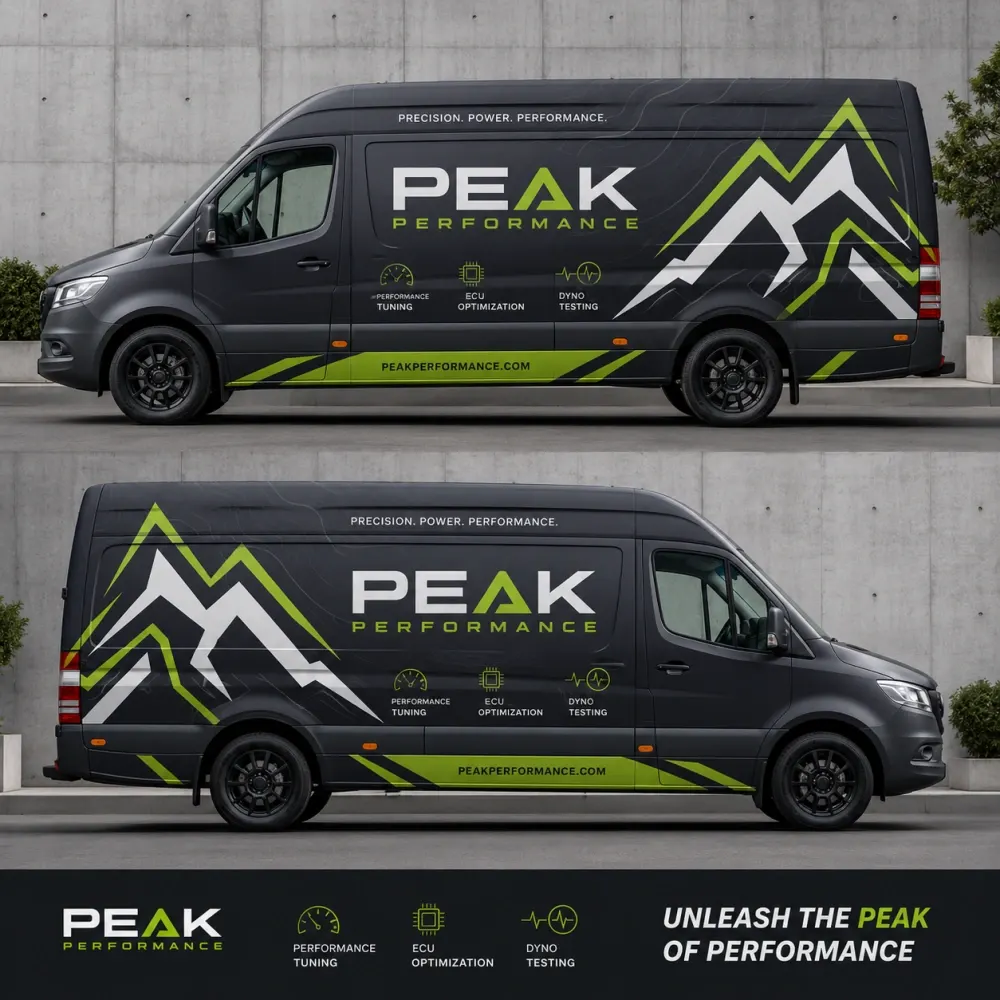
Graphics built around movement, panel breaks and the production template — never a flat poster stretched over a van.
Design for the way people actually see the vehicle.
A wrap has less time to communicate than almost any other marketing material. People glimpse it while driving, walking past a parked vehicle or waiting behind it in traffic — so the design needs a clear order before it needs decoration.
DesignBub provides vehicle wrap design services for cars, vans, trucks, pickups, trailers, food trucks and business fleets. We plan branding, typography, imagery and contact information around the real vehicle template, so the artwork moves cleanly from concept review to a practical installer handoff.
We never treat a vehicle like one flat billboard. Each side has different body features and different viewing conditions, and the design has to work on the road, at a job site and in the production file the wrap supplier receives.
Viewing Distance
The main identity stays clear from normal road and parking-area distances.
Vehicle Fit
Important content sits clear of doors, handles, windows, wheel arches and panel changes.
Production Handoff
Artwork prepared around the installer template and the confirmed print workflow.
Fleet Consistency
One visual system adapted to different vehicle shapes, never forced into identical layouts.
Pick the format around the vehicle and the job it has to do.
Different vehicles create different design and production problems, so we plan the artwork around the actual model, the coverage and the use — never one generic wrap template.
Car Wrap Design
Business cars, promotional vehicles and branded company cars, with careful placement across small panels.
Cars02Van Wrap Design
Service and delivery vans with a clear hierarchy across the side, rear and contact details.
Vans03Truck & Box Truck Wraps
Large-format graphics planned for longer viewing distances and much bigger production surfaces.
Trucks04Fleet Graphics Design
A repeatable vehicle branding system adapted across different makes and body types.
Fleet05Partial Wraps & Decals
Focused vinyl graphics, door branding, service lettering and partial-coverage systems.
Vinyl06Food Truck & Mobile Business Wraps
Customer-facing graphics for vehicles that work as a mobile storefront or service point.
MobileBrands that travel further than the vehicle
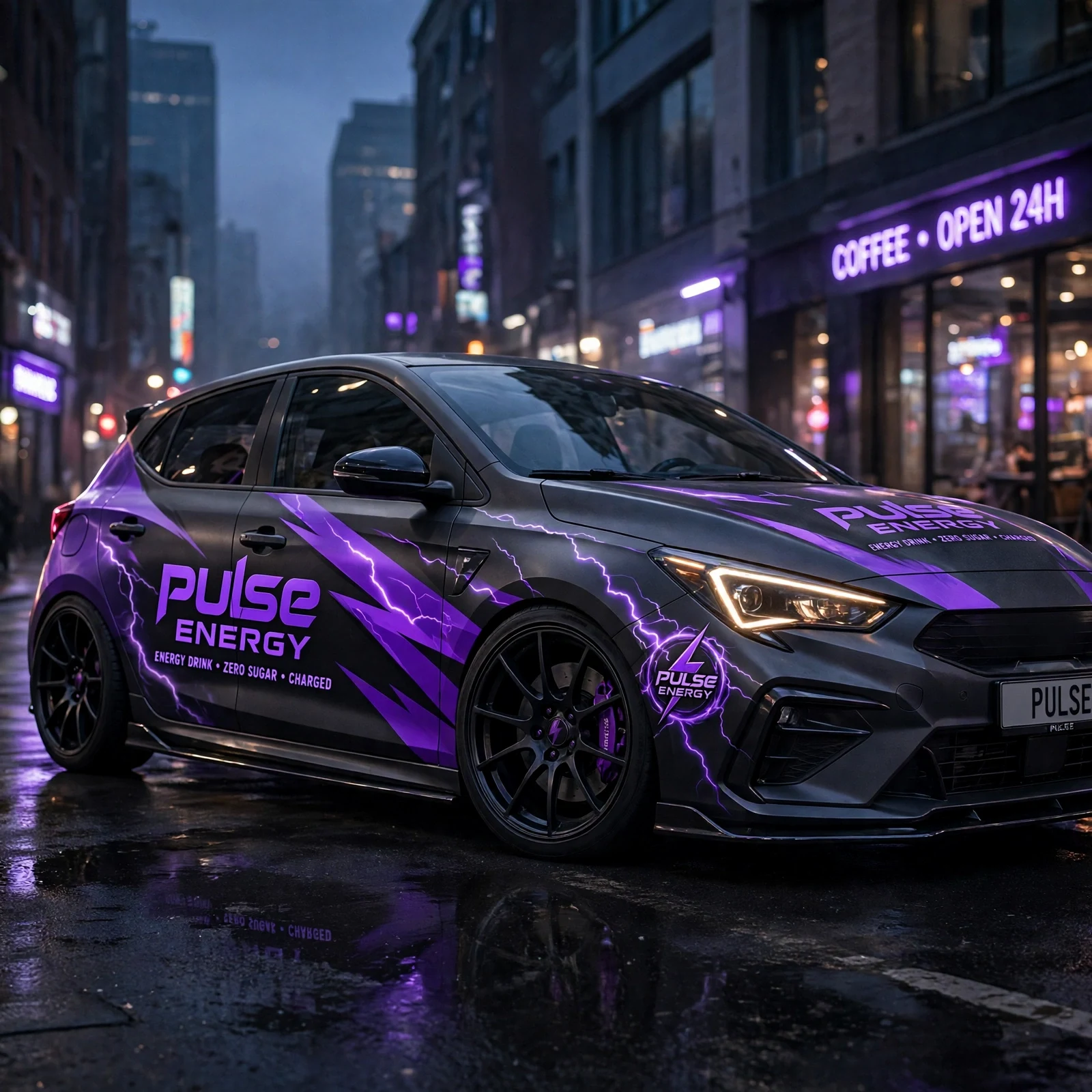
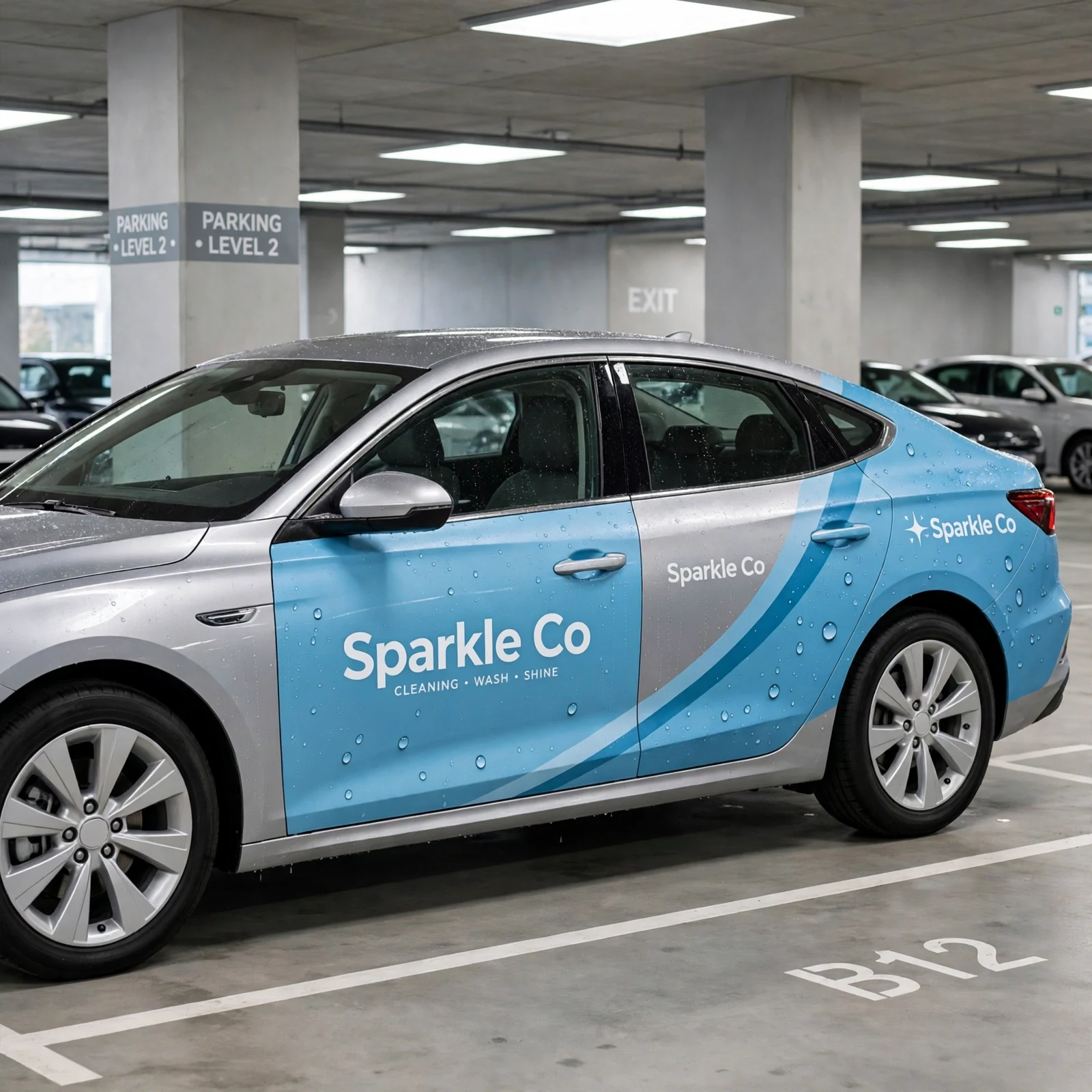
Six recent wrap directions — vans, food trucks, fleets, promos and partial wraps — each one designed around the real vehicle it covers.
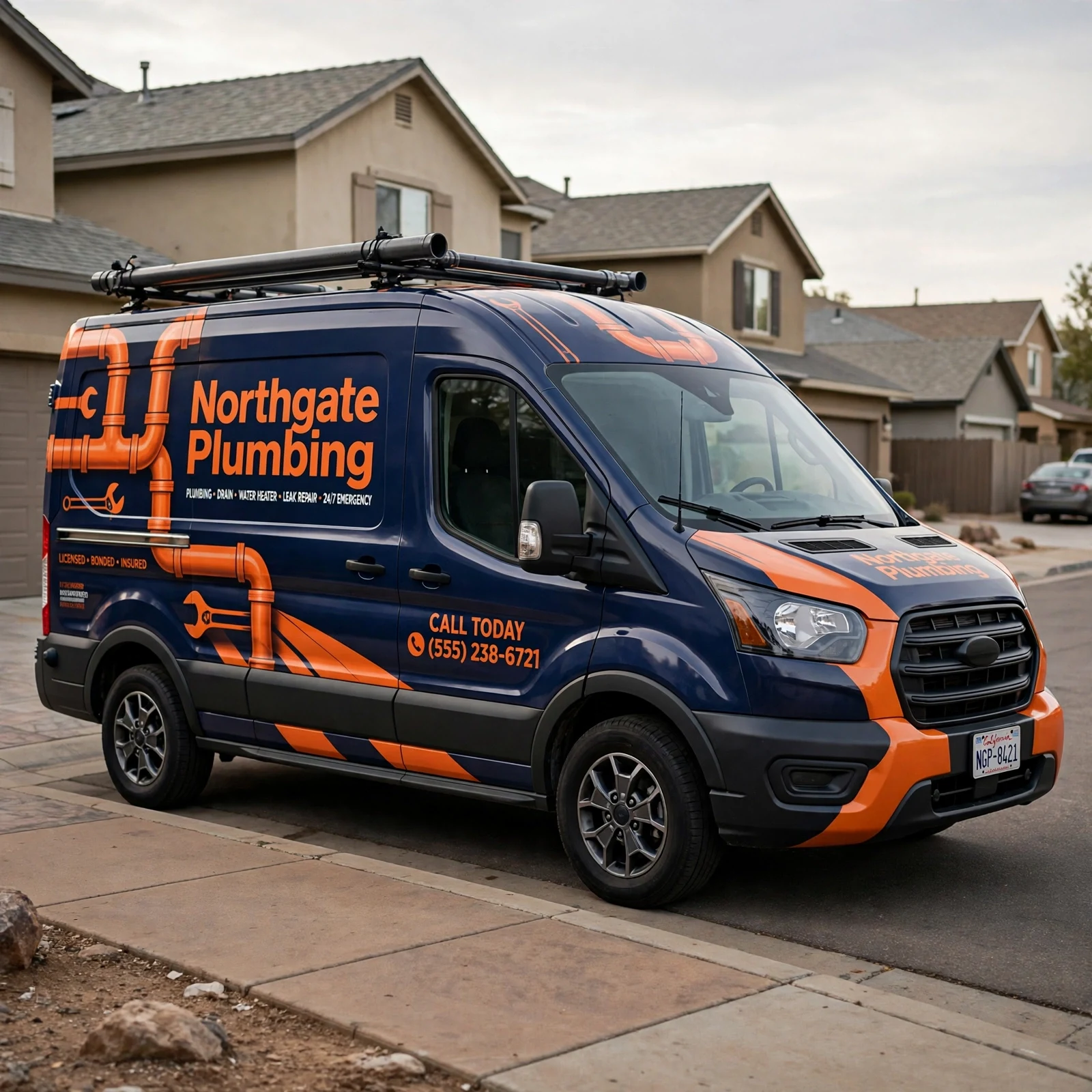
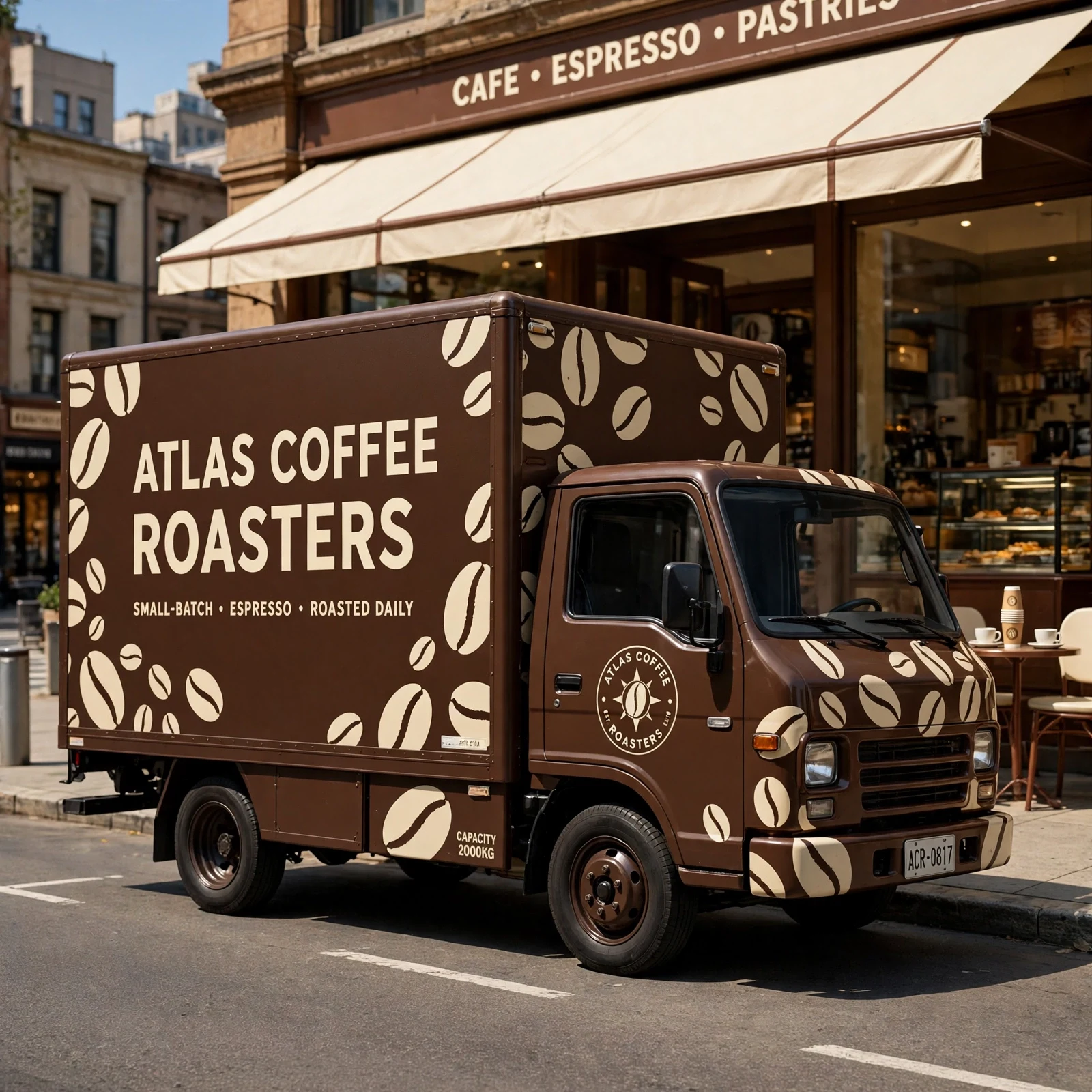


Plan the wrap around the vehicle, not around a flat rectangle.
A vehicle moves through traffic, car parks, job sites and customer locations, and people may only see the graphics for a few seconds — so the design has to communicate faster than a brochure or a website page. Large shapes, readable type and controlled information usually matter more than small decorative detail.
We start with the real vehicle, because its body changes the composition. Doors, handles, windows, wheel arches, sensors, trims and seams interrupt the surface, and a design that looks balanced on a flat artboard can still turn awkward when those features cut through a logo or a line of text.
Our vehicle wrap design connects brand presentation with the production template. We decide what must stay visible, which panels can carry supporting information, and how the complete vehicle should feel from different viewing angles.
Commercial vehicle wrap design.
A commercial vehicle is a visible brand asset while the team is simply doing its normal work. A service van may sit outside a customer’s property for hours. A delivery vehicle may pass through several neighbourhoods in one day. A contractor’s pickup may appear at a different site each week.
Commercial wrap design should make the business easy to identify without turning the vehicle into a dense service list. We normally prioritise the company name, the main service category and one practical contact route; supporting services can appear where space allows, but they must not compete with the main message.
We also plan the side and the rear independently, because viewers may never see the whole vehicle at once. Each important view should make sense on its own while still belonging to the same visual system.
Car wrap design.
Cars offer less flat space than vans and box trucks, so the layout needs tighter control. Windows, mirrors, wheel arches and body curves divide the surface into smaller areas and can quickly disrupt a complicated concept.
A business car wrap may use a clean logo, a short service line and a website. A promotional car can carry bolder colour or a stronger graphic idea. In both cases, we keep important text away from high-distortion zones and check how the composition works from common side and rear views.
The final design uses the exact make, model, year and body configuration. Similar vehicle names can still hide different trims, bumpers or panel shapes, so the installer template remains an important production reference.
Van wrap design.
Vans give service brands more usable surface area and often support clearer advertising layouts. The large side panels can carry the main brand message, while the rear can repeat the contact information for people who spend more time behind the vehicle.
We never recommend filling the whole side with every service the company offers. A short category line is usually easier to understand than ten small items — the viewer should first know who the business is and what kind of work it does.
Van wrap design can mean a full printed wrap, partial graphics, cut lettering or a mixed approach. The right option depends on the existing vehicle colour, budget, supplier process and how much information the brand needs to show.
Truck and box truck wrap design.
Truck graphics work at a larger scale and often need to stay clear from a greater distance. That changes the size of text, logos and imagery: something that looks oversized on a computer screen can still feel small on the side of a full box truck or trailer.
Long panels can support a strong visual idea, but they also carry hinges, locks, rails, reflective markings and other practical details. We leave suitable space around required hardware and ask the operator or installer to confirm any mandatory vehicle information before final production.
For product, delivery and logistics brands, truck wrap design can use bold imagery and simple messaging. For corporate fleets, a cleaner graphic system may work better, because consistency across several units matters more than one highly decorative vehicle.
Fleet wrap design.
A fleet may include cars, pickups, vans and trucks at the same time, and the branding should feel consistent without pretending every vehicle has the same proportions.
We define the parts of the system that must stay recognisable — logo treatment, colour relationship, graphic pattern, headline style and contact information — then adapt those elements to each vehicle template instead of stretching one layout mechanically.
Fleet wrap design can also include a reference guide for future vehicles, showing preferred logo zones, colour use, typography and the relationship between the main brand elements. That gives the business a clearer starting point when another vehicle joins the fleet later.
Full vehicle wrap design.
A full wrap covers most of the paint-visible body surface and gives the brand more room to make a strong overall impression — but more printable area does not mean the vehicle needs more copy.
We use the extra surface to strengthen recognition through colour, imagery and larger graphic movement. Important logos, faces and contact details stay away from areas where trimming or distortion may affect them, while background graphics can extend through more difficult zones, because a small installation shift will not damage the core message.
The printer decides panelling, overlap and installation strategy according to the vinyl and equipment they use. We prepare design artwork around the confirmed production specification, rather than assuming every wrap shop follows the same workflow.
Partial vehicle wrap design.
A partial wrap covers selected parts of the vehicle and often uses the original paint colour as part of the composition — a strong result without covering every body panel.
The transition between wrapped and unwrapped areas has to look intentional. We may use angled shapes, stripes, blocks or graphic edges that connect naturally with the body, and the exact vehicle colour matters, because it becomes one of the design colours whether we plan for it or not.
Partial wraps suit businesses that want visible branding with a smaller production footprint, and they can combine printed vinyl with cut lettering, depending on what the installer recommends for the final application.
Vehicle branding for service businesses.
Electricians, HVAC companies, cleaning teams, landscapers, repair services, pest-control firms and contractors drive in the same areas where they serve customers, so clear branding helps the vehicle look professional without turning it into a crowded advertisement.
We make the service category easy to understand: a short line such as Electrical, Solar and Maintenance communicates far more quickly than a long list of detailed tasks, and the viewer can visit the website or contact the business for the full service range.
We also keep proof claims grounded. If the business wants to display certifications, years of experience or other credentials, the client should confirm that information before it becomes part of the final wrap artwork.
Delivery, logistics and mobile service vehicles.
Delivery and logistics vehicles spend much of the day in motion, so strong recognition often matters more than detailed sales copy. The side graphics can focus on brand identity, while the rear may carry a simple contact action or service message that stays visible in slower traffic.
For ecommerce, food delivery and distribution businesses, product imagery can work when the files carry enough resolution and the product stays recognisable after cropping. A logistics company may prefer a cleaner, identity-led approach across a larger fleet.
Fleet numbers, safety labels and operational markings should come from the vehicle operator or installer. We reserve the required areas instead of guessing which regulatory information belongs on the vehicle.
Starting prices for wrap artwork, from focused graphics to fleet systems.
These prices cover design work and the stated production artwork. Printing, vinyl, lamination, physical installation and supplier charges are separate unless a quotation says otherwise.
Vehicle Graphics Starter
For one vehicle that needs a clear logo, service message and contact layout without a complex full-wrap concept.
- 1 vehicle model
- Up to 3 key views
- Logo, service and contact placement
- 1 presentation mockup direction
- Production-ready artwork from confirmed template
Commercial Wrap Design
For a car, van or pickup that needs a complete partial or full-wrap visual direction with production-aware panel planning.
- 1 vehicle model
- Side, rear and front/bonnet planning where applicable
- Custom branded graphic system
- 2 presentation mockup views
- Installer-ready artwork based on confirmed specs
Fleet Wrap System
For companies that need one recognizable visual system adapted across several vehicle shapes and operating uses.
- Master fleet design direction
- Up to 3 vehicle model adaptations
- Consistent logo, typography and graphic rules
- Presentation mockups for approved adaptations
- Production files for confirmed templates
Need one specific vehicle graphics task?
These are starting prices. Final cost depends on the exact vehicle template, artwork complexity, number of views and installer requirements.
Scope note: Printing, vinyl media, lamination, removal, vehicle preparation, physical measurement, installation, permits, premium stock images and third-party supplier fees are separate unless written into the quotation. Final paneling, output profiles and installation tolerances remain the wrap supplier’s responsibility.
Food truck and mobile business wrap design.
Food trucks and other mobile businesses use the vehicle both in motion and while parked, so the design has to work from two different viewpoints.
When the vehicle is serving customers, windows, doors, awnings and equipment can change what stays visible. We plan customer-facing graphics around those operating positions where the information is available, and menu cues, social handles, brand illustration and photography can all support the experience without making the wrap difficult to read.
A mobile salon, retail unit or event vehicle may need another balance: the wrap should still identify the business on the road, while creating a suitable atmosphere when the vehicle becomes the customer-facing location.
Typography for moving readability.
Vehicle typography needs enough size, weight and contrast to work from a practical viewing distance. Fine fonts, tight tracking and long sentences become difficult to read once the vehicle starts moving.
We build a clear hierarchy between the business name, the service category and the secondary contact information. The design does not need several different fonts to create interest — too many type styles slow down recognition and make the vehicle feel less organised.
If the brand uses a very delicate display font, we can keep it for selected identity elements and use a clearer supporting style for phone numbers, websites or service text that needs stronger readability.
Photography and large-format image use.
Photography can create strong impact on a wrap, but large-format production exposes weak source files quickly: an image that looks sharp on a website may turn visibly soft when enlarged across a van or truck panel.
We review the available resolution and crop before committing the concept to a photograph, and faces, products and important details need safe placement so a wheel arch or door seam does not cut through the subject.
When suitable client images are not available, we can suggest properly licensed stock or move towards a graphic-led direction. Premium stock, new photography, advanced retouching and custom CGI can be priced separately when required.
Vehicle templates, measurements and installer checks.
Accurate templates help us place graphics across the body, but the installer should still verify them against the real vehicle. Trim levels, accessories, aftermarket parts and model updates can change the available surface.
For unusual vehicles, the production team may need direct measurements. We use those measurements and templates to position critical artwork, but the wrap supplier remains the final authority on panel dimensions and installation tolerances.
That matters most when a graphic must align across several doors or body panels: small differences become obvious when a straight line or a large letter has to continue through multiple surfaces.
Handles, windows, wheel arches and other interruptions.
Vehicle graphics have to survive the physical parts that break the surface. Handles can cover words, wheel arches can remove the lower half of an image, and sliding doors can shift the relationship between two parts of a design.
We keep essential information inside safer zones and use flexible background elements across the more difficult areas: large colour fields, textures and abstract shapes tolerate slight production movement far better than a phone number or a face.
Window graphics need separate planning, because laws, visibility rules and available perforated films can vary. The installer or local operator should confirm what can be applied before we finalise artwork for glass areas.
Print-ready vehicle wrap artwork.
Vehicle wrap files can be very large, and print suppliers often use different production settings. One printer may request artwork at full scale, while another asks for a defined reduced scale with matching resolution.
We prepare the final files around the confirmed requirements for scale, bleed, file type and colour mode. Important elements stay in safer areas, and the production team receives organised artwork that makes the intended vehicle views clear.
The printer remains responsible for RIP settings, output profiles, panelling, ink calibration, media choice and installation preparation. We do not invent those values when the supplier has its own established workflow.
Vehicle wrap redesign services.
An existing wrap may still carry the correct logo and no longer represent the business well: the service list has changed, the phone number is old, or the visual style feels difficult to read from the road.
A redesign begins with the current artwork and the new production requirements. We keep useful brand elements, reduce unnecessary information and rebuild the layout around the vehicle the company uses now.
If the original source file is unavailable, parts of the design may need to be recreated. A different installer or vehicle model can also require a fresh production setup even when the visual direction stays similar.
The road gives the viewer seconds, not minutes.
A strong wrap helps people recognise the business quickly. It does not need to explain the whole company from one moving vehicle.
Clear Brand Recognition
Large, controlled brand elements are easier to notice than several competing messages.
Safer Artwork Placement
Production-aware design keeps critical content away from the most difficult body features.
Consistent Fleet Presence
A repeatable system makes different vehicle models look like one operating brand.
From vehicle details to installer-ready artwork.
We keep every step tied to the actual vehicle and the production team that will use the files.
Vehicle Confirmation
We collect the make, model, year, colour, photos and installer template.
Message Priority
We decide what the viewer must recognise first and what can stay secondary.
Wrap Concept
We build the main visual direction across the relevant vehicle views.
Review & Refinement
You review the mockups and share consolidated feedback on the selected direction.
Production Handoff
We prepare artwork around the confirmed installer specifications and the final template.
What can be included in the final vehicle graphics package.
The exact files depend on the selected package, vehicle model and production workflow.
Vehicle graphics need branding judgement and production awareness at the same time.
Our vehicle wrap design starts with the physical vehicle rather than a generic canvas. We look at viewing distance, body shape, panel breaks, contact information and the installer template before we finalise the artwork.
We keep the message simple enough to understand quickly, and we build fleet systems that can adapt instead of stretching one layout across different body types. Where the client already has a brand identity, we use it as the starting point rather than redesigning the company on the side of a vehicle.
We also keep responsibilities clear. We prepare professional design and production artwork based on the confirmed template and supplier requirements. The wrap printer and installer remain responsible for material selection, final measurements, output calibration, vehicle preparation, panelling and physical installation.
Practical questions before a vehicle goes to print.
Design scope, templates, mockups, production files, pricing and the information we need from the installer — answered plainly.
We usually need the vehicle make, model, year and colour, clear photos, the required text, your brand files and the printer or installer’s preferred template, so the artwork is planned around the real vehicle from the start.
Yes. We design full wraps, partial wraps and decals for single vehicles, and fleet systems that adapt one visual identity across cars, vans, pickups and trucks while keeping the main branding consistent.
No. Mockups show the design direction, scale and placement. Curves, trimming, vinyl, print colour, panel tolerances and installation can change the exact physical appearance, so the printer’s proof is the better production reference.
Our standard scope covers design and production artwork. Printing, vinyl, lamination, vehicle preparation and installation remain separate unless they are specifically included in the quotation.
Packages on this page start at the listed USD prices. Final cost depends on vehicle type, wrap coverage, artwork complexity, number of views and how many vehicle models need adaptation, and we confirm the schedule after reviewing the actual vehicle and production setup.
Make the brand clear before the vehicle reaches the next turn.
Send the vehicle make, model, year, photos, brand files and installer template, and DesignBub will plan the wrap around the real vehicle — then prepare the approved direction for production handoff.