Shopify Development

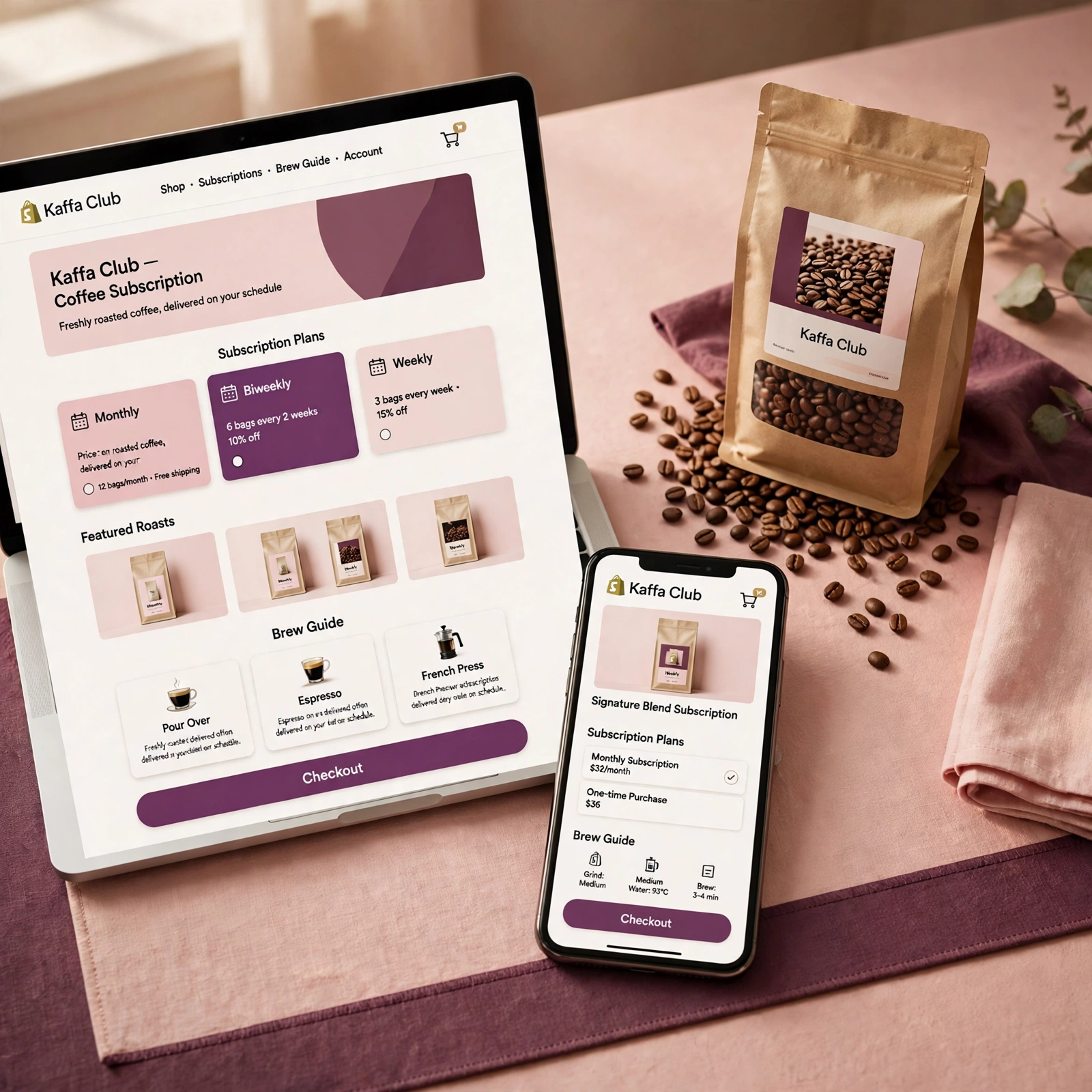
DesignBub provides Shopify development for ecommerce brands that need more than a theme installed with a logo. We plan and build storefronts around the catalogue, the customer journey, merchandising needs and the day-to-day work behind the store, with custom theme work, product and collection templates, app integrations, migration support, Shopify Plus requirements and performance-focused development when the project calls for it.

BespokeTheme and Storefront Work
Product-LedCommerce Built Around Your Catalogue
FlexibleBuilds Scoped to Your Business
Shopify development
Custom Shopify store development
Plan • Build • Test • Launch

A storefront planned around your catalogue, your customers and the daily work behind the store.

Selected Brands & Businesses in Our Portfolio
Asset 38 brand logo Asset 4 brand logo Asset 45 brand logo Asset 46 brand logo Asset 47 brand logo Decent Solar logo Dentesthetix logo Gazal Lounge logo GH Landscape logo Asset 38 brand logo Asset 4 brand logo Asset 45 brand logo Asset 46 brand logo Asset 47 brand logo Decent Solar logo Dentesthetix logo Gazal Lounge logo GH Landscape logo
Ghazoor logo Goodluck Trader logo Kingsley logo Lahoris logo MOI logo Naqaa Salt logo Nature Hug logo Netsole logo Ghazoor logo Goodluck Trader logo Kingsley logo Lahoris logo MOI logo Naqaa Salt logo Nature Hug logo Netsole logo
Nexcell Energy logo Roots logo Sheikh logo Shellbee logo Softcore logo Solvac Lifesciences logo Trendex logo Zameenex logo Nexcell Energy logo Roots logo Sheikh logo Shellbee logo Softcore logo Solvac Lifesciences logo Trendex logo Zameenex logo
Shopify Development Overview

A Shopify build should make buying easier without making store management harder.

An online store is both a customer-facing experience and an operating system. Shoppers see the homepage, product pages and checkout, while your team lives in the catalogue, orders, discounts and settings every day.

That is why we treat Shopify development as a commerce project rather than a design task. The storefront, the product structure and the admin workflow are planned together, so a beautiful store does not become a burden to run.

For some stores, a strong commercial theme with focused customisation is the right answer. For others, the catalogue or the customer journey needs bespoke templates. The decision should follow the business, not the other way round.

What Shopify development services actually cover.

Shopify development covers the work required to create, customise and support a store: theme development, product and collection templates, navigation and search, app and API integrations, migration, speed work and launch support.

Shopify already provides important commerce infrastructure, so custom work should focus on the parts that make your store different: your products, your brand, your merchandising and the experience your customers expect.

The exact scope changes with the business. A small direct-to-consumer brand, a growing catalogue and a B2B wholesaler each need a different build, even though they all run on the same platform.

Shopify Services

Development work shaped around the storefront and the commerce behind it.

The sections below cover the common Shopify services we are asked for, from a full bespoke build to a focused improvement on an existing store.

Bespoke Shopify Store Development

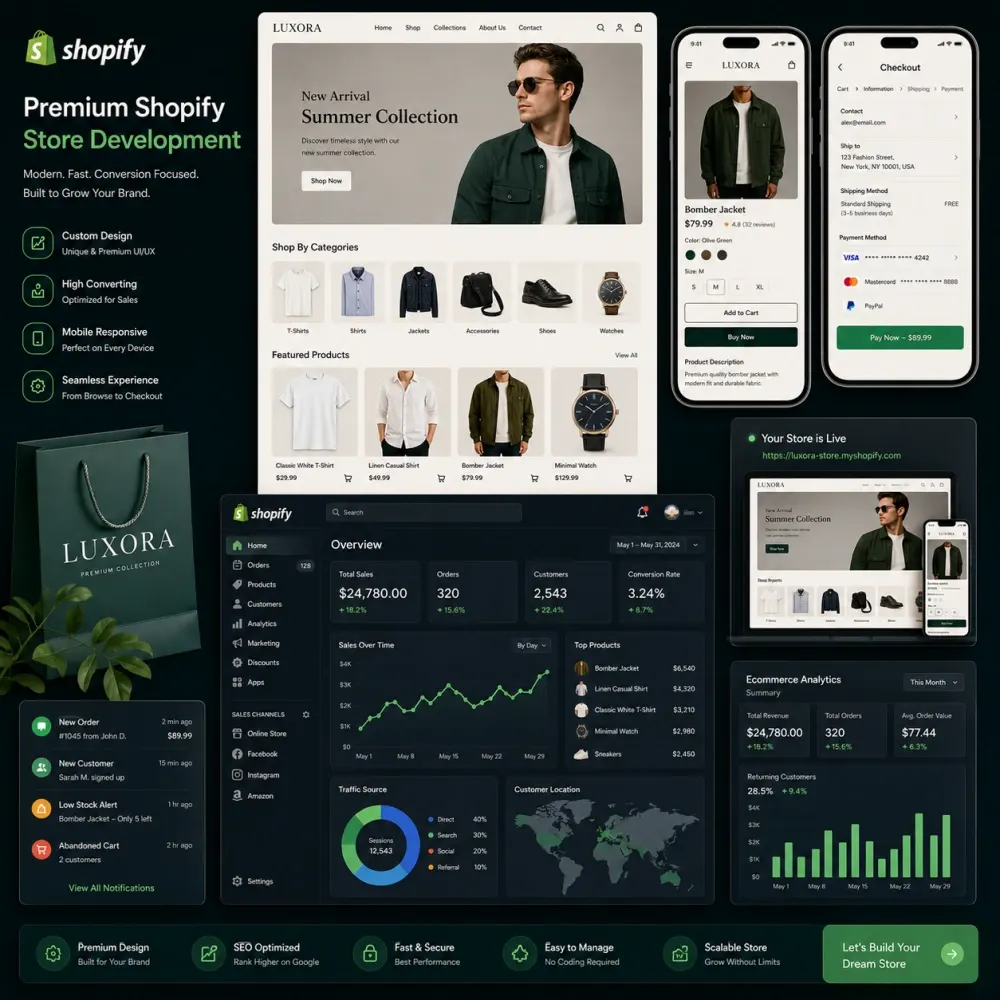
Custom Shopify store development is useful when a business needs a storefront shaped around its own products, customers and merchandising, rather than a theme that almost fits.

Custom does not have to mean every line of the theme is written from scratch. We use Shopify's foundations where they serve you well, and build bespoke sections and templates where the store needs to be different.

Shopify Theme Development

The theme controls most of what customers see on a traditional Shopify storefront. We build it around your brand, your catalogue and the way shoppers compare your products, with reusable sections your team can use for campaigns.

A reusable section system is especially useful for campaigns. Instead of rebuilding a page for every promotion, your team can assemble new pages from sections that already follow the brand and the design system.

Shopify Theme Customisation

Many stores do not need a full rebuild. Shopify theme customisation can improve product templates, collection layouts, navigation, checkout behaviour or specific sections, while keeping the store running.

We first decide whether a requirement belongs in the theme, an app or a custom integration, because the right home for a feature decides how easy it is to maintain.

Shopify Store Design and Ecommerce UI

A technically correct store can still be difficult to shop. Shopify store design should guide the visitor from the homepage to the right product, through a clear product page, and into a checkout that feels quick and trustworthy.

The visual treatment should also fit the category. A premium furniture store and a fast-moving fashion boutique need different rhythms, different imagery and different amounts of information on the page.

Shopify Product Page Development

Product pages carry much of the commercial responsibility of an ecommerce store. They have to explain the product, show it clearly, handle options and variants, and make the next step obvious.

We also consider how repeated product information is managed. Shopify metafields and structured content keep specifications, materials, care instructions and downloads consistent across the catalogue.

Shopify Collection Page Development

Collections are an important browsing layer between the homepage and individual products. A well-planned collection helps shoppers find the right group of products without wading through the whole catalogue.

Large catalogues need especially careful filter design. Showing every available filter on every collection slows shoppers down, so we choose the filters that genuinely help each category.

Navigation, Search and Product Discovery

Customers cannot buy products they cannot find. Navigation and search should reflect the way shoppers think about your range, using the words they actually use rather than internal product codes.

For stores with many products, we also consider the difference between browsing and searching. A shopper exploring a category needs a different experience from one who already knows exactly what they want.

Shopify App Integration

Apps can add established functionality for reviews, subscriptions, email marketing, loyalty, search and more. The question is always whether an app is the best way to solve the requirement.

We review whether Shopify already supports the requirement, whether the theme can handle it cleanly, and whether an app is worth its cost and its impact on speed, before recommending anything.

Custom Shopify App and API Integration

Some projects need functionality that belongs outside a theme. Custom Shopify apps and API integrations can connect the store with stock systems, ERPs, CRMs and other business tools.

Integration planning starts with data responsibility. If stock exists in Shopify and in a warehouse system, we agree which one is the source of truth before any code is written.

Shopify Migration Services

Moving an ecommerce business to Shopify can involve products, variants, collections, customers, order history, content and settings, and each one needs a plan rather than a bulk import.

SEO also matters during a migration. Existing product, category and content URLs need redirects, so the new store keeps the search visibility the old one earned.

WooCommerce to Shopify Migration

A WooCommerce store can contain behaviour created by WordPress plugins, custom fields and theme code that has no direct equivalent in Shopify. We map that behaviour before promising a like-for-like move.

We review the source site, exported data and required behaviour before confirming the migration scope, so nothing important is discovered halfway through.

Shopify Redesign and Store Rebuild

An existing store may need a visual redesign, a technical cleanup or both. A fresh look alone does not fix a catalogue that is hard to manage or a checkout that loses customers.

Before changing a live store, we identify what should remain. Existing analytics, customer accounts, order history and high-value URLs are protected, while the parts that cause problems are rebuilt.

Shopify Speed Optimisation

Store performance can be affected by images, fonts, app scripts, JavaScript and the theme itself. We review what is actually slowing the store down rather than guessing.

The objective is not to remove useful commerce features only to improve a loading score. We balance speed with the tools your shoppers and your team rely on.

Shopify SEO Foundations

Development can support search visibility by giving the store a clear technical structure: crawlable navigation, editable metadata, sensible templates, sitemaps, redirects and structured data where appropriate.

Shopify SEO is not a switch that guarantees rankings. Organic performance also depends on content quality, competition and reputation, and our role is to remove the technical obstacles.

International Shopify Stores and Shopify Markets

Businesses selling across countries may need different languages, currencies, pricing, shipping and tax rules. Shopify Markets can organise that, but the setup needs to match how each market actually buys.

Localisation is more than translating text. Shipping, payment availability, returns and local expectations all shape whether a visitor in another country completes a purchase.

Shopify Plus Development

Shopify Plus development can be relevant when a merchant has more advanced requirements, such as B2B selling at scale, checkout customisation, higher-volume operations or more complex integrations.

Plus is not required merely to create a custom-looking storefront. If a standard plan can support the store well, we will say so, because Plus is a meaningful ongoing cost.

B2B Shopify Development

B2B buyers may need company accounts, catalogues, negotiated pricing, bulk ordering and payment terms. Shopify's B2B features can support that, but the buying journey is very different from a consumer store.

Native B2B capabilities and eligibility can depend on the Shopify plan and the current feature set, so we confirm what is available before scoping a B2B build.

Headless Shopify Development

Most merchants can achieve a strong storefront with a well-built Shopify theme, and headless is not the default recommendation.

A headless build can use Shopify's storefront APIs and an appropriate frontend framework, which suits teams that need that architecture, but it adds hosting, deployment and maintenance that a theme-based store does not need.

How We Approach Shopify Builds

A better Shopify build begins by defining what the store must support.

Product structure, customer types, catalogue size and integrations determine the shape of the store. We agree those first, so the build follows the business.

Catalogue First

Collections, variants, filters and product data are planned around real products and real shoppers, not around placeholder content.

Merchant Control

Reusable sections and structured content make routine updates easier, so your team can publish campaigns and new products without developer help.

Selective Integrations

Apps and APIs are added for defined requirements instead of increasing the number of tools the store depends on.

Launch-Aware Development

Testing, redirects, analytics and store settings are considered before launch, not discovered afterwards.

Shopify Development Process

From catalogue decisions to a storefront your team can actually run.

01

Commerce Discovery

We review products, customer types, catalogue size, markets, content, shipping and payment needs before anything is built.

02

Store Architecture

Collections, navigation, search, product templates and content areas are organised around how shoppers find and compare your products.

03

UI and Template Planning

Key storefront templates and reusable sections are defined, including mobile layouts, so the design is planned before it is coded.

04

Shopify Development

Approved layouts are implemented using the chosen theme approach, Liquid, custom sections and structured content.

05

Apps and Integrations

Required third-party tools are configured after their capabilities, access and costs are confirmed, not before.

06

Catalogue and Content

Products, collections and agreed content are added or migrated according to the plan, with variants and metafields checked as we go.

07

Store QA

Representative products, variants, navigation, responsive layouts, cart behaviour and checkout are tested across devices.

08

Launch and Handoff

Production settings, redirects, analytics and agreed technical checks are reviewed, then the store launches with handoff guidance for your team.

Possible Deliverables

What can be included in a Shopify development project.

The final list is agreed around your store, your catalogue and your team, rather than adding every feature by default.

Store architecture and sitemaps
Theme setup and customisation
Reusable custom sections
Product page templates
Collection page templates
Responsive development
Metafield and structured content setup
Navigation and menu planning
App selection and integration
API integration where scoped
Migration and redirect support
SEO foundations
Analytics and tracking setup
Store QA and testing
Launch support
Admin handoff and training
Shopify Development Pricing

Starting packages for stores at different stages of ecommerce growth.

These are starting development fees in USD. Final pricing is confirmed after we review the theme approach, catalog, templates, integrations, migration requirements and any custom functionality.

Focused Store Build

Shopify Launch

$3,150starting at

For a new or smaller store that needs a clean branded storefront on a suitable Shopify theme.

  • Theme setup and brand customization
  • Homepage plus core store pages
  • Product and collection template setup
  • Up to 15 product entries
  • Navigation and basic metafields
  • Up to 1 standard app integration
  • Responsive QA and launch support
Discuss Shopify Launch ↗
Advanced Storefront

Custom Shopify Build

$6,650starting at

For more advanced stores needing a custom UI direction, larger template scope or connected commerce workflows.

  • Custom storefront UI and theme development
  • Advanced reusable sections and templates
  • Up to 100 product entries or migration mapping
  • Advanced product/collection content system
  • Up to 5 standard app integrations
  • One scoped API/integration workflow
  • International/market setup where applicable
  • Technical handoff and launch QA
Discuss Custom Build ↗

Common Shopify development add-ons

Shopify Theme Customizationfrom $499
Custom Product Page Templatefrom $249
Custom Shopify Sectionfrom $149
Shopify Store Migrationfrom $3,150
Shopify Speed Optimizationfrom $399
Standard App Integrationfrom $199
Custom API Integrationfrom $499
Shopify Plus / Headless Projectcustom quote

Pricing note: Shopify subscription fees, premium themes, paid apps, domains, payment-provider charges, third-party API costs, licensed assets, extensive copywriting, photography, large catalog cleanup and ongoing maintenance are separate unless specifically included in the quotation. Checkout, B2B, Markets, Shopify Plus and headless requirements are confirmed against the merchant's plan and supported platform capabilities.

Why work with DesignBub for Shopify development?

A Shopify project can become fragmented when the storefront, the brand, the product data and the apps are planned separately. Each piece works on its own, but the store as a whole feels disconnected.

DesignBub connects those decisions. We consider product presentation, navigation, merchandising, integrations and the admin workflow together, so the store makes sense to shoppers and to your team.

We also keep platform limits visible. We do not guarantee changes Shopify cannot support, and we say so early when a requirement would be better solved another way.

The result we aim for is practical: a storefront that fits the brand, a catalogue your team can manage, and a checkout that has been tested before it matters.

Shopify Development FAQs

Questions businesses usually ask before commissioning a Shopify build.

These answers cover themes, apps, migration, Shopify Plus and costs, so you can plan your store with confidence.

Yes. We build bespoke themes and sections around your brand and catalogue, using Liquid, reusable sections and structured content, so the store looks like your business rather than a demo.

Usually not. Most stores get a strong, custom-looking storefront on a standard Shopify plan. Plus becomes relevant for advanced B2B features, checkout customisation or higher-volume requirements, and we will tell you honestly if you need it.

Yes. We plan the move around products, variants, collections, customers, order history and redirects, so the new store keeps the content and search visibility the old one earned.

As few as possible. We use Shopify's native features first and add apps only for defined requirements, because every app adds cost, scripts and something else to maintain.

It depends on catalogue size, template count, custom functionality, apps and migration work. Our starting packages are listed on this page, and we confirm a final price after reviewing your store and your requirements.

Build the store around the products you actually sell.

Tell us about your catalogue, your customers and how you want the store to work. We will plan a Shopify build that fits your products, your team and your shoppers.

WhatsApp DesignBubChat with us now