



















">

Custom App Development Services for Businesses

DesignBub plans, designs and builds custom mobile apps for startups, product teams and growing businesses — from the first workshop to the App Store and Google Play, with the backend, integrations and admin tools included.

iOS & AndroidOne product, both stores
Flutter & NativeThe right stack per product
Launch SupportStore submission included
Custom App Development by DesignBub
mobile apps project preview
Custom Mobile Apps

Products planned around real users, real workflows and real business rules — not a template with your logo on it.

Selected Brands & Businesses We Have Designed For
Asset 38 brand logo Asset 4 brand logo Asset 45 brand logo Asset 46 brand logo Asset 47 brand logo Decent Solar logo Dentesthetix logo Gazal Lounge logo GH Landscape logo Asset 38 brand logo Asset 4 brand logo Asset 45 brand logo Asset 46 brand logo Asset 47 brand logo Decent Solar logo Dentesthetix logo Gazal Lounge logo GH Landscape logo
Ghazoor logo Goodluck Trader logo Kingsley logo Lahoris logo MOI logo Naqaa Salt logo Nature Hug logo Netsole logo Ghazoor logo Goodluck Trader logo Kingsley logo Lahoris logo MOI logo Naqaa Salt logo Nature Hug logo Netsole logo
Nexcell Energy logo Roots logo Sheikh logo Shellbee logo Softcore logo Solvac Lifesciences logo Trendex logo Zameenex logo Nexcell Energy logo Roots logo Sheikh logo Shellbee logo Softcore logo Solvac Lifesciences logo Trendex logo Zameenex logo
Custom App Development essentials

Custom App Development explained without jargon

Good Custom App Development is mostly invisible. The screens are clear, the steps are few, and nothing demands attention for its own sake. If users notice the software, it is usually because something went wrong.

A mobile app is only as good as its data. We plan where data comes from, how it is checked, and what happens when it is wrong, before a single screen is drawn. Garbage in, garbage out is not a slogan; it is a project risk.

Every mobile app we build starts with the people who will use it. We map their tasks, their frustrations and the workarounds they have already invented, because that is where the real requirements live. The result is mobile apps shaped by actual work, not by a feature list copied from a competitor.

Security and privacy are designed into Custom App Development from the first week, not audited in the last. Access is limited to who needs it, sensitive data is handled carefully, and the boring safeguards — backups, logs, updates — are set up before launch, not after a scare.

Custom App Development in practice

The mobile app worth investing in

The teams that get the most from Custom App Development are the ones that stay involved. We show working software early and often, because feedback on something real is worth more than a month of meetings about something imagined. Your reactions shape the product.

Keeping Custom App Development simple to run

an app people open every day is the outcome we design Custom App Development around. Everything else — the screens, the features, the integrations — exists to serve that outcome. If a feature does not serve it, we question it.

We review Custom App Development with you at every stage, not just at the end. You see the design before it is built, the build before it is launched, and the launch before it is announced. There are no big reveals — only steady progress.


What a first release you can learn from looks like in practice

We treat your budget for Custom App Development with respect. Every pound is accounted for in the scope, and we flag anything that would change the price before we do it. You should never be surprised by an invoice from us.

A mobile app that works for startup founders, product teams and growing businesses has to work on a bad connection, on an old phone, in a hurry. We design for those moments, not for the perfect demo. Real life is the test environment.

What crash-free sessions tells us

DesignBub works with startup founders, product teams and growing businesses who need mobile apps that actually ship. We keep the process visible — regular reviews, working software early, honest answers about what is and is not ready. You should never have to chase us to find out where your project stands.

Swift handles the front of the mobile app, Kotlin the back, and Node.js keeps the data honest. Each has a job, and each is chosen because it fits this particular mobile app, not because it is fashionable this year. Boring, proven technology is usually the right call.

Why Custom App Development starts with questions

The best compliment a mobile app can get is silence: users who simply get their work done and move on. We aim for that — software that disappears into the task, rather than demanding attention for itself.

Kotlin and Node.js are the tools we reach for most on Custom App Development projects, but the tool is never the point. What matters is whether the mobile app does the job your team needs it to do, every day, without fuss. We choose the stack after the workflow is understood, not before.

iOS and Android mobile app development
Why Custom App Development

From first idea to working mobile app

The first week of Custom App Development is the most important. We spend it understanding the problem, the users and the constraints — before any code is written. A week of understanding saves a month of rebuilding.

A mobile app built for startup founders, product teams and growing businesses should feel like it was made for them, not adapted from someone else's product. We design the workflows around your users' actual jobs, which is why the result looks different from a generic tool.

  • A product scoped around real users, not a feature list
  • One team for design, development and backend
  • Reviewable stages, so you see progress early
  • Store submission handled, not left to you
React Native mobile application development
The mobile app difference

Making Custom App Development easy to run

We do not invent features for mobile apps to fill a page. Every feature we propose answers a task your users actually perform, and we can explain the task it serves. If a feature cannot be tied to real work, it does not get built.

We choose Flutter for Custom App Development because it fits this mobile app, not because it is popular this year. Technology choices are made on evidence — what the product needs, what your team can maintain, what will still be supported in three years.

  • Source code and accounts handed over to you
  • Backend and admin tools included where needed
  • Testing on real devices before launch
  • Honest advice when custom development is not the answer
What is included

Services that make up Custom App Development

Support for Custom App Development does not end at launch. We offer ongoing help — fixes, small changes, the next release — because a mobile app that is never updated quietly becomes a risk.

01

Custom App Development

Mobile products built around your users, workflows, business rules and integrations — when an off-the-shelf app cannot do the job.

Custom
02

MVP App Development

A focused first release that tests the core idea with real users before you invest in the full product.

MVP
03

App UI/UX Design

Interfaces planned from user flows first, then designed to look and feel right on real phones.

Design
04

App Prototyping

Clickable prototypes that let you test the product with users and stakeholders before a line of production code.

Prototype
05

Backend Development

Accounts, databases, business logic and file handling, built to hold up when usage grows.

Backend
06

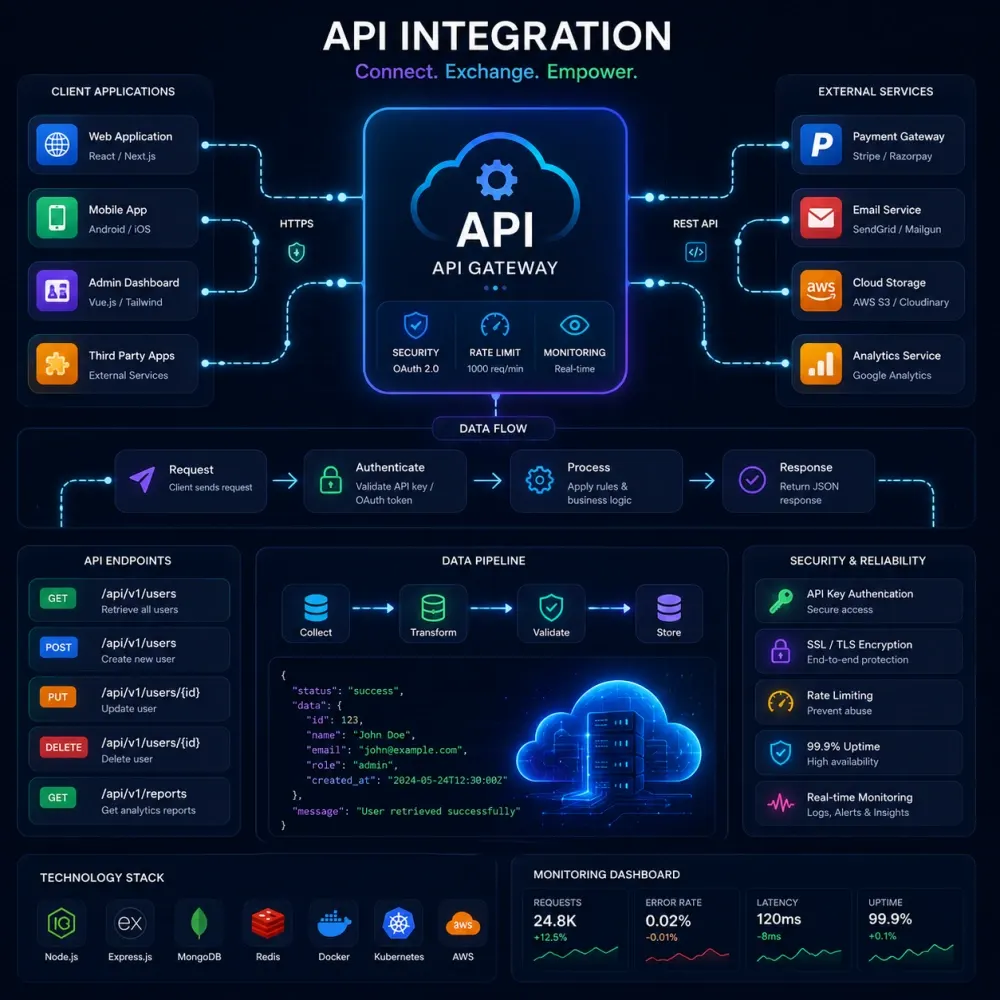
API Integration

Payments, maps, messaging, CRM and third-party services connected cleanly and documented.

APIs
07

Admin Panel Development

A practical dashboard for your team to manage users, content, orders and data without touching code.

Admin
08

App Store Preparation

Store listings, screenshots, privacy details and review checks handled so submission is not a last-minute scramble.

Stores
09

App Maintenance

Updates, fixes and small improvements after launch, so the app keeps working as phones and stores change.

Support
What to expect

What good mobile app changes for your team

The interface of mobile app should make the right action obvious and the wrong action hard. We think carefully about defaults, confirmations and destructive actions in Custom App Development, because a misclick should never be a disaster.

A mobile app that nobody can operate is a liability, not an asset. We build the admin side with the same care as the customer-facing side, so your team can change content, manage users and see what is happening without calling us. Handover is part of the project, not an afterthought.

Avoiding a beautiful interface on a shaky backend

A mobile app that tries to do everything does nothing well. We narrow Custom App Development to the job it must do, and we do that job properly. Focus is a feature.

retention after 30 days is the number we watch most closely on Custom App Development projects, because it tells us whether the mobile app is actually being used. A beautiful product that nobody opens is a failure, however polished it looks.

Your mobile app, explained

Custom App Development: the honest version

The users of mobile app are startup founders, product teams and growing businesses, and they have better things to do than learn your software. We design so the first task takes minutes, not a training session. If it needs a manual, we have made it too complicated.

The admin side of mobile app gets the same attention as the customer side. Your team needs to change content, manage users and see what is happening — without waiting for a developer. A mobile app you cannot operate is a mobile app you do not own.

What Firebase changes for your team

The second release of mobile app is where Custom App Development starts to pay. The first release proves the idea; the second fixes what real use revealed. We plan for that second release from the start, so it is a small step, not a rebuild.

The scope of Custom App Development is written down and agreed before we start. It lists what is included, what is not, and what happens if you want more. That document protects both of us, and we take it seriously.

How Custom App Development is built

Where Custom App Development is used

We do not disappear after Custom App Development launches. The first month is when the real feedback arrives, and we plan for it — a review, a list of fixes, and the next release. Software is never finished; it is maintained.

Ecommerce Apps

Product browsing, search, cart, checkout, accounts, order history and connections with supported ecommerce or inventory systems.

Marketplace Apps

Products with customers, sellers or service providers, where listings, permissions, payments and platform rules need careful planning.

Booking Apps

Appointment and resource scheduling with availability, reminders, rescheduling, cancellation rules and supported payment workflows.

On-Demand Service Apps

Customer requests, provider workflows, assignments, location data, status updates and administration for service-based platforms.

Business Apps

Internal tools for staff, field teams, approvals, inspections, inventory, tasks or other repeatable operational workflows.

Membership Apps

Plans, recurring access, account status and feature permissions for subscription or membership-based products.

Customer Portals

Secure mobile access to accounts, documents, service information, bookings, requests or other customer-specific data.

Community Apps

Groups, messaging, events and member profiles for audiences that need a place to belong, not just a feed.

Custom App Development at a glance

Why teams choose Custom App Development from DesignBub

Your audience is startup founders, product teams and growing businesses, and they will judge the mobile app in the first minute. If the first task is easy, they stay; if it is confusing, they leave and do not come back to explain why. So we test the first task before we polish anything else.

The mobile app we build for startup founders, product teams and growing businesses has to work for the least technical person who will use it. If they can complete the task without help, everyone can. That is the standard we test against, and it is stricter than it sounds.

How we measure activation

We have seen Custom App Development projects go wrong in the same few ways, and a beautiful interface on a shaky backend is near the top of the list. Our process is built to catch it early: a review before the build, a check during the build, and a test before launch.

How Swift fits this mobile app

Kotlin is where most of the visible work happens, and Node.js is where the decisions get made. We keep the two close together, so a change in the workflow does not take a week to reach the screen. That closeness is what makes Custom App Development feel responsive instead of rigid.

The Custom App Development standard

The process behind every mobile app we build

We test Custom App Development with real tasks, not with a checklist of features. Can a new user complete the core job without help? Can your team handle the common support question? Those are the tests that matter.

01

Discovery

We review users, product goals, platforms, existing systems and the business problem the app needs to solve.

02

Feature Scope

Core functionality, user roles and first-release priorities are separated from secondary roadmap ideas.

03

User Flows

Important journeys are mapped so navigation, actions and information requirements are understood early.

04

UI & Prototype

Wireframes become polished mobile interfaces and, where useful, an interactive prototype for review.

05

Architecture

Frontend, backend, database, APIs and external services are planned around the approved scope.

06

Development

The application, backend and agreed integrations are developed in reviewable stages.

07

Testing

Core workflows, validation, permissions, integrations and supported-device behaviour are reviewed before launch.

08

Launch

Approved production builds and agreed store-submission or deployment support are prepared.

09

Improve

Real usage, crash reports and feedback decide what the next release should contain.

The questions we ask first

We build Custom App Development in short cycles so you see progress every week. Working software, real screens, real data — not a slide deck about what will happen next month. If something is off, we find out in days, not at the end.

We start Custom App Development by watching the current process, not by reading a brief about it. The brief says what people think happens; watching shows what actually happens. The gap between the two is usually where the real project lives.

The mobile app after the first month

A mobile app built without testing is a guess. We test Custom App Development with real people doing real tasks, and we fix what we find. Testing is not a phase at the end; it is how we work.

If unclear scope is the risk you are worried about, say so early. We would rather design around a known risk than discover it in testing, and most risks in Custom App Development have a boring, proven answer once they are named.

The mobile app your customers remember

We write documentation for Custom App Development that a new team member can actually follow. Setup, data, deployments, common tasks — all written down, because a mobile app that only one person understands is a risk to your business.

A mobile app is a promise to its users: it will be there, it will work, and it will keep their data safe. We take that promise seriously in Custom App Development, which is why the boring parts — backups, monitoring, updates — are set up from day one.

How React Native keeps Custom App Development honest

Node.js and React Native do different jobs in Custom App Development, and we keep them separate. The interface is for people; the backend is for data. When the two are tangled, every change is expensive. When they are clean, the mobile app can grow.

We do not copy other mobile app products and change the colours. Your mobile app is designed around your workflow, your users and your business, which is why it looks and behaves differently from anything else out there.

The Kotlin side of Custom App Development

The mobile app your users will actually notice

The hardest part of Custom App Development is usually deciding what not to build. Every feature has a cost — in time, in complexity, in support — and we help you spend that cost where it earns the most.

We bring startup founders, product teams and growing businesses into the design of Custom App Development early. A short conversation with a real user is worth more than a month of guessing, and it usually changes the plan in useful ways.

We treat Custom App Development as a long relationship, not a one-off delivery. After launch, we stay available for fixes, small changes and the next release — because software that is never updated quietly becomes a liability.

The way we do Custom App Development

What we check before mobile app goes live

The cost of Custom App Development is decided by scope, not by hourly mystery. We agree the scope, the price and the stages before work starts, so there are no surprises in the middle. If the scope changes, the price is discussed first, not discovered later.

The fastest way to waste money on Custom App Development is to build everything at once. We separate the core — the workflow that must work on day one — from the features that can wait, and we prove the core first. That is how crash-free sessions improves without the budget disappearing into nice-to-haves.

The handover for Custom App Development includes a walkthrough with your team, written documentation, and a period where we answer questions. We do not consider the project finished until your team is comfortable running the mobile app alone.

What Custom App Development delivers

The difference between mobile app and a quick fix

We are honest about what Custom App Development cannot do. If a requirement does not fit the product, we say so and suggest what would. A mobile app that promises everything delivers nothing.

Custom App Development projects fail most often on handover, not on code. So we build the handover into the plan: documentation, a walkthrough with your team, and a period where we are still there to answer questions. The mobile app should feel like yours on day one.

How Node.js supports the team

We keep the number of tools in Custom App Development small. Kotlin, Node.js, Firebase — each chosen because it fits this mobile app, each one we can support properly. A long stack is a long list of things that can break.

How Custom App Development handles the hard parts

After launch, the mobile app is yours. We hand over the code, the documentation and the deployment, and we walk your team through all three. You should never be locked in to us — or to anyone.

Why Flutter and React Native

The sign-off for Custom App Development is not a meeting; it is your team using the mobile app without us in the room. When they can do their jobs with it, the project is done. Until then, it is not.

How Custom App Development stays maintainable

React Native keeps the data behind Custom App Development honest. It is not the glamorous part of the project, but it is the part that decides whether your reports are true and your users' information is safe.

Deliverables

What you own at the end of Custom App Development

React Native and the data behind Custom App Development

Your users do not care about React Native or Swift. They care whether the mobile app lets them finish their task and move on with their day. We keep that in mind every time a technical decision comes up.

The first release of a mobile app is a question, not a statement. It asks: does this solve the problem well enough to be worth using? We build it so the answer is easy to read — in activation, in usage, in what users say — and then we act on it.

Custom App Development for startup founders, product teams and growing businesses

We do not hand over mobile app and disappear. The weeks after launch are when the real questions arrive, and we stay available for them. A launch is the start of the product's life, not the end of ours.

We keep the mobile app fast. Slow screens lose users, and no amount of design fixes a product that makes people wait. Performance is planned into Custom App Development from the first week, not bolted on at the end.

Product Discovery
Feature Scope
User Flows
Wireframes
Mobile UI/UX
Interactive Prototype
iOS Development
Android Development
Backend & APIs
Admin Panel
Payment Integration
App Store Submission
App Development Pricing

Starting packages for MVPs and custom mobile apps.

These USD packages give you a practical starting point. Final pricing is confirmed after we review the features, user roles, integrations and technical requirements.

MVP Starter

Focused First Release

$1,499starting at

For a focused MVP or simple business app with one clear user journey.

  • Cross-platform iOS & Android build
  • Up to 8 core app screens
  • One primary user role
  • Mobile UI/UX design
  • Basic authentication and backend
  • One third-party integration
  • Testing and store-submission support
Choose MVP Starter →
Advanced Build

Custom App Platform

$6,999starting at

For multi-role apps, marketplaces and products with more complex business logic.

  • iOS & Android application
  • Up to 30 core app screens
  • Multiple user roles and permissions
  • Custom backend and admin system
  • Up to 5 third-party integrations
  • Advanced workflows and notifications
  • QA, launch support and technical handoff
Discuss Custom Platform →

Prices are starting design and development fees in USD. App Store or Google Play accounts, hosting, paid APIs, third-party subscriptions, payment-provider fees, licensed assets and ongoing maintenance are separate unless specifically included in your quotation. Complex marketplaces, real-time systems, AI-heavy products or additional features are quoted after technical review.

The Firebase view of Custom App Development

The parts of Custom App Development people forget

We keep Custom App Development projects small enough to steer. Short cycles, working software, regular decisions — so that if something needs to change, it changes in days, not months. Big-bang launches are where budgets go to die.

Communication is part of Custom App Development, not a layer on top of it. You get a named contact, a clear plan, and reviews you can actually attend and influence. Surprises are bad in a project; the only acceptable surprise is finishing early.

The mobile app we deliver is tested, documented and deployable. It is not a demo, and it is not a prototype with a coat of paint. It is working software, ready for your users.

How we work

Common questions about Custom App Development

We ask awkward questions at the start of Custom App Development: who will maintain this, what happens when the data is wrong, what does the user do when this fails? Awkward now is better than expensive later.

Planning, UI/UX design, development, backend systems, integrations, testing and launch preparation. The scope can cover iOS, Android or both, plus APIs, databases, admin panels and post-launch support — everything the product needs to work, not just the screens.

It depends on what the app has to do. Native suits products that need deep device features or the highest performance; Flutter or React Native suit products that need both stores from one codebase and a faster first release. We recommend the approach after scoping, and we explain the trade-offs plainly.

A focused MVP usually takes weeks rather than months; a fuller product with roles, payments and integrations takes longer. You get a realistic timeline after discovery, with reviewable stages so you see progress instead of waiting for one big reveal.

Yes. The source code, designs and accounts are yours. We hand everything over with documentation, so you are never locked in to us for future work.

We monitor crashes and feedback, fix what matters first, and plan the next release around real usage. Maintenance can be a small monthly arrangement or booked as needed — either way, the app is not abandoned on launch day.

Turn your app idea into a working digital product.

A good app begins with understanding the user, defining the important workflows and deciding what the first version actually needs to do. DesignBub can help move the project from product planning through UI/UX, development, integrations, testing and launch preparation.

WhatsApp DesignBubChat with us now