Writing Pad Design
A writing pad sits on a desk and gets used a hundred times a day, so we design it to be genuinely useful — comfortable lines, a header that stays out of the way and a brand people notice without thinking about it.
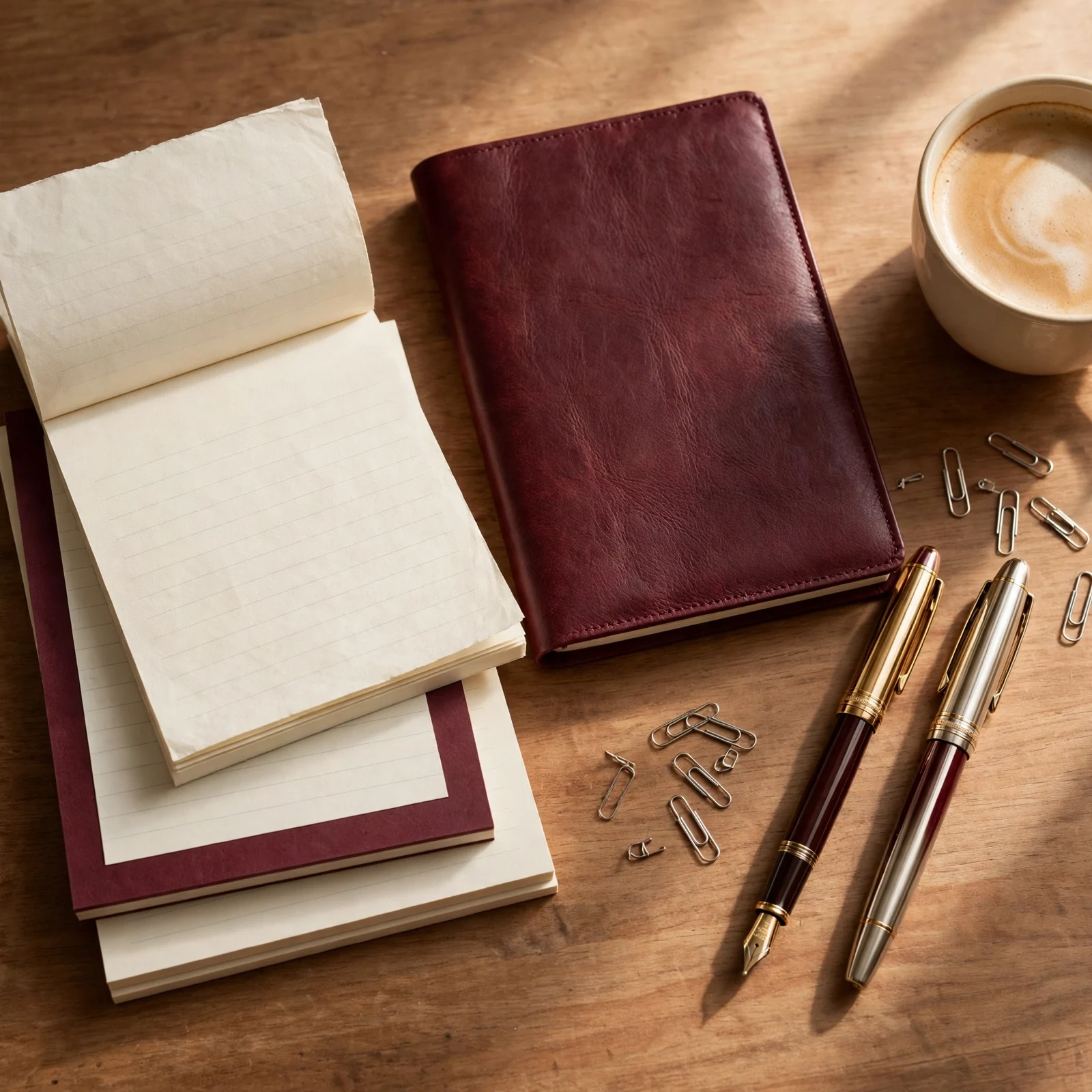
A branded notepad for desks, receptions and meetings — with lines that invite writing and a header that never gets in the way.
The most-used brand piece is the one nobody thinks about.
A writing pad is the quietest piece of branding a business owns — and often the most used. It sits on desks, in meeting rooms, at reception and in hotel rooms, and it gets picked up for phone numbers, meeting notes, shopping lists and ideas. Every page carries the brand into someone’s hand without asking for attention.
The job is practical before it is decorative. Lines must be comfortable to write on, the header must not crowd the first line, and the paper must take a pen without bleeding through. A beautiful pad that is unpleasant to write on will sit unused, however good the logo looks.
DesignBub provides writing pad design services for offices, law firms, clinics, hotels, schools, property companies, agencies and corporate teams that need branded notepads, memo pads, desk pads, meeting pads and consultation pads.
The style can range from formal and restrained to warm and playful. What stays the same is the standard: readable lines, honest writing space and print quality that holds up to daily use.
We start with the pen, not the logo.
A writing pad project begins with how the pad will be used: quick notes, meeting minutes, phone messages, prescriptions or planning. The page size, line spacing and header depth all follow the writing, not the branding.
Professional writing pad design services then decide the structure. A memo pad needs a compact header with To, From, Date and Subject lines. A meeting pad needs space for notes and actions. A desk pad needs a generous writing area and a calendar or contact strip that earns its place. The structure is agreed before the artwork.
Once the structure is settled, the branding can be placed with restraint. A logo at the top, a colour system in the lines and footer, and contact details where they are useful — present on every page, but never in the way of the writing.
Pads people reach for, not pads people file away
Six concept pads for fictional organisations — a classic notepad, a law firm memo pad, a tutoring pad, a hotel notepad, a clinic consultation pad and an executive desk pad — each built around real writing space.
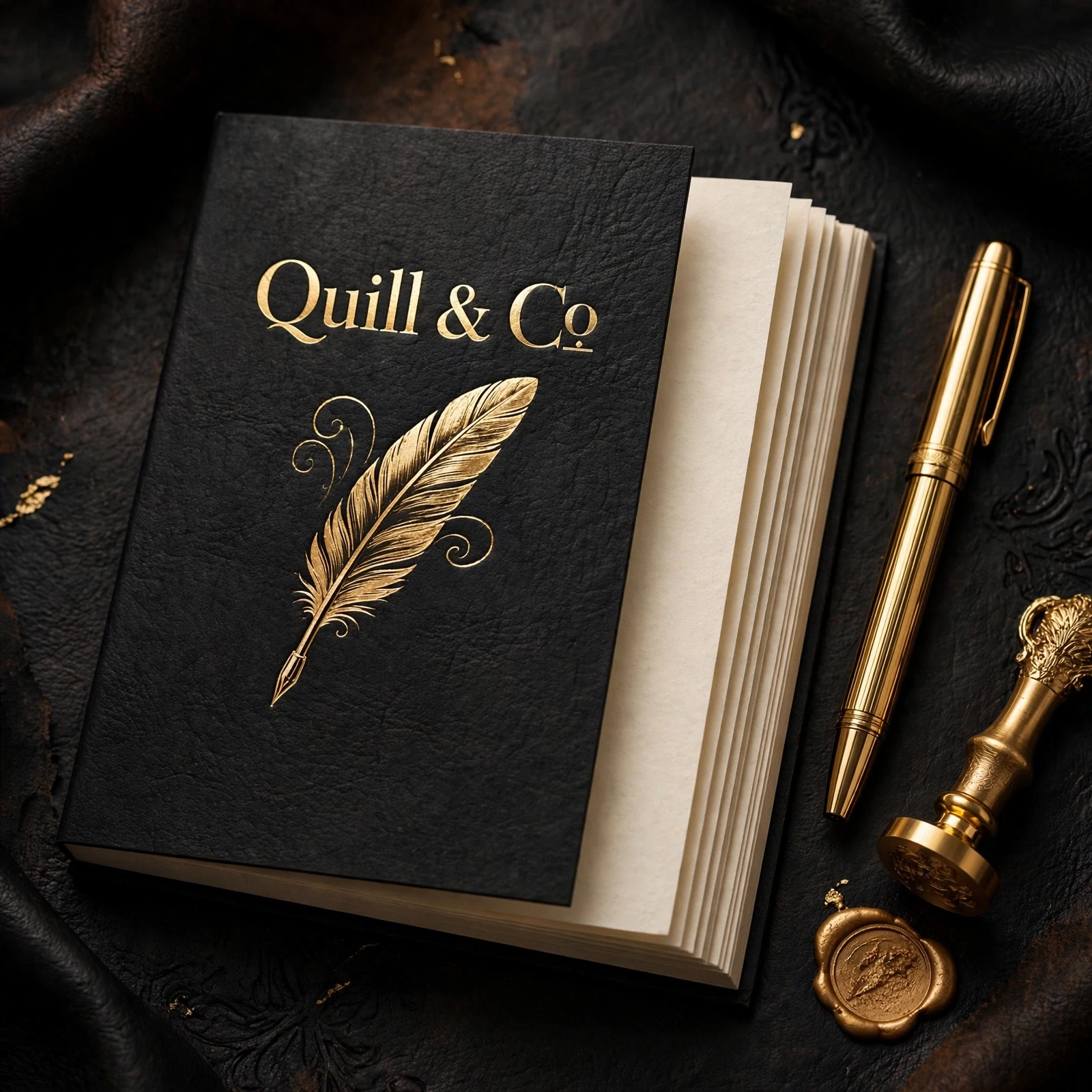
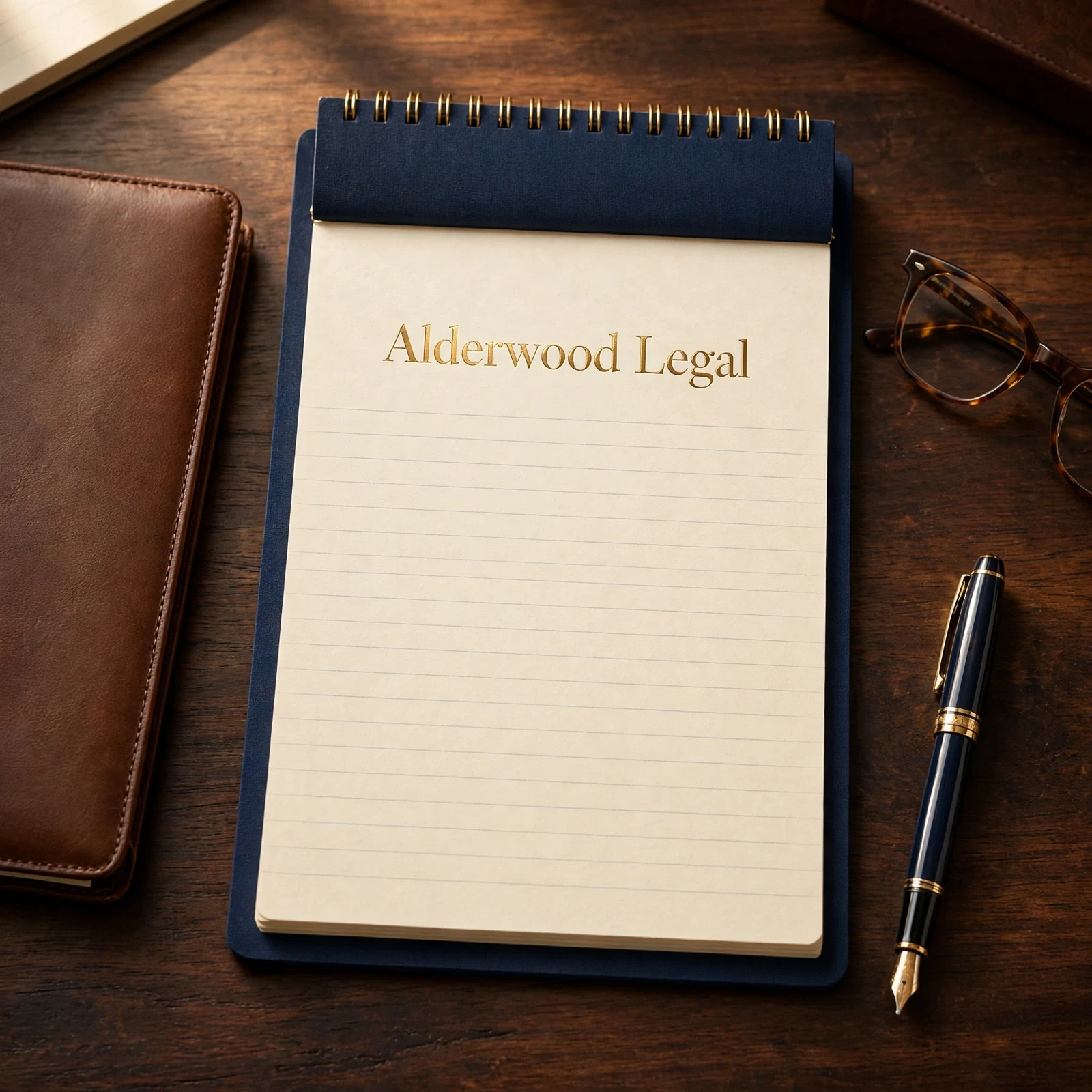


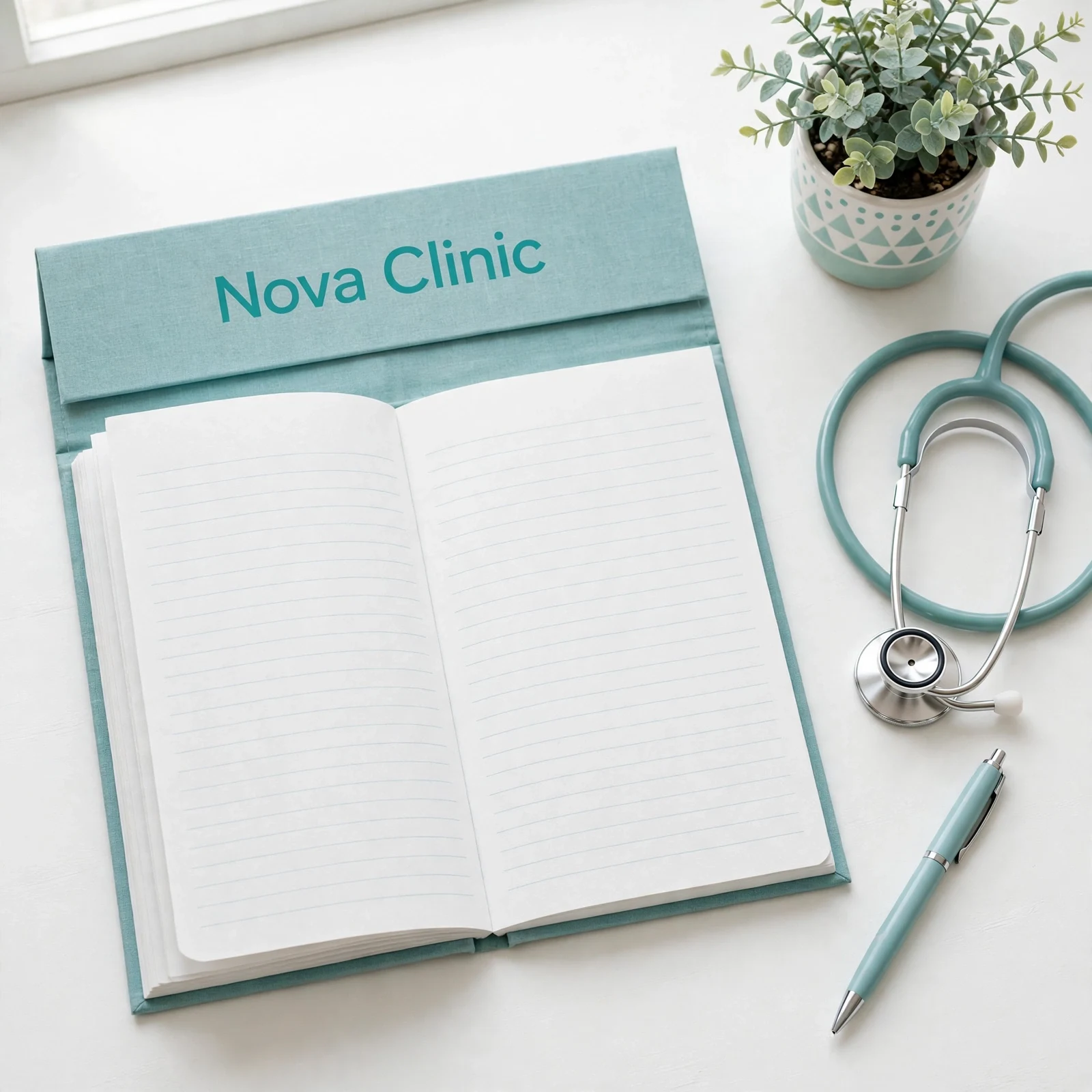

Six pad jobs, six different pages.
The page follows the writing — a memo pad is not a meeting pad.
Branded notepads
The everyday office notepad: a clean header, comfortable lines and a brand that is present on every page without shouting.
Memo pads
Compact pads for phone messages and quick notes, with To, From, Date and Subject lines that make handover easy.
Meeting pads
Structured pages for meetings, with space for notes, decisions and actions so nothing agreed is lost.
Desk pads
Large-format desk pads for planning and daily notes, with a generous writing area and a calm, useful footer.
Consultation pads
Clinic and professional pads for notes, instructions and follow-ups, designed to be clear for staff and patients.
Hotel & guest pads
Warm, welcoming pads for rooms and receptions, where the brand should feel like hospitality, not advertising.
If it is hard to write on, it is not a writing pad.
Line spacing is the most important decision on a writing pad. Lines that are too close together make handwriting cramped; lines that are too far apart waste the page. We set spacing around real handwriting at the intended pad size, and keep the header shallow enough that the first line is usable.
The header carries the brand and the purpose of the pad, but it should not take a third of the page. A logo, a name and a thin rule are usually enough. The footer can carry contact details quietly, so the page stays about the writing.
Paper matters more on a pad than on almost any other print piece. It has to take ballpoint, gel and pencil without bleeding through to the next sheet. We design with the intended stock in mind and keep ink coverage light where the pen will travel.
Present on every page, noticed without effort.
A writing pad puts a brand in someone’s hand dozens of times a day, which is a privilege most marketing never gets. The branding should be confident but calm — a clear logo, a consistent colour system and contact details that are there when needed and invisible when they are not.
Pads also make practical corporate gifts. A well-made pad given to a client or a new employee is used daily, which means the brand is seen daily. A cheap pad is thrown away; a good one is kept on the desk and refilled.
When the pad is part of a wider stationery set — letterhead, business cards, envelopes — we keep the same system running through all of it, so the pad, the letter and the card all clearly belong to the same organisation.
Straightforward prices for a pad that gets used.
A single pad design stays affordable, with set pricing for pad ranges and full stationery systems.
Essential Pad
For one custom writing pad — header, ruled page and footer built around supplied brand assets.
- One custom pad design
- Ruled page with header and footer
- Client-supplied brand assets
- Print-ready PDF
- High-resolution digital export
- Editable source file where applicable
Branded Pad Set
For a pad set — notepad, memo pad and desk pad from one consistent system.
- Pad set across up to 3 types
- Shared header and line system
- Perforation and padding setup
- Print-ready and digital exports
- Mockup preview
- One size adaptation
Pad Stationery System
For a full stationery range — pads plus matching letterhead, cards and envelopes.
- Pad designs plus stationery set
- Consistent brand system
- Multiple pad formats
- Print-ready and digital exports
- Organized final export package
- Editable source artwork
Need one specific writing pad deliverable?
These are starting rates for clearly scoped work. Complex artwork, extensive copy changes or unusually large version sets are quoted separately.
Scope note: Printing, padding, perforation, special paper, large-volume data handling and third-party licensing are separate unless specifically included. Starting prices assume reasonably finalized content and normal production requirements. Final cost depends on pad types, page count, artwork complexity and required formats.
We start with how the pad will be written on.
We begin with the pad type, size and use. The client supplies brand assets, the intended paper and any required fields — To, From, Date, Subject or custom headings. Before designing, we confirm the line spacing and header depth at real size.
The header and ruled page are designed together, so the brand and the writing space feel like one page rather than a logo stuck on top of lines. The design is checked at actual size, because a pad that looks fine on screen can feel cramped in the hand.
The client reviews a sample page and a mockup of the finished pad, and revisions are applied within the agreed scope. Final files are prepared with padding and perforation marks for the printer’s required format.
The file list follows the pad.
Not every project needs every output — we match the package to how the pads will be printed and used.
A pad is judged by the second page, not the first.
Anyone can make a first page look good. A writing pad is judged on page ten, when the lines still feel comfortable, the header still looks calm and the paper still takes the pen. If the pad is pleasant to write on, it gets used; if it is not, it gets replaced.
DesignBub approaches writing pad design services by designing for the writing first. Line spacing, header depth and paper behaviour are decided before decoration, because a pad that fights the pen has failed, however good the logo looks.
We can also connect the pad with wider stationery, letterhead, business card and envelope design when an organisation needs a coordinated set. The pad stays focused on its own role: being the easiest thing on the desk to reach for.
Writing pad questions, answered before you brief us.
Sizes, lines, paper, padding and pricing — the decisions that shape the quote.
The most common sizes are A5 and A4, with DL and custom sizes available. We design around the size you will actually print, because line spacing and header depth change with the page.
Yes. Memo pads are a standard brief — we include the fields you need in the header, with enough writing space below that the pad stays practical for quick notes and handovers.
Yes. Final files include padding and perforation marks in the printer’s required format, with bleed and safe areas set from the start so the finished pad tears cleanly.
The pad type and size, your brand assets, any required fields or headings, and the intended paper if you have a preference. The clearer the brief, the faster the first page lands.
Our packages start at $89 for an Essential Pad, $149 for a Branded Pad Set and $249 for a Pad Stationery System. The final price depends on pad types, page count and artwork complexity.
The searches that lead here all describe the same job.
Writing pad design services, branded notepad design, memo pad design, custom notepads, desk pad design, corporate notepad, hotel notepad design, consultation pad — different phrases for one task: a pad people actually write on.
The best brand piece is the one that gets used.
A writing pad does not need to shout. It needs to be comfortable, clear and always within reach. One good header, honest lines and paper that takes the pen — that is the whole job, repeated on every page.
The brand should be present on every page and in the way of none of them. The contact details should be there when needed. The writing space should be generous enough for real notes.
DesignBub provides writing pad design services for organisations that want their brand on desks instead of in drawers. You can start with a logo and a size, an old pad that needs rebuilding, or a full stationery set that needs pads to complete it.
We turn that material into a pad people reach for. It will be written on a hundred times a day — and the design should be ready for every one of those pages.
Ready to put your brand on every desk?
Send the pad type, the size, the fields you need and your brand assets — we will recommend the right package and output format from there.