Apparel Design
DesignBub creates custom apparel graphics for T-shirts, hoodies, streetwear, merchandise, jerseys, uniforms and clothing brands — artwork designed around the garment, the audience and the print method, then prepared as clear files your production team can work with.
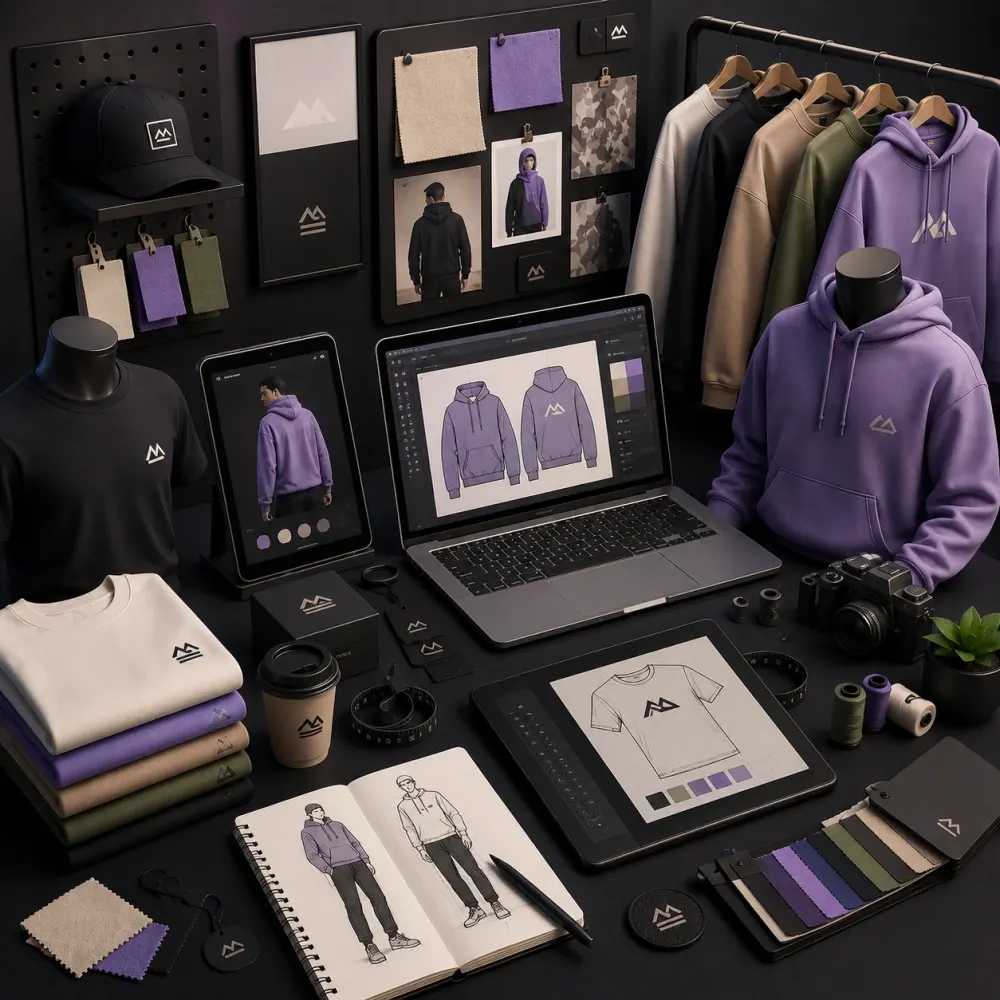
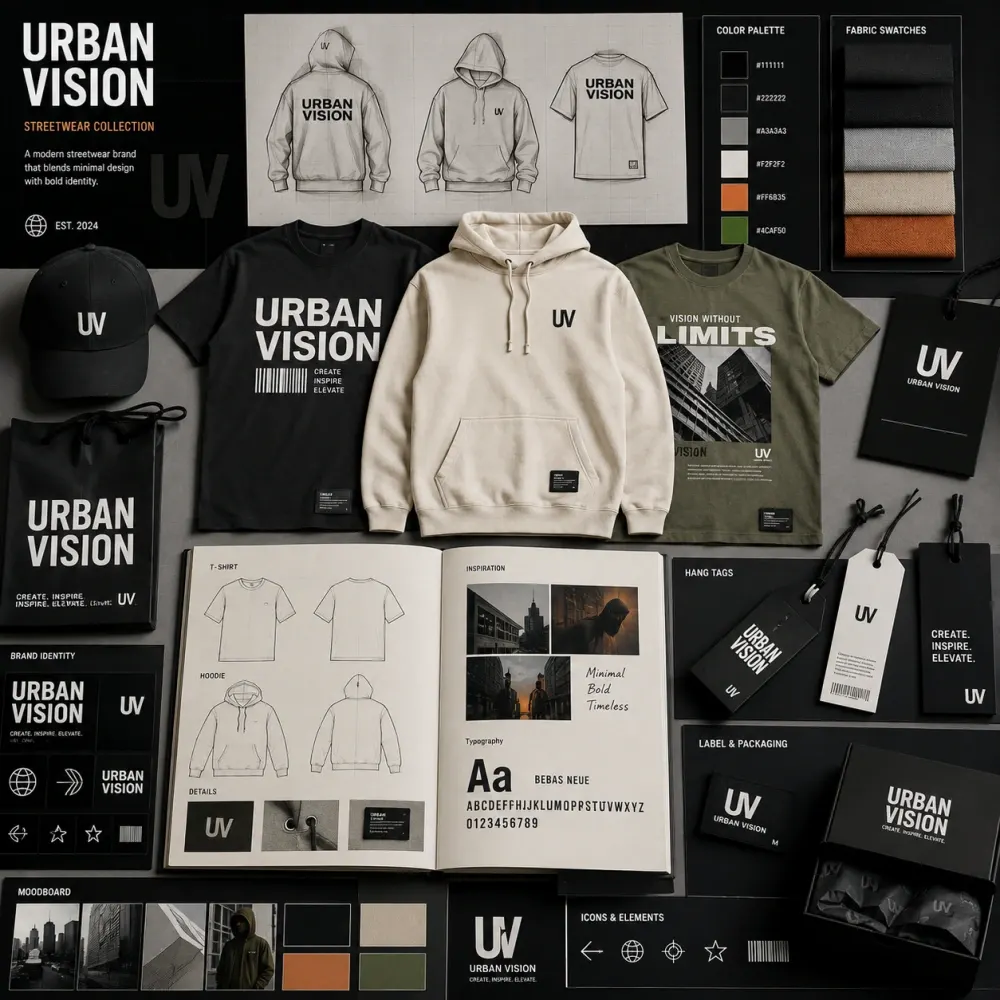
Artwork planned for front, back, sleeves, jersey panels, colourways, mockups and production handoff.
Clothing graphics need to work on fabric, not only on an artboard.
Clothing gives a brand a physical presence people can wear, photograph, sell and share. A strong garment graphic can turn a simple T-shirt, hoodie, jersey or merchandise item into a product that feels connected to a clear identity — and that takes more than dropping a logo in the middle of a mockup.
Our apparel design services focus on the visual side of clothing production. We create T-shirt graphics, hoodie designs, streetwear concepts, merchandise artwork, jersey layouts, typography, illustration, patterns, logo placements, colour variations and garment mockups, and we prepare the artwork for the production method named in the brief.
We start with the product. A retail clothing brand may need graphics that fit a wider collection. A sports team needs numbers, names, sponsor marks and team identity to stay clear. A creator may need merchandise followers genuinely want to wear after the campaign ends. Those are different design problems, so they should not get the same solution.
The garment itself shapes the work, too. Fabric colour changes contrast. Seams and pockets interrupt artwork. A small left-chest mark needs different detail from a large back print. Screen printing creates different constraints from DTG, DTF, sublimation or embroidery. We shape the design around those realities from the start.
Build artwork around the brand, audience and garment.
Custom apparel design gives you control over how a clothing product represents your brand. Instead of starting from a ready-made template, we develop the visual direction around your identity, intended audience, garment type and commercial purpose.
The result might be a bold illustrated back graphic for a streetwear release, a restrained typographic composition for a premium label, a clean staff uniform, or a front-and-back merchandise concept for an event. When an existing brand identity is available, we use its approved logo, colours, typography and visual elements as a starting point.
When apparel needs more expression than the core identity normally allows, we can create a visual extension without making the product feel disconnected from the brand. The aim is not to force every brand asset onto the garment — it is to decide which elements help the clothing feel intentional and recognisable.
Custom work also makes future expansion easier. Once a brand has a useful apparel direction, new graphics, colourways and placements can follow the same visual logic instead of beginning with a completely unrelated style every time.
Graphics for clothing brands, merchandise, teams and everyday branded wear.
Every apparel format opens different possibilities for scale, placement, detail and production. We adapt the artwork to the product in hand rather than treating each garment like the same rectangular canvas.
T-Shirt Design Services
Front prints, back graphics, pocket-area marks, sleeve artwork, typography, illustration and combined layouts for retail, events, teams and branded merchandise.
Hoodie & Sweatshirt Design
Artwork planned around chest, back and sleeve areas, allowing for pockets, seams, zips, drawstrings and the larger surface of a heavier garment.
Streetwear Design
Graphics built around the label’s own visual character — from minimal marks and bold type to illustrated drops and oversized back compositions.
Sportswear & Jersey Design
Team-focused layouts that coordinate colours, sponsor marks, names, numbers and branding on the garment template supplied by the manufacturer.
Merchandise Design
Wearable graphics for creators, restaurants, podcasts, events, communities and companies that want merchandise to feel like a product, not a giveaway.
Uniform & Staff Apparel
Clear branded clothing concepts for teams and workplaces where logo visibility, garment colour, placement and practical repeat use matter.
Garments designed as products, not just decorated.
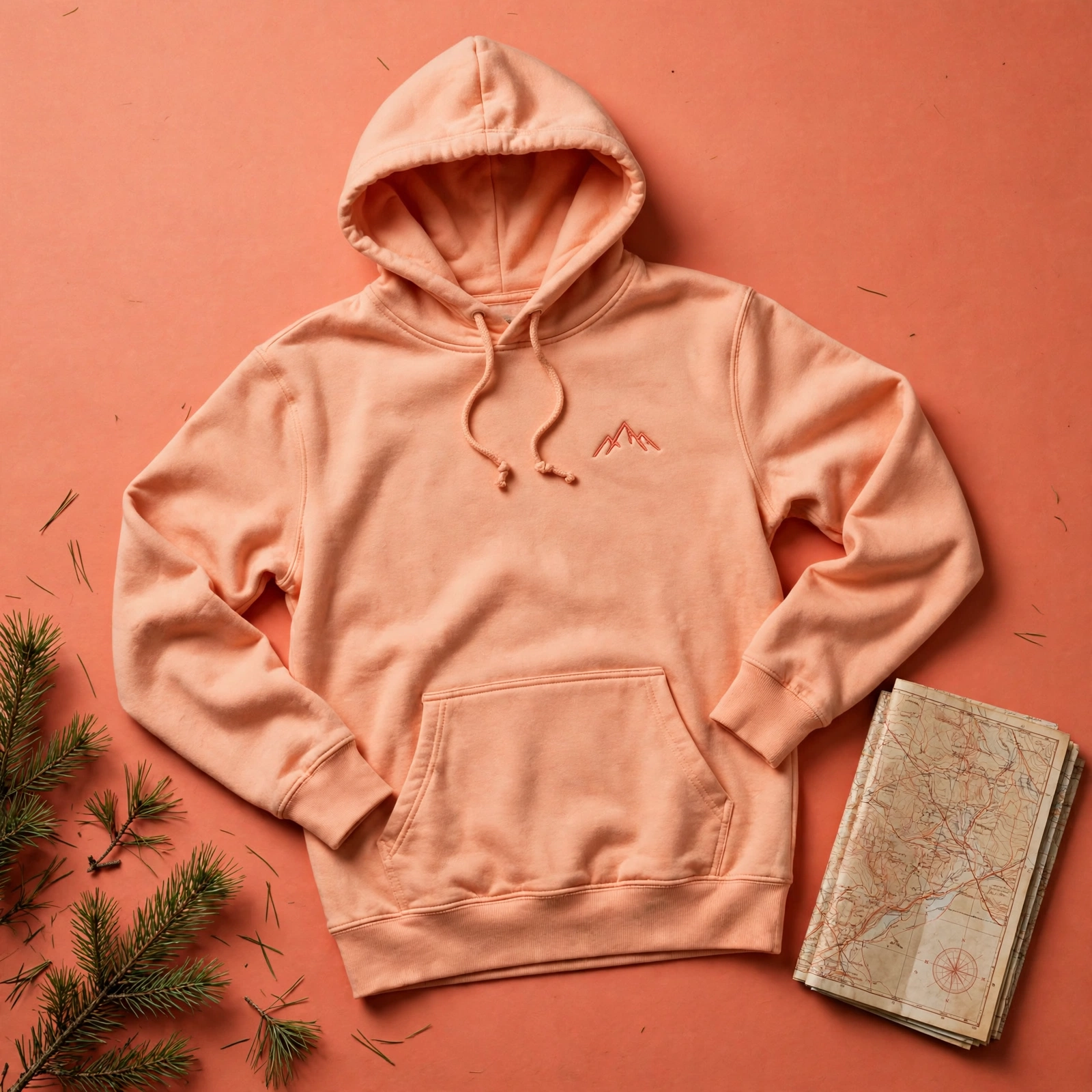
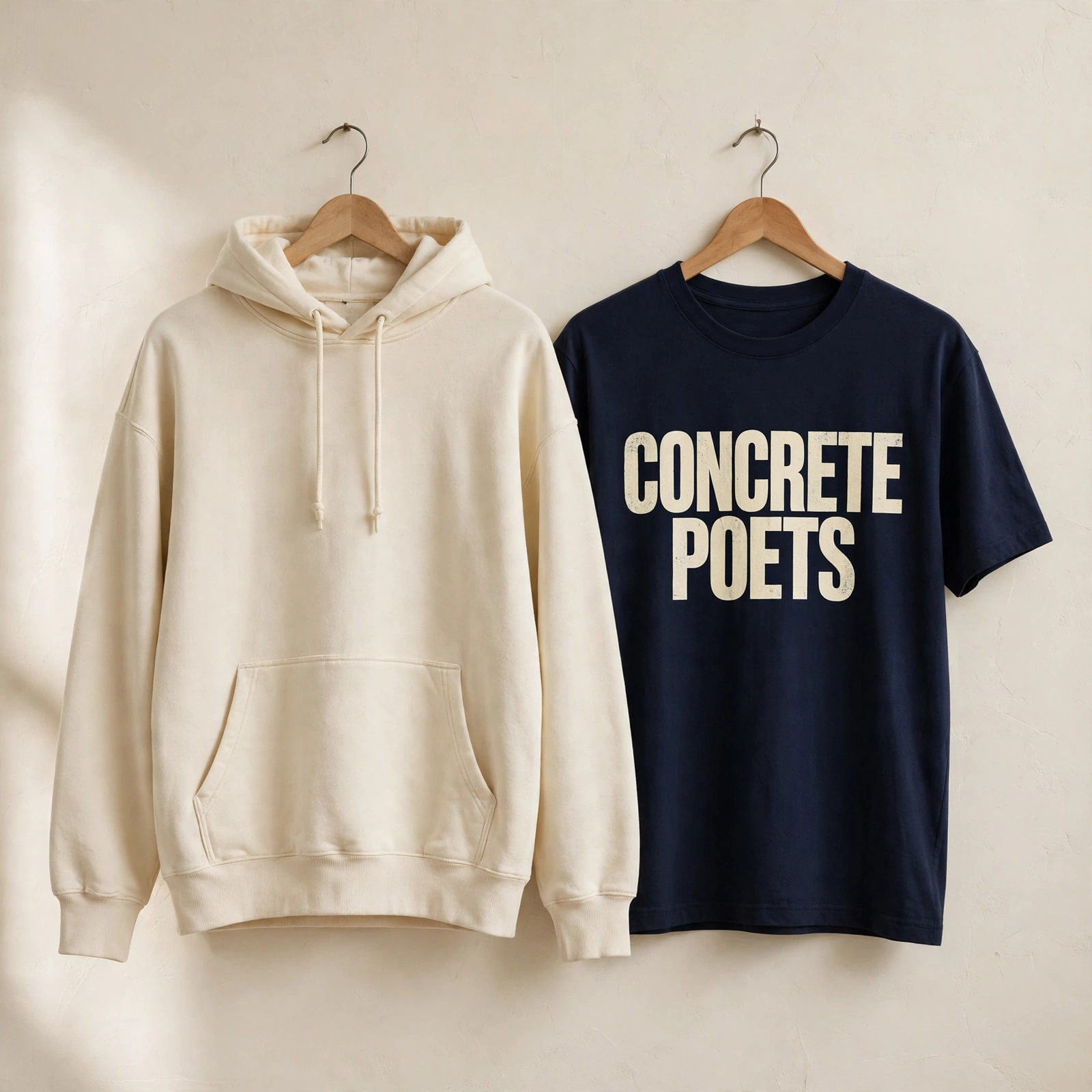
A few recent apparel pieces — a surf tee, an outdoor hoodie, a streetwear drop, a football jersey, podcast merchandise and café staff wear.

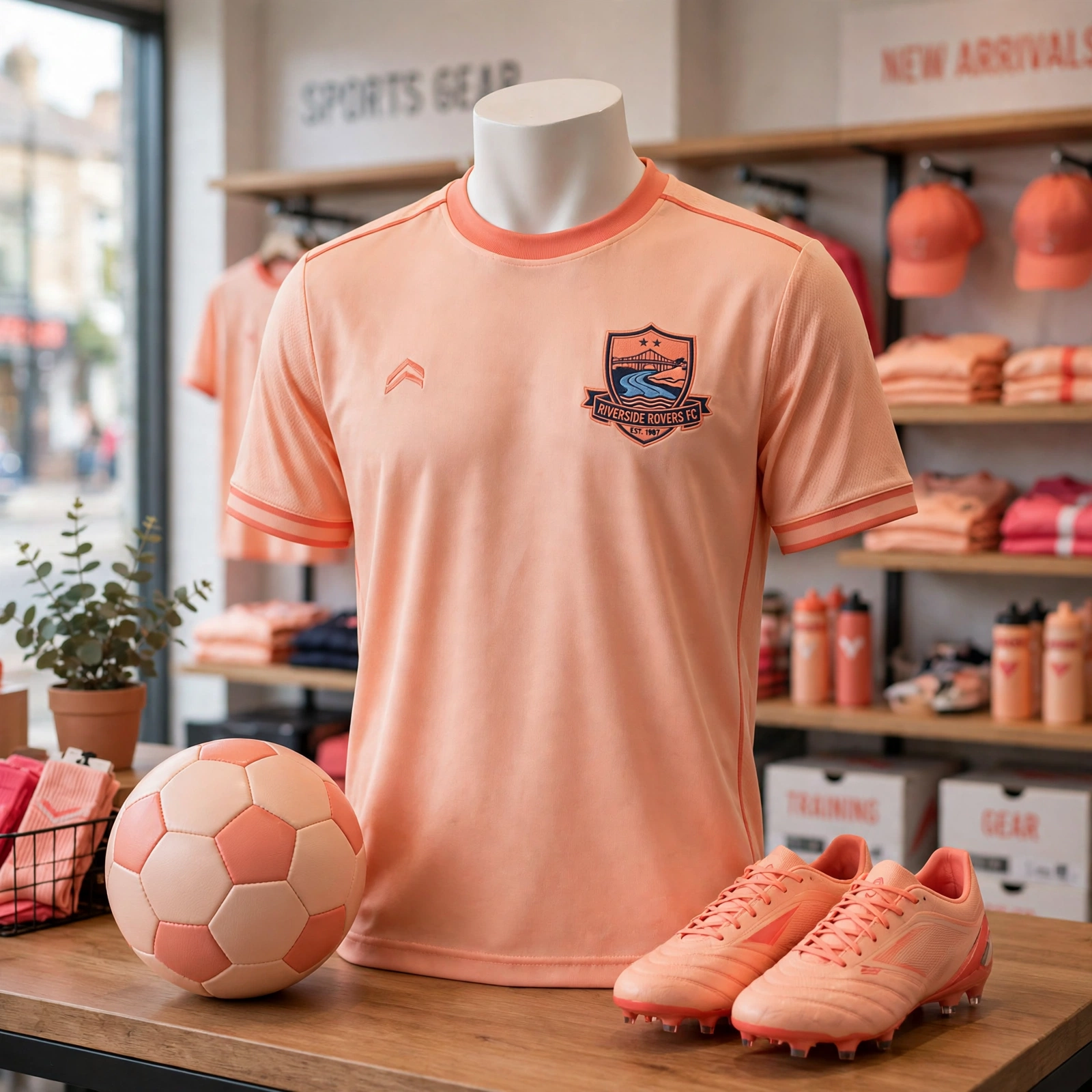
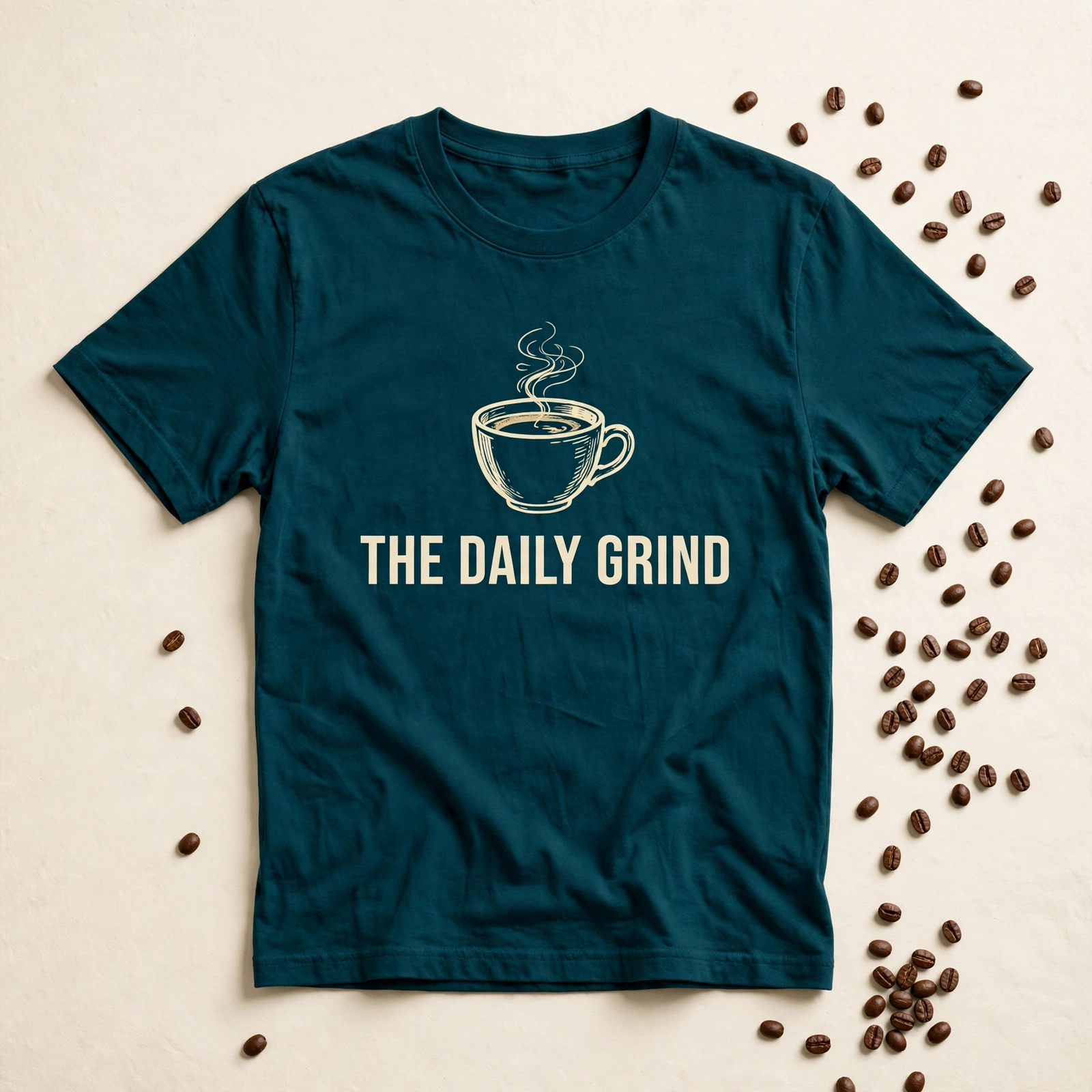

Create a visual language that can continue across a collection.
A clothing label needs more than individual graphics. Its garments should also help build recognition over time. Our clothing brand design work can establish repeated ideas such as typography, symbol use, logo placement, illustration style, colour behaviour, slogans or layout principles across several products.
Consistency does not mean repeating one graphic on every garment. A collection can contain very different designs while still sharing a recognisable creative language. Several pieces may use the same type system and attitude while changing the main illustration. Another range may use one brand symbol at different scales or positions.
For streetwear and fashion drops, we can create a hero design and supporting graphics that feel related when the garments are photographed or displayed together. This makes the release feel planned as a collection rather than assembled from unrelated ideas.
Use typography, illustration and patterns with the garment in mind.
Apparel graphic design can combine typography, symbols, badges, slogans, line art, geometric forms, emblems, custom illustration, photo treatments and pattern work. The strongest choice depends on the product and the audience.
Typography can become the main visual element of a garment. We consider line breaks, scale, spacing, alignment and placement rather than selecting a font and stopping there. Very thin lettering may not reproduce well through some decoration methods, while long phrases may become difficult to read when fabric folds.
Custom illustration can create a more ownable product. We can develop line art, flat vector graphics, badge-style artwork, character illustration or another agreed direction. If the intended printer has a restricted colour count, we can develop the illustration inside that limit instead of simplifying it at the last minute.
For garments that use repeated artwork, textile pattern design can create a seamless or intentionally structured repeat. We consider pattern tile, scale and visual rhythm while the manufacturer remains responsible for final fabric-print specifications and textile production settings.
Prepare the creative work for the decoration method you actually plan to use.
Every printing and decoration process has its own strengths and limits. If the production method is already known, sharing the vendor’s requirements early helps us make artwork that is genuinely useful.
Screen Print Apparel Design
Controlled artwork for solid colours, line work, halftone approaches or simplified illustration. Vendor colour limits and separation requirements should be supplied before final output.
DTF & DTG Graphics
Detailed full-colour artwork and transparent exports prepared around the print provider’s size, resolution and background requirements.
Embroidery-Friendly Artwork
Simplified shapes, controlled detail and clearer lettering that give an embroidery digitiser a cleaner starting point for stitch preparation.
Sublimation & Jersey Graphics
Visual layouts created around the supplied garment template, including team colours, patterns, sponsor placements, numbers and names where required.
Print-on-Demand Design
Artwork prepared around the print area and format of a chosen print-on-demand platform, with mockups available when the package includes promotional presentation.
Print-Ready Apparel Artwork
Organised exports based on the approved dimensions, colours and vendor requirements, so the next production step is easier to understand.
Review how the graphic behaves on the actual garment format.
An artwork file can look balanced by itself but feel completely different once it appears on a T-shirt or hoodie. Apparel mockup design helps show approximate scale, position, colour and overall presentation before production begins.
We can test front, back, chest, sleeve or other approved placements. A small centred chest print communicates differently from an oversized front graphic. A high back placement creates another effect from artwork positioned lower on the garment. These choices become part of the design rather than an afterthought.
Mockups are visual previews, not manufacturing proofs. Garment cut, fabric behaviour, print size and final colour can vary from the presentation. The printer or manufacturer should always confirm exact production dimensions before printing.
We can also create apparel colorways when one design needs to work on several garment colours. Approved light and dark versions can protect contrast and prevent production teams from choosing unplanned colour combinations later.
Plan several garments as one release instead of unrelated individual pieces.
An apparel collection can feel connected through colour, theme, typography, illustration style, repeated symbols, placement or storytelling. We can organise these elements across several garments while still giving each product its own role.
A collection might include one highly detailed hero graphic, simpler supporting designs, a recurring chest mark and several garment colourways. The goal is to create enough variety for the range to feel interesting without losing the visual relationship between products.
This approach can work for fashion startups, streetwear labels, creators, sports communities, seasonal merchandise and businesses launching more than one branded apparel item at the same time.
Different products need different design decisions.
T-Shirt Design for Retail, Events and Brand Merchandise
A T-shirt looks simple, but placement changes the whole character of the design. A small chest mark can feel understated and premium; an oversized back graphic can carry illustration, typography or a full campaign idea. We develop front-only, back-only or coordinated front-and-back artwork around how the shirt will be sold or used. Event and promotional shirts may need a message that reads in a second, while retail fashion can be more expressive and product-led. We also test how the graphic behaves across light and dark garment colours, rather than assuming one file works equally well on every shirt.
Hoodie and Sweatshirt Graphics
Hoodies offer more room for artwork — and more physical interruptions. Pockets, zips, seams, hoods and drawstrings can all affect placement, and a graphic that looks balanced on a flat rectangle can feel awkward once those features appear. We plan chest marks, large back designs, sleeve graphics and supporting details so each element has room to breathe. A zip hoodie may need a different answer from a pullover for a centred front graphic, and while bold type and larger shapes suit heavier garments, the final print method still decides how much detail is practical.
Streetwear and Fashion Drop Graphics
Streetwear design services often need a stronger point of view than standard promotional clothing. The design may use oversized typography, symbols, illustration, distressed treatments, repeated marks or unexpected placement — but we never treat “streetwear” as one fixed visual style. A technical label, a minimal luxury-inspired brand and a youth-focused graphic brand can all sit in the category while needing very different creative directions. When several pieces belong to one drop, we look for a shared idea that connects them: a recurring phrase, symbol, colour family, type treatment or illustration language, rather than one repeated graphic.
Merchandise People May Want to Wear After the Campaign
Merchandise design works better when the product has value beyond basic promotion. A restaurant, creator, podcast, event, sports community or company may already have recognition, but putting the main logo on a blank shirt does not automatically create merchandise anyone wants to wear. We build graphics around the culture, message, place, product or community behind the brand — slogans, inside references, illustrated elements, limited-edition themes or reworked brand assets. The goal is to keep the identity visible while giving the garment enough design value to stand on its own.
Keep team identity, player information and sponsor content clear.
Sportswear design often combines more information than a normal T-shirt. A jersey may need the team name, crest, player number, surname, sponsor logos, league information, colour blocking and a background pattern to work together on one garment. We organise those elements so the team identity stays dominant and the important information remains readable.
Number design deserves particular attention. Thin or overly decorative numerals may look interesting in isolation but become difficult to identify from a distance. Sponsor marks also need enough separation from player numbers and team graphics. When a manufacturer supplies a jersey template, we can place the artwork inside that structure and coordinate front, back and sleeve areas.
The clothing producer remains responsible for garment pattern engineering, seam allowances, panel construction, sublimation setup, fabric choice and final manufacturing. Our role is the visual jersey concept and the artwork package agreed for the project. Clear separation between design and manufacturing helps avoid assumptions about technical processes controlled by the vendor.
Deliver artwork that your printer or manufacturer can actually review.
A final garment mockup is useful for approval, but production teams normally need separate artwork files. Depending on the design and the vendor, we can supply editable AI, EPS, SVG or PDF vector files, high-resolution transparent PNG artwork, or other agreed exports. Some graphics are naturally vector-based while complex textured or photographic artwork may need a high-resolution raster master.
We can include print-size references, named colour variations, separate front and back artwork, and clearly organised files when those items are part of the package. If the vendor supplies a template, we can adapt the approved design to that template rather than asking the printer to interpret a presentation image.
Production requirements still vary by equipment. A screen printer may ask for separated colours. A DTF provider may prefer a transparent PNG at a specific size. An embroidery company needs stitch digitising after the artwork stage. A sublimation manufacturer may use its own garment panels. We prepare the design around the information supplied, while the production vendor confirms the final machine-ready setup before manufacturing.
From garment brief to production-focused artwork.
The process flexes for a single shirt or a wider collection, but every project begins by understanding the product and how it will be made.
Garment Brief
We confirm the garment type, audience, purpose, fabric colours, print locations and known production method.
Brand & Reference Review
We review logo files, brand guidelines, wording, previous collections and the visual references that matter.
Creative Direction
We develop the agreed concept around typography, illustration, logo use, colour and the physical garment area.
Garment Mockup
Where included, mockups show approximate scale, placement and how the artwork sits against the garment colour.
Revision & Refinement
We refine the chosen direction within the package’s revision allowance and confirm the final visual treatment.
Production Handoff
We prepare the agreed source and export files around the specifications available from your chosen production vendor.
A useful brief prevents avoidable production changes later.
Tell us the garment type, intended audience, garment colours, required wording, logo assets, brand guidelines, print placements and how many designs you need. If you already know whether the garment will use screen print, DTF, DTG, sublimation or embroidery, include that too.
References can communicate mood, detail level or placement, but they should guide the direction rather than become artwork to copy. Existing clothing brands can share previous releases too, so new work does not drift away from visual elements their audience already recognises.
If the manufacturer provides a garment template, maximum print area, colour restrictions or file requirements, send them before the final-artwork stage. Those details can materially change how the design should be built.
Choose a package based on how many garments and design directions you need.
These prices cover DesignBub’s creative and artwork-preparation service. Garments, printing, embroidery, sampling, manufacturing, labels, packaging, shipping and third-party production charges are not included unless a quotation says otherwise.
Apparel Graphic Starter
For one focused T-shirt, hoodie or merchandise graphic that needs a clear concept and production-ready artwork.
- 1 apparel design
- Up to 2 initial concept directions
- Front or back primary placement
- 1 garment mockup
- 1 approved colorway
- Print-ready artwork export
- Editable source file
- 2 revision rounds
Merch & Brand Pack
For brands that need a small coordinated merchandise range with more placements, colour options and presentation.
- Up to 3 apparel designs
- Front/back placement planning where needed
- Up to 3 garment mockups
- Up to 2 colorways per approved design
- Basic typography or graphic system
- Vector/high-resolution production files
- Editable source files
- 3 revision rounds
Apparel Collection System
For clothing labels, campaigns or merchandise launches that need a connected visual direction across several products.
- Up to 6 coordinated apparel designs
- Collection-level creative direction
- Multiple front/back/sleeve placements as scoped
- Up to 6 garment mockups
- Up to 3 colorways per approved design
- Vendor-template adaptation when supplied
- Organized master/source files
- 4 revision rounds
Package comparison
| Included | Starter | Brand Pack | Collection |
|---|---|---|---|
| Apparel designs | 1 | Up to 3 | Up to 6 |
| Initial directions | Up to 2 | Project based | Collection direction |
| Mockups | 1 | Up to 3 | Up to 6 |
| Colorways | 1 | Up to 2/design | Up to 3/design |
| Editable source files | Included | Included | Included |
| Production exports | Included | Included | Included |
| Revision rounds | 2 | 3 | 4 |
Expand the package only where the product needs it.
Important: embroidery digitizing, screen separations, physical samples, blank garments, printing, fabric production, cutting, sewing, shipping and other manufacturer charges remain separate unless they appear in a custom quotation.
Price depends on creative depth, not only on the number of garments.
The apparel design cost changes with the amount of creative and production work involved. A simple logo placement takes less time than an original illustrated T-shirt, and a single garment needs less coordination than a six-piece streetwear drop with several colourways and mockups.
Other factors include front and back artwork, sleeve graphics, custom illustration, pattern design, jersey personalisation, number of concepts, production templates, source-file setup and how much revision is needed after the initial direction.
We keep the design fee separate from manufacturing, so you can see exactly what you are paying DesignBub to create. The printer, embroiderer, print-on-demand platform or garment manufacturer then quotes the physical production on quantity, fabric, print method and finishing.
Compare the actual scope, not only the price attached to one mockup.
When choosing an apparel design company, ask how many original designs the quote includes, whether front and back placements count separately, how many colourways are included, which source files you receive and whether mockups are part of the package.
It also helps to ask whether the designer can work from a manufacturer’s template, and how custom illustration changes the scope. A useful provider should clearly separate visual design from manufacturing, embroidery digitising, screen setup and the other technical processes handled by the production vendor.
Clear deliverables reduce confusion when the artwork leaves the design stage. The final files should make it easier for the next person in the workflow to understand the intended artwork, size, colour and placement — rather than forcing them to rebuild the design.
Clothing graphics and production files — the usual questions.
What the design service covers, and where the printer, manufacturer or embroidery vendor takes over.
We can create graphics and visual concepts for T-shirts, hoodies, sweatshirts, polos, jerseys, uniforms, jackets, caps, merchandise and other suitable garments. The final artwork setup depends on the product and production method.
Yes. We can develop a connected visual direction across several garments, including hero graphics, supporting artwork, typography, logo placements, colourways and mockups within the agreed scope.
Our core service is apparel graphic design and artwork preparation. Garment sourcing, printing, embroidery, sewing, sampling and manufacturing remain separate unless a quotation specifically includes them.
Yes. We can prepare high-quality graphics and transparent exports according to the size, resolution and file requirements supplied by your DTF or DTG print provider.
The Starter package includes two revision rounds, the Brand Pack includes three, and the Collection package includes four. A completely new concept after approval may require a separate scope.
Apparel that feels designed as a product, not just decorated.
Send us your garment type, brand assets, wording, references, planned print method, garment colours and vendor template if you have one. We will turn those inputs into custom apparel artwork with a clear scope and a production-focused handoff.