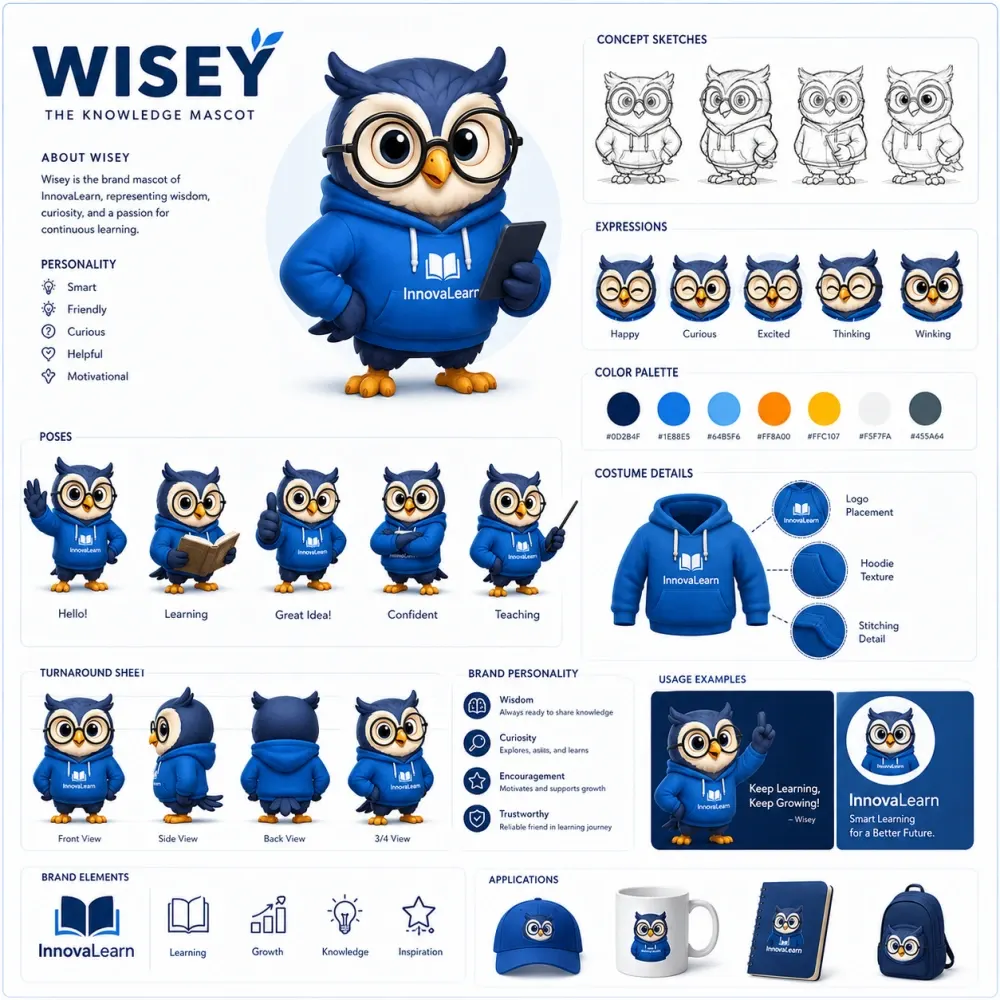
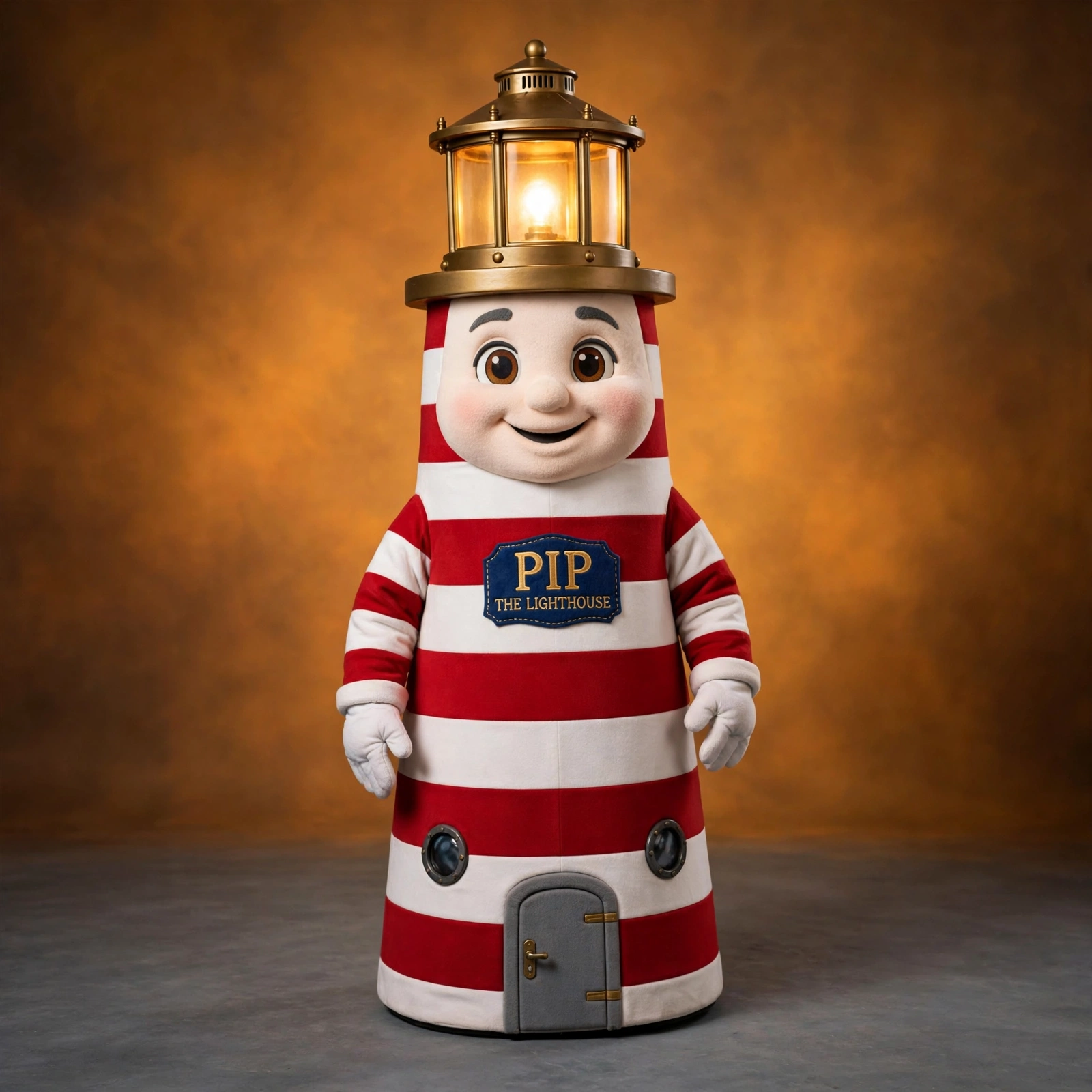
Costume DesignClothing can explain a world, a role and a personality without a paragraph of text.
A uniform, a cloak, a pair of worn boots — costume tells a story instantly. It says where the character comes from, what they do, and how seriously they take themselves, before a single line of dialogue.
We design costume with the character's world in mind, and we keep it practical: a costume that cannot be drawn twice, or that falls apart in a new pose, is a costume that will be abandoned.
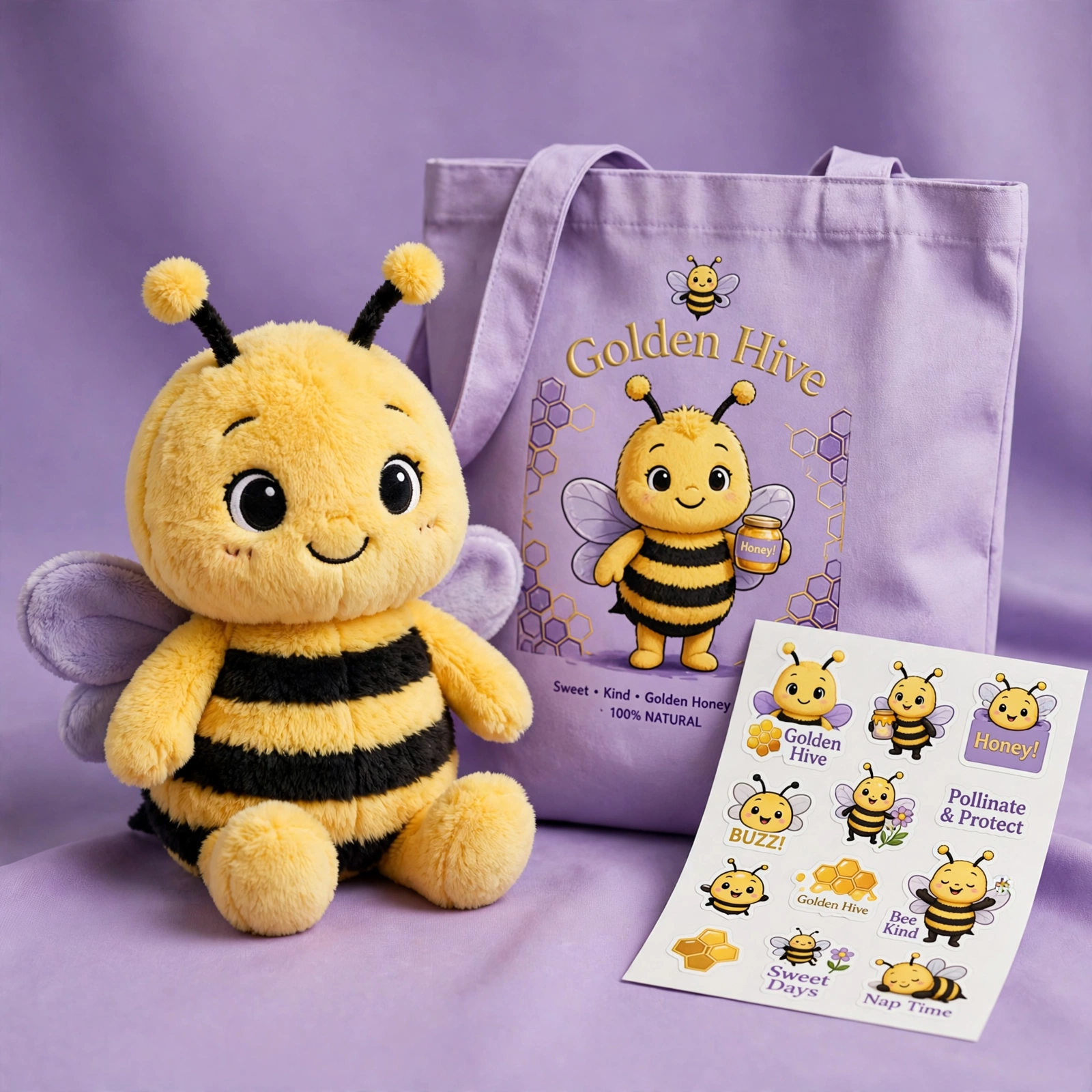
Props & AccessoriesOne well-chosen object can tell as much story as a whole costume.
A prop can do the same work in a smaller package. A signature object — a tool, a toy, a weapon, a book — can become the character's calling card, recognisable even in silhouette.
We choose props that mean something to the character, not decoration added to fill an empty hand. The best props suggest a history.
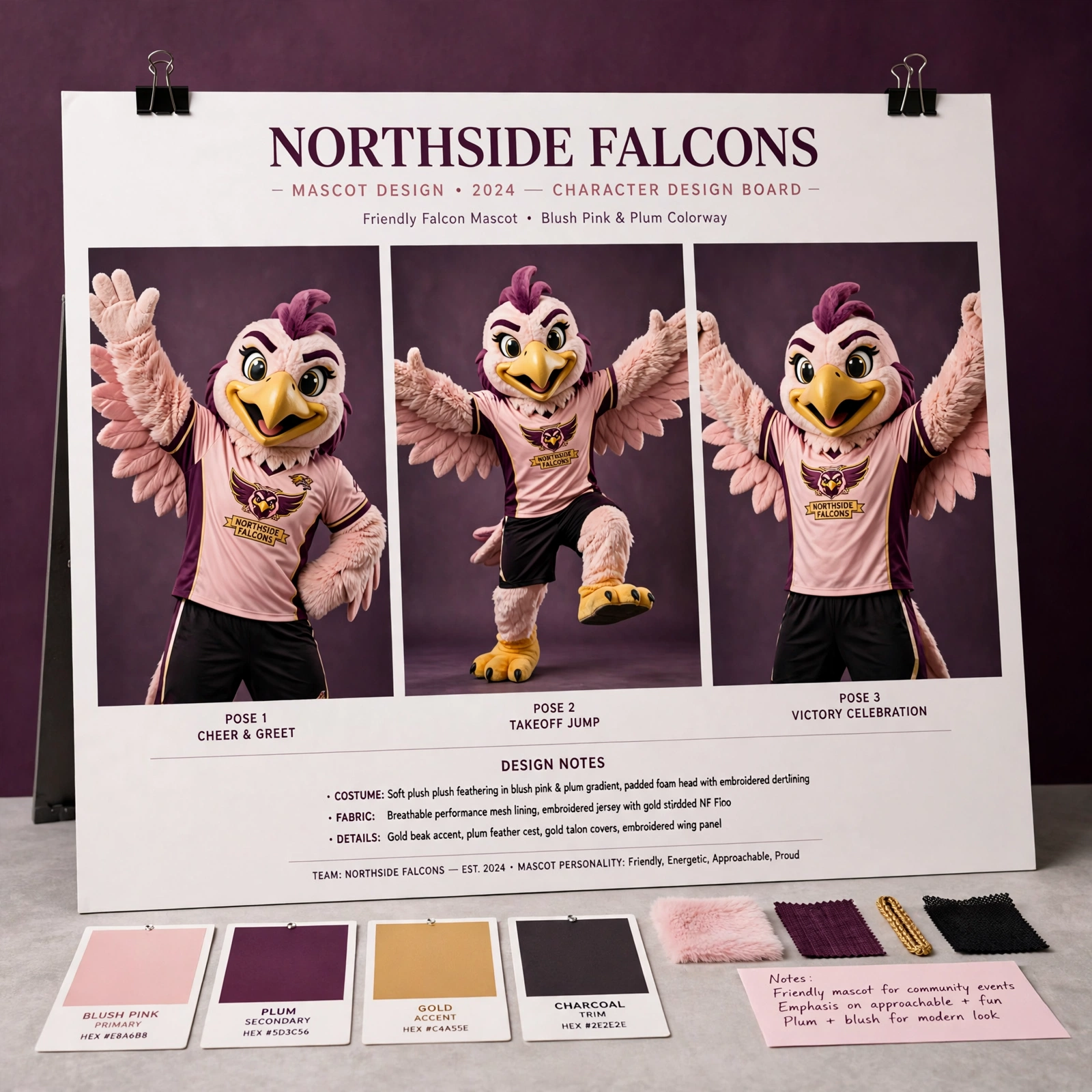
Color DevelopmentColour works when one shade leads and the rest follow.
A palette is not a collection of pretty colours; it is a hierarchy. One colour leads, one or two support, and the rest appear sparingly. That order is what makes a character readable at a glance.
We test the palette against its real uses: on light and dark backgrounds, at small sizes, in print and on screen, so the character never becomes a muddy shape in the wrong context.
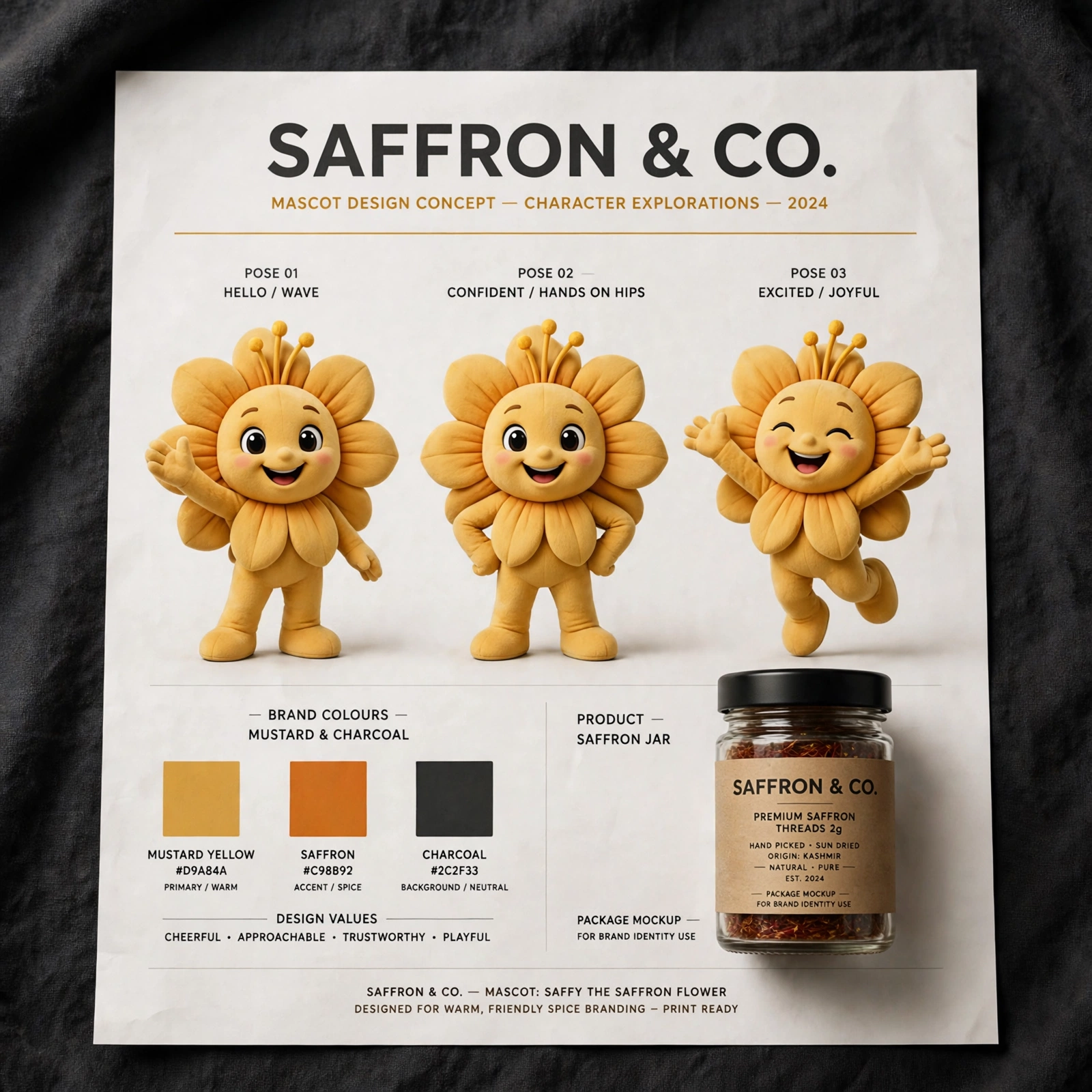
Style DevelopmentPick the rendering style your audience and your production schedule can both live with.
The art style is a practical decision as much as an aesthetic one. A simple, bold style is easy to reproduce across a team and a long production. A detailed painterly style is richer, but slower and harder to keep consistent.
We agree the style with you in the context of your audience and your production plan, so the character you approve is a character your team can actually keep drawing.