Custom Signage Design Services for Businesses

DesignBub creates signage for storefronts, offices, retail spaces, buildings, reception areas and wayfinding systems. We plan around real dimensions, viewing distance, brand identity and production needs so the design works beyond the screen.

$299Starting Design Package
VectorProduction-Ready Artwork
CustomBrand & Space Focused
Custom business signage design
Premium storefront and office signage design
Signage Design

Clear visual systems for the places where customers actually see your brand.

Signage should work in the physical world, not only on an artboard

A sign often becomes one of the first physical interactions someone has with a business. People may notice your storefront before they visit your website. A customer entering an office may look for a reception sign before speaking to anyone. Visitors inside a large building rely on directional signs to understand where they need to go. Retail environments use signage to attract attention, identify departments and support the customer journey.

Good signage does more than display a name. It communicates identity, creates visibility, provides direction, organizes information and helps people understand a physical space. Our signage design services focus on those practical jobs as much as the visual appearance.

We design around the place where people will actually see the sign. That means considering viewing distance, available space, architecture, lighting, brand colors, text size, placement, likely materials and the amount of information a viewer can understand quickly. A beautiful sign can still fail if customers cannot read it from the road. A directional sign can look modern but create confusion if the hierarchy is unclear.

What professional signage design includes

Professional signage design covers the visual planning and preparation of signs used to identify, promote, direct or inform people within a physical environment. The project may involve one business sign or a coordinated signage family across a complete site.

A small shop may only need an exterior fascia and window graphics. A corporate office may need entrance identification, reception branding, room signs, department labels, directional signage and floor information. A retail location may use storefront signage, hanging signs, promotional graphics, category signs and checkout communication.

A sign designer therefore needs to think beyond the artwork on a screen. Viewing distance, approach direction, lighting, surrounding visual noise and the production method all influence the design before final artwork is prepared.

Signage Design Services

Design support for exterior, interior and wayfinding signage

Each sign type solves a different communication problem. We adjust the layout, hierarchy and production approach to the actual environment instead of applying one template to every project.

01

Storefront & Fascia Signage

Shopfront concepts that balance logo visibility, proportions, supporting information and real viewing conditions.

Exterior Branding
02

Office & Reception Signage

Reception walls, office identification, room signs and branded interior applications designed around the space.

Corporate Interiors
03

Wayfinding & Directional Signs

Clear information systems using typography, arrows, numbering, icons and consistent destination naming.

Navigation
04

Retail Signage Design

Storefront, category, promotional and in-store signage organized around customer movement and message priority.

Retail
05

Building & Pylon Signage

Large-format identity concepts planned for scale, approach direction, architecture and long-distance visibility.

Large Format
06

Window & Wall Graphics

Branded glass graphics, wall visuals and environmental design that add information without creating clutter.

Environmental Graphics

Business signage design starts with recognition

Your business signage should help people identify the company quickly. Many signs become weaker because they try to communicate everything at once. The logo becomes too small while service lists, phone numbers, social handles, slogans, addresses and promotional lines compete for attention.

Our business signage design process creates a visual hierarchy. The business name or brand identity usually receives the strongest position. Supporting information only appears when it serves a clear purpose. A roadside sign may need extreme simplicity because people have seconds to read it. A reception panel can use more space and detail because viewers stand closer and have more time.

Custom signage design for the actual location

Every physical location creates different design requirements. A logo that works perfectly on a website may need changes in spacing or arrangement when it appears across a large building fascia. A narrow storefront may need a horizontal solution. A tall entrance feature may need a vertical composition. Glass surfaces may suit vinyl graphics while an interior wall may support dimensional lettering.

Our custom signage design work can use site photographs, dimensions, architectural drawings, floor plans or production specifications supplied by the client or fabricator. We adapt the visual direction around those limits instead of stretching a generic layout until it fits.

Shop and storefront signage design

A shop sign competes with neighboring stores, vehicles, street activity, architecture and advertisements. It needs to become noticeable without becoming chaotic. Our shop signage design service focuses on recognition, readability, scale and brand fit.

A premium boutique may benefit from restrained lettering and clean materials. A food outlet may need stronger contrast and immediate recognition. A pharmacy may prioritize clarity. A technology store may use lighting and dimensional elements to create a modern impression. The design should suit the business instead of forcing one fashionable style onto every storefront.

For broader storefront signage design, we can coordinate the main fascia with window graphics, door information, hanging signs or campaign panels so the complete frontage feels like one visual system.

Sign board design that communicates quickly

A sign board has very little time to communicate. The viewer should understand the most important message first. Depending on the purpose, the board may identify the business, explain a service, show a direction or present a call to action.

Professional sign board design relies on strong hierarchy, appropriate type size, spacing, contrast, logo placement and disciplined supporting copy. A board beside a pedestrian entrance can contain more detail than a board viewed from a moving vehicle. Adding more text does not automatically communicate more information. Often, removing unnecessary copy creates a much stronger result.

Outdoor signage design for distance and changing conditions

Outdoor signs work under conditions that digital graphics do not face. Sunlight changes. Buildings create shadows. People approach from different angles. Vehicles move past quickly. Other signs compete for attention. Our outdoor signage design process accounts for these realities.

High contrast usually improves visibility. Letter sizes need to match viewing distance. Fine details that look impressive on a monitor may disappear at architectural scale. Colors should remain recognizable against the surrounding environment. We design exterior concepts so the idea does not depend on details that the viewer will never notice.

Indoor, office and reception signage

Interior signs usually serve different purposes from outdoor signs. People stand closer and often have more time to read. The signs can also become part of the interior design rather than simply competing for attention.

Indoor signage design may include reception branding, directional signs, department markers, wall graphics, floor directories, meeting-room signs and informational panels. We consider wall surfaces, furniture, lighting, materials and surrounding visual elements so the sign feels connected to the space.

For office signage design, we can combine practical navigation with corporate identity. Entrance signage confirms that visitors reached the right organization, reception signage reinforces the brand, and directional signs reduce unnecessary confusion throughout the workplace.

A reception wall often becomes one of the most visible branded areas inside a business. Our reception signage design work considers the logo, wall proportions, furniture, lighting and expected viewing position. Sometimes a smaller mark with generous surrounding space creates a stronger premium impression than an oversized logo.

Corporate and multi-location signage systems

A company with several offices or branches needs consistency. Customers should not encounter one signage style at headquarters and a completely unrelated system at another location. Corporate signage design can establish repeatable rules for logo placement, typography, colors, directional signs, room identification and common proportions.

The system should remain flexible enough to work across spaces with different dimensions. Consistency does not mean every sign must be identical. It means the same visual logic should connect them. This makes future branch adaptations faster and helps the physical brand feel intentional.

Retail signage design for the complete customer journey

Retail spaces use signage at many points. The storefront attracts attention. Category signs help customers locate products. Promotional signs explain offers. Directional information organizes movement. Checkout signs reduce confusion.

A strong retail signage design system creates different levels of importance. Permanent brand signage should not look identical to a temporary promotion. Directional information should stay easy to scan. Campaign graphics can become more expressive without weakening the core identity. The customer should understand the environment without needing to stop and study every sign.

Wayfinding signage design is an information problem first

Wayfinding helps people understand where they are and how to reach a destination. It becomes important in offices, hospitals, shopping centers, educational facilities, hotels, campuses and other large environments.

Professional wayfinding signage design involves more than adding arrows. The system needs logical information. Where does a visitor first make a decision? Which destinations should appear together? When should another sign confirm that the person is still moving in the correct direction? What names will visitors understand immediately?

We organize this information into a clear visual hierarchy. Typography, arrows, icons, numbering, color coding and sign placement should work together. The strongest wayfinding systems often feel simple because the difficult decisions have already been solved during planning.

Directional signage design should be fast to understand

Directional signs need speed and clarity. People should understand the direction without stopping to decode the layout. We use clear arrows, readable typography, appropriate spacing and consistent naming.

A directional sign should not become an advertising poster. If decorative elements compete with the destination and arrow, the sign loses its purpose. Consistency also matters: arrows should behave the same way throughout the site, destination names should stay consistent, and icons should follow one visual language.

Building, pylon and large-format signage

Building signage design operates at a larger scale and may identify a headquarters, commercial property, hotel, hospital, factory or retail complex. The design needs to account for architecture, viewing angles, road approach, installation height and surrounding structures.

Logo proportions become especially important. A mark designed for a business card may contain small elements that become difficult to reproduce at architectural scale. We can adjust spacing and presentation while protecting recognition.

3D signage and dimensional lettering

Dimensional signage creates physical depth. Letters or symbols can stand away from a wall, cast shadows and interact with environmental lighting. 3D signage design may use acrylic, metal, PVC, wood, fabricated letters or other materials depending on the project.

The artwork needs to respect how those materials behave. Very thin typography may be difficult to fabricate. Tiny gaps may disappear. Complex gradients may not translate into cut materials. We adapt the artwork so the final sign works as a physical object rather than only as a flat digital presentation.

Illuminated signage design for day and night

Lighting can improve visibility and change how a sign feels at night. Illuminated signage may use face lighting, back lighting, halo lighting, internal lighting or light boxes.

Our illuminated signage design concepts consider both daytime and nighttime appearance. Bright lighting does not automatically create a better sign. The lighting should support the identity and environment. A premium business may suit subtle halo lighting, while a roadside retail location may require stronger face illumination.

Fascia signage design for storefront identity

The fascia often carries the primary identity across the front of a shop or commercial unit. Because it sits above the entrance, it needs to remain readable from several positions.

Fascia signage design starts with the available width and height. We then determine logo scale, background treatment, letter spacing, supporting information and whether illumination needs to influence the layout. Not every detail from a brand identity belongs on the fascia. Sometimes the logo alone creates the strongest result.

Window signage and glass graphics

Windows provide useful branding space without always requiring permanent structural signage. Window signage design can use vinyl graphics, frosting patterns, campaign artwork, opening information, privacy treatments or decorative brand elements.

We consider how the graphics look from inside and outside. Natural light can affect contrast. Furniture behind the glass may compete with the artwork. Large printed areas can also reduce daylight, so the design should balance communication with the role the glass already plays.

Signage should extend the brand identity

Signage should look like part of the brand rather than a separate visual identity created for the building. We use existing logos, typography, colors, patterns and graphic elements where available.

Physical production may still require practical adjustments. A pale brand color may lose visibility outdoors. A detailed mark may be difficult to fabricate. A thin typeface may perform poorly when illuminated. This is where signage branding differs from simply placing the logo on a rectangle. We protect recognition while adapting the brand to real-world conditions.

Typography, color and contrast affect readability

Typography plays a major role because signs are often read from much greater distances than websites or brochures. Letter height, stroke thickness, spacing, capitalization and contrast all affect readability.

Brand typefaces work well when they remain clear, but directional information may need a simpler supporting typeface. We also check foreground and background contrast because attractive brand colors do not always remain readable at distance or in changing light.

Signage mockups help clients judge scale

A flat artwork file can make scale difficult to judge. A logo may look balanced on an artboard but feel too small once placed on a large wall. A sign may appear elegant by itself but disappear against the building.

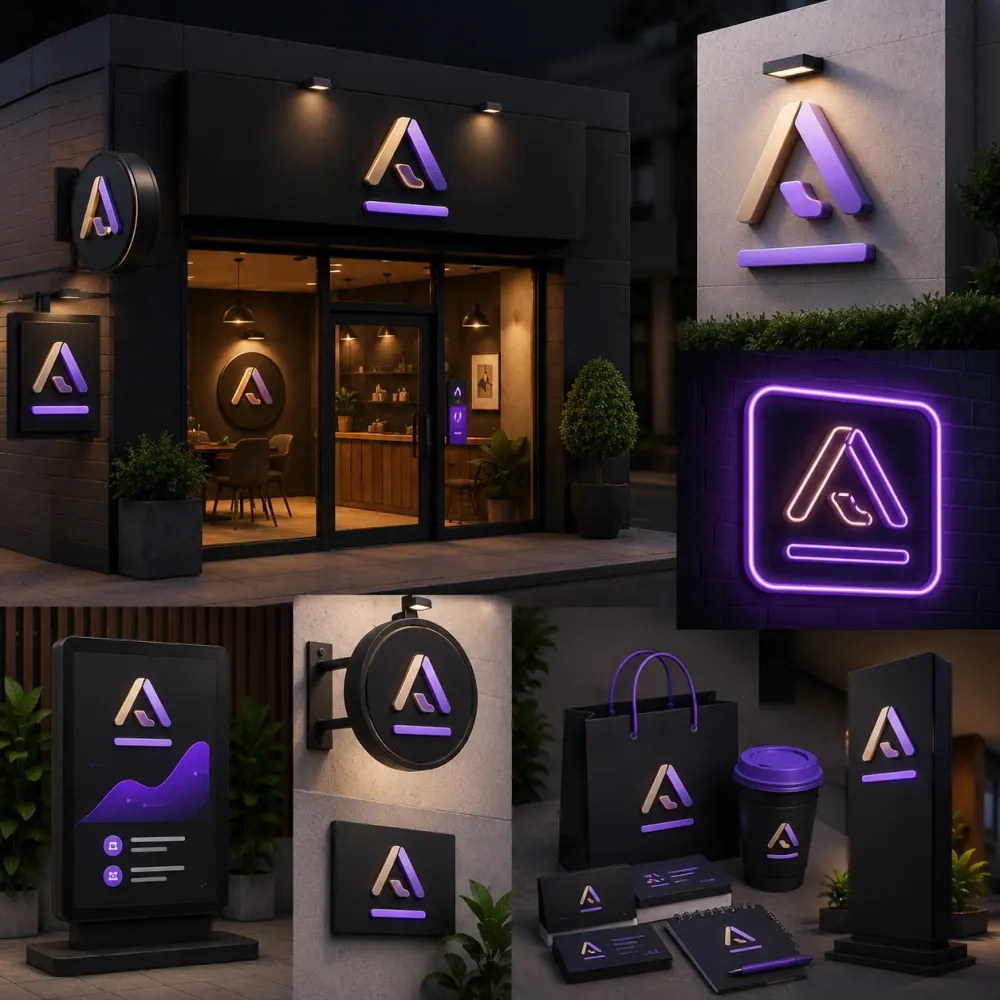
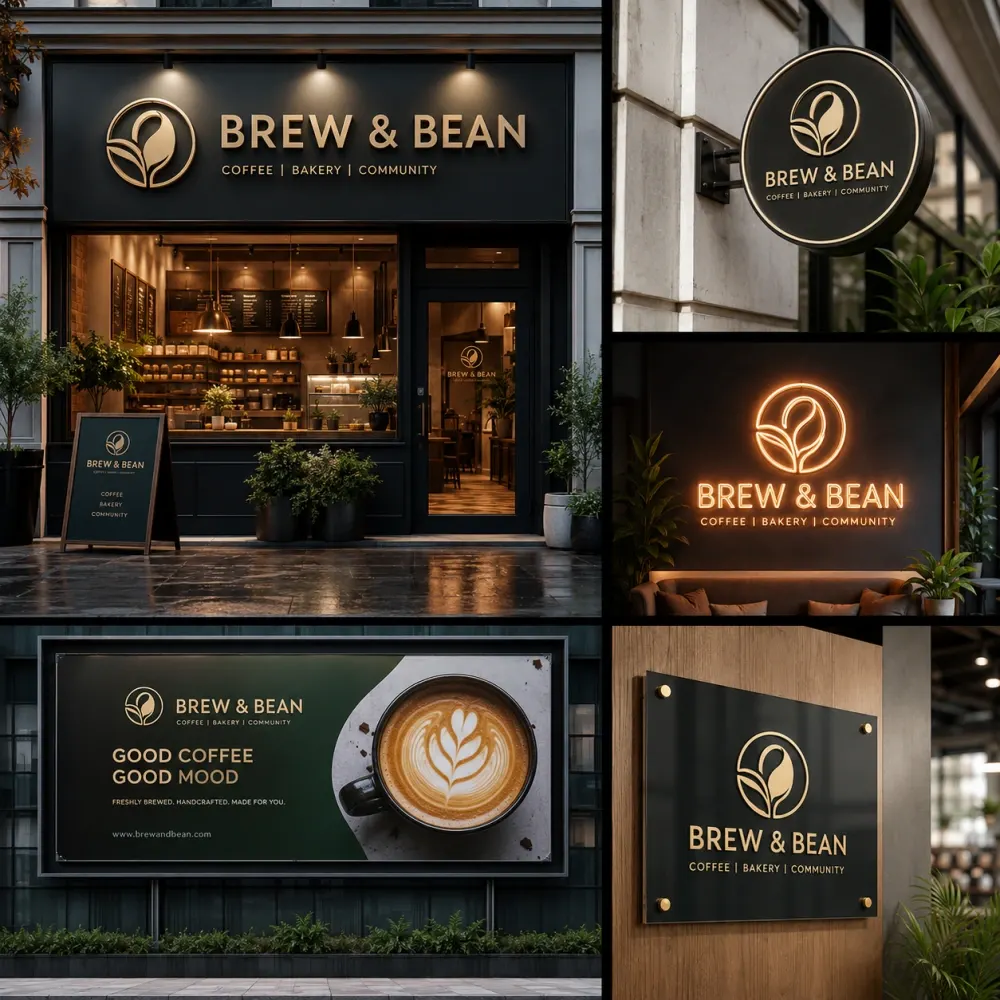
A signage mockup design can place the proposed artwork on a site photograph to show approximate positioning, proportion, color and overall appearance. Mockups support creative approval, but they do not replace engineering drawings, structural calculations or final site verification.

Designing artwork for fabrication

A signage file eventually needs to become a physical object, so production preparation matters. Vector artwork usually gives fabricators more flexibility. Fonts may need outlining. Colors need clear references. Cut lines, dimensions or separate layers may be required depending on the agreed deliverables.

DesignBub can prepare the graphic design and production-ready visual artwork within the project scope. The manufacturer remains responsible for material selection, engineering, structural safety, electrical work, code compliance, permits and installation unless those services are specifically included in a written quotation.
Practical Design

Why production-aware signage creates a stronger final result

A sign needs to work after it leaves the design file. We make decisions around real scale, message priority, brand consistency and the physical output so the final concept remains useful when it reaches the fabricator.

Readable at the right distance

Type size, contrast and copy length are planned for how people are likely to view the sign.

Designed around real dimensions

We work with the wall, fascia, panel or display proportions instead of designing on a generic canvas.

Brand consistency across sign types

Exterior, interior and directional signs can share one visual language without all looking identical.

Cleaner vendor handoff

Approved artwork can be supplied in scalable formats with the agreed dimensions and basic production references.

Our signage design process

Our process starts with information about the location. We review the business, brand assets, sign type, dimensions, site photographs, intended message, viewing conditions and any fabrication requirements already available.

Next, we establish the design direction. We decide how prominently the logo should appear, what supporting information belongs on the sign, which visual elements support the identity and how the composition fits the physical space.

We then develop the signage concept and suitable placement mockups. Client feedback guides refinement. Once the selected design receives approval, we prepare the agreed artwork for vendor handoff. Larger signage systems may require additional planning because several sign types need to work together.

01

Site & Brief Review

Share the logo, photos, dimensions, sign type, required wording and known production details.

02

Hierarchy & Direction

We define the main message, brand priority, viewing distance and visual approach.

03

Concept & Mockup

We develop the agreed sign applications and show suitable concepts in context.

04

Refinement

We adjust scale, typography, color, spacing and production details based on feedback.

05

Final Handoff

You receive the agreed vector, PDF, mockup and production-reference files.

What we need before starting

The most useful starting material includes the business logo in a high-quality format, brand guidelines when available, site photographs, approximate or confirmed dimensions, required wording and examples of signage the client likes or dislikes.

We also need to understand the intended sign type. A printed board has different possibilities from individual metal letters. An illuminated light box behaves differently from vinyl graphics. A pylon needs different information hierarchy from an office room sign. If the fabrication method has already been selected, sharing the manufacturer's technical limitations early can reduce redesign later.

Design-Only Pricing

Signage design packages with a clear scope

These packages cover creative signage design and production-ready artwork. Fabrication, materials, structural engineering, electrical work, permits, delivery and installation are not included unless a written quotation specifically says otherwise.

Focused Project

Single Signage Design

$299

For a business that needs one professional sign application such as a storefront fascia, reception wall or building identification concept.

  • 1 signage type / application
  • 2 initial design directions
  • Brand and logo alignment
  • 1 placement mockup
  • Scaled signage artwork
  • Vector source + print-ready PDF
  • Basic color and production references
  • 2 revision rounds
  • Estimated 4–6 business days
Choose Single Signage
Multi-Sign System

Complete Signage System

$1,999+

For offices, retail locations and small-to-mid-size facilities that need a broader family of branded and directional signs.

  • Up to 10 signage types / applications
  • Signage family and hierarchy planning
  • Wayfinding visual direction
  • Up to 6 placement mockups
  • Exterior + interior sign coordination
  • Sign schedule guidance for included types
  • Typography, color and icon rules
  • Scaled vector + PDF production files
  • Vendor handoff notes
  • 4 revision rounds
  • Estimated 10–15 business days
Discuss Signage System

Package Comparison

IncludedSingle Signage
$299
Business Package
$749
Complete System
$1,999+
Signage applications1Up to 3Up to 10
Initial design direction2 conceptsCoordinated systemFull signage family
Placement mockups1Up to 3Up to 6
Exterior signageβœ“βœ“βœ“
Interior signageOptional as selected signβœ“βœ“
Basic wayfinding hierarchyβ€”When neededβœ“
Broader wayfinding visual systemβ€”β€”βœ“
Day/night illuminated conceptAdd-on1 signAs scoped
Scaled vector artworkβœ“βœ“βœ“
Print/fabricator-ready PDFβœ“βœ“βœ“
Color referencesβœ“βœ“βœ“
Sign schedule guidanceβ€”Basicβœ“
Vendor handoff notesBasicβœ“Detailed
Revision rounds234
Fabrication / materialsNot includedNot includedNot included
Installation / permits / engineeringNot includedNot includedNot included

Optional Signage Design Add-Ons

Additional signage typeFrom $125
Additional placement mockupFrom $75
Extra day/night illuminated variationFrom $100
Wayfinding map or expanded routing layoutFrom $300
Second-language / bilingual layout adaptationFrom $75 per sign type
Extra revision roundFrom $100
Additional branch adaptationCustom quote
Rush design schedule+35%

Important: Package prices are for signage design and agreed production artwork only. Final fabrication cost depends on size, materials, lighting, structure, quantity, location and installer. Structural engineering, electrical specifications, code or accessibility compliance, landlord approvals, permits, printing, fabrication, shipping and installation must be handled by qualified local parties unless your written DesignBub quotation specifically includes them.

How much does signage design cost?

The signage design cost depends on the number and complexity of the signs rather than only their physical size. A single storefront concept requires a different amount of design work from a complete office wayfinding system.

Important factors include the number of sign types, number of locations, brand-development requirements, mockups, directional planning, revisions and production artwork. A project may involve one fascia design. Another may require exterior identification, reception branding, room signs, directories, wall graphics and directional signs.

We separate the design fee from manufacturing because materials and installation can change dramatically between locations. Clients can still use their preferred local fabricator.

Why work with a signage design company?

Professional signage sits between branding, graphic design, architecture, marketing and physical production. A signage design company looks at those areas together.

The designer does not simply ask whether the artwork looks attractive. They consider whether people can read it, whether the hierarchy makes sense, whether the design matches the brand and whether the concept works at the intended scale.

This becomes especially valuable when several sign types need to feel connected. Without one direction, the fascia may use one style, reception another, directional signs another and window graphics something completely different. A coordinated system makes the environment feel more deliberate.

Choosing a signage design agency

When selecting a signage design agency, look beyond attractive mockups. Ask whether the designer understands real viewing conditions, dimensions, different needs for pedestrians and drivers, wayfinding logic and fabrication constraints.

Ask what final artwork is included. Confirm whether fabrication and installation are separate. Check how many sign types the quoted scope covers and whether revisions include major concept changes or only refinements to the selected direction.

Signage Design FAQs

Common questions before starting a signage project

These answers explain the design scope, pricing boundaries, production files and practical information needed before fabrication.

We can design storefront signs, fascia signs, reception signs, office signs, retail signage, building signs, directional signage, room signs, pylon concepts, wall graphics, window graphics, illuminated-sign concepts and other branded sign applications.

DesignBub offers design-only packages starting at $299 for a Single Signage Design, $749 for the Business Signage Package and $1,999+ for a Complete Signage System. Fabrication, materials, permits, engineering, electrical work, delivery and installation are separate unless your written quotation includes them.

Our standard service covers signage graphic design, visual planning, mockups and production-ready artwork. Fabrication, structural work, electrical work, permits, delivery and installation are separate unless specifically included in the project quotation.

Yes. We can adapt an existing brand identity for physical signage while protecting recognition and adjusting details when scale, viewing distance or fabrication requires it.

Yes. A complete system can include entrance identification, reception branding, room signs, department labels, directories, wall graphics and directional signage within the agreed project scope.

Yes. We can create a repeatable signage direction and adapt it to different branch dimensions while maintaining a consistent brand system. Additional locations are quoted according to the number of adaptations required.

Yes. Placement mockups can show how the proposed sign may look on a shopfront, wall, reception area, building or other photographed location before fabrication.

Yes. We can design directional and wayfinding systems using clear typography, arrows, numbering, icons and consistent information hierarchy. Complex facilities may require additional architectural or specialist planning beyond graphic design.

Depending on the agreed scope, final files can include editable vector artwork, print-ready PDFs, outlined-font versions, color references, scaled artwork, placement mockups and basic production notes.

Approximate dimensions can support early concepts, but confirmed measurements are important before final production artwork. The fabricator or installer should verify final site dimensions before manufacturing.

Build signage people can recognize before they need to think about it

Send your logo, site photos, dimensions, required wording, sign type and any available fabrication details. DesignBub can turn them into a clear signage direction for the place where customers will actually see your brand.