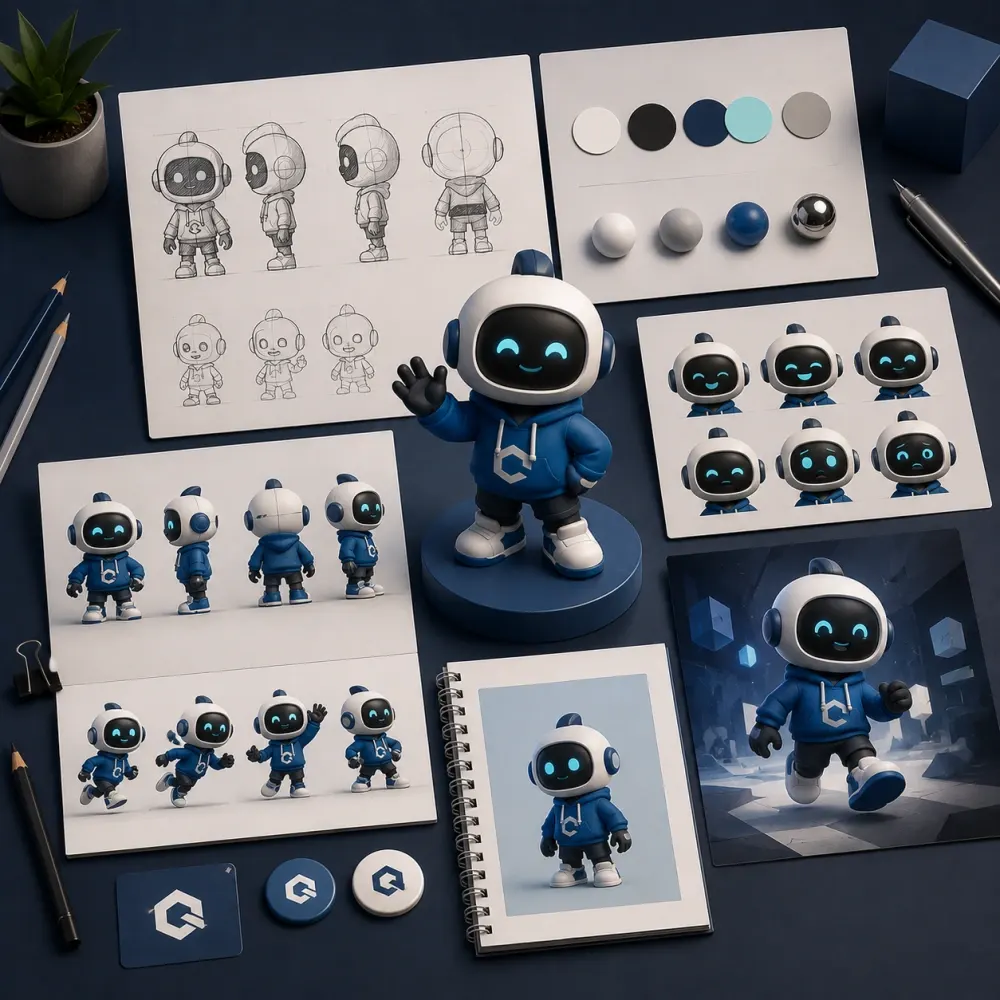
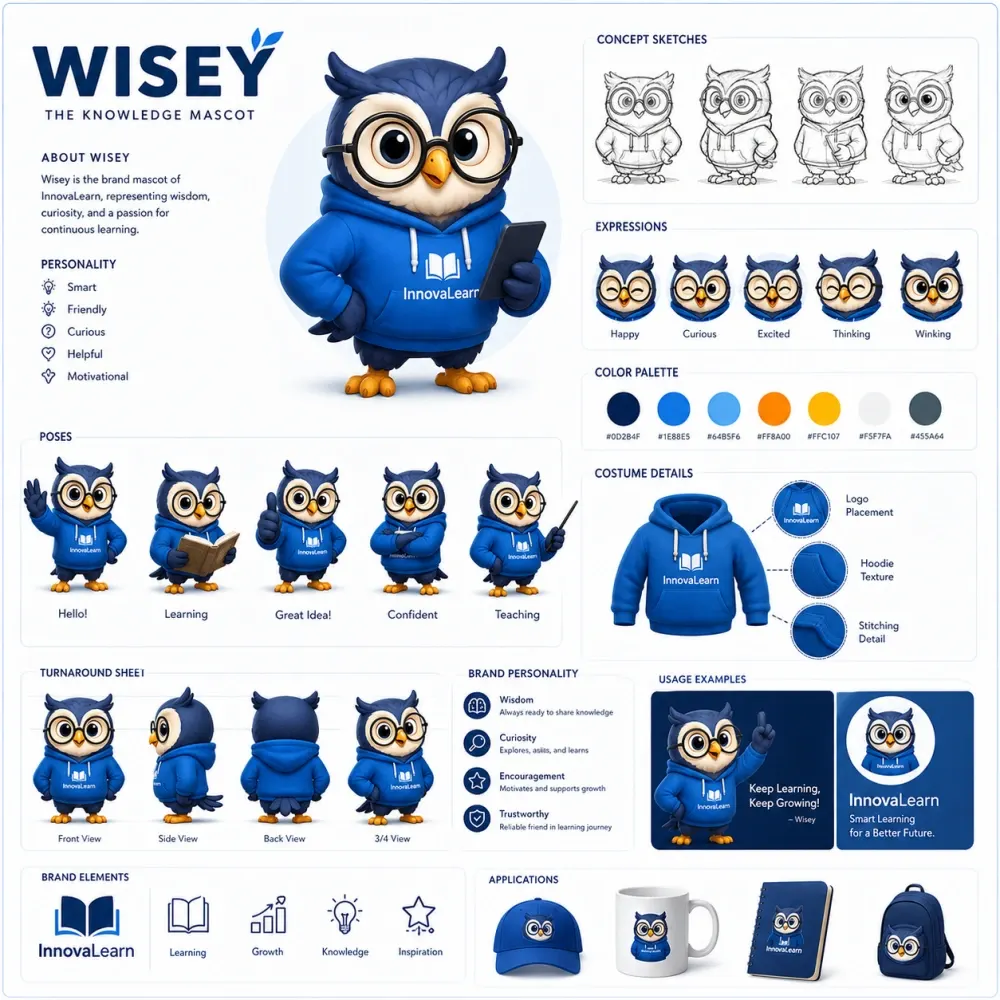
Costume DesignClothing can explain world, role and personality without a paragraph of text.
Outfits can suggest era, climate, profession, status, culture or personal habits. For game characters, costume variants may also communicate faction or progression. For brand mascots, seasonal outfits can expand campaign use while the underlying identity stays stable.
We consider how layers sit on the body and how complicated the outfit will be to reproduce. A design that works only from the front is not ideal when the character needs to be animated, modeled or illustrated repeatedly.
Props & AccessoriesSignature objects can carry as much storytelling as the costume.
A device, tool, weapon, bag, book or product can quickly establish what the character does. Important props can receive their own detail views when another artist needs to understand the construction.
The object should also belong to the same visual world. A highly realistic prop attached to a simplified cartoon character can feel accidental unless that contrast is intentional.
Color DevelopmentA palette needs hierarchy, not just attractive swatches.
Color can connect a character to a brand, environment, faction or emotional role. We look at large color areas first, then accents. If every area is equally saturated or similar in value, important features can disappear when the character is shown smaller.
Approved colors can be documented for consistent future use, especially when the character will appear across campaigns or be handled by multiple artists.
Style DevelopmentThe art style should fit both the audience and the amount of future production.
A painterly character can work beautifully for a key illustration while becoming inefficient for weekly marketing posts. A clean vector style may be easier to reproduce but unsuitable for a dramatic fantasy world.
Line quality, shading, texture, proportions and rendering depth are selected with the intended use in mind rather than following a style simply because it is fashionable.