Custom Email Template Design Services for Businesses
DesignBub creates branded email systems for marketing, ecommerce, lifecycle and transactional campaigns, with reusable modules, responsive layouts and optional HTML implementation.
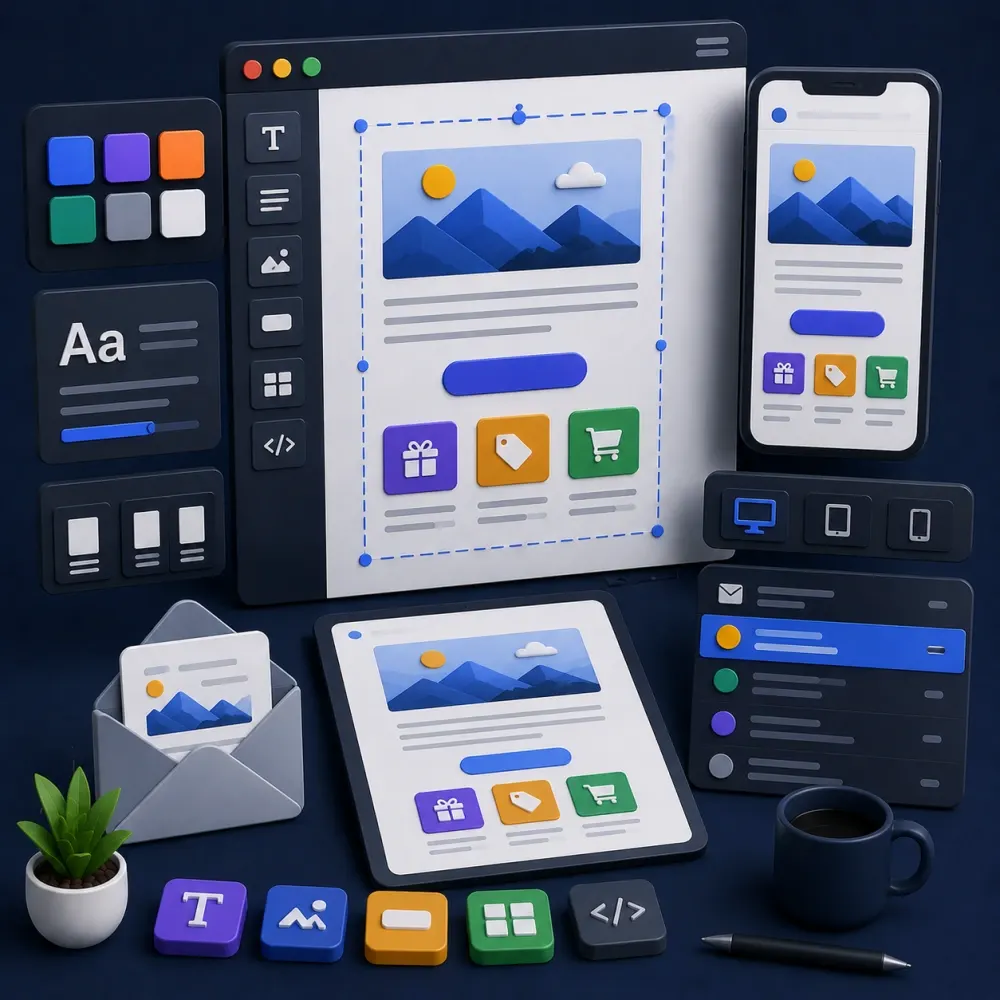
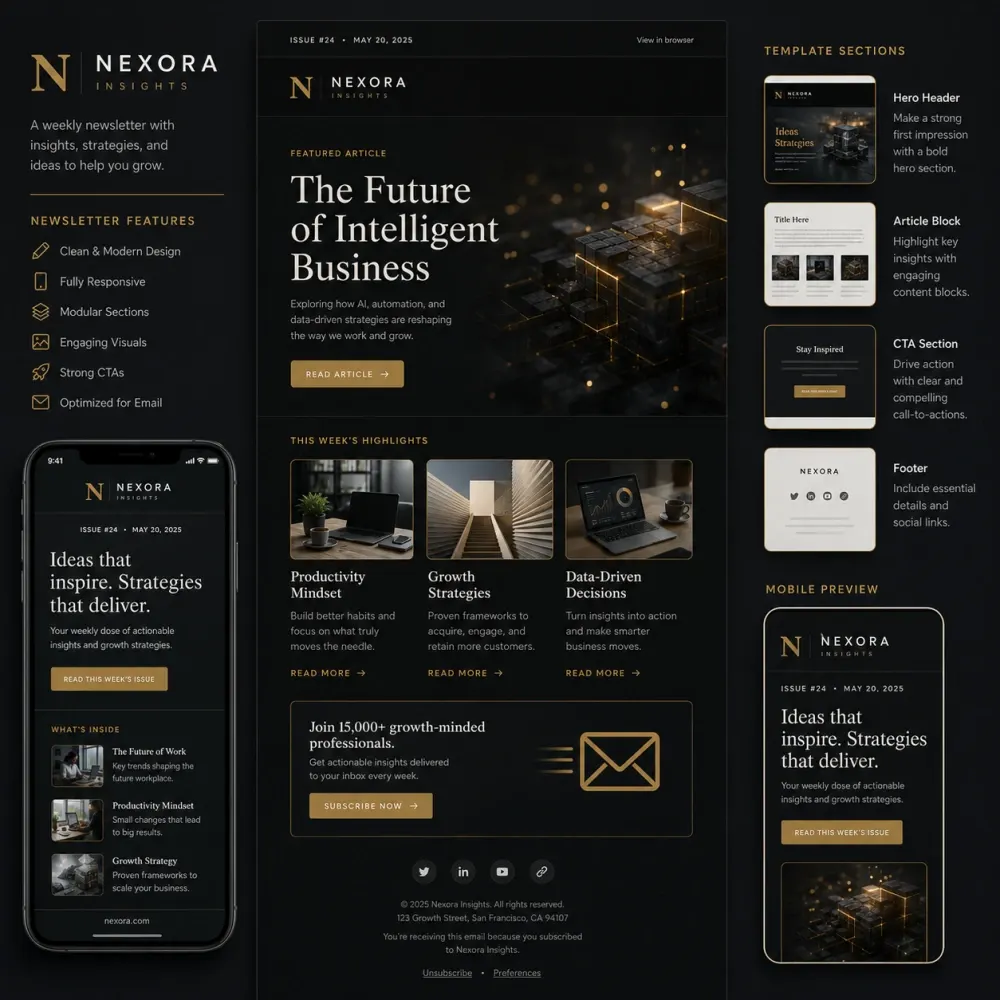
Reusable modules for the messages your team sends repeatedly, without rebuilding the visual system for every campaign.
Email campaigns should change. The design system behind them should stay dependable.
Email teams often lose time solving the same design problems again and again. A new campaign starts, someone copies an old email, another person changes the spacing, a button gets a new style, and the next campaign introduces another layout that no longer looks connected to the brand.
DesignBub provides email template design services for businesses, ecommerce brands, SaaS companies, agencies, publishers, nonprofits and marketing teams that need a reliable visual system for regular email communication.
We design branded marketing emails, promotional templates, ecommerce campaigns, lifecycle emails, newsletters, product launches, B2B emails, transactional layouts and reusable modular email systems.
The work begins with the way your team actually sends email. Which platform do you use? Who edits the campaigns? How often do you send? Which sections repeat? Do you need product blocks, article cards, event modules, coupon areas, account information or text-heavy updates? Does the team need drag-and-drop editing after handoff?
Those questions shape the template before visual styling starts. A useful email template should make the next campaign easier to build, not create another file that only the original designer understands.
A reusable system for the campaign types your team sends most often.
We plan responsive structure, reusable modules, platform fit and handoff around the real workflow instead of treating every email as an isolated design.
Responsive Template Design
Desktop and mobile layouts with clear reading order, usable buttons and practical content stacking.
Email UI 02Modular Email Systems
Reusable hero, content, product, event, article and CTA sections your team can combine across campaigns.
Reusable Modules 03HTML Email Development
Responsive HTML implementation can be added when the project needs a coded, production-ready template.
Email Coding 04Platform Template Setup
Mailchimp, Klaviyo and HubSpot-friendly structures designed around the editor and workflow your team uses.
Platform FitWhat Email Template Design Services Can Include
Professional email template design services can include content hierarchy, template architecture, responsive layouts, branded headers, footers, hero sections, article blocks, product cards, buttons, banners, dividers, reusable modules and platform-ready design systems.
A project may focus on one campaign template or create a family of templates for different email types. An ecommerce brand may need a promotional template, a product-launch layout, an educational email and a customer-update format. A B2B company may need a thought-leadership email, a webinar invitation, a case-study campaign and a sales follow-up template.
We do not force all of those messages into one rigid design. We create one shared visual language and give each email type the structure it needs. That makes future campaigns easier to assemble while keeping the brand recognizable.
Responsive Layouts
Desktop and mobile structures planned around real inbox behavior.
Reusable Modules
Flexible blocks for offers, products, articles, events and calls to action.
Platform Fit
Design choices shaped around the email tool your team actually uses.
Clear Handoff
Editable design, assets and implementation guidance according to scope.
Custom Branded Email Templates
Custom template work starts with the brand and the campaign workflow rather than a generic premade layout. The template should reflect how the business communicates and how the marketing team works.
If the brand relies on strong product photography, the system may need flexible image-led sections. If the business sends educational content, the template should support comfortable reading and clear article hierarchy. If the team publishes frequent promotions, the system may need reusable offer blocks, product grids and campaign banners.
Custom does not mean adding more visual effects. Email works best when the design stays clear and practical. We use typography, color, spacing, imagery and button styles to make the brand recognizable without making the template difficult to maintain.
Responsive Email Layouts
People open email on many screen sizes, so responsive email template design needs to plan for mobile from the beginning. A two-column section that feels balanced on desktop can become cramped on a phone. Small buttons can become difficult to tap, and a long headline can wrap into an awkward block.
We decide how columns stack, how padding behaves and which content appears first on smaller screens. Images should keep the important subject visible, and buttons should remain easy to use. The mobile version should feel like the same campaign reorganized for a smaller screen, not a broken desktop layout.
The selected email platform can limit responsive behavior. We design within those real limits instead of creating a layout that looks impressive in a mockup but cannot be built reliably.
HTML Email Production
A visual email layout and a working HTML email are related, but they are not the same task. HTML email follows stricter rules than normal website development because inboxes do not support code in exactly the same way.
When HTML development forms part of the project, we build the approved design with email compatibility in mind. Depending on the requirements, that can include table-based layout, inline styling, responsive media queries and fallback treatments.
If another developer will handle coding, we can provide the design files, asset exports and clear specifications they need. We define design and coding separately so the team knows what the project includes before production starts.
Modular Email Design Systems
A reusable template works best when it behaves like a system rather than one fixed page. We can create modules that the team combines depending on the campaign.
One module may contain a hero image and headline. Another may present products. A text block can support a short story. An event module can show a date, location and registration button. A footer can remain consistent across every send.
This modular approach gives the team flexibility without letting every campaign develop a different visual language. It also reduces the need to redesign the whole email when only the content changes.
Marketing Email Templates
Marketing emails need a clear reason for the reader to continue. The opening should establish what the campaign is about, the middle should support the message, and the main action should be easy to understand.
Marketing templates can support product announcements, services, content promotion, offers, events, lead nurturing and brand communication. A short promotion may only need a hero, offer details and a button. An educational campaign may need several sections and supporting links.
We give the team enough options for useful variation without encouraging every send to become unnecessarily long.
Promotional Campaign Emails
Promotional emails usually focus on an offer, launch or time-sensitive action. That makes hierarchy especially important. The reader should understand the promotion quickly without searching through several competing messages.
If the campaign includes a price, discount, code or deadline, the business should provide and approve those details. We can make the offer prominent while keeping the design connected to the brand.
A premium business may use a quiet layout with one strong image. A retail campaign may need more direct price communication. The right treatment depends on the audience and offer. Design can support clarity, but it cannot guarantee opens, clicks, conversions or revenue.
Ecommerce Email Templates
Ecommerce brands often send many different email types, including new arrivals, product launches, sale campaigns, back-in-stock messages, cart reminders, post-purchase emails and educational content.
An ecommerce template system can create one shared system across those messages. Product cards can use consistent image areas, names, prices and buttons. Offer blocks can follow one recognizable style. Category modules can support collection campaigns.
We keep the real product and approved commercial information central. Prices, discounts, stock status and claims should come from the store or campaign data. The design organizes the information; it does not invent it.
Lifecycle Email Templates
Lifecycle emails support different stages of the customer relationship. A welcome email speaks to someone who has just joined. An onboarding email helps a new user take the next step. A reminder email brings attention back to an unfinished action. A retention email may introduce new value to an existing customer.
These messages should feel related, but they do not need identical layouts. A lifecycle system can create a family of templates with shared typography, buttons, header rules and spacing while allowing different structures for different stages.
Automation logic, segmentation and trigger setup can be scoped separately from the visual template work.
Transactional Email Templates
Transactional emails carry information the recipient expects to receive. Common examples include order confirmations, shipping updates, password resets, account alerts, booking confirmations and receipts.
The design priority changes in these emails. Clarity matters more than promotion. An order confirmation should make the order number, purchased items, price and next steps easy to find. A password reset should make the secure action obvious.
Transactional templates can apply the brand without hiding functional information. Technical implementation normally depends on the ecommerce, CRM or application system that sends the message.
Choose a starting point that matches how often your team sends email.
Pricing is based on the template system, responsive requirements and implementation depth. Final scope can change when a project needs more templates, custom code, complex dynamic content or broader inbox testing.
Essential Email Template
A focused branded template for one main campaign type.
- 1 custom email template
- Desktop + mobile layout
- Up to 6 reusable sections
- Brand typography, buttons and spacing
- Editable design source
- 2 revision rounds
Modular Email System
A flexible reusable system for recurring marketing campaigns.
- 1 master template system
- Up to 10 reusable modules
- Desktop + mobile layouts
- Marketing, content and product blocks
- Mailchimp, Klaviyo or HubSpot-ready structure
- 3 revision rounds
Email System + HTML
Design plus responsive HTML implementation for a production-ready system.
- Modular email design system
- Up to 12 reusable sections
- Responsive HTML coding
- Basic Gmail + Outlook review
- Platform-ready handoff
- 3 revision rounds
Need one specific email design task?
These starting rates help when a full template package is not necessary.
Pricing note: Prices are starting USD fees. Copywriting, lifecycle strategy, automation logic, list management, deliverability consulting, CRM configuration, premium stock or font licenses, paid email-platform plans and third-party tools are separate unless the project scope specifically includes them. No open-rate, deliverability, conversion or revenue outcome is guaranteed.
B2B Campaign Templates
B2B campaigns often carry more text than retail emails because the message may explain an event, report, service or business idea. The design should support reading without making the email feel like a long document.
We can use a clear opening, short content sections, resource cards and one or two useful actions. Webinar invitations can highlight the date and registration details. Case-study emails can summarize the problem and link to the full story.
B2B email design works best when it respects the reader's time and makes useful information easy to scan.
SaaS Email Systems
SaaS businesses often use email across product marketing and customer communication. A user may receive onboarding tips, feature announcements, usage reminders, trial messages, billing notices and educational content from the same company.
A SaaS email system can connect these messages through recurring typography, buttons, spacing and branded components. We can create reusable patterns for feature highlights, screenshots, step-by-step instructions, release notes and account information.
When a message contains technical, pricing or account information, the business should provide the approved content. The design should make that information easier to understand without changing its meaning.
Email Newsletter Templates
A newsletter template supports recurring communication, but it should still allow each issue to change. We can create modules for a lead story, short updates, articles, events, products, announcements and secondary links.
A reusable system needs to handle real variation. A headline may become longer next month. One issue may include four stories and another only two. The template should adapt without losing its visual order.
For teams that publish often, this flexibility can save more time than a decorative layout with rigid content limits.
Mailchimp Templates
Mailchimp gives teams a visual editor and reusable email components, so the design should fit that editing model. We can create a branded Mailchimp email template with practical blocks for common campaign types.
That may include hero sections, text areas, image cards, product highlights, buttons, dividers and footer content. When the team needs ongoing internal editing, we avoid layouts that require custom code for every small change.
If the project includes Mailchimp implementation, we can prepare the approved design inside the available platform tools or scope custom HTML where needed. List management, automation strategy and deliverability remain separate unless specifically included.
Klaviyo Templates
Klaviyo is widely used by ecommerce teams, so its templates often need to support both promotional campaigns and lifecycle flows. We can design branded layouts for launches, promotions, welcome flows, abandoned-cart campaigns and post-purchase communication.
The structure can account for dynamic product blocks and reusable content sections where the implementation supports them. We focus on visual consistency and content clarity.
Flow logic, audience segments, triggers and advanced personalization require separate marketing-automation planning.
HubSpot Templates
HubSpot email campaigns often sit inside a wider marketing and CRM workflow. Businesses may send newsletters, lead-nurture emails, webinar invitations, content promotions and sales-support campaigns.
We can create HubSpot-friendly layouts that use reusable sections and clear hierarchy. The design can support links to forms, landing pages and resources without trying to place every CRM function inside the email itself.
Where platform implementation forms part of the project, we work within HubSpot's available email-building tools and module structure. Complex automation, lead scoring and CRM configuration remain separate unless the scope includes them.
Drag-and-Drop Email Templates
Many marketing teams want to update emails without touching code. A drag-and-drop email template can support that workflow when the selected platform allows reusable blocks.
We design modules with realistic editing in mind. Text areas need enough room for shorter and longer copy. Image sections should work with predictable aspect ratios. Buttons should stay stable when the label changes. Multi-column layouts need clear mobile behavior.
The goal is to give the team useful freedom without giving every campaign so much freedom that the brand loses consistency.
Email Accessibility
Accessible email design can make the experience easier for more readers. We use clear text hierarchy, readable contrast, useful link wording and sensible spacing. Buttons should be large enough to interact with comfortably.
Important information should not exist only inside an image. HTML implementation can also support alt text, useful reading order and other accessibility-minded details where the email environment allows them.
Formal requirements vary by organization and market. We can apply accessibility-minded design practices, but formal compliance claims require the appropriate testing and agreed standard.
Email Client Compatibility
Email templates can render differently in Gmail, Outlook, Apple Mail and other clients because each inbox handles HTML and CSS differently.
We design around practical email patterns instead of assuming browser-level support. If HTML development is included, testing can cover an agreed set of clients and devices. Complex interactive features may need fallback designs or a simpler approach.
The goal is not to make every inbox pixel-identical. The goal is to keep the message, hierarchy and main actions usable across the environments that matter to the campaign.
Redesigning Existing Email Templates
An existing email system may need improvement even when the brand itself has not changed. The layout may feel dated, mobile spacing may be inconsistent, and different teams may have created several button or header styles.
A template redesign can create a more consistent system without rebuilding the entire marketing stack. We review the templates currently in use, identify repeated content types and simplify where possible.
Useful modules can stay. Weak or duplicated patterns can be replaced. The redesigned system should make future production easier, not simply make one campaign look newer.
Our Email Design Process
We start with the workflow. The client shares the email platform, campaign types, audience, brand assets, existing templates and editing requirements.
Next, we identify the modules the team uses most often and organize them into a template architecture. Then we create the visual direction through typography, color, imagery, spacing, buttons and recurring sections.
The client reviews the primary template and provides consolidated feedback. After approval, we create the agreed variations and reusable modules. If development forms part of the scope, we implement or code the approved design and test the agreed environments.
Before handoff, we document the main editing rules so the team understands how to use the system without breaking the hierarchy.
What Can Be Included in an Email Template Project
Our email template design services can include marketing emails, promotional campaigns, ecommerce templates, B2B emails, SaaS emails, lifecycle layouts, event campaigns, newsletters, transactional designs and reusable modular systems.
A project can also include responsive layouts, mobile adaptations, branded headers and footers, product blocks, content cards, CTA styles, dark-mode considerations, HTML email coding, platform implementation and template documentation.
The correct scope depends on how the team works. One campaign template and a complete email design system are not the same project. A business with one monthly update may need a focused reusable layout, while a larger ecommerce or SaaS team may need several template families and many modules.
Why Choose DesignBub for Email Template Design Services?
Email templates should make communication more consistent and production less complicated. DesignBub approaches email template design services as a system-building task rather than a one-time visual exercise.
We look at the campaign types the business sends, the platform the team uses and the parts of the layout that need to change most often. Then we build reusable design rules around those needs.
The brand stays recognizable, but the template remains practical. Mobile receives the same attention as desktop. Buttons, images and text blocks have clear roles. Where HTML development is needed, we keep email-client limits in mind before approving complex ideas.
A stronger template can improve clarity, consistency and production efficiency. It cannot guarantee opens, clicks, deliverability, leads, conversions or sales because those outcomes also depend on the list, sending reputation, subject line, offer, timing, segmentation, content and destination experience.
Practical answers before you build a reusable email system.
These answers cover platforms, responsive behavior, HTML implementation, editing and project scope.
Email template design services create reusable layouts for marketing, ecommerce, B2B, lifecycle and transactional emails. The work can include branded modules, responsive layouts, mobile design, CTA styles and platform-ready templates.
Yes. We can build the layout around your logo, colors, typography direction, campaign needs and email platform rather than using a generic visual template.
We design responsive templates with mobile reading in mind. Final behavior also depends on the email platform, HTML implementation and receiving email client.
Yes. Responsive HTML email coding can be included in the project or scoped separately from the visual design.
Yes. We can create reusable Mailchimp layouts and prepare them around the editing workflow available inside the platform.
Yes. We can design ecommerce campaign and lifecycle templates suitable for Klaviyo workflows.
Yes. We can create HubSpot-friendly templates for newsletters, lead nurturing, events, resources and other B2B campaigns.
Yes. We can design for enterprise email platforms once the implementation, module and editing requirements are confirmed.
Yes. We can design order confirmations, account emails, booking messages, password resets and other transactional layouts around clear functional information.
Yes. We can design product-launch emails, promotions, collection campaigns, cart-related layouts and other ecommerce communication.
Yes. We can create a family of reusable templates and modules for teams that send several campaign types.
Yes, when the selected platform supports editable modules. We can structure the template around practical internal editing requirements.
Yes. We can review the current system, keep useful patterns and create a cleaner, more consistent set of templates.
Yes. Newsletter templates can form part of a wider email design system when the business sends regular content updates.
We can make design choices that reduce common dark-mode problems. Email clients can still apply their own rendering changes, so no designer can control every dark-mode result.
Testing can be included for an agreed list of email clients and devices when HTML implementation forms part of the project.
The template design can support automation campaigns, but flow strategy, triggers, segmentation and advanced CRM automation should be scoped separately.
Light content organization can be included where agreed. Full campaign copywriting, lifecycle strategy and ongoing content creation require a separate scope.
A clearer template can support easier reading and stronger visual consistency, but it cannot guarantee conversions. Results depend on the audience, offer, copy, timing, list quality and many other factors.
Email template design cost depends on the number of template types, reusable modules, responsive behavior, platform implementation, HTML coding, testing and custom graphics. A single branded template requires less work than a complete modular email system.
Timing depends on the number of templates, platform, code requirements, feedback and testing scope. We confirm the project schedule after reviewing the campaign types and internal workflow.
Stop Rebuilding the Email Every Time the Message Changes
The content of an email should change more often than the design rules behind it. A promotion may need different products. A webinar needs another headline. A monthly update brings new stories. A lifecycle email speaks to another stage of the customer journey.
Those changes are normal. The brand should not need a new visual system every time they happen.
DesignBub provides email template design services for teams that want a dependable starting point for regular campaigns. You can begin with one old email, a library of inconsistent templates, a new brand identity or a list of campaign types your team sends every month.
We can turn those requirements into reusable layouts and modules that make future emails easier to build while keeping the visual identity controlled.
The best email template is not the one with the most sections. It is the one your team can reuse without losing clarity, consistency or the reason the email exists.