Merchandise Starter
$49 starting
For one original merchandise graphic adapted to one primary product.
- 1 original merchandise concept
- 1 primary product adaptation
- 1 colorway
- Production-ready artwork
- 1 presentation mockup
- 2 revision rounds
DesignBub creates branded merchandise systems for apparel, drinkware, bags, stationery, stickers and promotional products, with artwork planned for the real item and its production method.
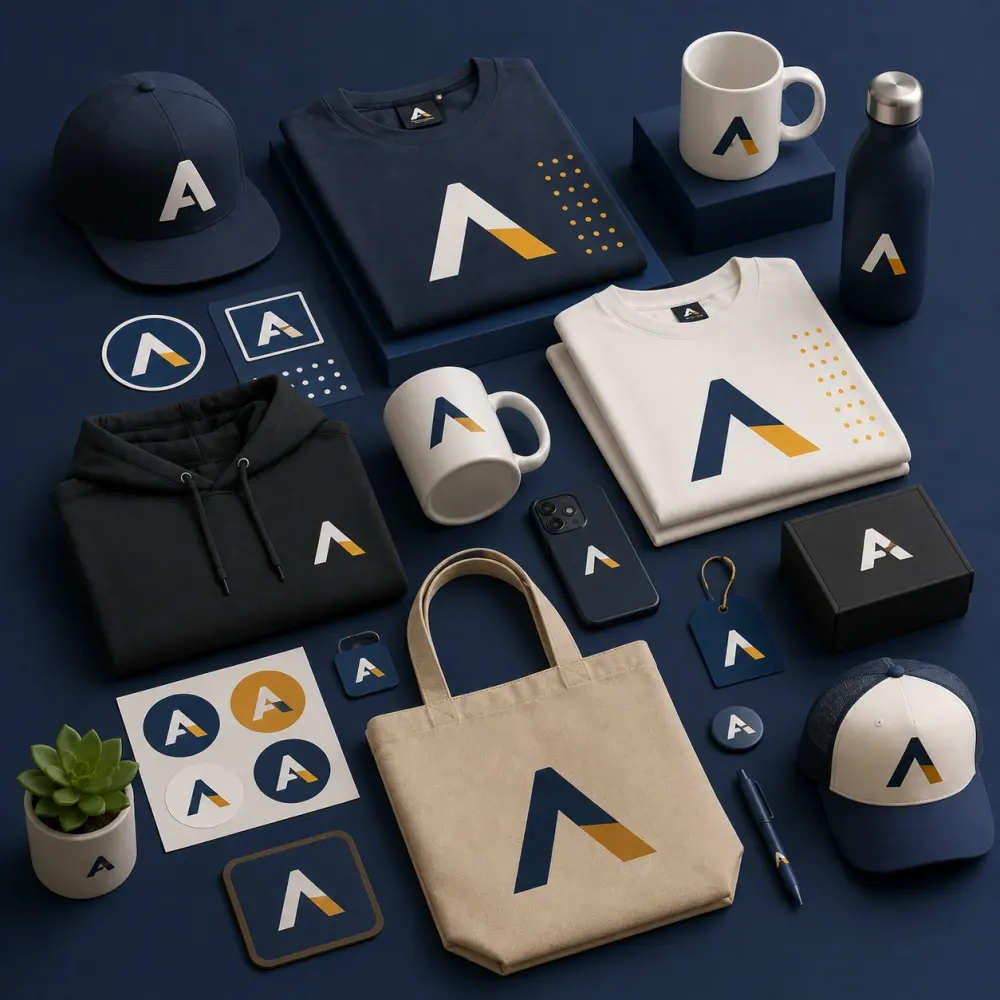
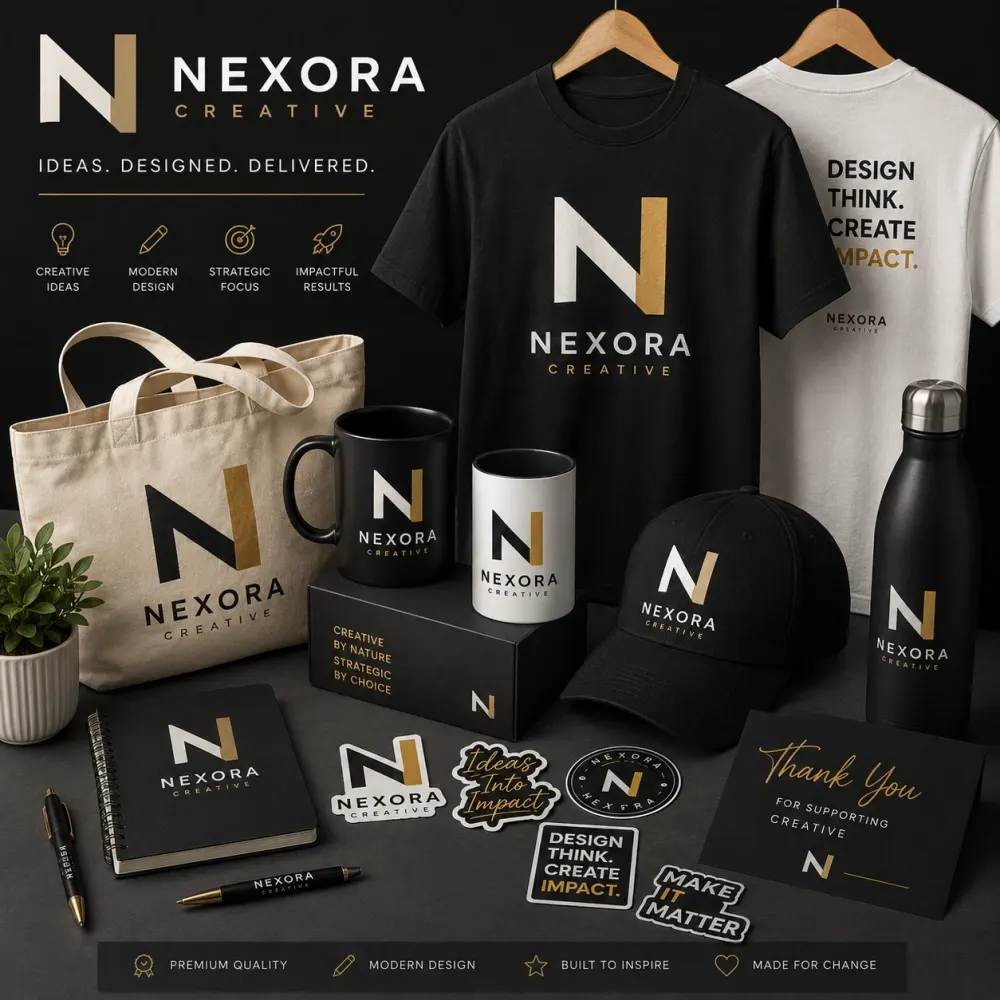
Build a clear visual direction across products without forcing the same artwork onto every print area, material or decoration method.
Merchandise becomes valuable when people want to keep it after the event, purchase or campaign has finished. A shirt can stay in a wardrobe. A bottle can sit on a desk. A tote can return to the shop. A sticker can remain on a laptop. That continued use gives the product more life than a short promotional impression.
A logo placed on every product does not automatically create useful merchandise. A graphic that works on a poster may feel oversized on a cap. Fine details can disappear in embroidery. A colorful illustration may need another treatment for screen printing. A mug has a curved surface. A notebook gives the designer much more room than a sleeve print. Every item changes the way the artwork has to behave.
DesignBub provides merchandise design services for businesses, retail brands, creators, restaurants, events, startups, schools, sports groups and organizations that want branded products with a clear visual idea. We design apparel graphics, T-shirts, hoodies, caps, mugs, drinkware, bags, notebooks, stickers, staff items, promotional products and coordinated merchandise collections.
We start with the product. What will carry the artwork? Who will use it? Will the item be sold, gifted or used by staff? Does the supplier use screen printing, embroidery, direct-to-garment printing, sublimation, engraving or another production method? How many colors can the process support? Will the artwork appear in one size or across several products?
Those questions shape the design before we prepare a polished mockup. Strong merchandise should feel like an extension of the brand, not a spare logo placed on an empty object.
The scope changes with the product, audience and production method. We create a system that stays consistent while each item receives the treatment it actually needs.
Define the visual idea, product role and brand connection before adapting artwork across the collection.
Create custom typography, illustration, patterns, logo treatments and layouts for selected merchandise.
Recompose approved graphics for different print areas instead of mechanically scaling one file.
Prepare supplier-ready artwork around the confirmed template, imprint area and decoration method.
Merchandise works better when the purpose is clear before the design begins. Some items need to sell. Some need to reward customers. Some help staff look consistent. Others support an event, launch or client gift. Those goals affect the visual direction.
A product intended for retail should feel valuable enough for someone to choose it with their own money. A staff shirt may need clear company identification. A conference item may need a stronger event message. A premium client gift may work better with quiet branding and careful placement.
We also consider how long the product should stay relevant. A date-heavy design can suit a one-time event. A reusable item often benefits from a more lasting idea. This early thinking helps us create merchandise that fits the real situation instead of only filling printable space.
Branded merchandise should be recognizable without repeating the complete logo in exactly the same way on every item. We can use the logo, symbol, type style, colors, patterns, icons and brand phrases in different combinations.
A cap may use a small embroidered symbol. A T-shirt may use a larger graphic with a subtle logo. A notebook can carry a pattern built from identity elements. A mug may use one short line and a small brand mark. These products still belong together because they use the same visual language.
Branded merchandise design gives the identity more flexibility while keeping recognition. It also helps the collection feel like a set of real products rather than promotional material made only to display a company name.
T-shirts give designers a large surface, but the artwork still needs to work when someone wears it. The graphic bends, folds and moves with the fabric. We consider print position, size, garment color and normal viewing distance.
A front chest print can stay small and simple. A large back print can carry more detail. A sleeve can support a secondary element. Some projects need front and back artwork that work together. Custom T-shirt design can include type-led graphics, illustration, brand symbols, campaign concepts or a controlled mix of several elements.
We also account for the production method. Screen printing may favor cleaner color separations. Direct-to-garment printing can support more detail. DTF and heat transfer introduce different limits. The supplier should confirm the final printable area and production setup before manufacturing.
Hoodies and sweatshirts provide different placement options from standard T-shirts. The front pocket can reduce usable print space, a hood can cover part of a back graphic, and zippers can split artwork. Thicker fabric can also change how fine detail appears.
We plan the composition around the actual garment style. A pullover hoodie may use a centered chest graphic, sleeve print and small back mark. A zip hoodie may work better with separated front elements. A sweatshirt can support larger type or illustration without the obstruction of a hood.
We also think about how the product looks when worn, folded and photographed for ecommerce. The design should stay clear outside the perfect flat mockup.
Caps offer a much smaller decoration area, which makes simplification important. A full wordmark may become too wide. Small text may not embroider cleanly. Fine lines can close up. A compact icon or monogram may work better than the complete brand signature.
We design cap artwork around the available front, side or back positions. Embroidery usually needs shapes that remain clear at small scale. If the supplier uses patches, heat transfer or printing, the design options may change.
We can prepare different versions when one concept needs to work across several methods. The goal is to keep the cap recognizable and wearable without forcing too much information into a narrow area.
Mugs, bottles, tumblers and cups use curved surfaces, so the artwork may not be visible all at once. A design can wrap around the product, sit on one side or use two separate positions.
We plan the layout around how the item will be held and viewed. A company mug may use a logo on one side and a short brand message on the other. A retail tumbler may use a repeat pattern. An event cup may need the date and campaign name.
Production also matters. Sublimation, screen printing, engraving and UV printing can support different visual results. We prepare the artwork for the confirmed method and supplier template where available.
Tote bags can work as merchandise as well as packaging. When the item is meant to be reused, the design should have enough visual value to stand on its own.
A large illustration, graphic phrase or strong pattern can make the tote feel more intentional. A small logo can support the concept instead of dominating it. We consider bag color, fabric texture, print area and handle placement.
When a business needs a full retail bag system, that may become a dedicated bag and tote design project. Within a wider merchandise collection, the tote should still connect with the shirts, caps or other products around it.
Notebooks, planners, folders and desk items give brands a practical merchandise category. These products often benefit from quieter design because people use them in work or study settings.
A strong cover may use a pattern, short phrase, logo mark or simple illustration. Interior page design can also be included when the project requires it. For corporate kits, notebook artwork may connect with pens, folders and presentation materials. For retail merchandise, the design can become more expressive.
We keep production limits in mind, including foil, embossing, print area and binding. The final file should follow the printer or manufacturer specification rather than relying only on a visual mockup.
Stickers can support merchandise collections, packaging, events and community building. They work well because customers can choose where to place them, which means each individual design should feel complete.
We can create logo stickers, type-based designs, illustrated characters, icons, badges and small collections. Cut shape also matters. A die-cut sticker needs enough space around the artwork, while very thin edges or tiny isolated pieces can become difficult to produce.
We prepare artwork with suitable cut guidance when the printer confirms the required format.
Event merchandise can make a conference, launch, festival, school event or company gathering feel more complete. The design should connect with the event identity but still work as a product after the day ends.
A shirt may include the event name and year. A tote may use the campaign theme. A cap can carry a simpler icon. A notebook can use the same color system with a quieter layout. Sponsor logos can be added when required, but they need clear hierarchy.
The event organizer should provide final names, dates, sponsor marks and approved wording before production. We do not invent sponsors, attendance claims or other event facts to make the design look stronger.
Online merchandise needs to work both as a physical product and as a product listing. Customers may first see the item as a small thumbnail, so the graphic should still make sense at that size.
We can create merchandise for ecommerce brands, creators, communities and businesses that sell directly through their websites. The project may include a hero graphic, supporting variations, mockups and product-ready visual assets.
Where the collection contains several items, we can build a shared theme so the shop looks connected. The business remains responsible for product descriptions, prices, stock, sizing, shipping and other commercial information. Design can support the product presentation, but it cannot guarantee sales.
Creators often need merchandise that feels connected to their audience without looking like generic promotional material. The design may come from a phrase, symbol, inside reference, recurring theme or visual style already associated with the creator.
We can turn those ideas into wearable graphics and coordinated products. Strong creator merchandise often works even when someone does not immediately recognize the source, which gives the item more value as clothing or an object.
We also consider how a drop may expand later. A visual system can support future colors, seasonal releases or additional products without repeating the exact same graphic each time.
Businesses that produce merchandise regularly benefit from a reusable system. Instead of starting from zero for every item, we can define rules for logo size, graphic styles, color combinations, type treatments and placement.
A merchandise design system works especially well for brands with staff items, event merchandise, customer gifts and retail products happening throughout the year.
Illustration can give merchandise a stronger reason to exist. It can turn a simple T-shirt into a collectible item or give a brand event a distinctive visual theme.
We can create illustration-led merchandise when the project scope includes original artwork. The style may be bold and simple for screen printing or more detailed for suitable digital production.
We also consider how the illustration adapts to other products. A large back print may use the full artwork while a sticker or cap uses one extracted element. Complex illustration requires more creative time, so we scope it separately from basic logo placement.
Patterns work well across merchandise because they can adapt to many shapes. A pattern can use icons, initials, abstract forms, product symbols or parts of the existing identity.
We can create seamless repeats for fabric, notebooks, drinkware and other surfaces. Scale matters. A pattern that works on a mug may need to change on a large bag. Dense patterns can also compete with logos.
We decide whether the pattern should lead, support or remain in the background. When the supplier has a fixed print area, we adjust the repeat or crop so the final product still feels balanced.
Different apparel printing methods support different types of artwork. Screen printing often works well for clear shapes and controlled color counts. Direct-to-garment printing can support more color and detail on suitable garments. DTF can also handle detailed full-color artwork depending on the supplier.
We do not choose a production method without considering the printer's setup. Instead, we prepare artwork around the confirmed process. Color separations, underbase requirements, printable area and file format may vary.
The printer remains responsible for final production settings. Our role is to create artwork that respects those limits and remains visually strong after the production method is selected.
Embroidery changes artwork more than many clients expect. Thread has physical thickness. Very small type, thin lines and tiny gaps may not reproduce clearly. Gradients usually need simplification, and a detailed logo may require a reduced version.
We can prepare embroidery-friendly artwork and simplified visual versions when needed. The embroidery supplier or digitizer still needs to create the machine-specific stitch file.
Stitch density, thread choice, backing and garment material affect the physical result. We design with embroidery in mind but do not claim to control the final stitch quality when another supplier handles production.
Merchandise often appears in more than one color. One graphic may need a light version for dark garments and a dark version for light products. A colorful design may also need small changes so important elements stay visible.
We prepare approved colorways instead of assuming one file works everywhere. The product color itself can become part of the composition. A natural canvas tote creates a different feel from a black hoodie, and a metal bottle changes how a printed color appears.
We plan variations around the actual products selected for production rather than treating color adaptation as a last-minute export task.
Mockups help clients see the artwork on a product before manufacturing. They are useful for concept review, internal approval, presentations and ecommerce planning.
We can create realistic visual mockups using the approved design. Mockups remain simulations, so fabric, ink, embroidery, product color and manufacturing can change the physical result.
A mockup should not replace a supplier proof or sample when the final result needs close production control. We separate presentation mockups from final production files so each serves the right purpose.
Final production files depend on the supplier and decoration method. A screen printer may request vector artwork with separated colors. A DTG supplier may need a high-resolution transparent file. An embroidery vendor may need clean vector artwork before digitizing. A mug printer may provide a wrap template.
We prepare files according to those confirmed requirements. Common outputs can include PDF, AI, EPS, SVG, PNG and other formats agreed in the project. We also keep important artwork inside the confirmed print area.
The manufacturer remains responsible for machine setup, materials, final color output and physical production.
Existing merchandise can become outdated even when the main brand still works. The artwork may feel too promotional, the logo may be oversized or the product range may no longer feel connected.
A redesign can improve those issues without changing the identity itself. We review the current items, audience and the way the merchandise is used. Then we decide what to keep and what to replace.
The new direction may use better placement, stronger graphics, improved color combinations or a more consistent collection system. If the original source files are unavailable, some artwork may need to be recreated before production-ready files can be prepared.
These are starting prices for design work. Printing, blank products, embroidery, manufacturing, shipping, minimum order quantities, premium assets and supplier costs are separate unless a quotation states otherwise.
For one original merchandise graphic adapted to one primary product.
For a coordinated visual direction across up to three selected products.
For a wider branded range that needs reusable design rules and multiple applications.
Standalone prices help when the project does not need a full collection. Final pricing can change with artwork complexity, product count and supplier requirements.
Scope note: Prices cover design services only unless a written quotation says otherwise. Product sourcing, printing, embroidery digitizing, blank garments/items, manufacturing, sampling, shipping, taxes, platform fees and supplier charges are separate. Production results depend on the selected vendor, material, print method and proofing process.
We begin with the merchandise list and purpose. You share the products, audience, brand files, supplier templates, production methods and any visual references that explain the direction. We identify which items need original graphics and which can use adaptations.
Next, we build the creative direction. We develop typography, illustration, placement, color and supporting graphic elements around the products. You review the main concepts through clear mockups and provide consolidated feedback.
We refine the selected direction within the agreed revision scope. After approval, we adapt the artwork to the remaining products and prepare production files using the supplier specifications available to us. Before manufacturing, the printer or supplier should confirm the final technical setup.
Our merchandise design services can cover T-shirts, hoodies, sweatshirts, caps, hats, mugs, drinkware, tote bags, notebooks, stickers, event merchandise, staff items, creator merch, sports merchandise and promotional products.
A project can also include custom typography, illustration, patterns, product adaptations, colorways, mockups, print files and supplier-ready artwork. The scope depends on the number of items and the level of original creative work.
One logo-led T-shirt needs less work than a complete retail merchandise collection. A three-item employee kit requires less adaptation than a creator drop with multiple garments, illustrations and color versions. We define the deliverables around the actual collection rather than treating every product as the same design task.
Merchandise sits between brand identity and a physical product. The artwork has to look good, but it also needs to survive printing, embroidery, curved surfaces, fabric texture and different product sizes.
DesignBub approaches merchandise design services by considering those practical conditions from the start. We look at who will use the product, why it exists and how the supplier plans to manufacture it. We can work within an existing identity or create fresh supporting graphics around the brand.
We also keep production responsibilities clear. We prepare professional artwork and mockups based on the supplier information available. The manufacturer controls material, printing, embroidery, product quality, physical color and the final production result. A good design system helps the vendor, but it cannot replace a physical proof when color, texture or placement must be checked closely.
These answers explain common scope, file, production and pricing questions for merchandise projects.
Merchandise design services cover the visual artwork and product adaptations used on branded apparel, drinkware, notebooks, bags, stickers and other physical merchandise.
Yes. We can create front, back, sleeve and small chest graphics for T-shirts according to the selected creative direction and print method.
Yes. We can create artwork for pullover hoodies, zip hoodies and sweatshirts while accounting for pockets, zippers and garment construction.
Yes. We can create embroidery-friendly or print-ready cap graphics based on the supplier's decoration area.
Yes. We can prepare artwork for mugs, bottles, tumblers and other drinkware using the supplier's confirmed template or print area.
Yes. We can create coordinated event merchandise for conferences, launches, festivals, schools and company gatherings.
Yes. We can design branded staff apparel, notebooks, drinkware and onboarding items around your existing identity.
Yes. We can develop creator merchandise around phrases, symbols, visual themes, illustrations and audience-recognizable ideas.
Yes. We can build a connected visual direction across several products instead of treating each item as an unrelated design.
Yes. We can adapt your logo, colors, typography and graphic system to merchandise while adjusting the artwork for each production method.
Yes. Original illustration can form part of the project when the selected scope includes it.
Yes. We can create repeat patterns and supporting graphics for fabric, notebooks, bags, drinkware and other suitable products.
Yes. We can prepare production artwork according to the confirmed supplier requirements and selected decoration method.
We can prepare embroidery-friendly vector artwork. Machine-specific digitized stitch files are usually created by the embroidery supplier or specialist digitizer unless separately agreed.
Yes. We can resize, simplify or reorganize approved artwork so it works across different products without looking mechanically copied.
Yes. We can provide visual merchandise mockups for presentation and approval. Physical production may differ from the mockup.
Yes. We can update outdated graphics, improve placement and build a more consistent merchandise system around your current brand.
Yes. We can prepare suitable light, dark or alternate colorways when several product colors are part of the project.
Our standard service focuses on design and production artwork. Product sourcing, printing, embroidery, manufacturing, minimum order quantities and shipping remain separate unless included in the quotation.
DesignBub merchandise packages currently start at $49. The final price depends on the number of products, original concepts, illustration complexity, adaptations, mockups and production requirements.
Timing depends on the number of products, creative complexity, supplier templates, feedback and the amount of adaptation required. We confirm the schedule after reviewing the complete merchandise list.
Start with one product, an existing merchandise range, a staff kit, an event idea or a complete collection that still needs a visual direction. We can create the artwork, adapt it across products and prepare approved files for the production process.