



















">

Custom SaaS Application Development Services

DesignBub plans, designs and develops SaaS products for startups and businesses that need more than a marketing website. From focused MVPs and multi-tenant platforms to dashboards, subscriptions, APIs and AI-assisted features, we build around the workflow, users and commercial model the product actually needs.

ProductWorkflow First
MVPFocused First Release
ScalePractical Architecture
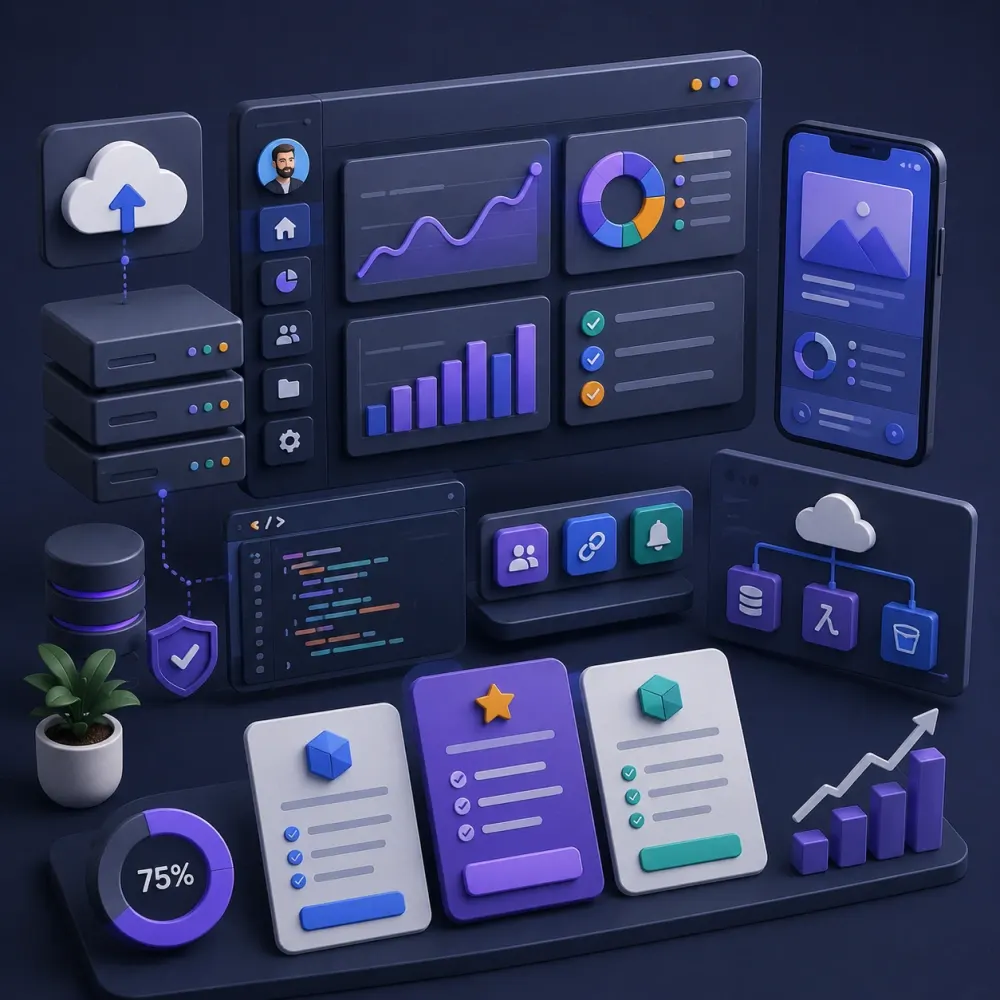
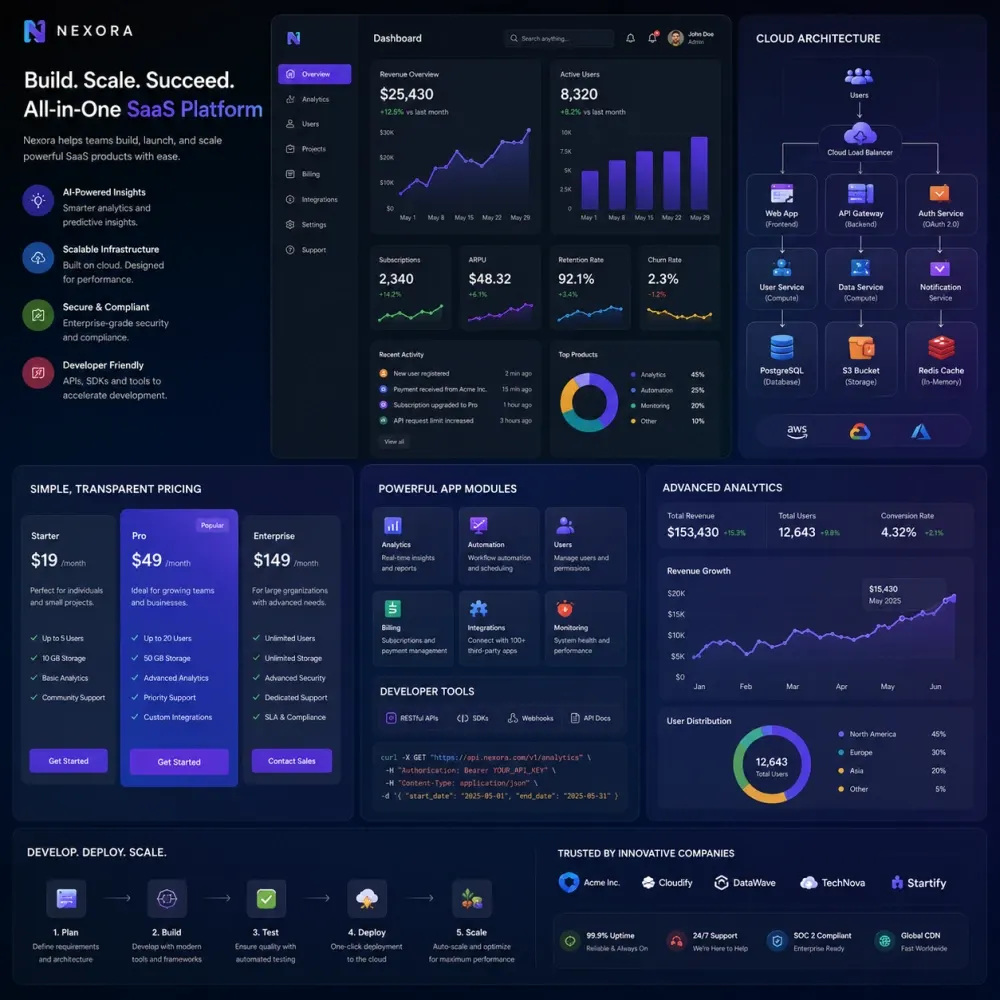
SaaS product development interface
SaaS dashboard and product interface
Plan β€’ Design β€’ Develop

Product discovery, UI/UX, accounts, billing, dashboards, integrations, testing and launch planning in one connected workflow.

Selected Brands & Businesses We Have Designed For
Asset 38 brand logo Asset 4 brand logo Asset 45 brand logo Asset 46 brand logo Asset 47 brand logo Decent Solar logo Dentesthetix logo Gazal Lounge logo GH Landscape logo Asset 38 brand logo Asset 4 brand logo Asset 45 brand logo Asset 46 brand logo Asset 47 brand logo Decent Solar logo Dentesthetix logo Gazal Lounge logo GH Landscape logo
Ghazoor logo Goodluck Trader logo Kingsley logo Lahoris logo MOI logo Naqaa Salt logo Nature Hug logo Netsole logo Ghazoor logo Goodluck Trader logo Kingsley logo Lahoris logo MOI logo Naqaa Salt logo Nature Hug logo Netsole logo
Nexcell Energy logo Roots logo Sheikh logo Shellbee logo Softcore logo Solvac Lifesciences logo Trendex logo Zameenex logo Nexcell Energy logo Roots logo Sheikh logo Shellbee logo Softcore logo Solvac Lifesciences logo Trendex logo Zameenex logo
SaaS Product Development

Software-as-a-Service needs more than a polished dashboard.

A SaaS product has ongoing users who sign in, work with data, manage accounts and expect the product to behave consistently every time they return. That means the project usually needs a product model, authentication, permissions, account structure, database logic, administration and a clear route from onboarding to the core task.

DesignBub provides SaaS development services for founders, startups and established businesses that want to turn an idea, internal process or existing software concept into a browser-based product. Depending on the scope, we can handle product discovery, SaaS UI/UX design, frontend development, backend development, databases, multi-tenant architecture, subscription billing, dashboards, APIs, testing and deployment.

We do not start by choosing a framework and then forcing the product into it. We start with the users, workflows, data and business rules. Some projects need a focused MVP. Others need several roles, team workspaces, billing, reporting or integrations from the first release. The development approach follows those requirements.

Definition

What are SaaS development services?

SaaS development services cover the planning, design, engineering, testing and launch work required to build software that customers access online, normally through accounts, subscriptions or an ongoing business relationship.

Unlike a standard website, a SaaS application has to remember users and data between sessions. It may need organizations, workspaces, plans, permissions, billing status, notifications, audit history or integrations with outside systems. These requirements influence both the interface and the technical architecture.

A good SaaS build is therefore not simply a collection of dashboard screens. The public website, onboarding, product interface, backend, administration and commercial model need to work as one system.

Custom Product

Custom SaaS development without unnecessary reinvention.

Custom SaaS development is useful when the software itself is part of your product or when a standard platform cannot support the required workflow. It lets the experience, account model, permissions and business logic follow your product instead of the limits of a generic tool.

Custom does not mean every technical component must be written from zero. Reliable third-party services can still handle payments, transactional email, storage or authentication when they fit the project. The goal is control over the product where it matters, not complexity for its own sake.

If existing software already solves the requirement cleanly, using it may be the better decision. We would rather choose an appropriate solution than create custom engineering that adds cost without useful product value.

Product Planning

SaaS product development starts with the problem, not the feature list.

SaaS product development is broader than coding. Before development begins, we need to understand who the primary user is, what task they are trying to complete, what information the system stores and how the business expects to charge or manage access.

Those answers affect the entire product. A tool built for individual freelancers has a different account model from software sold to companies with several team members. A workflow product that processes documents has different backend needs from a lightweight scheduling service. A usage-based product has different billing logic from a flat monthly subscription.

During discovery we identify the core workflow, user roles, important data, required integrations and the first useful release. This gives UI/UX and engineering a shared product model and reduces the chance of building screens that later conflict with backend or billing rules.

For New Products

SaaS MVP development that tests the main idea first.

A first release does not need every feature imagined for the eventual platform. SaaS MVP development focuses on the smallest version of the product that can provide real value and test the most important business assumption.

An MVP should still be understandable and stable enough for its intended users. The difference is scope, not care. It may begin with registration, one primary dashboard, a core workflow, basic account management and an admin area. Advanced reporting, automation, integrations or collaboration can be added later when user behaviour justifies the work.

This approach is especially useful for startup SaaS development because the roadmap can respond to real usage instead of expanding entirely from pre-launch assumptions.

Architecture

Multi-tenant SaaS development for organizations and workspaces.

Many SaaS products serve several customers from one application. Multi-tenant SaaS development means planning how different organizations, accounts or workspaces use the same product while their information and permissions remain appropriately separated.

A company account may have an owner, managers and members. An agency product may need a parent account with several client workspaces. An enterprise product may need departments, locations or invitation rules. These relationships affect authentication, database structure, billing and administration, so they should be defined early.

We plan tenancy around the real commercial and operational model instead of adding β€œmulti-tenant” as a generic technical feature.

Access Control

User roles and permissions that match responsibility.

Different users often need different access. Role-based access control can determine what account owners, administrators, managers, reviewers or members are allowed to view and change.

The rules need to exist in the backend, not only in the interface. Hiding a button is not enough if an unauthorized user could still perform the action through another route.

We define common permissions such as inviting teammates, managing billing, editing records, exporting data, changing settings or deleting an organization. The aim is clear access control without creating so many roles that the product becomes difficult to administer.

SaaS UI UX dashboard design
SaaS UI/UX Design

Dashboards should help users act, not just display data.

SaaS UI/UX design defines how people understand the product before development fixes those decisions into code. We map registration, onboarding, navigation, the core task, settings, billing and administration, then design screens around those journeys.

  • Product flows and wireframes before polished screens
  • Reusable components for forms, tables, cards and navigation
  • Loading, empty, success, error and permission states
  • Responsive dashboard behaviour for relevant devices

Metrics are only useful when they support a decision. An account owner may need billing and team activity, while a normal member may only need assigned tasks. Different roles can therefore require different dashboard priorities.

Onboarding

Help new users reach the useful part of the product.

SaaS onboarding is the bridge between creating an account and receiving value. A user can register successfully and still leave if the next step is unclear.

Depending on the product, onboarding may include workspace setup, profile information, team invitations, sample data, checklists or connecting an external service. A simple product may need one short setup form; a larger platform may need several steps before the main workflow is ready.

We try to collect only the information needed to get the customer moving. Extra setup can be deferred until the user understands why it matters.

Account Management

Authentication is only the beginning of account logic.

Most SaaS products need registration, login, password recovery and account verification. Team products may also need invitations, ownership transfer, member removal and organization settings.

Questions such as who can invite users, who can see billing, what happens when an owner leaves and who can delete an organization should be answered before development. These rules affect both the customer experience and backend permissions.

Additional authentication methods can be considered when the audience or risk profile requires them.

Revenue Logic

Subscription billing should be planned as product behaviour, not just checkout.

SaaS billing integration can support monthly or annual subscriptions, trials, plan changes, seat-based pricing and other models when the selected payment provider supports them.

Billing rules affect the product after payment as well. What happens when a trial ends? Does a downgrade apply immediately or at the next billing cycle? Which features become unavailable? How are additional team members counted? What should happen after a failed payment?

We define these states before implementation because subscription access touches the interface, backend and account permissions. Third-party payment providers also have their own fees, supported features and regional availability, so final behaviour depends on the provider selected for the project.

Backend

SaaS backend development built around the product model.

The backend manages much of what makes a SaaS platform work: users, data, permissions, subscriptions, notifications, files and business logic. SaaS backend development should reflect the current product stage without creating obvious limitations for normal growth.

A new MVP does not need infrastructure designed for an imaginary audience of millions. At the same time, account relationships, data ownership and important workflows should be structured carefully so ordinary future changes do not require rebuilding the product from scratch.

APIs

SaaS API integrations with systems your product depends on.

Products often need to connect with payment services, CRMs, email platforms, analytics, calendars, cloud storage, messaging tools or other software. Some SaaS products also need their own API for customers or partners.

External platforms can have rate limits, paid API access or restrictions on what their integration allows. We review the documented capabilities before committing to an integration. If the provider later changes its API, maintenance may be required to keep the connection working.

Administration

SaaS admin panel development for the team operating the product.

A SaaS company normally needs internal tools that customers never see. An admin panel can let authorized staff find accounts, review subscription status, manage selected records, investigate support issues or control operational settings.

The goal is to reduce routine dependence on developers. Internal tools can include search, filters, support notes, account actions and system information according to the product. Platform-level permissions should remain separate from customer roles because internal administrators may have capabilities no customer should receive.

Product Analytics

Track product events that answer useful questions.

SaaS analytics can help a team understand whether users complete onboarding, reach the core feature, invite teammates or abandon an important workflow.

We prefer to plan tracking around questions rather than collect every possible event. The implementation can then focus on actions that inform product decisions. Analytics tools, privacy requirements and consent needs vary by audience, so the final setup should reflect the product and the regions in which it operates.

AI SaaS Development

Add AI where it improves a defined task, not simply because the product needs an AI label.

AI SaaS development can support summarization, classification, conversational assistance, document processing, search support and other focused workflows. The feature still needs normal product design: what information can the model access, what should happen when the answer is uncertain, and which actions require confirmation?

Defined Data Access

Limit model access to the information required for the feature and understand how the selected provider handles that data.

Human Review Where Needed

High-impact or uncertain outputs can require approval instead of being treated as automatically correct.

Usage Cost Planning

AI APIs can create variable operating expenses, so product pricing and limits may need to account for usage.

Useful Failure States

The interface should explain when an AI action cannot complete reliably instead of presenting uncertain output as a fact.

Architecture & Security

Scalable SaaS architecture means appropriate structure for the current stage.

Scalability is often discussed as if every new product needs enterprise infrastructure on day one. A better approach is to choose architecture that fits current needs while avoiding obvious barriers to future growth.

SaaS architecture can include application structure, database design, background work, caching, file storage, integrations and deployment. A reporting product that processes large files has different requirements from a lightweight scheduling tool. A multi-tenant B2B application has different data concerns from a simple consumer subscription product.

Security also needs to influence the design. Common considerations include authentication, permission enforcement, secure data transmission, credential handling, input validation and dependency management. Software handling regulated, financial, medical or highly sensitive information may require specialist security, legal or compliance work beyond standard development. We do not treat a generic checklist as proof of compliance with a particular regulation.

SaaS Development Process

From product discovery to a working release.

The exact sequence changes with project scope, but the work normally moves through product definition, interface design, technical planning, engineering, testing and launch.

01

Discovery

We define the problem, intended users, business model, existing process and main product outcome.

02

MVP & Feature Scope

Core requirements are separated from secondary ideas so the first release has a manageable product boundary.

03

Roles & Data

We map users, organizations, permissions and important data relationships that affect UX and backend logic.

04

Flows & Wireframes

Registration, onboarding, the main workflow, settings and administration are structured before detailed styling.

05

UI/UX Design

Approved flows become responsive product screens and reusable interface components.

06

Architecture

Frontend, backend, database, authentication, deployment and integrations are planned around the scope.

07

Development

The product is built in working modules so major flows can be reviewed throughout the project.

08

Testing

We test workflows, permissions, billing states, forms, integrations and representative edge cases.

09

Deployment

The approved application is prepared for the agreed production environment and live integrations.

10

Iteration

Post-launch work can address bugs, user feedback, new integrations and additional features under a separate scope.

SaaS Development Pricing

Starting packages for different stages of a SaaS product.

These are starting development packages, not fixed quotes for every product. SaaS cost changes with user roles, workflows, billing, integrations, data complexity and the amount of custom engineering required.

Focused first release

SaaS MVP Starter

Starting from$3,500

For founders who need the core product workflow built before expanding into a larger platform.

  • Product discovery and MVP scope
  • Core SaaS UI/UX design
  • Authentication and onboarding
  • Primary dashboard and core workflow
  • Basic backend and database
  • One primary customer role + admin
  • 1 standard third-party integration
  • Responsive web application
  • QA and deployment support
Choose SaaS MVP Starter β†—
Complex product

Advanced SaaS Product

Starting from$10,500

For multi-module SaaS products with deeper workflows, reporting and a wider integration surface.

  • Advanced product and architecture planning
  • Multi-tenant SaaS product structure
  • Up to 5 defined user roles
  • Subscription, seat or plan-access logic
  • Advanced dashboards and admin controls
  • Reporting and structured data workflows
  • Up to 5 standard integrations
  • Scoped AI/API feature allowance where agreed
  • QA, deployment and technical handoff
Discuss Advanced SaaS β†—

Pricing note: Package prices are starting development fees in USD. Hosting, cloud usage, payment-provider charges, paid APIs, AI model usage, email/SMS/WhatsApp charges, licensed assets, data migration, third-party subscriptions, taxes and ongoing maintenance are separate unless specifically included in the quotation. Features outside the listed scope are estimated separately after requirements are reviewed.

Project Deliverables

What you can receive from a SaaS development project.

Not every product needs every item. The final deliverables are confirmed around the business model, first-release goals and actual user workflow.

Product Discovery
MVP Scope
User Flows
SaaS UI/UX
Responsive Frontend
Backend & Database
Multi-Tenant Setup
Authentication
Roles & Permissions
Billing Integration
Admin Panel
API Integrations
Notifications
Analytics Events
Testing & QA
Deployment Support
Existing Product

SaaS redesign and redevelopment.

An existing SaaS platform may have a visual problem, a workflow problem, a technical problem or a mixture of all three. We can review current user journeys, dashboards and product structure before deciding whether the right scope is a UI refresh, selected redevelopment or a larger modernization effort.

We avoid treating redesign as decoration. If users struggle because the underlying workflow is unclear, changing colors and components will not solve the product problem. Likewise, a clean interface may not justify replacing a backend that is still working reliably.

After Launch

SaaS maintenance and ongoing product development.

Operating systems, browsers, dependencies and third-party APIs continue changing after launch. Maintenance can cover agreed bug fixes, compatibility work, monitoring and updates.

New modules, major workflow changes, additional integrations and product expansion are usually treated as ongoing development rather than routine maintenance. Defining the boundary between the two helps both sides understand what post-launch support includes.

FAQ

SaaS development questions before starting.

Clear answers about MVPs, multi-tenancy, billing, integrations, pricing, source code and post-launch support.

SaaS development services cover the planning, UI/UX design, frontend and backend engineering, databases, authentication, user roles, billing, integrations, testing and deployment required to build software delivered through the web. The exact scope depends on the product, users and business model.

Custom SaaS development means building a software product around specific users, workflows, data, permissions and commercial rules rather than relying entirely on a fixed off-the-shelf platform. It is useful when the software itself is part of the company's product or operating model.

Yes. A SaaS MVP can focus on the core workflow, essential user roles, dashboard, authentication and minimum features needed to put a real product in front of intended users. Secondary modules can be planned for later releases.

Yes. Multi-tenant SaaS development can support several organizations, workspaces or customer accounts inside one platform, with data separation, user roles and permissions planned around the product model.

Yes. Role-based access can define what account owners, administrators, managers, members or other user types can view and change. Permissions should be enforced in the backend as well as reflected in the interface.

Yes. Subscription billing can be integrated through a supported payment provider. Monthly, annual, trial, seat-based and other models can be considered when the provider and project requirements support them.

Yes. Customer dashboards and internal administration can both be included. They serve different purposes and can have separate permissions, reporting views and management tools.

Yes, where the third-party platform provides suitable API access. Integrations can include payment services, CRM tools, email systems, calendars, analytics, storage, messaging and other software.

Yes. AI features can be integrated when they support a defined user task, such as summarization, document processing, conversational assistance or classification. Data handling, model limitations, operating cost and human review should be considered before implementation.

DesignBub's SaaS development packages start at $3,500 for a focused MVP, $7,000 for a growth SaaS platform and $10,500 for an advanced SaaS product. Final cost depends on user roles, workflows, billing logic, integrations, data requirements and technical complexity.

The timeline depends on product complexity, design requirements, integrations, feedback and testing. A focused MVP requires less work than a multi-tenant product with several roles, modules and third-party systems. The schedule is confirmed after discovery and scope planning.

Source-code ownership and handoff can be defined in the project agreement. Hosting, repositories, third-party accounts and deployment responsibilities should also be confirmed before development begins.

Post-launch maintenance and ongoing SaaS development can be arranged separately. This may include bug fixes, updates, monitoring, compatibility work and additional feature development depending on the agreed support scope.

Yes. Product discovery can help turn an early idea into user roles, workflows, an MVP feature set, UI/UX direction and an initial technical plan before full development starts.

Start with the SaaS problem, not the technology stack.

Tell us who will use the software, what they need to accomplish, how accounts should work and what belongs in the first useful release. DesignBub can turn that into a practical product scope covering UI/UX, SaaS application development, billing, integrations, testing and launch.