">

Professional Graphic Design Services for Businesses

Custom business, marketing, print and digital graphics built around clear communication, recognizable brand choices and the real format where each asset will be used.

CustomBuilt Around Your Brief
Print + DigitalChannel-Ready Artwork
System-LedConsistent Brand Choices
Professional graphic design
Creative graphic design studio
Graphic Design

Business visuals for campaigns, sales, social media, documents, print and everyday brand communication.

Selected Brands in Our Portfolio
Asset 38 brand logo Asset 4 brand logo Asset 45 brand logo Asset 46 brand logo Asset 47 brand logo Decent Solar logo Dentesthetix logo Gazal Lounge logo GH Landscape logo Asset 38 brand logo Asset 4 brand logo Asset 45 brand logo Asset 46 brand logo Asset 47 brand logo Decent Solar logo Dentesthetix logo Gazal Lounge logo GH Landscape logo
Ghazoor logo Goodluck Trader logo Kingsley logo Lahoris logo MOI logo Naqaa Salt logo Nature Hug logo Netsole logo Ghazoor logo Goodluck Trader logo Kingsley logo Lahoris logo MOI logo Naqaa Salt logo Nature Hug logo Netsole logo
Nexcell Energy logo Roots logo Sheikh logo Shellbee logo Softcore logo Solvac Lifesciences logo Trendex logo Zameenex logo Nexcell Energy logo Roots logo Sheikh logo Shellbee logo Softcore logo Solvac Lifesciences logo Trendex logo Zameenex logo
Graphic Design Overview

A business rarely communicates through one design, so the visual decisions need to work as a family.

There is the sales presentation sent to a prospect, the social post announcing a launch, the PDF attached to an email, the event banner, the product sheet, the advertisement, the company document, the infographic and the small graphic somebody needs before the end of the day. Individually, each item may seem simple. Together, they shape how the business is perceived.

When those materials use unrelated fonts, random colors, inconsistent spacing and completely different image styles, the brand begins to feel less organized even when the underlying business is professional. That is the problem useful graphic design should solve before it worries about decoration.

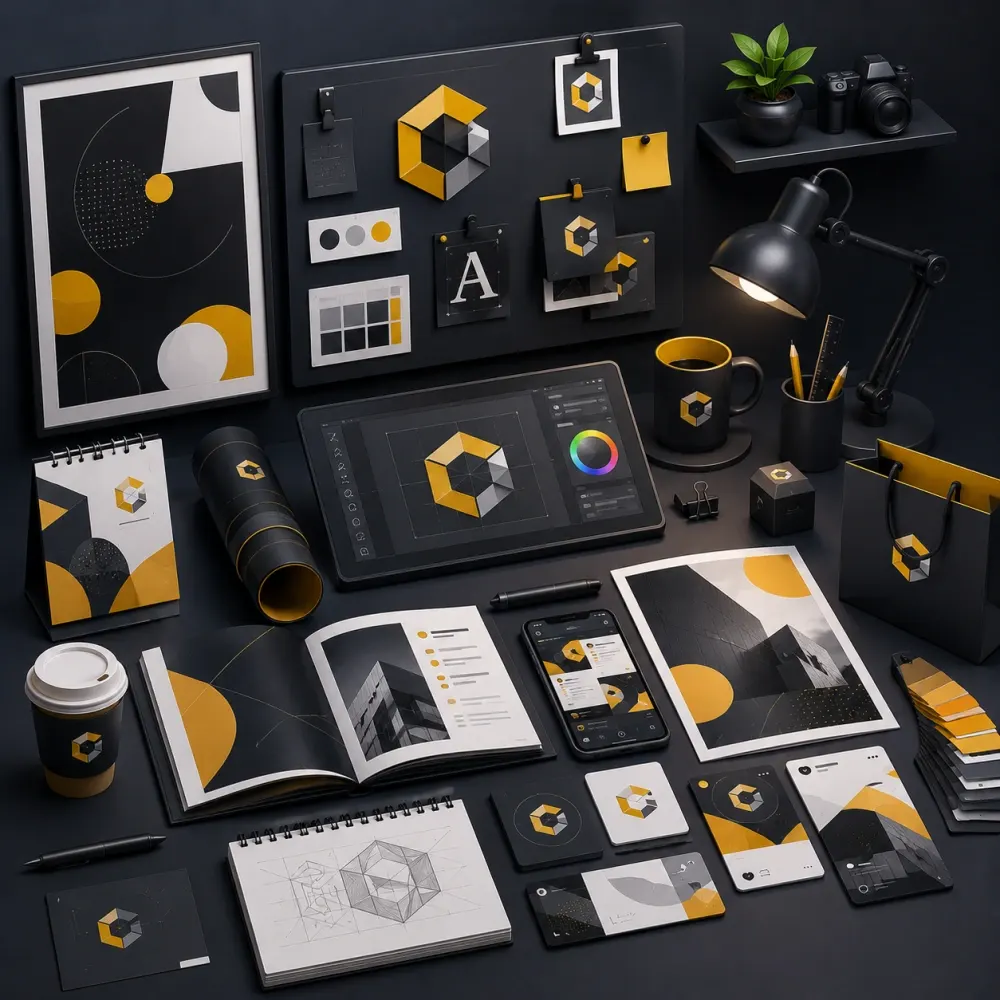
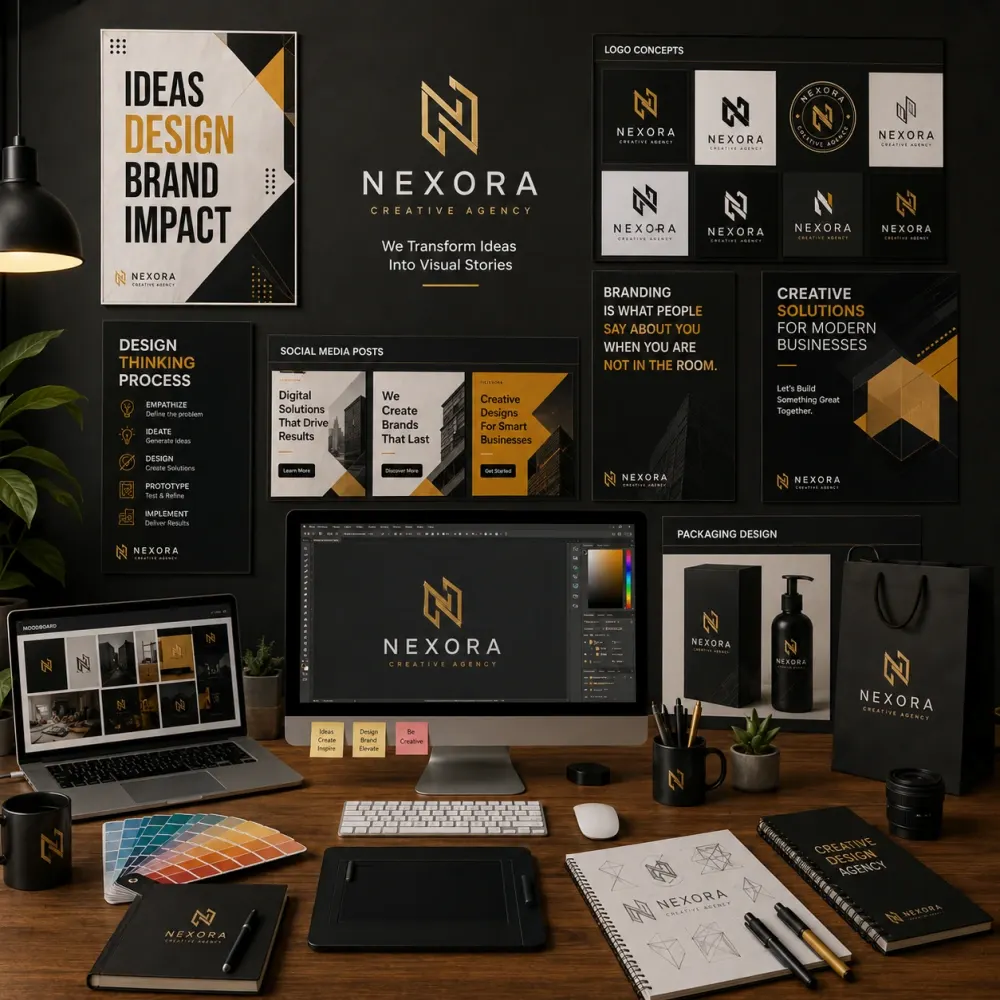
DesignBub provides graphic design services for companies, startups, agencies, entrepreneurs and growing brands that need visual communication to feel clear, consistent and appropriate for the place where it will be used. Work can include business graphics, marketing collateral, print design, digital campaign assets, social media creative, sales material, corporate documents, infographics, promotional artwork, branded templates and ongoing creative support.
What The Service Covers

Different formats need different layouts, but the brand should still feel familiar.

Professional graphic design services can support one campaign or become a broader visual system across many business touchpoints. A company may need one polished sales sheet. Another may need advertisements, brochures, event graphics and social assets for a launch. A growing team may already have a strong logo but struggle to keep everyday marketing material consistent.

The work can involve layout, typography, image treatment, color application, icon use, information organization and preparation for print or digital channels. The exact combination depends on the deliverable rather than a generic checklist.

Where a complete brand identity already exists, the design should respect it. Where the visual system is still limited, the project can create practical consistency around the supplied logo, colors and typography without pretending that a single marketing asset replaces full brand development.

Core Design Applications

Graphic design for the everyday places where a business has to communicate clearly.

The categories below share a visual foundation, but each one is designed around its own viewing environment and information load.

01

Custom Graphic Design

Custom work begins with the message, audience and format rather than a premade layout. A data-heavy business graphic can use a structured grid, while a premium service campaign may benefit from more restraint. The design should respond to the content instead of forcing the content into someone else's template.

02

Business Graphic Design

Service sheets, capability pages, internal documents, one-pagers and business communication often contain useful information that becomes difficult to absorb because it has not been visually organized. Headings, spacing, tables and supporting graphics can create a clearer reading path.

03

Marketing Graphic Design

Campaign visuals, promotional graphics, advertisements, email artwork, handouts and sales collateral need a reason for attention. We establish what the audience should understand first and make the supporting information work around that priority.

04

Digital Graphic Design

Web banners, social graphics, display creative, downloadable assets and screen-based communication need to survive different aspect ratios. A balanced desktop composition may require a real redesign for a narrow mobile placement rather than a simple resize.

Print Graphic Design

Print introduces physical decisions that do not exist on a screen.

Printed material becomes an object. Paper size, folds, binding, stock, finishing and viewing distance can change what makes a layout successful. A brochure held in the hand behaves differently from a poster seen across a room. A product insert has different constraints from a presentation PDF.

Print design can include brochures, leaflets, posters, folders, stationery, inserts, product sheets, signage artwork and other physical collateral. The artwork should be built around the final dimensions from the beginning rather than resized after approval.

Small text that appears comfortable on a monitor may become difficult after printing. A photograph may need more resolution. A fold may cross through an important headline. Special finishes can require separate production layers. Those are production questions as well as creative questions.

DesignBub can prepare print-ready files using the confirmed vendor specification, including bleed and appropriate export settings where required. The printer remains the best source for final production requirements, material behavior and finishing constraints.

Social Media Graphics

Frequent content should not require a new visual identity every time somebody posts.

Social media moves quickly, but visual consistency still matters. A recognizable system can make routine content easier to produce and easier to connect with the business behind it.

Social media graphic design can include campaign posts, announcements, educational carousels, quote graphics, story assets, reel covers and reusable templates. A single post may need one clear idea, while a carousel can distribute information over several slides.

The logo does not need to dominate every composition for the post to feel branded. Recognition can come from typography, spacing, color, image treatment and recurring graphic elements.

For teams that publish often, reusable templates can help preserve those choices. Template design should still account for realistic content lengths so future posts do not break when a headline is longer than the placeholder used during setup.

Advertising Creative

Paid creative needs room for testing without losing the brand every time a variation changes.

Advertising campaigns commonly need several versions of one idea. Placements use different ratios, headlines change, products change and the same offer may be tested with more than one visual treatment.

Advertising creative can support social ads, display banners, retargeting creative and campaign artwork. We can establish a master direction first and then adapt it into the agreed placements.

That master direction does not have to be loud. Some brands benefit from restrained creative, while others need stronger product, offer or price emphasis. The visual style should fit the message and the existing identity.

Design can make the offer easier to notice and understand, but artwork alone cannot guarantee clicks, leads, conversion rates or sales. Media buying, targeting, budget, copy and the offer itself all influence campaign performance.

Sales Collateral

Sales material sits between a quick marketing message and a full company document.

Prospects often need a compact explanation of services, features, packages, processes or capabilities. A salesperson may need something that can be sent after a call without overwhelming the recipient with a fifty-page presentation.

Sales collateral design can include one-pagers, service sheets, capability documents, comparison sheets, proposal graphics and product summaries. These assets need enough detail to answer practical questions while remaining easy to scan.

A comparison may need a structured table. A service sheet may work better with three clear sections and one contact path. A capability page may use selected proof points, images and a short process rather than a long company history.

The layout should reflect how the material will be used during a real sales conversation or follow-up, not simply how much content can fit on the page.

Corporate Documents

Longer documents need a page system that remains coherent after the first spread.

Company profiles, credentials documents, business reports and other corporate material may include services, project examples, team information, timelines, charts and contact details. The challenge is keeping those content types connected across many pages.

Corporate document design can establish page grids, heading styles, image treatments, callouts and recurring content blocks. The document does not need every page to look identical, but readers should understand that the pages belong to the same publication.

Variation can be useful. A strong opening spread may carry more visual impact, while a detailed service section can become more structured. The design system keeps that variation from turning into inconsistency.

Copywriting, research, financial reporting and fact verification are separate tasks unless specifically included. Graphic design organizes approved content; it should not invent factual claims to make a page look more persuasive.

Brochures & Multi-Page Collateral

More pages create more room, but also more opportunities to add information nobody needs.

A brochure can explain a service or business in greater depth than a flyer, but the extra space should not automatically become filler. The content still needs a sequence.

Brochure design can begin by asking what belongs on the cover, which subject needs a full spread, what can be grouped and how the reader should move from introduction to detailed information and contact.

The correct sequence depends on the use. A leave-behind sales brochure is different from an event handout. A product brochure is different from a corporate overview. A digital PDF may also support clickable navigation that a printed brochure does not.

We build the page system around the real content rather than filling a predetermined page count simply because a template contains that many pages.

Posters & Large Formats

Distance changes the hierarchy.

A poster may be seen from several metres away. A trade-show panel can be viewed while somebody is walking past. Signage may have only a moment to communicate before the viewer moves on.

Poster and large-format graphic design therefore requires stronger prioritization. The main message should survive at distance, while supporting information can become secondary.

Images also need enough quality for enlargement. A low-resolution photograph that looks acceptable inside a small social post may become visibly soft on a large printed panel.

Large-format production often comes with vendor-specific scale, material and file requirements. We prepare the artwork around the supplied specification, while the printer or fabricator should confirm final production details and installation needs.

Infographic Design

Some information becomes easier when relationships are shown instead of described repeatedly.

A process can become a sequence. A timeline can reveal order. A comparison can use a structured visual. A set of approved statistics can become easier to review when related numbers are grouped deliberately.

Infographic design services combine visual hierarchy with information structure. The objective is to make the meaning clearer, not to turn every number into decoration.

Charts need accurate labels and proportions. Icons should support interpretation rather than replace important context. If the graphic simplifies a technical subject, the simplification should not change what the source information actually says.

We work from client-approved information and data. Research, statistical verification or subject-matter review should be completed separately when the infographic is expected to support technical, legal, medical or financial claims.

Working With Existing Brands

Graphic design often starts after the identity work is finished.

Many businesses already have a logo, colors and typography before they need ongoing design support. The designer's job is then to use those assets intelligently rather than reinventing them without a reason.

We can work with supplied brand guidelines, logo rules, color palettes, fonts, icon styles, image direction and existing templates. Consistency does not mean repeating one layout everywhere. It means carrying recognizable decisions from one format to another.

A social post and a brochure can use different grids while still feeling related through typography, spacing, color and image treatment. A business document can be restrained while an event graphic is more expressive, as long as the core brand logic remains visible.

If the existing assets are too fragmented to support practical use, we can identify where the problem moves beyond graphic production and into brand-identity development.

Design for Startups

Early-stage businesses often need many assets before they have an internal design team.

A startup may need launch graphics, sales material, recruitment visuals, social content, pitch-support artwork, event pieces and website graphics within a short period of growth.

The risk is that every urgent request gets solved independently. A social template comes from one style, an investor graphic from another and a launch banner from a third. The company slowly collects visual inconsistency.

Design support for startups benefits from a few repeatable rules early: shared typography, controlled color use, image treatment and layout principles. Those decisions can create useful continuity before the company invests in a larger brand system.

The goal is not to make a young business bureaucratic. It is to give the team a visual foundation that makes the next asset easier to create.

Editable Templates

Some graphics are finished once. Others need to survive repeated updates.

Property listings, price sheets, event announcements, social posts and recurring reports often change after the initial design is delivered. In those cases, an editable template can be more practical than a locked final file.

Editable design templates should define what can change safely and what should remain fixed. A photo area may be replaceable, while typography and spacing remain controlled. A headline can allow a realistic range of text without breaking the layout.

The editing software should also fit the team. An advanced source file may be appropriate for an internal designer, while a non-design team may need a simpler workflow.

We discuss that workflow before building the template so editability is useful in practice rather than merely listed as a deliverable.

Print Preparation

The artwork is not finished when it looks correct on a monitor.

Before print production, dimensions, bleed, safe areas, image quality and color setup need to match the chosen vendor and product. Folding or cutting templates may also affect where text and imagery can sit.

We can prepare suitable final artwork from an approved design using the confirmed printer specification. Special finishes such as foil, spot varnish or die cutting may need their own production layers or instructions.

Proofreading remains important because design software cannot know whether a supplied phone number, price, date or address is correct. Client approval of factual content should happen before final print production.

For higher-volume or unusual jobs, a printer proof can reveal physical issues that are much harder to judge on screen.

Graphic Design Pricing

Starting packages for businesses that need more than one polished asset.

These packages are built around standard graphic assets. Multi-page publications, packaging, complex illustration, motion, UI design and unusually technical production are quoted separately because their workload is different.

Focused Design Support

Essential Visual Pack

Starting at$199

For a small business need, launch task or short set of coordinated visuals.

  • Up to 3 standard single-layout assets
  • One visual direction based on supplied brand assets
  • Digital or print-ready exports as agreed
  • Two consolidated revision rounds
  • Source files for the approved artwork
Choose Essential Visual Pack
Multi-Channel Campaign

Campaign Design System

Starting at$899

For a broader campaign that needs a master direction and multiple coordinated outputs.

  • Up to 15 standard campaign assets
  • Master visual direction for the campaign
  • Multi-channel format adaptations
  • Reusable graphic elements where appropriate
  • Organized handoff for marketing or internal teams
Choose Campaign Design System
Standalone Starting Prices

Need one specific deliverable?

Useful when you do not need a multi-asset package.

Social Media / Ad Graphic$59+
Business Flyer or Poster$99+
Business Card Design$99+
One-Page Sales Sheet$129+
4-Page Brochure$249+
Infographic Design$199+
Editable Template Set$199+
Website / Campaign Banner$79+
Additional Size Adaptation$29+
Monthly Design Support$699+/mo

Prices are starting USD fees and depend on content volume, number of concepts, complexity, asset count, revision scope and production requirements. Printing, paid stock assets, custom photography, complex illustration, motion design, copywriting, translation, premium font licensing and third-party costs are separate unless specifically included.

Our Process

A design workflow that begins with the communication problem, not the software.

The steps scale up or down depending on whether the project is one asset or a coordinated campaign.

01

Define the Job

We clarify what is being designed, where it will appear, who will see it and what the audience should understand or do next.

02

Collect the Material

We review copy, logos, guidelines, dimensions, images, product details and any existing graphics that should inform the project.

03

Build the Hierarchy

Before decorating the layout, we decide which message leads and how supporting information should be grouped.

04

Develop the Direction

Typography, imagery, spacing, color and graphic elements are shaped around the approved brief and intended format.

05

Refine and Deliver

Consolidated feedback is applied within scope, then the approved artwork is checked and exported for the agreed print or digital uses.

Possible Deliverables

One service can support many kinds of business communication.

The final list depends on the brief rather than an artificial bundle of items the project may never use.

Social Media Graphics
Ad Creatives
Brochures
Flyers & Posters
Sales One-Pagers
Infographics
Business Cards
Digital Banners
Corporate Documents
Campaign Assets
Editable Templates
Print-Ready Artwork
Why DesignBub

Individual assets work harder when they stop looking like individual accidents.

Graphic design becomes more useful when a brochure relates to the website, a social campaign still feels like the same brand as the sales document and an event graphic does not introduce a completely new set of visual rules just because the format changed.

DesignBub approaches graphic design services with that wider relationship in mind. We can work from established guidelines or help create practical consistency from a smaller set of existing assets. The communication objective, viewing environment and production format influence the layout before decorative choices are added.

We also separate what design can influence from what it cannot promise. Clearer hierarchy can make information easier to follow. Consistent choices can support recognition. Proper file preparation can reduce avoidable production problems. None of those points amount to a guarantee of sales, ad performance, leads or business growth.

The aim is more grounded: create visual communication that feels intentional, usable and recognizably connected to the business behind it.

Graphic Design FAQs

Common questions before choosing a design package.

These answers cover scope, formats, source files, templates, pricing and the difference between everyday graphic production and specialist design work.

Graphic design services cover the planning and creation of visual communication for print, digital and business use. Work can include marketing collateral, social graphics, advertisements, documents, brochures, posters, infographics, templates and other branded assets.

Yes. Projects are developed around the actual content, brand, audience and format instead of being forced into a generic premade layout.

Yes. Supplied logo rules, typography, colors and other brand standards can guide the artwork so new material stays connected to the existing identity.

We can work with the assets you already have and create practical consistency for the project. A broader brand-identity engagement can be scoped separately when the visual foundation itself needs development.

Yes. Campaign graphics, brochures, flyers, sales collateral, banners, advertisements and other marketing assets can all be included according to scope.

Yes. Digital artwork and print-ready files can both be prepared when the brief requires them, using the dimensions and production specifications agreed for each output.

Yes. Individual posts, campaign sets, carousels, stories, reel covers and reusable social templates can be designed around the brand and content plan.

Yes. Processes, timelines, comparisons, data graphics and other information-led visuals can be created from client-approved material.

Source files are included where listed in the selected package or agreed in the custom scope. The exact software depends on how the artwork is created.

Yes. Reusable templates can be created for recurring graphics when the chosen editing software and content structure make that practical.

Yes, but major aspect-ratio changes often need layout adjustment rather than simple scaling. Adaptations are priced according to how much re-composition is required.

Basic image treatment can be included in layout work. Complex compositing, reconstruction or high-end retouching may need a separate scope.

Yes, when required. Premium stock licenses or other paid third-party assets are charged separately unless they are specifically included in the quote.

The standard service focuses on design and production-ready artwork. Physical printing, shipping and fabrication are separate unless specifically arranged.

Light editing and content organization can be included where agreed. Full copywriting, research or content strategy is a separate service.

Yes. Monthly design support can be scoped around an agreed volume and type of recurring creative work rather than an undefined unlimited workload.

DesignBub packages currently start at $199 for the Essential Visual Pack, $449 for the Business Creative Pack and $899 for the Campaign Design System. Final pricing depends on asset count, complexity, content condition, revisions and production requirements.

Printing, extensive copywriting, paid stock assets, custom photography, complex illustration, motion design, advanced UI work, translation, premium font licenses and third-party costs are separate unless the quote says otherwise.

Timing depends on the number and complexity of deliverables, the readiness of supplied content and how quickly consolidated feedback is returned. A schedule is confirmed after the brief is reviewed.

Related Search Intent

Commercial searches this page answers without turning the copy into a keyword list.

These topics are supported by the sections above and help clarify the kinds of design work clients commonly look for.

graphic design services
professional design services
custom graphic design
creative design agency
visual design company
business visual design
marketing graphic design
print design services
digital design services
social media graphic design
advertising creative design
sales collateral design
corporate collateral design
brochure graphic design
infographic design services
poster design services
business document design
one pager design
product sheet design
campaign design services
ad creative design
banner design services
editable graphic templates
monthly graphic design support
Final Thought

Build a visual system that still looks like your business when the format changes.

Businesses do not communicate in one size. The same company may need a small mobile graphic in the morning, a printed brochure in the afternoon and a large event display the following week.

Those materials do not need identical layouts. They do need a recognizable relationship. Typography can carry through. Color can stay controlled. Image treatment can feel familiar. Spacing and hierarchy can reflect the same visual thinking.

That is how individual graphics begin to feel like one system instead of a folder full of unrelated files.

DesignBub provides graphic design services for businesses that need both the individual asset and the wider consistency around it. You can come with a complete brand guide, a few existing assets, an old piece that needs redesigning or a campaign that has not yet been given a visual direction.

We can start from the message, define what matters on the page and create the design around the environment where people will actually see it.

Need a single asset, a coordinated campaign or regular design support?

Send the formats, content, brand assets and where the graphics will be used. We can recommend the most sensible package or custom scope.