WooCommerce Theme Development
We can adapt an existing theme, build child-theme customizations or create tailored templates. Where possible, we avoid editing third-party core files so updates do not overwrite custom work.
DesignBub plans and builds WooCommerce stores around products, customers, payments, shipping and the day-to-day work behind each order. We create practical ecommerce experiences inside WordPress without treating every business like the same template.
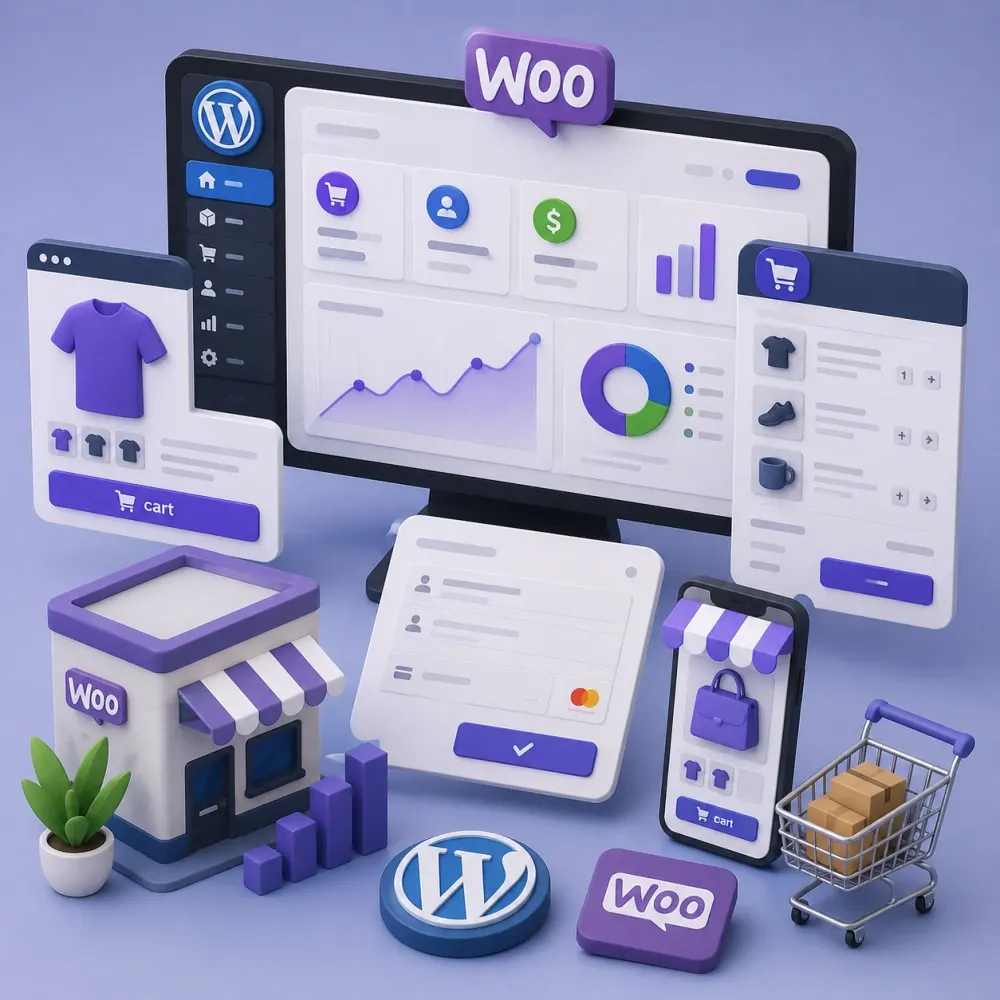
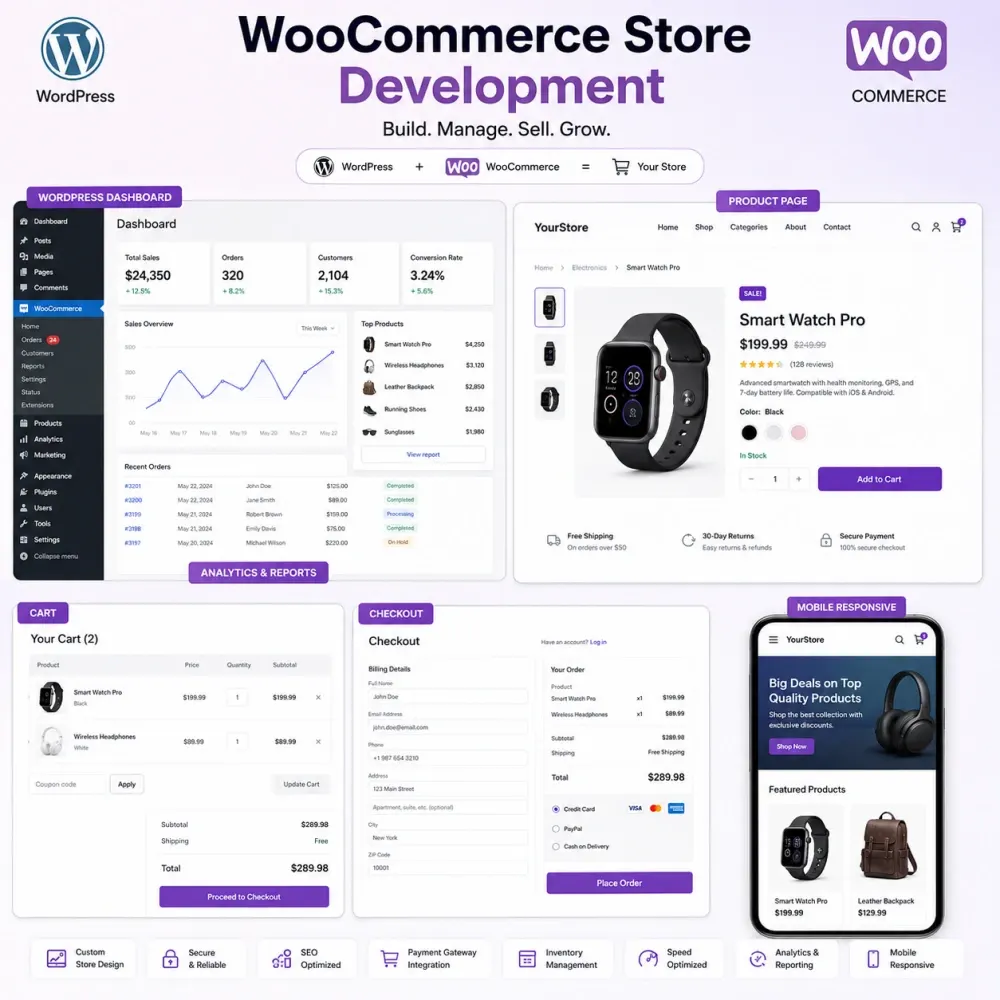
Storefront design, catalog structure, checkout logic and integrations planned as one ecommerce system.

























Selling online involves more than adding products to WordPress. Customers need to discover the right item, understand the offer, choose an option, trust the checkout, complete payment and receive useful order communication. The team behind the store also needs a practical way to manage products, stock, orders and routine updates.
DesignBub provides WooCommerce development services for businesses that need a new store, a redesign, custom functionality or a more stable ecommerce setup. We can work on storefront templates, product and category pages, carts, checkout, payments, shipping, product variations, filtering, integrations, migrations and performance improvements.
We define the architecture around the products and operations first. A small store with a simple catalog needs a different system from a wholesaler with customer-specific pricing or a subscription business with recurring billing. That difference shapes the development plan.
A project can involve a complete store build or a focused improvement to one part of an existing ecommerce website.
WooCommerce website development can include information architecture, WordPress setup, storefront design, product templates, category pages, cart, checkout, customer accounts, payment gateways, shipping methods, store emails, analytics setup, SEO foundations and testing.
A smaller assignment may address one specific need such as a custom product page, checkout field logic, an additional payment method, a product filtering system, a migration or an integration with another business platform.
We do not add features because they happen to exist in a plugin marketplace. Every extension increases the amount of software the store depends on. We prefer a controlled setup in which each plugin or custom feature solves a clear requirement and can be maintained after launch.
WooCommerce already handles many common ecommerce tasks. Custom development becomes useful when the normal product, pricing, account or order workflow does not match the business.
A custom requirement might involve special product fields, unique pricing logic, customer roles, quote requests, order rules, account tools, checkout behavior, shipping conditions or data exchange with another system. We first check whether WooCommerce or a dependable extension already handles the requirement well. Custom code should solve a real gap rather than recreate stable functionality for no reason.
This approach also helps future maintenance. A store that depends on dozens of overlapping customizations can become difficult to update. We aim for the simplest reliable architecture that supports the required workflow.
Visual design matters, but an ecommerce interface also needs to help people make decisions.
We organize the storefront around the information customers need at each stage. Category pages should make browsing and comparison easier. Product pages should explain price, options, specifications, availability and delivery information. Cart and checkout should make the order clear before payment.
Typography, color, imagery, spacing and brand elements support recognition, while the page hierarchy supports shopping. A decorative layout that hides product information or creates unnecessary steps works against the main purpose of the store.
Responsive behavior is part of the build. Product galleries, filters, variation selectors, cart controls and checkout fields need to remain usable on phones as well as larger screens.
We can adapt an existing theme, build child-theme customizations or create tailored templates. Where possible, we avoid editing third-party core files so updates do not overwrite custom work.
Product templates can organize galleries, pricing, variations, stock, specifications, delivery information, reviews, FAQs and related products around the information customers need to buy.
Category structure, grids, sorting, filters and subcategory navigation help larger catalogs become easier to browse instead of presenting customers with one long product list.
We review responsive layouts, sticky controls where appropriate, menus, filters, variation selection and checkout behavior so important actions remain practical on smaller screens.
Product and order setup should remain understandable for the people who run the store. We structure normal editing tasks around WooCommerce rather than requiring code for routine updates.
Before launch, we test representative products, variations, cart behavior, coupons when included, checkout, payment and shipping scenarios, emails and responsive pages.
The final steps of a purchase are sensitive because pricing, delivery, tax, customer information and payment all meet in one place.
WooCommerce cart development can refine quantity controls, variation details, coupons, order totals, shipping estimates and cross-sell areas. The cart should help the shopper confirm what they selected without making the next action difficult to find.
WooCommerce checkout development can adjust field order, required information, validation, layout and business-specific fields. A digital-product store may not need the same shipping information as a physical retailer. A B2B store may need company or tax data that a consumer checkout does not.
We make changes carefully because payment, analytics, shipping extensions and other integrations can depend on the checkout. Simplification is useful only when the final order still contains what the business needs to fulfil it correctly.
WooCommerce payment gateway integration can cover supported card processors, bank transfer, cash on delivery, digital wallets or local gateways depending on the provider and country. The payment company controls merchant approval, transaction charges, settlements, supported currencies and compliance. Our scope covers the store-side configuration and testing agreed for the project.
Shipping can depend on location, cart value, product type, weight or delivery method. We can configure WooCommerce shipping zones, flat rates, free-shipping conditions and local pickup. Live carrier rates or more complex rules may need a paid extension, external API or custom logic.
We test realistic combinations instead of assuming one sample order proves every rule. Large or unusual items, free-shipping thresholds and restricted destinations can expose problems that a simple test order will not show.
Catalog tools work best when product information is structured consistently.
WooCommerce product variations can handle choices such as size, color, material, capacity or finish. We organize attributes, variation combinations, pricing, stock, SKUs and images according to the product model. Complex catalogs need planning because thousands of unnecessary combinations can become difficult for both shoppers and administrators.
WooCommerce product filters can narrow products by useful attributes such as category, price, brand, availability or specifications. The filter system should follow the questions customers actually ask rather than showing every possible database field.
Search may also need improvement on a large catalog. Depending on the store, a stronger search tool can help with product names, codes, common terms or relevant attributes. The right solution depends on catalog size and performance requirements.
WooCommerce can connect to CRM systems, ERP platforms, accounting tools, inventory services, couriers, fulfillment systems, marketplaces, email platforms and custom applications. Some integrations have mature plugins while others depend on APIs or webhooks.
For a WooCommerce API integration, we define which information moves, in which direction and which system owns the final record. Orders might flow to fulfillment. Inventory might update from another platform. Customer records might enter a CRM. Clear ownership helps reduce duplicate or conflicting data.
Custom WooCommerce plugin development can also isolate business-specific functionality from the theme. Where an existing plugin is suitable, we prefer supported extension points rather than modifying its core files directly. This protects the work from being overwritten during normal updates.
Recurring billing and wholesale selling create more operational rules than a standard retail order.
WooCommerce subscription development can support recurring products through suitable extensions and compatible payment gateways. The final scope can include renewal schedules, trials, customer account actions, recurring shipping and related emails. Recurring billing depends on what the chosen payment provider supports.
B2B WooCommerce development can include wholesale pricing, account approval, private catalogs, minimum quantities, customer roles, quote requests or different payment terms. Some wholesalers only need alternate pricing for approved users; others need a more complex purchasing workflow.
We map those rules before development so the store supports the real sales process instead of forcing every business customer through a consumer checkout that does not fit.
A store is not only a customer-facing website. The internal team needs to update products, manage stock, review orders and handle routine changes without creating new technical problems.
WooCommerce can track stock at product or variation level when that model fits the business. We can configure product identifiers, stock status, backorder behavior and other supported settings included in the project. If another inventory system remains the master record, the integration plan needs to define where quantities are updated and how those updates reach WooCommerce.
Order workflow matters too. Store managers need clear order statuses, customer information, payment status and shipping details. Custom operational steps can sometimes be added, but they should reflect a real process instead of creating additional admin screens that nobody uses.
For larger catalogs, we also consider how product data will be imported or maintained. A clean spreadsheet or structured source can reduce manual entry and make future catalog updates more consistent.
Order communication is part of the purchase experience. Customers expect confirmation that the order was received, and later messages may need to communicate processing, completion, refunds, account activity or other store events.
We can style and configure standard WooCommerce transactional emails within the agreed scope, keeping important order details easy to read. More advanced email automation, abandoned-cart campaigns, CRM journeys or marketing sequences may require a separate email platform or extension.
We also review sender details and basic deliverability setup where relevant to the project. Reliable email delivery can depend on domain authentication, SMTP or transactional-email services outside WooCommerce itself. Those third-party services and their fees remain separate unless the quotation includes them.
Ecommerce software changes over time, so launch should not be treated as the last technical event.
WordPress, WooCommerce, themes and extensions receive updates for features, compatibility and security. A store with many plugins can develop conflicts when several components change at once. We therefore try to keep the extension stack focused and use supported methods for customization.
For significant updates, a staging environment and backup can provide a safer place to test changes before they reach customers. Payment, checkout, account and custom integration functions deserve particular attention because a visual page check alone may not reveal an operational problem.
Security also depends on hosting, access control, account practices, software maintenance and the third-party services connected to the store. We can address the areas included in the development scope, but no development provider can promise that an internet-facing store will never face a security issue.
Stores rarely remain exactly as they looked on launch day. New products are added, promotions introduce scripts, payment providers release updates, plugins change, and teams install tools for marketing or operations. Each change can affect performance or compatibility.
Ongoing WooCommerce support can include planned updates, backups, minor fixes, performance checks, product or content assistance, and troubleshooting according to the selected maintenance scope. Larger feature development remains a separate project when it requires new design, custom logic or a major integration.
A maintenance plan is optional rather than a hidden requirement. The store can be handed over to the client or another technical team. When DesignBub continues support, the package should define response scope, included work and third-party responsibilities clearly.
WooCommerce migration services can involve products, categories, images, customers, orders, coupons, pages and URLs depending on the source platform and the data it exposes. Passwords, payment tokens, subscriptions and some historical records can have platform-specific limitations, so we audit the source before confirming the migration scope.
A WooCommerce redesign can keep useful store data while improving navigation, product templates, categories, cart, checkout and mobile experience. It is also a good time to review old plugins, abandoned features and inconsistent templates.
Where the existing technical foundation remains stable, improving the parts that cause problems can be safer and more efficient than rebuilding the entire store only for the sake of starting over.
Ecommerce performance and search visibility depend on more than one plugin setting.
WooCommerce speed optimization can review image delivery, theme assets, plugins, JavaScript, fonts, caching, database behavior, hosting and third-party integrations. Cart, checkout and account pages need extra care because aggressive caching can create incorrect customer experiences.
WooCommerce development can also support SEO foundations through clear categories, crawlable internal links, useful heading structure, appropriate canonical behavior, image handling and compatible structured data. Development does not guarantee search rankings. Product content, search intent, reputation, internal linking and ongoing SEO work remain important.
We keep the distinction clear so performance or technical SEO work improves the foundation without being sold as a guaranteed traffic or revenue result.
We build the project in stages so product structure, customer experience and operational rules are considered before launch.
Confirm products, customer types, payments, shipping, taxes, integrations and business rules.
Plan categories, product types, templates, filters and the main route from discovery to checkout.
Develop approved templates, configure WooCommerce and implement the selected extensions or custom features.
Set up supplied product information and connect approved payment, shipping or external systems in scope.
Test representative products, variations, cart, checkout, emails, devices and important integration scenarios.
Move the approved store into production and hand over the agreed management guidance and project files.
These are starting prices for DesignBub development work. Final cost depends on catalog complexity, design depth, data quality, extensions, integrations and custom business rules.
For a small business launching a straightforward WordPress store with standard ecommerce requirements.
For stores that need a larger catalog, stronger product UX and more ecommerce configuration.
For ecommerce operations that need custom workflows, integrations, migration, B2B or subscription features.
| Scope | Starter | Growth | Advanced |
|---|---|---|---|
| Starting price | $660 | $1,710 | $2,900+ |
| Product entry | Up to 20 simple | Up to 75 supplied products | Custom / migration scope |
| Variable products | Limited / quoted | Included | Included |
| Payment gateways | 1 | Up to 2 | Custom |
| Shipping configuration | Basic zones/rates | Expanded rules | Advanced/custom |
| Filters | Basic catalog | Included | Advanced where needed |
| Custom business logic | — | Light scope | Included by quotation |
| Integrations | Core only | Selected tools | API/custom integrations |
| Revisions | 2 rounds | 3 rounds | 4 rounds |
Third-party costs are separate. Hosting, domains, premium themes or plugins, WooCommerce extensions, payment-provider fees, carrier accounts, email services, external APIs, CDN plans and other software subscriptions are not included unless a quotation states otherwise. Taxes, legal compliance, gateway approval and shipping-provider contracts remain the client's responsibility.
The number of visible pages is only one small part of ecommerce scope.
A store with ten products can still need advanced pricing, account logic or integrations. A larger catalog can sometimes use one well-planned product system with less custom development. Cost usually changes with product types, template depth, product-entry volume, variation complexity, payments, shipping, tax rules, B2B features, subscriptions, migrations, custom code and external integrations.
Third-party services should remain separate from the development fee. A premium WooCommerce extension, payment gateway, hosting plan, email platform, courier service or paid API can create ongoing charges that belong to the provider rather than DesignBub.
We scope the project around deliverables and operational requirements so the quote reflects what the store actually needs instead of using a flat price based only on page count.
Useful starting information includes the product range, category structure, existing website if there is one, brand assets, target markets, payment requirements, shipping rules, tax instructions and any systems that need to connect with the store.
Product setup may require names, descriptions, prices, SKUs, categories, images, stock information, dimensions, attributes and variation data. The cleaner this information is before development, the easier it becomes to create filters, variations and a manageable catalog.
Tell us about ERP, accounting, CRM, courier, inventory, marketplace or fulfillment systems at the beginning. Those dependencies can change the technical plan, and discovering them only at launch can create avoidable rework.
A store needs to keep working after the launch screenshots are finished.
Ask how the agency plans the catalog and checkout before development starts. Ask whether each custom feature really needs custom code, how paid plugins are selected and who owns the licenses.
Ask how the team tests mobile shopping, payment and shipping rules. Ask whether staging and backups are used for risky changes, what happens during future updates and how custom functionality is documented.
Also clarify what source code, admin access and third-party accounts you receive at handoff. These questions reveal whether the provider is building a maintainable ecommerce system or only a polished front-end demo.
Scope, payments, shipping, migrations and third-party tools can change the build, so the answers below define the common boundaries clearly.
Yes. A new project can include store planning, WordPress and WooCommerce setup, storefront templates, product structure, cart, checkout, payment and shipping configuration, testing, and the other features included in the selected package.
Yes, when the current theme, plugins, hosting and codebase can support the required ecommerce features safely. We review the existing setup before confirming whether an extension, redesign or cleaner rebuild is the better route.
Yes. We can configure attributes and product variations such as size, color, material or capacity. Complex catalogs are planned carefully so the variation structure remains usable for customers and manageable for the store team.
Yes. We can configure supported WooCommerce payment gateways when you have the required merchant account and provider access. Transaction fees, merchant approval, settlements and financial compliance remain subject to the payment provider.
Yes. We can configure zones, flat rates, free-shipping rules, local pickup and other supported methods. Live carrier rates or complex conditional shipping may require a paid extension, external service or custom development.
Yes, suitable extensions and custom development can support recurring subscriptions, wholesale pricing, account approval, private catalogs, minimum quantities and other B2B workflows. The exact setup depends on the commercial rules.
Yes, depending on the source platform and available data. Product, category, image, customer and order migration can require mapping and cleanup, so we review the source before confirming what can transfer safely.
Yes. Performance work can cover images, theme assets, plugins, scripts, caching, database behavior, hosting and third-party services. Dynamic cart, account and checkout pages require careful testing during optimization.
The store can be structured so your team can manage normal product, inventory, coupon and order tasks through WordPress and WooCommerce. Custom workflows or advanced integrations may need additional documentation or support.
Cost depends on design depth, product types, templates, product-entry volume, payments, shipping rules, migrations, B2B features, subscriptions, integrations, custom functionality, testing and support. Third-party software and service fees are normally separate.
Send DesignBub your product range, customer journey, payment methods, shipping rules and required integrations. We can turn those requirements into a WooCommerce development plan with a clear scope and practical handoff.