Custom Product Label Design
Original label artwork developed around your product, customer, positioning and existing brand rather than a premade marketplace layout.
Custom label design for bottles, jars, food, beverages, cosmetics, supplements and retail products—built around real dimensions, clear information hierarchy and production-ready artwork.
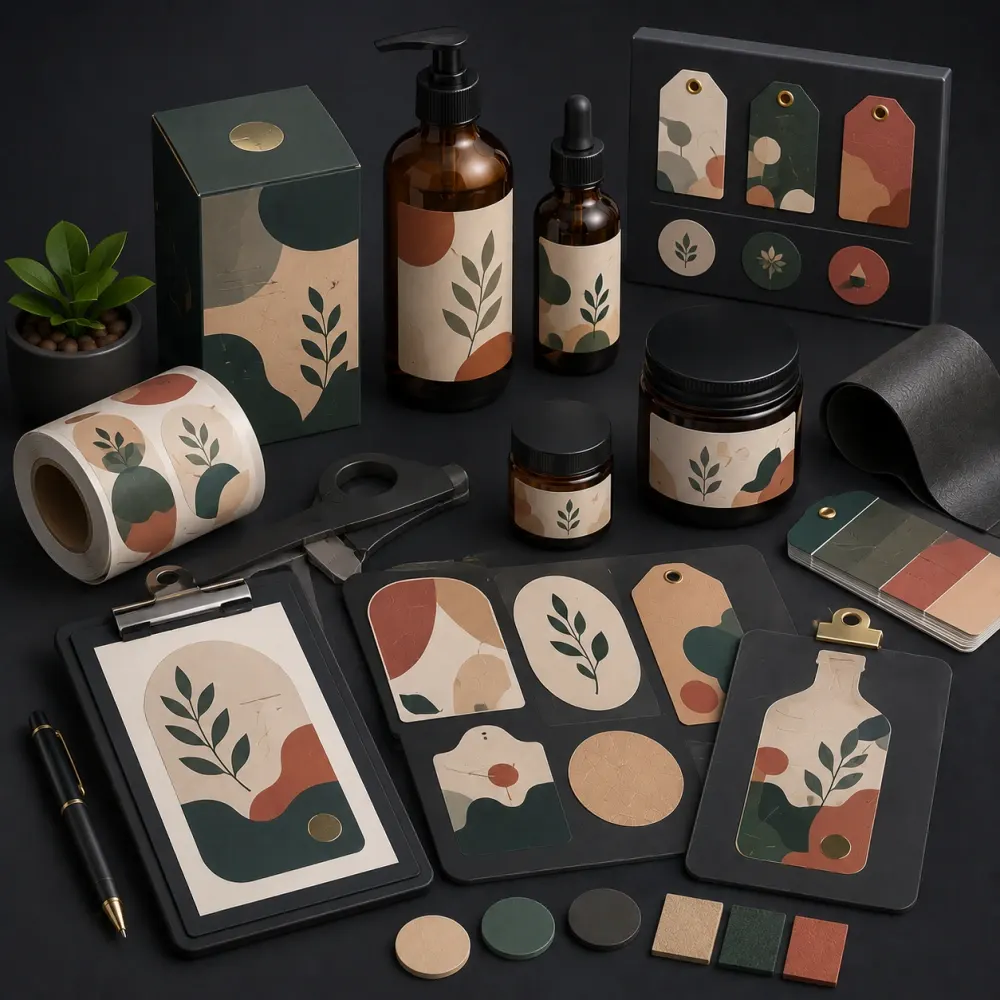
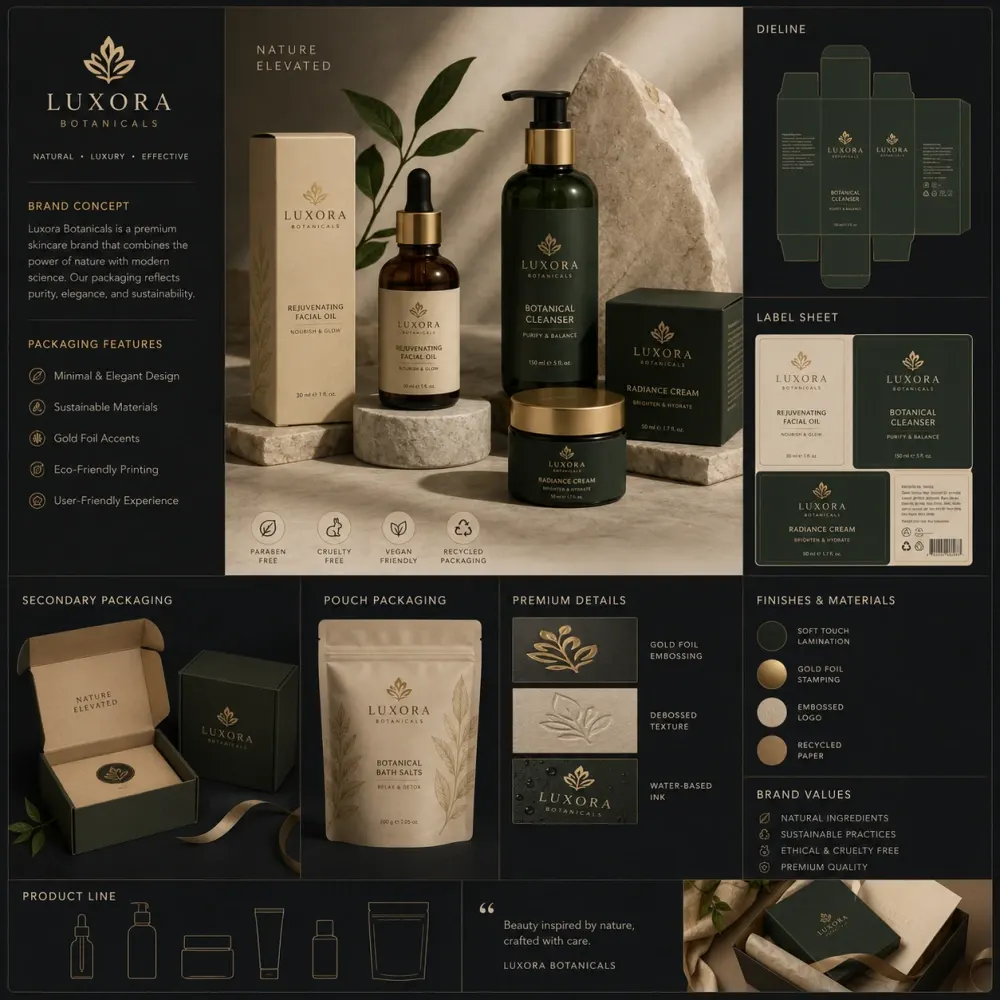
We work from the approved size or supplier dieline so the final artwork is planned for the physical label—not an imaginary flat rectangle.
A product label may occupy only a small part of the packaging, but it often carries most of the information a customer uses to recognize, compare and understand the product. The brand name is there. The product type is there. Flavor, size, variant, instructions and other details may all compete for the same limited space.
The label also has to wrap around a bottle, sit on a curved jar, fit an unusual container or leave room for information that cannot simply disappear because the design would look cleaner without it. That makes label design a problem of both branding and information.
DesignBub provides label design services for businesses that need custom labels for food products, beverages, cosmetics, supplements, bottles, jars, candles, personal-care products and other packaged goods. We design around the actual container, product range, brand identity and information supplied for the project.
The goal is not to cover every available centimetre with graphics. It is to establish a hierarchy that lets customers understand the product quickly while keeping the label visually connected to the brand. A strong label should know what deserves attention first and what can wait until the customer turns the container around.
We do not force one template onto different packaging formats. Each project is planned around the real surface, approved content and production method.
Original label artwork developed around your product, customer, positioning and existing brand rather than a premade marketplace layout.
Front, back or wraparound designs planned for curved containers, front-facing visibility and the exact printable area supplied by the vendor.
Clear product recognition, flavor distinction and organized space for approved ingredients, nutrition, quantity and other supplied information.
Compact, brand-led systems for bottles, tubes and jars where premium presentation has to coexist with dense product details.
Structured layouts that separate product identity from directions, ingredient panels, warnings and other client-approved content.
A repeatable master system for flavors, scents, formulas or sizes so new variants can join the range without looking unrelated.
Label design and packaging design are closely connected, but they are not always the same assignment. A label is usually an applied printed element attached to an existing bottle, jar, box, pouch or container. Packaging design can involve the entire printable surface and sometimes the structure of the package itself.
A glass honey jar may already exist, so the design task is the label that will be printed and applied to it. A custom carton may require artwork across several panels of a supplied dieline. Some products need both: a bottle label and an outer box that carries related branding.
We separate those deliverables during scoping so the client knows which surfaces are being designed, what production information is required and which files will be prepared. This also prevents the label from being asked to solve every branding or packaging problem at once.
Customers should not have to give equal attention to twenty pieces of information at once. A product label needs levels. The brand may come first, followed by the product category, flavor, fragrance, variant or main descriptor. Smaller supporting information can follow.
The right order changes by product. For an established brand, the brand name may deserve the strongest recognition. For a new product in a category where people primarily shop by ingredient or flavor, the descriptor may need greater prominence. There is no universal arrangement that suits every label.
We review what the customer needs to recognize at first glance and build the visual structure around that priority. The result should still work at the actual printed size rather than only when the artwork is enlarged on a designer's monitor.
Bottle label design has specific layout challenges because the artwork is rarely viewed flat. Part of a wraparound design turns away from the customer, a narrow bottle may leave limited front-facing space, and a transparent container introduces the color of the liquid as part of the visual composition.
We design around approved dimensions and printer specifications. Important front-facing information stays in a useful viewing area while secondary details can move to the side or back depending on the label configuration. Before production, final dimensions should be checked against the real container rather than estimated from a photograph.
Jar label design can involve a wraparound label, separate front and back labels, a lid label or a combination. A short jar behaves differently from a tall bottle, so the available space changes how product identity and supporting information are organized. If lid artwork is part of the project, it should feel connected without simply repeating the front panel.
Food label design often combines brand recognition, product appetite and a large amount of practical information. The design may need to accommodate product name, flavor, weight, ingredient information, nutrition details, preparation instructions or storage information supplied by the business.
The visual direction can use photography, illustration, typography or a more minimal graphic approach. An illustrated ingredient may communicate flavor, a transparent label may allow the product itself to provide visual appeal, and a premium food product may benefit from restrained typography and material finish.
Beverage label design often has to work in a crowded shelf environment. We can build a master system where the logo, typography and core layout remain stable while selected colors, ingredient imagery or flavor graphics change between SKUs. This makes range expansion easier without turning every new flavor into a new brand.
DesignBub organizes approved product information but does not determine whether food claims, nutrition data or regulatory wording satisfy a particular country's legal requirements. Those details should be confirmed by the client or an appropriate specialist before printing.
Cosmetic label design often needs to balance premium presentation with substantial product information. A serum bottle may offer very little printable space, while a shampoo bottle can carry more information on the reverse. Typography needs careful consideration because tiny containers can force text sizes downward quickly.
Skincare label design usually benefits from range logic. Cleanser, serum, toner and moisturizer should feel connected while remaining easy to identify. Color coding, numbering, ingredient references or controlled typography changes can distinguish variants without breaking the family resemblance.
Supplement label design can be even denser. Product name, serving information, quantity, ingredient panels, directions and warnings may all need a home. We treat that as an information-design challenge rather than trying to make everything equally prominent.
The client remains responsible for confirming claims, ingredients, warnings and regulatory information for the intended market. We design approved content into the label; we do not certify a product or guarantee compliance through graphic design alone.
Fragrance names, collection systems and restrained visual treatments for jars, tins or vessels, with optional lid artwork and coordinated variants.
A common visual architecture that helps products from different suppliers appear as one intentional retail range.
Round, rectangular or die-cut stickers for bags, jars, takeaway packaging, handmade products or promotional applications.
A front panel focused on recognition paired with a back panel that organizes supporting content without feeling like a separate brand.
Artwork considered in relation to the product behind the material, with white-ink or opacity requirements confirmed with the printer.
Hierarchy, typography and range consistency improved while useful existing recognition can be retained rather than discarded automatically.
A single label can be designed around one convenient product name and one specific information panel. A range is harder because the design has to survive different flavors, longer names, additional claims, new sizes and changing imagery.
When we design a product family, we define which elements stay fixed and which communicate variation. The logo position may remain consistent. Typography can stay stable. Flavor colors, ingredient visuals or product numbers can change in controlled ways. This helps the shelf look connected while still allowing customers to distinguish each item.
Testing the system against several realistic products early prevents a common problem: approving a beautiful first label that has no room for the second SKU. Multi-SKU label design should be planned as a system before it becomes a collection of exceptions.
Minimal label design is often misunderstood as removing information. A product can still require substantial detail while keeping the front panel restrained. Minimalism depends on hierarchy, spacing and disciplined visual choices—not making necessary information unreadably small.
Premium label design is not simply black and gold. The feeling comes from typography, material, spacing, image treatment and production finish. Foil, embossing, textured stocks, selective varnish or other techniques can add value when the vendor and budget support them, but special finishes need to be prepared according to real printer specifications.
A playful food product, scientific supplement and luxury skincare bottle should not all share the same aesthetic just because a trend is popular. We build the direction around the brand and buying context.
Small surfaces expose weak typography quickly. A typeface that works beautifully on a poster may fail on a 60 mm label. Product names need presence, descriptions need clarity and supporting copy needs practical readability. Too many type styles can fragment the hierarchy, while overly thin fonts can disappear in print.
Labels do not always need imagery. Some products benefit from ingredient photography, botanical illustration or a distinctive icon system. Others become stronger when typography and color do most of the work. The important question is whether the image remains useful at real size.
Custom illustration or advanced product photography can be included as separate creative work when needed. We do not hide those additional production needs inside a vague label-design fee.
Barcodes and QR codes should be treated as machine-readable elements, not decorations. We can reserve space and position supplied codes within the artwork, but the final printed version should be tested before a large production run. DesignBub does not issue or certify retail barcodes.
Depending on the product and market, a label can also contain ingredients, nutrition panels, warnings, net quantity, manufacturer information, batch data, dates, directions or other required information. The exact requirements vary by jurisdiction and product category.
Our role is to organize information supplied or approved for the product. We do not invent regulatory copy or claim that a graphic design automatically meets FDA, EU, UK, GCC, Pakistani or another jurisdiction's rules. Where formal compliance is required, a qualified reviewer should confirm the content before final production.
Print-ready label design can include artwork prepared to the approved dimensions, bleed and technical requirements supplied by the printing vendor. Color setup may change depending on the print method, while die-cut labels need the correct cut path and clear labels may involve white-ink considerations.
The same design can behave differently on white paper, transparent film, kraft stock or metallic material. Light colors may change visually on clear stock, and special finishes may require dedicated layers. The vendor remains the authority on adhesives, durability, material compatibility and physical production performance.
Containers also curve, taper and sometimes contain ridges or recessed areas. We therefore work from the supplied dieline or approved dimensions. Mockups are useful for presentation, but they are not a substitute for a physical proof when production risk matters.
A label lives between brand identity, information and physical production. Ignoring any one of those areas creates problems: attractive artwork with no room for required copy, complete information with no brand presence, or a strong flat design that loses its main message around the side of the bottle.
Hierarchy is judged against the actual label dimensions, not only an enlarged artboard.
Variant systems can be planned so future products have a clear place within the design.
Dielines, bleed, cut paths and special-print layers are handled against the supplied vendor specification.
Printing, regulatory review, photography, illustration and other specialist work are separated rather than hidden inside the design promise.
We collect the brand assets, product name, container details, label dimensions or printer template, approved copy and visual references.
Front-facing content, supporting details, required panels, barcode space and variable SKU information are organized before styling begins.
Typography, color, imagery and range logic are developed around the brand and the way the product will be presented.
The approved direction is built with the real content and checked at realistic size. Multi-SKU projects approve the master before wider rollout.
Feedback is applied within the selected package, while the client confirms product names, claims, quantities and other supplied information.
Approved artwork is prepared to the supplied print specification with agreed source files, exports and presentation mockups.
Pricing is based on the design scope, number of SKUs, information density and production setup. These are starting fees in USD; unusual containers, advanced illustration, regulatory consulting or complex prepress requirements can change the final quote.
A focused custom label for one product and one approved label size.
A fuller retail-ready label system for one product with more content and production detail.
A reusable master label system for a product family that needs consistent SKU expansion.
Useful when the core brand or master label already exists.
Pricing note: printing, barcode registration, regulatory or legal review, copywriting, translation, custom photography, advanced illustration, 3D rendering, paid fonts or stock assets, product testing and courier or production costs are separate unless written into the quote. Printer specifications should be confirmed before final production.
The final package depends on the selected tier, label format and production requirements.
These are common ways clients describe the work before a formal brief exists.
Answers about label formats, source files, regulatory content, dielines, pricing and multi-product systems.
Label design services cover the visual and production design of labels used on bottles, jars, containers and other packaged products. Work can include hierarchy, typography, color, product information, imagery, variant systems and print-ready artwork.
Yes. We develop the label around the specific product, container, brand and approved content rather than placing a new name into a generic template.
Yes. Bottle and jar projects can include front labels, back labels, wraparound artwork, lid labels and coordinated product variations based on supplied dimensions.
Yes. Food and beverage work can cover jars, sauces, snacks, juices and other packaged products using product information supplied and approved by the client.
Yes. We can organize product names, quantities, directions, ingredient panels and other supplied information while keeping the label visually connected to the brand.
Yes. Multi-SKU systems can keep typography, layout and brand elements consistent while using controlled differences such as color, imagery or naming to distinguish variants.
Yes. Useful recognizable elements can be retained while hierarchy, spacing, typography, range consistency and production readiness are improved.
Yes. Existing logos, colors, typography and brand guidelines can guide the label system. If you only have a logo, we can establish a practical visual direction around the available assets.
We can position a valid barcode supplied by the client, but barcode registration, numbering or certification is not included in standard label design work.
Yes. A supplied and tested QR code can be placed within the artwork with suitable clear space. The final printed code should still be tested before mass production.
We can format information supplied by the client. Ingredient accuracy, warnings, claims and regulatory copy should be verified by the business or an appropriate qualified professional.
Graphic design alone cannot guarantee regulatory compliance. Requirements depend on the product and target market, so formal legal or regulatory review remains the client's responsibility.
Yes. Final artwork can be prepared to the dimensions, bleed and production specification supplied or confirmed by the printer.
If the vendor provides a dieline or template, using that exact file is preferable. It reduces the risk of building artwork to dimensions that do not match production.
Yes. Clear-stock, white-ink, foil or other special-finish artwork can be prepared when the printer supplies the required production specification. Special-finishing costs are separate from design.
Yes. Mockups can help review the label visually and support presentations or ecommerce. They are presentation assets and do not replace a physical print proof.
Deliverables can include a print-ready PDF and editable source files such as AI or PSD, depending on the production method and selected package.
DesignBub packages currently start at $199 for one focused label, $249 for a fuller retail label system and $349 for a multi-SKU product range system. Final pricing depends on complexity, number of variants, information density and production requirements.
No. The listed prices cover design and agreed artwork preparation. Printing, materials, courier costs, barcode registration and specialist production services are quoted separately by the relevant vendors.
Timing depends on content readiness, concept complexity, SKU count, feedback and how quickly the printer's dimensions or dieline are confirmed. We provide a project schedule after reviewing the actual brief.
A label will be touched, turned, scanned, stacked, shipped and compared with competing products. We design for that real use—not only the flat artwork preview.