AI Video Ads
Short promotional videos for paid and organic campaigns, built around a clear hook, offer and call to action.
DesignBub creates AI-generated video for ads, products, social content, explainers and brand campaigns. We combine concept development, generative footage and human editing so the final piece follows a clear message instead of looking like a collection of random AI clips.
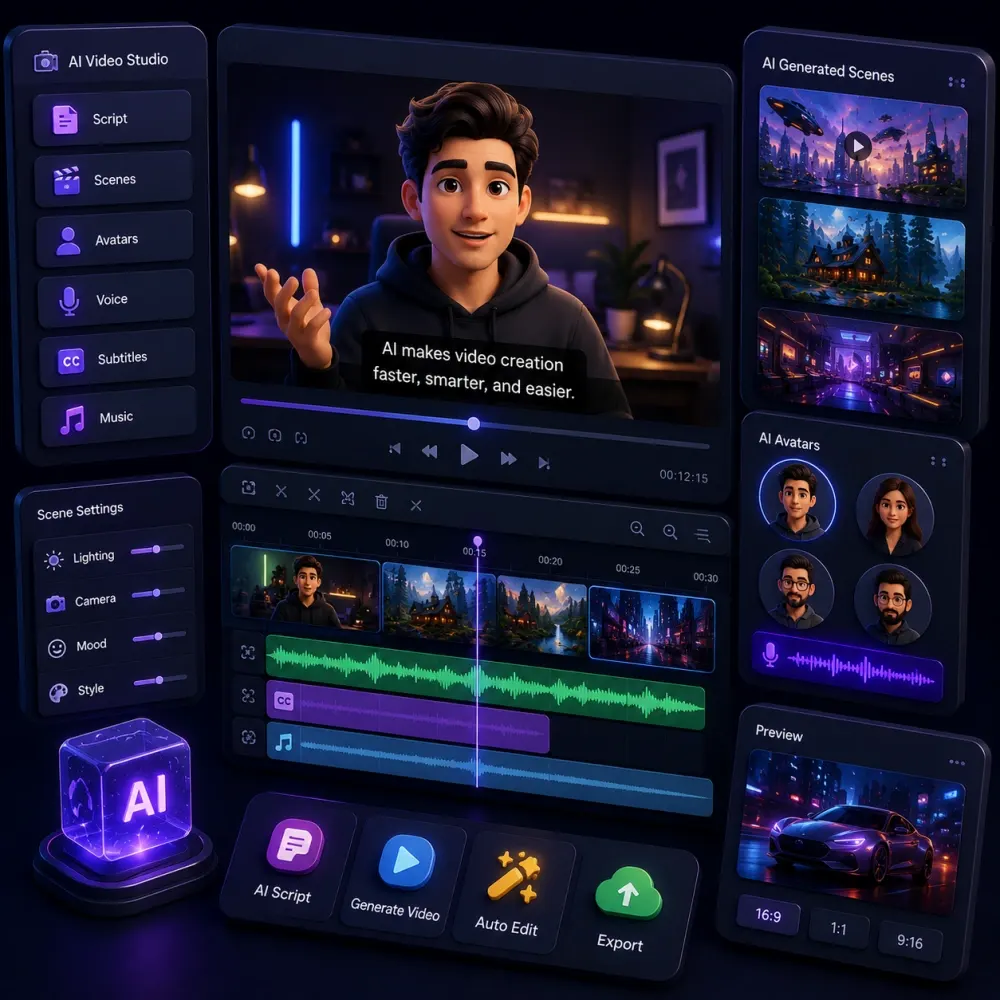
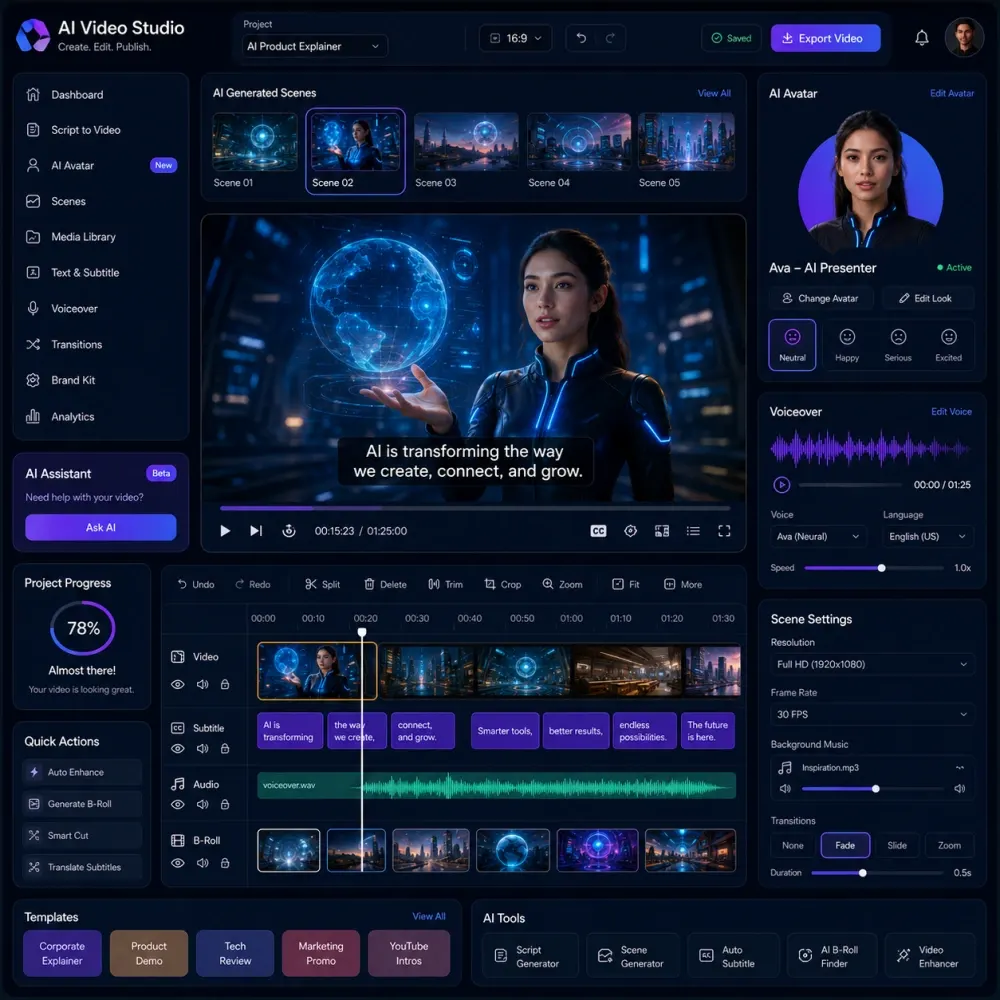
Concept, generated scenes, editing and platform-ready delivery in one managed workflow.

























Video can communicate quickly, but conventional production can turn a small concept into a long chain of logistics. A short campaign may need a script, location, crew, talent, lighting, filming and post-production before anyone sees a finished version. AI gives businesses another production route for projects that do not need every frame captured by a camera.
DesignBub provides AI video generation services for brands, agencies, ecommerce teams, startups and businesses that need visual concepts without building every shot through a traditional shoot. We can develop the idea, plan the scene sequence, generate footage, combine real brand assets, add typography or voice, edit the result and export versions for the channels where the video will run.
We do not treat generation as the whole job. A model can create a striking shot and still fail to produce a useful campaign. We decide what the viewer needs to understand, which scenes require continuity, what must stay factually accurate and where a conventional editing or motion-design technique gives us more control.
A useful scope depends on the message. One project may need fully generated environments and characters. Another may keep a real product photograph in every important frame while AI creates the background and motion around it. A third may use AI only for a few difficult transitions while the rest comes from supplied footage and screen recordings.
Our AI video generation services can support video ads, product promotions, social media videos, explainers, campaign teasers, short-form content, avatar-led presentations, image-to-video animation, text-to-video scenes and creative visual effects. We choose the workflow around the level of control the project needs.
Short promotional videos for paid and organic campaigns, built around a clear hook, offer and call to action.
Product-led creative that can combine real pack shots or renders with generated environments and motion.
Vertical, square or landscape video for reels, shorts, feeds, launches and recurring brand content.
Structured video that combines generated scenes with typography, icons, screenshots or motion graphics.
We begin with the audience, message, duration and platform instead of asking a model to make something “cinematic” and hoping the footage suggests a useful campaign. The brief determines the visual direction.
A premium product launch may need slow movement, controlled lighting and minimal text. A social ad may need a direct opening and faster edits. A technology company may benefit from abstract visual metaphors that would cost far more to build physically. A service business may need a simple narrative that shows a problem and outcome without pretending to document a real customer.
Custom AI video generation lets us explore scenes that may be difficult to film, but we keep the concept connected to the business. We also decide early whether exact continuity matters. If the same person, product or environment needs to remain identical across many shots, we plan references and hybrid techniques before production rather than discovering the limitation after dozens of clips have already been generated.
Advertising creative works when the opening creates relevance and the rest of the sequence delivers on that promise. We can create AI video ads for product launches, service offers, awareness campaigns, retargeting and social advertising.
We plan the first few seconds carefully. The video may open with the product, a recognizable problem, a visual transformation or a clear statement. We then use generated scenes, supplied assets, captions and editing to move the viewer toward the message rather than filling the timeline with unrelated spectacle.
One campaign can need several creative variations. We can change hooks, scene order, duration or aspect ratio after the main direction is approved. We focus on meaningful variations. Design can support attention and message clarity; it cannot guarantee clicks, conversions, sales or return on ad spend.
AI can create attractive product environments quickly, but it can also change packaging, typography, proportions, labels and small details between frames. Those changes matter when the customer needs to see the actual item.
For accuracy-sensitive work, we can use genuine product photography, renders or supplied footage as the anchor and generate motion, backgrounds, lighting effects or supporting scenes around it. This hybrid approach gives the creative more variety without asking a model to invent details that should remain exact.
An ecommerce product video may show a real bottle against generated lifestyle environments. A SaaS promotion may combine interface recordings with abstract AI visuals. A fashion campaign may animate approved key images rather than generating a new garment in every shot. We choose the method that protects the promise the business makes to the customer.
Short-form platforms reward clarity and fast visual communication, but not every brand needs frantic cuts, giant captions or trend-based editing. We can create AI reels, shorts, vertical ads and other social content around the tone the business already uses.
Vertical content may need larger text and tighter framing. A square version may need another composition. A landscape campaign cut may allow more environmental detail. We adapt the sequence rather than blindly cropping the same master file.
We can also build batches around one campaign idea. A product launch might use a hero video, several short hooks and a few image-to-video clips for follow-up posts. That creates a connected visual system while giving the team enough variation to publish across several placements.
An explainer needs structure before it needs spectacle. We identify what the viewer already knows, what they need to understand and which moments deserve a visual example.
AI can provide conceptual scenes, environments or character moments. Motion graphics can handle diagrams and process steps more precisely. Screen recordings can show a software interface. Text can clarify a term that would take too long to represent visually. We can combine these techniques instead of forcing every sentence into generated footage.
This approach suits service explainers, product introductions, internal training pieces and campaign videos where the message carries more weight than the production method. The finished piece should reduce explanation for the viewer rather than become another thing the viewer has to decode.
Ecommerce teams need video for product pages, paid ads, marketplaces, launch pages and social content. Generative production can help create lifestyle environments, category visuals, product reveals and campaign cutdowns.
The workflow should reflect how closely the video must represent the item. Beauty packaging, electronics, food labels and apparel can all contain details that AI changes easily. We preserve genuine source assets where those details influence the buying decision.
This makes AI useful around the product rather than in place of the product. A real image can remain sharp while the environment moves. A supplied render can sit inside a generated scene. Existing footage can connect to a synthetic transition. The customer sees the actual offer while the brand gains more creative options.
AI avatars can work for training, internal updates, simple presentations, multilingual versions and selected marketing content. They suit situations where the audience needs a clear presenter but does not depend on the nuance of a live performance.
We can combine an avatar with screenshots, branded graphics, subtitles and supporting footage. The script and pacing still need human attention because a synthetic presenter can sound mechanical if the copy was written only for reading.
We also treat likeness and voice rights carefully. A project that uses a real person's face, voice or identity needs appropriate permission. We do not create deceptive impersonations or fabricate endorsements. When synthetic media could reasonably confuse the audience about who is speaking, disclosure may be appropriate or required by the publishing platform.
A prompt can influence subject, environment, lighting, framing, camera movement and style, but one long generation rarely gives enough control for a finished campaign.
We normally break the idea into individual shots. A thirty-second video may need several short clips, each with a specific purpose. We can generate options for those shots, select the strongest takes and build the final timing in the edit.
This gives us more control over pacing and lets us replace a weak scene without regenerating the entire video. Text-to-video works especially well for conceptual imagery, atmospheric footage and scenes where exact real-world continuity is less important than the overall visual idea.
This workflow begins with a still image and adds motion. Brands can use existing photography, illustrations, renders, campaign key art or concept frames as a visual anchor.
We can introduce camera movement, environmental motion, fabric movement, particles, lighting changes or other scene activity while keeping the original composition as a reference. This often gives more control than text-only generation.
The model can still alter faces, hands, logos or product details as motion develops. We review each output and reject clips that distort something important. In many cases, subtle movement looks more believable and protects the source asset better than a dramatic animation request.
A strong concept defines what the viewer should feel, understand or do. It also tells us where AI adds value.
A cybersecurity company may not need another video of people typing on laptops. A concept about invisible systems, threats and layers of protection may explain the service more effectively. A skincare brand may need sensory visuals around real packaging. A property company may use stylized location transitions around approved photography instead of synthetic buildings that do not exist.
Concept development prevents the timeline from becoming a collection of impressive but unrelated clips. We can create a scene map or storyboard first, then generate only the material the sequence actually needs.
Generation produces raw footage. Editing decides what the viewer experiences.
We select usable clips, control duration, build transitions, add typography, integrate product assets, place captions and shape the sound. Editing also helps manage AI inconsistencies. A shot may look convincing for two seconds and fall apart if we hold it for six. A clean cut can preserve the useful moment.
Color treatment can bring separate generations closer together. Motion graphics can stabilize brand elements that the model would otherwise distort. A title card can communicate a product feature more precisely than generated text inside a scene. Human post-production gives us tools that generation alone does not provide.
One generation may look photorealistic, another may feel illustrated and a third may introduce different lighting even when the prompts share similar wording. That flexibility can make a campaign feel fragmented.
We define visual rules before the full generation run. Those rules can cover color mood, lighting, lens feel, environment, wardrobe, framing, camera behavior and graphic treatment. Reference assets can reinforce the direction when selected workflow supports them.
The goal is not to make every shot identical. Video needs change. We want controlled variation that still belongs to one campaign. When the brief requires exact character continuity or exact product behavior across many scenes, we may recommend a hybrid, 3D or conventional production approach instead.
Generative media raises questions around copyright, trademarks, training data, voice cloning and commercial licensing. The exact position can vary by tool, jurisdiction and project.
We do not make blanket claims that every generated frame automatically receives full copyright protection or unlimited commercial rights. Before we use a particular platform for commercial production, the relevant terms need to support the intended use. Client-supplied logos, images, characters and reference material should also come with the necessary rights.
High-risk campaigns may need specialist legal review because design and production do not replace legal advice.
AI can create faces, voices and scenes that look convincing. We do not use that capability to fabricate endorsements, impersonate people without authorization or present fictional events as verified evidence.
If a project uses a recognizable person, the client should have the necessary permission for the requested likeness or voice. If synthetic media could reasonably cause the audience to believe a real person said something they did not say, we either change the concept or handle disclosure according to the use case and platform rules.
Creative AI video can still feel imaginative without depending on deception.
Generative models can shift faces, change hands, distort text, alter packaging, ignore physical logic or lose continuity between shots. Long uninterrupted actions remain harder to control than short clips.
We plan around those weaknesses rather than hiding them. We can shorten a shot, replace a scene, composite a real logo, use motion graphics for text or keep the real product in the frame. For exact demonstrations, regulated claims or precise technical procedures, traditional filming, screen capture, 3D animation or another controlled technique may provide a better result.
The production method should follow the requirement. We do not add AI to every frame simply to make the project sound more advanced.
Our AI video generation services begin with the audience, platform, duration, brand assets and any product or factual details that must remain accurate. We then define the concept and scene structure. This stage identifies which shots need generation, which should use supplied material and where motion graphics or conventional editing will give us better control.
Next, we develop visual references or storyboard frames. After the direction is approved, we generate and evaluate the required shots. AI output varies, so we may create several options for important scenes and select the strongest material based on visual quality, continuity and usefulness inside the sequence.
Editing brings the work together. We control pacing, captions, transitions, typography, voice, music and sound where included. The client reviews the assembled version and provides consolidated feedback. We refine the approved direction within the package revision scope and export the final files for the agreed channels.
These AI video generation services packages cover standard concept, generation and editing work. Projects with complex characters, exact product simulation, heavy regeneration or specialist licensing may need a custom quote.
For a focused social clip, teaser or single-message visual concept.
For a polished ad, product promotion or multi-scene campaign asset.
For a longer brand piece, product story or visually connected campaign film.
Starting prices assume a defined brief and usable source assets where accuracy matters.
Pricing note: Standard generation and editing within the agreed scene count are included. Premium stock, paid music, specialist voice or avatar licenses, cloned-voice work, unusually heavy regeneration, 3D production, live filming, paid talent and third-party platform costs are separate when required. Pricing does not include advertising spend and does not guarantee campaign performance.
The scope can include concept development, storyboards, text-to-video scenes, image-to-video animation, AI product visuals, social ads, explainers, synthetic presenters, visual effects, editing, captions, voice integration, sound design, logo animation and multi-format exports.
A project can also use real product images, existing video, screenshots, interface recordings, conventional motion graphics and traditional design. We define the mix around the level of control the message requires.
A six-second conceptual ad does not need the same production plan as a sixty-second product story with recurring characters and exact packaging. Scene count, continuity, revisions and output versions all affect the workload, so the quote should reflect the real deliverables rather than video length alone.
DesignBub treats generative video as creative production rather than an automatic output. We decide where synthetic footage genuinely helps and where another method provides better control.
We build scenes around the message, check whether the product still looks like the product, keep visual changes connected to the brand and edit the generated material into one sequence. We also stay clear about the limits of the medium.
AI can support experimentation and reduce some production barriers. It cannot promise perfect continuity, exact realism in every frame or commercial results. The value comes from combining the technology with human decisions about what the audience actually needs to see.
These answers cover generation, product accuracy, avatars, revisions, rights, pricing and final delivery.
AI video generation services use generative video tools inside a managed creative workflow. A project can include concept development, prompt direction, generated scenes, image animation, editing, captions, voice integration, motion graphics and final exports.
Yes. Some projects can use fully generated scenes. Other projects work better when we combine AI footage with real product images, supplied video, screen recordings, motion graphics or conventional editing.
Yes. We can create short AI video ads for social campaigns, launches, retargeting, product promotions and other digital marketing uses. We build the creative around the offer, audience and placement rather than a generic template.
Yes. We can prepare vertical, square and landscape versions for reels, shorts, feeds and ads. Different aspect ratios may require layout changes rather than simple cropping.
Yes, but product accuracy determines the workflow. When packaging, logos, proportions or physical details must remain exact, we usually combine genuine product assets with generated backgrounds, motion or supporting scenes.
Yes. AI avatar videos can support training, internal communication, presentations and selected marketing uses. If a project uses a real person's likeness or cloned voice, the appropriate permission must exist.
Yes. Image-to-video workflows can add camera movement, environmental motion and other controlled animation to approved photography, illustrations or concept frames.
Yes. We can turn a script or scene description into a planned sequence of generated shots, then select and edit the strongest outputs into final video.
Yes. Prompt development can cover subject, environment, framing, camera behavior, lighting, movement and visual style. We treat prompts as part of production rather than the final creative strategy.
Yes. Script and storyboard work can be included. Technical, medical, financial or other sensitive claims should come from the client or an appropriate subject-matter reviewer.
Yes. We can integrate client-supplied narration, suitable synthetic voices or other approved voice assets. Premium voice licensing, cloned voices or third-party voice costs may require separate scope.
Yes. We can add captions, subtitles, product callouts, branded typography and calls to action according to the platform and video format.
Yes. We can adapt an approved direction into additional hooks, lengths or aspect ratios. The number of versions should be defined in the project scope because each variation still needs review and export.
Not always. Generative models can change facial details, clothing and proportions between shots. We plan around that limitation and use references, editing or hybrid production when continuity matters.
Not reliably in every generated frame. For accuracy-sensitive products, we recommend using genuine photography, renders or footage as the product source and using AI around those assets.
Yes. We can create short hero visuals, loops and supporting video assets. Website implementation, compression and performance work may require separate development scope.
Yes. We can prepare generative visual sequences for events, presentations and exhibition screens when the final resolution, duration and display format are confirmed.
Usage rights depend on the tools, source assets, licenses and legal context used for the project. We define the agreed deliverables and workflow, but we do not make blanket legal guarantees about copyright status.
We can use broad creative references such as cinematic, editorial, minimal or surreal, but we develop a distinct direction rather than copying another brand's protected creative work shot for shot.
Cost depends on duration, scene count, product or character consistency, revisions, voice work, motion graphics and output formats. DesignBub packages start at $1,750, with larger campaign and brand-film scopes priced higher.
Timing depends on scene complexity, regeneration requirements, approvals and editing. AI can shorten parts of production, but difficult continuity or product-accuracy requirements may still require several iterations.
You can start with a brief, script, product images, existing footage, storyboard or a rough visual idea. DesignBub can decide which parts suit generation, create the scenes and bring the strongest outputs together through editing, typography, motion and sound.