Technical SEO Audit
Review crawling, indexation, canonical signals, redirects, sitemaps, duplicate URLs, internal architecture and other technical issues that can interfere with important pages.
Technical SEODesignBub provides SEO services for businesses that want clearer search visibility through stronger site structure, useful content and technically sound pages. We combine technical SEO, keyword research, on-page optimization, internal linking, content planning and measurement without relying on ranking guarantees or keyword stuffing.
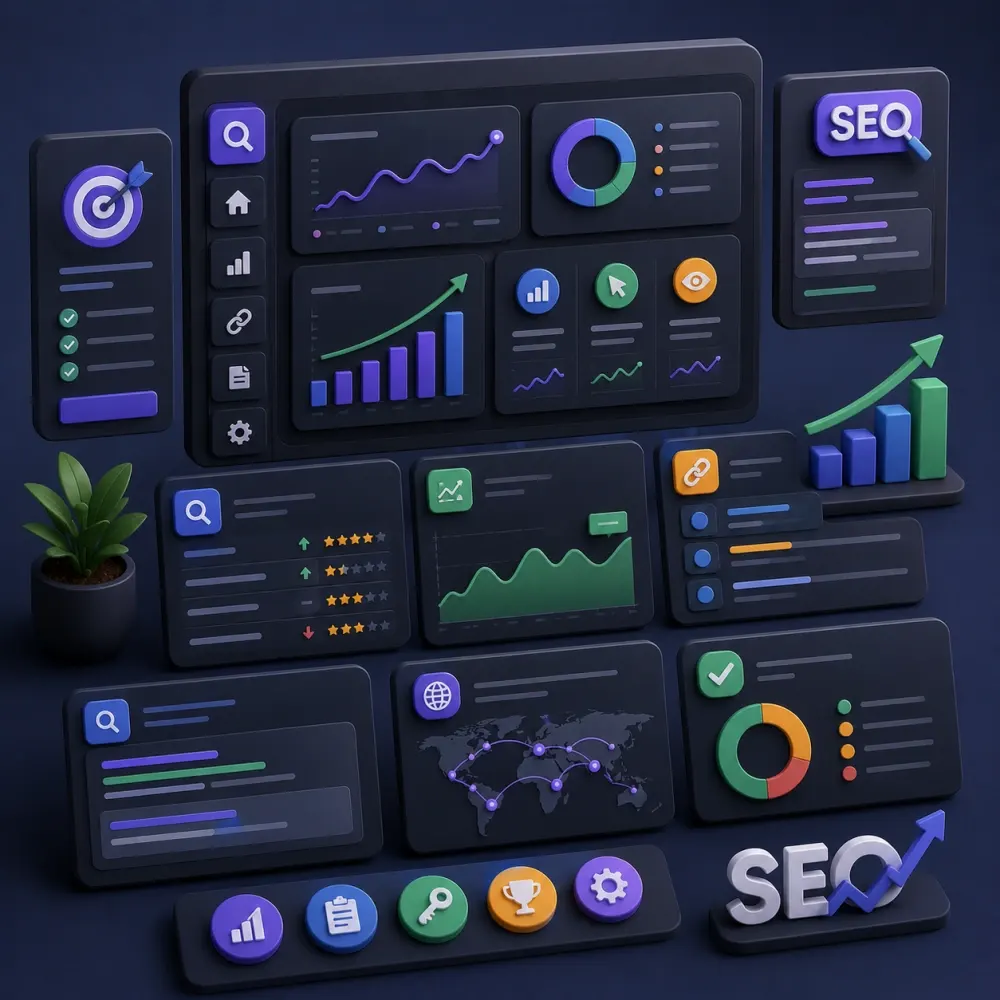
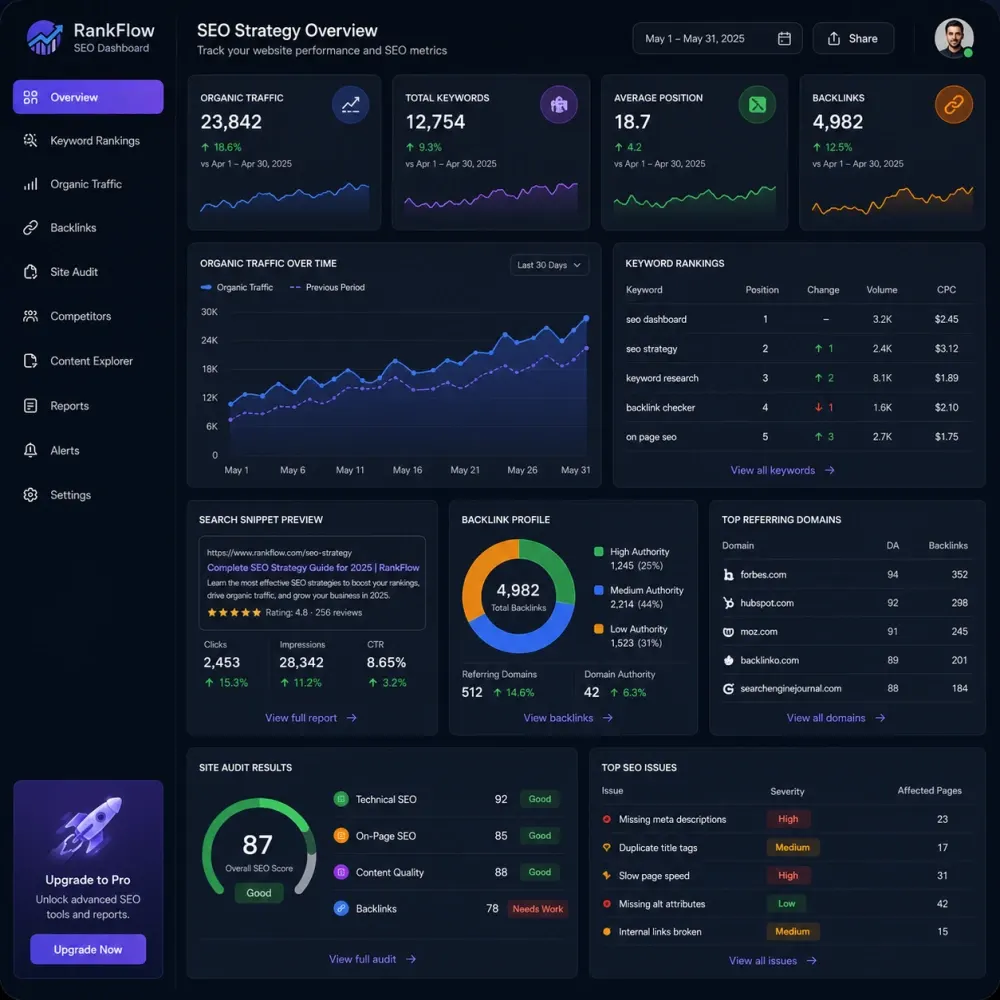
Search strategy built around crawlability, page purpose, useful content and measurable search demand.

























Search engine optimization is not one task. It is a connected system of technical decisions, page structure, content quality, internal discovery and ongoing measurement. A page can be technically indexable but still fail because it does not answer the search intent. A useful article can remain difficult to discover if the site architecture isolates it. A strong service page can also lose clarity when several nearly identical URLs compete for the same topic.
Our SEO services start by identifying what the website should be found for, which existing pages can satisfy those searches and where technical or content problems are limiting performance. We then prioritize the work that is most relevant to the site instead of applying the same checklist to every business.
The aim is a website that search engines can process efficiently and people can understand easily. That means descriptive titles, logical navigation, crawlable content, useful explanations, sensible internal links and pages that match the reason behind the search.
Different sites need different priorities. The service mix below can be combined into a one-time project or an ongoing SEO plan after the website, competition and commercial goals are reviewed.
Review crawling, indexation, canonical signals, redirects, sitemaps, duplicate URLs, internal architecture and other technical issues that can interfere with important pages.
Technical SEOIdentify commercial, informational and long-tail searches, then group related phrases by intent instead of creating thin pages for every keyword variation.
Search DemandImprove titles, headings, copy structure, internal links, metadata and page relevance while keeping the content readable and useful for the person who lands on it.
Page OptimizationPlan service pages, guides, comparison content, FAQs and supporting resources around real customer questions and meaningful gaps in the current website.
Content StrategyReview category pages, product pages, filters, variants, duplicate URLs, structured data and internal links so a large product catalog remains understandable.
CommerceUse search data, crawl findings and conversion information to explain what changed, what still needs attention and where the next useful opportunity may be.
MeasurementA phrase is not a strategy by itself. Someone searching “SEO services” is usually evaluating providers, while a person searching “how canonical tags work” is trying to understand a technical concept. Those users should not be pushed toward identical pages simply because both searches contain SEO terminology.
Search intent helps us choose the right page type. A commercial query may belong on a service page. A research question may deserve a guide. A comparison search may need a decision-focused page that explains differences clearly. A branded query should make the official website easy to identify. Mapping intent before writing reduces unnecessary pages and gives each URL a clearer purpose.
Automated crawlers can identify thousands of signals, but a long export is not the same as an SEO audit. Some warnings are minor housekeeping. Others can affect hundreds of commercial pages. We separate the issues by likely impact, affected templates and the amount of work needed to correct them.
An audit can cover status codes, redirect chains, canonical tags, robots directives, XML sitemaps, duplicate URLs, heading patterns, internal links, thin pages, orphan content, structured data and page-speed concerns. We also review whether the current site structure reflects the way customers search for the business.
The output should answer three questions: what is happening, why it matters and what should be done next. When a problem needs developer involvement, the recommendation should be specific enough to hand to the technical team. When a page needs editorial work, the recommendation should explain what the page is missing rather than saying only “add more content.”
Keyword research helps us understand the language customers use, the problems they are trying to solve and the level of competition around different topics. We look at primary service phrases, supporting searches, questions, comparison terms and long-tail variations that may reveal more specific intent.
A broad keyword with a large search volume is not automatically valuable. It may be too general, dominated by a different kind of page or disconnected from what the business actually sells. A narrower phrase can sometimes be more useful because the searcher already knows what they need.
Related terms are grouped into themes so the website can answer a topic naturally. We do not create a separate page for every singular, plural or slightly reordered phrase. When several searches describe the same need, they can often be covered together on one stronger page. This reduces duplication and makes the site easier for users to navigate.
Keyword mapping connects research to URLs. We compare existing pages against the search themes that matter and identify overlaps, gaps and unnecessary duplication. This is particularly useful on websites that have expanded without a clear content architecture.
For example, a business might have separate pages called “SEO agency,” “SEO company,” “SEO experts,” “organic SEO” and “search engine optimization services,” even though the content and user intent are nearly identical. Publishing all of them does not automatically create more search coverage. It can create five weak pages instead of one useful destination.
In other cases, two similar keywords deserve separate pages because the service, audience or decision process is genuinely different. We make that distinction by looking at intent, the search results and the business offering. The map becomes a reference for content creation, internal linking and future site expansion.
On-page SEO includes the visible and structural signals that explain what a page is about. Titles, headings, introductions, internal links, image context, FAQs and body copy all contribute to that understanding.
We use the primary phrase naturally, but we do not work toward a fixed keyword-density formula. A service page that repeats the exact keyword every paragraph can become difficult to read and may still fail to explain important questions. Related language, examples and clear definitions often make the topic easier to understand than repetition alone.
Optimization can involve rewriting a title, improving the H1, adding missing service details, reorganizing sections, strengthening internal links or removing filler. The best changes depend on what the page already does well. The objective is a page that feels complete to the visitor and unambiguous to search systems without sounding as though it was written for a crawler.
Technical SEO covers the systems that influence how pages are discovered, rendered, indexed and connected. Common work can involve redirects, canonicals, robots rules, sitemaps, JavaScript rendering, status codes, duplicate parameters, HTTPS issues, pagination and template-level problems.
The priority is not technical complexity. It is technical clarity. A small service site does not need the same architecture as a marketplace with millions of URL combinations. We look at the real site and choose recommendations proportionate to its structure.
Large stores and custom applications may require deeper crawl analysis because filters, user-generated parameters and faceted navigation can create many versions of similar pages. On a smaller WordPress site, the larger issue may simply be duplicate archives, old URLs or inconsistent canonical handling. Technical recommendations should fit the platform rather than becoming a generic checklist.
Search engines need to discover the pages that matter and receive clear signals about which versions should appear in results. Websites often accumulate tag archives, filter URLs, internal search pages, test pages, duplicate products or older versions that no longer provide unique value.
We review which URLs are intended for search, which should remain accessible only to users and which may need canonicalization, noindex handling, consolidation or removal. At the same time, important pages should not be accidentally blocked or left without internal links.
The objective is not to hide large parts of a website for the sake of reducing a crawl count. Each decision needs a reason. A valuable category page should remain available even if it produces many child products. A thin parameter page may not need independent indexation. Clear indexation makes the site easier to maintain and helps important pages stand out.
Site architecture tells both users and crawlers how information is related. Important services should be reachable through logical navigation. Supporting articles should connect back to relevant commercial pages. Related products or categories should be linked where that relationship helps the user.
We review navigation, breadcrumbs, orphan pages, contextual links and anchor text. The aim is to create useful pathways without turning every sentence into a keyword-rich link. Internal links are strongest when the next page genuinely answers the next question.
Architecture is also important for future growth. If a site is going to add dozens of services, locations or product groups, deciding the hierarchy early can prevent inconsistent URLs and duplicated categories later. A clear structure is easier to explain, easier to crawl and easier for the business team to expand.
Content SEO can include service pages, buying guides, tutorials, FAQs, comparison content, resources and articles. We choose topics based on user need, search demand and the knowledge the business can contribute instead of producing articles only because a keyword tool generated a list.
Existing content often deserves attention before new content is added. A page may have useful information but weak organization. Another may answer the right question but use an outdated title. Several short articles may be better combined into one complete guide. Optimization can include updating, consolidating, pruning or expanding content depending on the evidence.
Originality matters. Rephrasing what every competing page already says does not create much value. Useful content can include firsthand process information, examples, product details, limitations, comparisons, supporting data or explanations that reflect real experience. The right depth depends on the query rather than a predetermined word count.
A service page should do more than repeat that the company is professional and reliable. Potential clients want to know what is included, who the service is for, how the process works, what affects price or timing and what they need to provide.
Service-page optimization can include keyword mapping, title and heading improvements, richer explanations, related-service links, FAQs, case-study references and appropriate structured data. We also review whether the page overlaps with another service or product URL.
Trust is especially important on commercial pages. Contact information, clear business identity, transparent scope and realistic claims can matter as much to the user as keyword placement. We avoid unsupported “best,” “number one” or guaranteed-result language. A page should earn confidence through useful detail rather than exaggerated adjectives.
Ecommerce websites create search opportunities at several levels. Category pages can answer broad buying intent, product pages can target specific items and supporting content can help customers compare options or understand technical details.
The challenge is scale. Filters, sorting, variants, tracking parameters and internal search can create thousands of URL combinations. We review which patterns need to be indexed, how categories should link to products, how canonical signals are handled and whether important pages contain enough unique information.
Product descriptions should be accurate and useful rather than copied blindly from a manufacturer when original information is available. Category copy should support shopping rather than burying products under paragraphs of filler. Structured data can also be reviewed for product information, but markup should reflect visible, accurate content instead of inventing values solely for search features.
WordPress gives site owners control over content, but themes, page builders, plugins and custom post types can create overlapping structures. SEO work may involve permalink patterns, category archives, media handling, sitemap settings, canonical tags, schema output, WooCommerce URLs and performance.
We also look at how the site has evolved. A service might exist as a standard page, a product and a custom post type with similar copy. An old builder may leave pages behind after a redesign. Tags may have been generated for years without a clear purpose. Cleaning those relationships can make the site easier to manage.
An SEO plugin is useful for editing metadata and technical settings, but installing another plugin is not the answer to every issue. Sometimes the better solution is to simplify templates, remove duplicate functionality or change the way content is organized.
Website migrations can affect rankings when URLs change, pages disappear, internal links break or metadata is lost. SEO migration planning identifies important URLs before launch and defines what should happen to them on the new site.
Work can include old-to-new URL mapping, redirect planning, sitemap updates, canonical checks, internal-link review and post-launch crawling. If an existing page already receives useful organic traffic, the redesign team should know whether that page is being retained, consolidated or replaced.
After launch, we can review redirects, indexation, broken links and Search Console signals for unexpected problems. Migration support reduces avoidable mistakes, but no migration can guarantee that rankings remain identical because search systems still reassess the changed website.
Links from other websites can support discovery and reputation, but low-quality link schemes can create more risk than value. We do not treat the number of backlinks as a performance target by itself.
Off-page opportunities can include relevant industry publications, legitimate directories, partnerships, supplier relationships, associations, useful resources and digital PR. The best opportunities depend on the business and the type of content it can contribute.
Some projects need off-page work early because the site has strong content but limited awareness. Others should first fix technical issues and improve pages that are already receiving impressions. Paid placements, PR distribution and third-party publishing costs are not silently included in monthly SEO fees; they are discussed separately when relevant.
No agency controls the ranking algorithms, competitors or the way search results change for different users. We therefore do not promise a number-one position, a fixed traffic increase or a guaranteed ranking date.
We also avoid mass-produced location pages, hidden text, automated link networks and other tactics that depend on deception or scale rather than usefulness. Short-term visibility is not valuable if the method creates a fragile website.
Our responsibility is to identify the problems we can influence, implement the agreed work carefully and explain the evidence behind the recommendations. If a proposed tactic cannot be explained clearly to the client, it probably does not belong in the strategy.
Technical health, intent, content and internal discovery reinforce one another. Improving only one area while ignoring the others can leave valuable pages underused.
Important URLs are mapped to distinct search needs instead of competing with near-duplicate pages.
Canonical, crawl, sitemap and redirect issues are reviewed so search systems receive more consistent instructions.
Pages answer the questions that matter without adding filler only to reach a target word count.
Search Console, analytics and crawl data help determine what deserves attention next.
We identify priority services, products, audiences and markets before judging the website only by technical scores.
We review indexation, templates, internal architecture and current organic performance to understand the starting point.
Keywords are grouped by user need and mapped to existing or proposed pages with a clear purpose.
Technical fixes, page improvements and content opportunities are ranked so the most meaningful work is handled first.
Agreed on-page, technical and internal-link changes are applied or documented for the relevant team.
Existing pages are improved and new briefs are created only where search demand and user need justify them.
Search data and crawl checks are reviewed after changes so assumptions can be compared with actual behavior.
The next work cycle follows current evidence instead of repeating tasks simply because they appeared in last month’s plan.
The final deliverables depend on website size, access, platform and whether the work is a one-time project or an ongoing monthly plan.
These prices are starting points in USD. Final scope depends on website size, competition, platform, current technical condition, target markets and the amount of content or implementation work required.
For smaller service or business websites that need a clear technical baseline and consistent page optimization.
For businesses that need technical monitoring, stronger commercial pages and an active content roadmap.
For ecommerce, larger service websites or sites with deeper technical, content and indexation requirements.
One-time services can be useful before a redesign, during a technical cleanup or when an internal team needs research and recommendations to implement itself.
| Service | Starting Price | Typical Scope |
|---|---|---|
| Technical SEO Audit | $399 | Crawl, indexation, redirects, canonicals, sitemap, internal architecture and prioritized findings. |
| Keyword & Intent Map | $249 | Keyword grouping, search-intent research and page-to-topic mapping for a focused website. |
| On-Page SEO — Up to 5 Pages | $349 | Titles, headings, metadata, content structure, internal links and page-level recommendations. |
| SEO Content Brief | $99 / page | Search intent, recommended structure, primary/supporting topics and internal-link direction. |
| WordPress SEO Review | $299 | Indexation, plugin settings, sitemap, archive, canonical and content-structure review. |
| Local SEO Foundation | $349 | Business information, local landing-page review, citations direction and local search recommendations. |
| Ecommerce SEO Audit | $599 | Category, product, filters, duplicate paths, structured data and indexation review. |
Pricing note: SEO fees cover the agreed strategy, analysis and implementation scope. Paid PR, sponsored placements, premium SEO tools purchased specifically for the client, third-party development, large-scale copywriting, translation and advertising spend are separate unless included in the quotation. No package guarantees rankings, traffic or revenue.
These answers explain scope, timing, pricing and expectations without promising results that search engines ultimately control.
SEO services can include technical SEO, keyword research, search intent mapping, on-page optimization, content strategy, internal linking, ecommerce SEO, local SEO, migration support, off-page work and reporting. The right mix depends on the website and its current problems.
Our monthly SEO packages currently start at $280 for SEO Foundation, $560 for SEO Growth and $1,120 for SEO Scale. One-time work such as a technical audit starts at $399. Final pricing depends on site size, competition, platform, target markets and implementation requirements.
There is no universal timeline. Technical fixes may be implemented quickly, while search visibility can take longer to change depending on crawl frequency, competition, site history, content quality and many other factors. We measure progress over time instead of promising a fixed ranking date.
No. Search engines control rankings, and results can vary by query, device, location, competition and algorithm changes. We focus on the technical, content and structural factors we can influence rather than selling guaranteed positions.
Yes. Technical work can include crawling, indexation, redirects, canonical tags, sitemaps, duplicate URLs, structured data, internal architecture, rendering and other issues relevant to the platform.
Yes. Keyword research is grouped by search intent and mapped to appropriate pages. On-page work can include titles, headings, metadata, content structure, internal links and page-level improvements without forcing a fixed keyword density.
Yes. WordPress SEO can include indexation, archive, sitemap, plugin and content-structure issues. Ecommerce SEO can include categories, products, filters, variants, structured data, duplicate URLs and internal-linking patterns.
Off-page work can be part of an SEO plan, but we do not sell bulk backlink packages or promise a fixed number of links from arbitrary sites. Relevant outreach, credible directories, partnerships and digital PR opportunities are considered according to the business and scope.
Content briefs, content optimization and writing can be included depending on the agreement. The objective is useful, accurate content that satisfies the page purpose rather than mass-produced pages created only to target keywords.
Yes. Migration support can include URL mapping, redirect planning, sitemap updates, internal-link review, canonical checks and post-launch crawling. The scope should be agreed before launch whenever possible.
Useful starting information includes the website URL, priority services or products, target markets, known competitors, previous SEO work and access to Search Console or analytics when available. We can then define the first audit and research priorities.
Share your website, the services or products that matter most and any search problems you already know about. DesignBub can review the current setup and define an SEO scope based on the site rather than a generic checklist.