Custom Apparel Design Services for Clothing Brands
DesignBub creates custom apparel graphics for T-shirts, hoodies, streetwear, merchandise, jerseys, uniforms and clothing brands. We develop the artwork around the garment, audience and intended print method, then prepare clear files for the production workflow you plan to use.
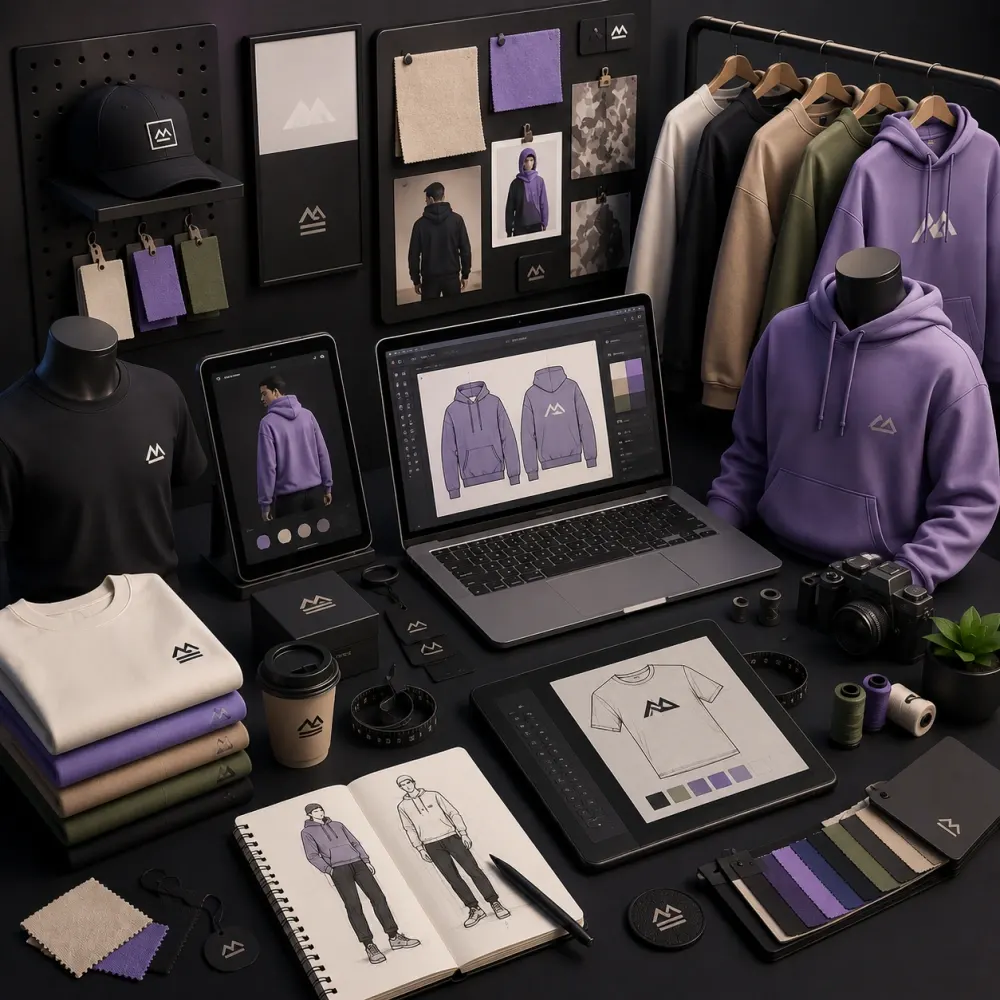
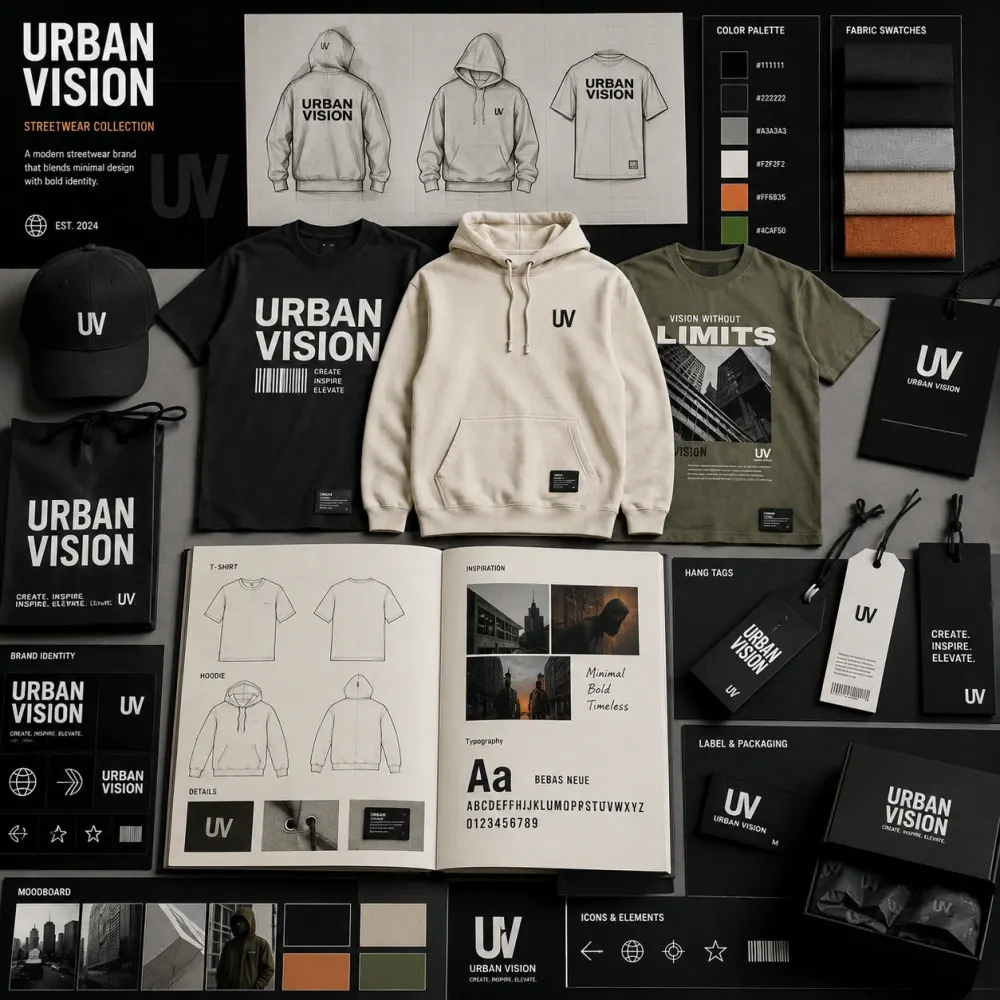
Artwork can be planned for front, back, sleeves, jersey panels, colorways, mockups and production handoff.
Clothing graphics need to work on fabric, not only on an artboard.
Clothing gives a brand a physical presence that people can wear, photograph, sell and share. A strong garment graphic can turn a simple T-shirt, hoodie, jersey or merchandise item into a product that feels connected to a clear identity. That requires more than placing a logo in the center of a mockup.
Our apparel design services focus on the visual side of clothing production. We create T-shirt graphics, hoodie designs, streetwear concepts, merchandise artwork, jersey layouts, typography, illustration, patterns, logo placements, color variations and garment mockups. We also prepare artwork for the production method identified in the brief.
We start with the product. A retail clothing brand may need graphics that fit a wider collection. A sports team needs numbers, names, sponsor marks and team identity to remain clear. A creator may need merchandise that followers would genuinely want to wear after the campaign ends. Those are different design problems, so they should not receive the same solution.
The garment itself also affects the work. Fabric color changes contrast. Seams and pockets interrupt artwork. A small left-chest mark needs different detail from a large back print. Screen printing can create different constraints from DTG, DTF, sublimation or embroidery. We shape the design around those realities from the beginning.
Build artwork around the brand, audience and garment.
Custom apparel design gives you control over how a clothing product represents your brand. Instead of starting from a ready-made template, we develop the visual direction around your identity, intended audience, garment type and commercial purpose.
The result might be a bold illustrated back graphic for a streetwear release, a restrained typographic composition for a premium label, a clean staff uniform, or a front-and-back merchandise concept for an event. When an existing brand identity is available, we use its approved logo, colors, typography and visual elements as a starting point.
When apparel needs more expression than the core identity normally allows, we can create a visual extension without making the product feel disconnected from the brand. The aim is not to force every brand asset onto the garment. It is to decide which elements help the clothing feel intentional and recognizable.
Custom work also makes future expansion easier. Once a brand has a useful apparel direction, new graphics, colorways and placements can follow the same visual logic instead of beginning with a completely unrelated style every time.
Graphics for clothing brands, merchandise, teams and everyday branded wear.
Each apparel format creates different opportunities for scale, placement, detail and production. We adapt the artwork to the specific product rather than treating every garment like the same rectangular canvas.
T-Shirt Design Services
Front prints, back graphics, pocket-area marks, sleeve artwork, typography, illustration and combined layouts for retail, events, teams and branded merchandise.
Hoodie & Sweatshirt Design
Artwork planned around chest, back and sleeve areas while considering pockets, seams, zippers, drawstrings and the larger surface of heavier garments.
Streetwear Design
Streetwear graphics built around the label's own visual character, from minimal marks and bold type to illustrated drops and oversized back compositions.
Sportswear & Jersey Design
Team-focused layouts that coordinate colors, sponsor marks, names, numbers and branding on the garment template supplied by the manufacturer.
Merchandise Design
Wearable graphics for creators, restaurants, podcasts, events, communities and companies that want merchandise to feel like a product rather than a giveaway.
Uniform & Staff Apparel
Clear branded clothing concepts for teams and workplaces where logo visibility, garment color, placement and practical repeat use matter.
Create a visual language that can continue across a collection.
A clothing label needs more than individual graphics. Its garments should also help build recognition over time. Our clothing brand design work can establish repeated ideas such as typography, symbol use, logo placement, illustration style, color behavior, slogans or layout principles across several products.
Consistency does not mean repeating one graphic on every garment. A collection can contain very different designs while still sharing a recognizable creative language. Several pieces may use the same type system and attitude while changing the main illustration. Another range may use one brand symbol at different scales or positions.
For streetwear and fashion drops, we can create a hero design and supporting graphics that feel related when the garments are photographed or displayed together. This makes the release feel planned as a collection rather than assembled from unrelated ideas.
Use typography, illustration and patterns with the garment in mind.
Apparel graphic design can combine typography, symbols, badges, slogans, line art, geometric forms, emblems, custom illustration, photo treatments and pattern work. The strongest choice depends on the product and the audience.
Typography can become the main visual element of a garment. We consider line breaks, scale, spacing, alignment and placement rather than selecting a font and stopping there. Very thin lettering may not reproduce well through some decoration methods, while long phrases may become difficult to read when fabric folds.
Custom illustration can create a more ownable product. We can develop line art, flat vector graphics, badge-style artwork, character illustration or another agreed direction. If the intended printer has a restricted color count, we can develop the illustration inside that limit instead of simplifying it at the last minute.
For garments that use repeated artwork, textile pattern design can create a seamless or intentionally structured repeat. We consider pattern tile, scale and visual rhythm while the manufacturer remains responsible for final fabric-print specifications and textile production settings.
Prepare the creative work for the decoration method you actually plan to use.
Different printing and decoration processes have different strengths and limits. If the production method is already known, sharing the vendor's requirements early helps us create more useful artwork.
Screen Print Apparel Design
Controlled artwork for solid colors, line work, halftone approaches or simplified illustration. Vendor color limits and separation requirements should be supplied before final output.
DTF & DTG Graphics
Detailed full-color artwork and transparent exports prepared around the print provider's size, resolution and background requirements.
Embroidery-Friendly Artwork
Simplified shapes, controlled detail and clearer lettering that can give an embroidery digitizer a cleaner starting point for stitch preparation.
Sublimation & Jersey Graphics
Visual layouts created around the supplied garment template, including team colors, patterns, sponsor placements, numbers and names where required.
Print-on-Demand Design
Artwork prepared around the print area and format of a chosen POD platform, with mockups available when the package includes promotional presentation.
Print-Ready Apparel Artwork
Organized exports based on the approved dimensions, colors and vendor requirements so the next production step is easier to understand.
Review how the graphic behaves on the actual garment format.
An artwork file can look balanced by itself but feel completely different once it appears on a T-shirt or hoodie. Apparel mockup design helps show approximate scale, position, color and overall presentation before production begins.
We can test front, back, chest, sleeve or other approved placements. A small centered chest print communicates differently from an oversized front graphic. A high back placement creates another effect from artwork positioned lower on the garment. These choices become part of the design rather than an afterthought.
Mockups are visual previews, not manufacturing proofs. Garment cut, fabric behavior, print size and final color can vary from the presentation. The printer or manufacturer should always confirm exact production dimensions before printing.
We can also create apparel colorways when one design needs to work on several garment colors. Approved light and dark versions can protect contrast and prevent production teams from choosing unplanned color combinations later.
Plan several garments as one release instead of unrelated individual pieces.
An apparel collection can feel connected through color, theme, typography, illustration style, repeated symbols, placement or storytelling. We can organize these elements across several garments while still giving each product its own role.
A collection might include one highly detailed hero graphic, simpler supporting designs, a recurring chest mark and several garment colorways. The goal is to create enough variety for the range to feel interesting without losing the visual relationship between products.
This approach can work for fashion startups, streetwear labels, creators, sports communities, seasonal merchandise and businesses launching more than one branded apparel item at the same time.
Different products need different design decisions.
T-Shirt Design for Retail, Events and Brand Merchandise
A T-shirt may look simple, but the available placement changes the character of the design. A small chest mark can feel understated and premium, while an oversized back graphic can carry illustration, typography or a larger campaign idea. We can develop front-only, back-only or coordinated front-and-back artwork based on how the shirt will be sold or used. For event and promotional shirts, the message may need to read quickly. For retail fashion, the artwork can be more expressive and product-led. We also consider how the graphic behaves across light and dark garment colors instead of assuming one file will work equally well on every shirt.
Hoodie and Sweatshirt Graphics
Hoodies create more opportunities for artwork, but they also introduce more physical interruptions. Pockets, zippers, seams, hoods and drawstrings can affect placement. A graphic that looks balanced on a flat rectangle may feel awkward once those garment features appear. We can plan chest marks, large back designs, sleeve graphics and supporting details so each element has enough space. For zip hoodies, a centered front graphic may need a different solution from a pullover. For heavier garments, bold typography and larger shapes can work well, but the final print method still determines how much detail is practical.
Streetwear and Fashion Drop Graphics
Streetwear design services often need a stronger point of view than standard promotional clothing. The design may use oversized typography, symbols, illustration, distressed treatments, repeated marks or unexpected placement. We do not treat “streetwear” as one fixed visual style. A technical label, a minimal luxury-inspired brand and a youth-focused graphic brand can all operate in the category while needing very different creative directions. When several pieces belong to one drop, we look for a shared idea that connects them. That may come from a recurring phrase, symbol, color family, type treatment or illustration language rather than one repeated graphic.
Merchandise People May Want to Wear After the Campaign
Merchandise design works better when the product has value beyond basic promotion. A restaurant, creator, podcast, event, sports community or company may already have recognition, but placing the main logo on a blank shirt does not automatically create desirable merchandise. We can build graphics around the culture, message, place, product or community behind the brand. This may include slogans, inside references, illustrated elements, limited-edition themes or reworked brand assets. The goal is to keep the identity visible while giving the garment enough design value to stand on its own.
Keep team identity, player information and sponsor content clear.
Sportswear design often combines more information than a normal T-shirt. A jersey may need the team name, crest, player number, surname, sponsor logos, league information, color blocking and a background pattern to work together on one garment. We organize those elements so the team identity stays dominant and the important information remains readable.
Number design deserves particular attention. Thin or overly decorative numerals may look interesting in isolation but become difficult to identify from a distance. Sponsor marks also need enough separation from player numbers and team graphics. When a manufacturer supplies a jersey template, we can place the artwork inside that structure and coordinate front, back and sleeve areas.
The clothing producer remains responsible for garment pattern engineering, seam allowances, panel construction, sublimation setup, fabric choice and final manufacturing. Our role is the visual jersey concept and the artwork package agreed for the project. Clear separation between design and manufacturing helps avoid assumptions about technical processes controlled by the vendor.
Deliver artwork that your printer or manufacturer can actually review.
A final garment mockup is useful for approval, but production teams normally need separate artwork files. Depending on the design and the vendor, we can supply editable AI, EPS, SVG or PDF vector files, high-resolution transparent PNG artwork, or other agreed exports. Some graphics are naturally vector-based while complex textured or photographic artwork may need a high-resolution raster master.
We can include print-size references, named color variations, separate front and back artwork, and clearly organized files when those items are part of the package. If the vendor supplies a template, we can adapt the approved design to that template rather than asking the printer to interpret a presentation image.
Production requirements still vary by equipment. A screen printer may ask for separated colors. A DTF provider may prefer a transparent PNG at a specific size. An embroidery company needs stitch digitizing after the artwork stage. A sublimation manufacturer may use its own garment panels. We prepare the design around the information supplied, while the production vendor confirms the final machine-ready setup before manufacturing.
From garment brief to production-focused artwork.
The process stays flexible enough for a single shirt or a wider collection, but every project begins by understanding the product and how it will be produced.
Garment Brief
We confirm the garment type, audience, purpose, fabric colors, print locations and known production method.
Brand & Reference Review
We review logo files, brand guidelines, wording, previous collections and relevant visual references.
Creative Direction
We develop the agreed concept around typography, illustration, logo use, color and the physical garment area.
Garment Mockup
Where included, mockups show approximate scale, placement and the relationship between artwork and garment color.
Revision & Refinement
We refine the selected direction within the package's revision allowance and confirm the final visual treatment.
Production Handoff
We prepare the agreed source and export files around the specifications available from the selected production vendor.
A useful brief prevents avoidable production changes later.
Tell us the garment type, intended audience, garment colors, required wording, logo assets, brand guidelines, print placements and the number of designs you need. If you already know whether the garment will use screen print, DTF, DTG, sublimation or embroidery, include that information too.
References can help communicate mood, detail level or placement, but they should guide the direction rather than become artwork to copy. Existing clothing brands can also share previous releases so new work does not accidentally move away from visual elements their audience already recognizes.
If the manufacturer provides a garment template, maximum print area, color restrictions or file requirements, send them before the final-artwork stage. Those details can materially affect the way the design should be constructed.
Choose a package based on how many garments and design directions you need.
These prices cover DesignBub's creative and artwork-preparation service. Garments, printing, embroidery, sampling, manufacturing, labels, packaging, shipping and third-party production charges are not included unless a quotation states otherwise.
Apparel Graphic Starter
For one focused T-shirt, hoodie or merchandise graphic that needs a clear concept and production-ready artwork.
- 1 apparel design
- Up to 2 initial concept directions
- Front or back primary placement
- 1 garment mockup
- 1 approved colorway
- Print-ready artwork export
- Editable source file
- 2 revision rounds
Merch & Brand Pack
For brands that need a small coordinated merchandise range with more placements, color options and presentation.
- Up to 3 apparel designs
- Front/back placement planning where needed
- Up to 3 garment mockups
- Up to 2 colorways per approved design
- Basic typography or graphic system
- Vector/high-resolution production files
- Editable source files
- 3 revision rounds
Apparel Collection System
For clothing labels, campaigns or merchandise launches that need a connected visual direction across several products.
- Up to 6 coordinated apparel designs
- Collection-level creative direction
- Multiple front/back/sleeve placements as scoped
- Up to 6 garment mockups
- Up to 3 colorways per approved design
- Vendor-template adaptation when supplied
- Organized master/source files
- 4 revision rounds
Package comparison
| Included | Starter | Brand Pack | Collection |
|---|---|---|---|
| Apparel designs | 1 | Up to 3 | Up to 6 |
| Initial directions | Up to 2 | Project based | Collection direction |
| Mockups | 1 | Up to 3 | Up to 6 |
| Colorways | 1 | Up to 2/design | Up to 3/design |
| Editable source files | Included | Included | Included |
| Production exports | Included | Included | Included |
| Revision rounds | 2 | 3 | 4 |
Expand the package only where the product needs it.
Important: embroidery digitizing, screen separations, physical samples, blank garments, printing, fabric production, cutting, sewing, shipping and other manufacturer charges remain separate unless they appear in a custom quotation.
Price depends on creative depth, not only on the number of garments.
The apparel design cost changes with the amount of creative and production work required. A simple logo placement takes less time than an original illustrated T-shirt. A single garment has less coordination than a six-piece streetwear drop with several colorways and mockups.
Other factors include front and back artwork, sleeve graphics, custom illustration, pattern design, jersey personalization, number of concepts, production templates, source-file setup and the amount of revision required after the initial direction.
We keep the design fee separate from manufacturing so clients can see what they are paying DesignBub to create. The printer, embroiderer, POD platform or garment manufacturer can then quote the physical production based on quantity, fabric, print method and finishing.
Compare the actual scope, not only the price attached to one mockup.
When choosing an apparel design company, ask how many original designs the quote includes, whether front and back placements count separately, how many colorways are included, what source files you receive and whether mockups are part of the package.
It also helps to ask whether the designer can work from a manufacturer's template and how custom illustration changes the scope. A useful provider should clearly distinguish visual design from manufacturing, embroidery digitizing, screen setup and other technical processes handled by the production vendor.
Clear deliverables reduce confusion when the artwork leaves the design stage. The final files should make it easier for the next person in the workflow to understand the intended artwork, size, color and placement rather than forcing them to rebuild the design.
Common questions about custom clothing graphics and production files.
These answers explain what the design service covers and where the printer, manufacturer or embroidery vendor takes over.
We can create graphics and visual concepts for T-shirts, hoodies, sweatshirts, polos, jerseys, uniforms, jackets, caps, merchandise and other suitable garments. The final artwork setup depends on the product and production method.
Yes. We can develop a connected visual direction across several garments, including hero graphics, supporting artwork, typography, logo placements, colorways and mockups within the agreed scope.
Our core service is apparel graphic design and artwork preparation. Garment sourcing, printing, embroidery, sewing, sampling and manufacturing remain separate unless a quotation specifically includes them.
Yes. We can create or adapt artwork with screen printing in mind. If your printer has a color limit, minimum line requirement or other technical specification, send it before final production files are prepared.
Yes. We can prepare high-quality graphics and transparent exports according to the size, resolution and file requirements supplied by your DTF or DTG print provider.
We can create embroidery-friendly artwork and simplify graphics for embroidery. Final stitch digitizing is a separate technical process usually completed by the embroidery production vendor.
Yes. Mockups can be included depending on the package. They help show approximate placement, scale, garment color and overall appearance before production.
Yes. We can clean, redraw, update, simplify, recolor or restructure existing artwork while preserving the elements you want to keep. The scope depends on the condition and complexity of the original file.
Depending on the artwork and production requirements, files may include AI, EPS, SVG, PDF, PNG, JPG or other agreed formats. Detailed raster artwork and vector graphics may require different master formats.
Yes. We can create apparel graphics around the specifications of your chosen print-on-demand platform. Platform fees, product costs, fulfillment and store operations remain separate.
The Starter package includes two revision rounds, the Brand Pack includes three, and the Collection package includes four. A completely new concept after approval may require a separate scope.
Yes. We can build apparel graphics around your current logo, colors, typography, visual elements and brand guidelines while adapting the identity to the garment and intended production method.
Create apparel that feels designed as a product, not just decorated.
Send us your garment type, brand assets, wording, references, planned print method, garment colors and vendor template if available. We can turn those inputs into custom apparel artwork with a clear scope and production-focused handoff.