WordPress Website Design and Development Services

DesignBub builds WordPress websites for businesses that need more than a theme installation. We plan the content structure, editing workflow, templates, integrations and storefront or lead-generation requirements so the finished site is useful to visitors and practical for the people managing it.

StructuredCMS Architecture
FlexibleEditing Workflow
PracticalCustom Development
WordPress development
Custom WordPress website development
WordPress Development

Custom themes, structured content, WooCommerce, integrations and maintainable editing controls shaped around the website you actually need.

Selected Brands & Businesses We Have Designed For
Asset 38 brand logo Asset 4 brand logo Asset 45 brand logo Asset 46 brand logo Asset 47 brand logo Decent Solar logo Dentesthetix logo Gazal Lounge logo GH Landscape logo Asset 38 brand logo Asset 4 brand logo Asset 45 brand logo Asset 46 brand logo Asset 47 brand logo Decent Solar logo Dentesthetix logo Gazal Lounge logo GH Landscape logo
Ghazoor logo Goodluck Trader logo Kingsley logo Lahoris logo MOI logo Naqaa Salt logo Nature Hug logo Netsole logo Ghazoor logo Goodluck Trader logo Kingsley logo Lahoris logo MOI logo Naqaa Salt logo Nature Hug logo Netsole logo
Nexcell Energy logo Roots logo Sheikh logo Shellbee logo Softcore logo Solvac Lifesciences logo Trendex logo Zameenex logo Nexcell Energy logo Roots logo Sheikh logo Shellbee logo Softcore logo Solvac Lifesciences logo Trendex logo Zameenex logo
WordPress Development Overview

A WordPress website should make publishing easier, not create another technical dependency.

WordPress can power a focused company website, a large content library, a WooCommerce store, a membership area or a custom platform with structured content and integrations. That flexibility is valuable, but it also makes planning important. A website can become difficult to maintain when every new requirement is solved with another plugin, another page-builder workaround or another manually duplicated layout.

Our WordPress development services begin with the content and functionality the business needs to manage. We identify which pages are unique, which information repeats, which areas should be editable and which parts need stronger technical control. From there, the theme, blocks, custom fields, plugins and integrations can be chosen for the job rather than added by habit.

For businesses comparing WordPress development services, the useful question is not how many tools are listed in a proposal; it is whether the proposed structure matches the website that needs to be managed.

Some clients arrive with approved UI designs. Others need the design and development planned together. Existing sites may already have useful content, rankings and workflows that should be preserved while the underlying implementation is improved. We treat those as different starting points instead of forcing every project through one template.

Custom WordPress Website Development

Custom WordPress development is useful when the website needs its own page structure, content model or functionality rather than a generic demo imported from a theme. The custom work may include responsive templates, service structures, case studies, resources, directories, forms or integrations.

Custom does not mean rebuilding everything WordPress already provides. The platform already handles publishing, users, media, taxonomies and many administrative tasks. The development work should extend those capabilities only where the project benefits from additional control.

WordPress Website Design and Development

Design and development affect each other. A layout that looks attractive in a mockup may become awkward when editors need to update it every week. We plan reusable components and realistic content states so the interface and CMS can work together.

This can include desktop and mobile layouts, navigation, landing pages, service templates, article layouts, forms, search and reusable content sections. The final interface is built around the brand without making routine updates unnecessarily fragile.

Custom WordPress Theme Development

A custom theme gives the website control over templates, reusable components, styling and responsive behavior. It can be developed from an approved design system rather than reshaping a third-party theme that was built for another purpose.

WordPress theme development can cover page templates, archives, posts, services, projects, search results and other content types. The goal is a theme that works with real content and normal WordPress publishing rather than one that depends on repeated manual fixes.

Theme Customization

A complete custom theme is not always necessary. If an existing theme is stable and close to the required layout, focused customization may be the more efficient route. This can include sections, templates, navigation, styling, fields or selected functionality.

We review whether a requirement belongs in the theme, a plugin or a reusable block before adding code. That separation makes future updates easier to understand.

Gutenberg and Block-Based WordPress Development

WordPress block development can give editors flexible content tools without requiring them to rebuild the visual system on every page. Depending on the project, this can include block themes, custom blocks, patterns, template parts and controlled Site Editor options.

The amount of editor freedom should be intentional. A marketing team may need to rearrange selected page sections, while a regulated information page may need a more fixed layout. We can define which settings are available and which visual rules remain controlled so the website does not become inconsistent after a few months of normal editing.

Elementor WordPress Development

Elementor can be a practical choice when a client wants a visual editing workflow and the website does not require a fully custom block architecture. We can use global styles, reusable templates and dynamic data so the site remains more consistent than a collection of independently styled pages.

Elementor development should still consider performance, responsive behavior and content ownership. Adding more widgets is not automatically useful. The build should give editors the controls they need while avoiding unnecessary nesting, repeated CSS and duplicated components.

Custom Post Types, Taxonomies and Content Models

WordPress becomes more useful when repeated information is treated as structured content. Services, projects, team members, locations, resources, properties, events and similar entries can be managed through custom post types instead of copied into unrelated pages.

Taxonomies can organize that content, while relationships can connect relevant entries. A project, for example, may be associated with a particular service and automatically appear on the relevant service page. Structured content can reduce duplication and help editors update information in one logical place.

Advanced Custom Fields Development

Advanced Custom Fields can create clearer editing interfaces for structured content. Instead of asking an editor to arrange every element manually, a case-study template can provide dedicated fields for the client, industry, challenge, solution, gallery and related service.

ACF development is most useful when the fields reflect real editorial needs. A long list of technical fields can be just as confusing as an unrestricted page builder. We organize fields around the information editors actually own and present them through templates that preserve the visual system.

Custom WordPress Plugin Development

Some functionality belongs outside the theme because it should continue working even when the presentation changes. A custom plugin can be appropriate for business logic, administrative tools, integrations, data processing or project-specific functionality.

Before recommending custom WordPress plugin development, we check whether WordPress itself or a maintained third-party plugin already solves the requirement well. Custom code creates ongoing responsibility, so it should have a clear reason to exist. When custom development is justified, the scope should define what the plugin does, what information it stores and which systems it connects with.

WooCommerce Development

WooCommerce development can turn WordPress into a product catalog and ecommerce system with products, categories, cart, checkout, customer accounts, payments and shipping. We plan the store around the products rather than assuming the default templates are right for every category.

The scope can include store setup, product templates, category pages, filters, account areas, supported payment gateways, shipping configuration and integrations.

Custom WooCommerce Development

Stores sometimes need functionality beyond a standard WooCommerce setup. This may involve product options, account rules, quote workflows, custom fields, pricing logic, order processing or connections to other systems.

These changes can affect payments, inventory and orders, so they should be scoped more carefully than visual theme edits. We separate business rules from presentation and test representative purchase scenarios before launch.

WooCommerce Product and Category UX

Product and category templates should match the way customers compare what is being sold. A technical equipment catalog may need specifications and downloads; a fashion store may prioritize variants, imagery and size guidance.

Structured attributes and fields can make product data easier to maintain. Collection or category pages can use meaningful filters and merchandising content without turning every archive into a wall of controls.

Membership and Restricted Content

WordPress can support membership areas, gated resources and account-based content using suitable extensions or custom development. The important part is defining who can access what, how permissions change and whether payments or subscriptions are involved.

A simple private resource library does not need the same architecture as a recurring membership product, so we select the implementation after the access model is understood.

WordPress API Integration and Connected Systems

Websites often need to exchange information with CRM software, email platforms, booking tools, payment providers, marketing systems or internal applications. WordPress API integration can connect these systems when compatible APIs, webhooks or supported plugins are available.

The integration needs a clear data direction. If a lead form creates a CRM contact, which fields are required? If product information exists in two systems, which platform is the source of truth? If an external API is temporarily unavailable, what should happen to the user action? Defining those questions before development produces a more reliable connection.

Third-party capabilities, authentication, rate limits and subscription costs can affect the final implementation. We confirm those dependencies before treating an integration as guaranteed functionality.

WordPress Performance Optimization

A slow WordPress site can have many causes: oversized media, excessive scripts, poorly configured caching, heavy themes, database queries, hosting limits or plugins that load assets across pages where they are not needed.

WordPress speed optimization starts with diagnosis. We review the factors that are creating avoidable work and prioritize improvements that make sense for the actual site. That can include image handling, script loading, caching, theme code, database cleanup or plugin changes.

We do not promise a perfect score because external tools, ads, analytics, third-party widgets and hosting conditions can influence performance. The objective is a practical improvement in how the site loads and responds under realistic use.

WordPress Security and Update Planning

Security is an ongoing operational responsibility rather than a plugin badge. A sensible WordPress setup uses maintained software, appropriate permissions, secure credentials, backups and a process for applying updates.

Custom code also needs normal secure-development practices such as validation and controlled access. We can reduce unnecessary risk by removing unused components, limiting accounts and keeping the implementation understandable.

No ordinary development service can guarantee that a website will never experience a security incident. Sites processing highly sensitive or regulated information may need dedicated security, legal or compliance review beyond the normal project scope.

Technical SEO Foundations for WordPress

Development can make SEO easier by providing crawlable navigation, sensible templates, editable metadata, canonical handling, XML sitemaps, redirect support and structured data where appropriate.

The content model also matters. WordPress can generate archives, tags, attachments and search URLs that do not always deserve search visibility. We review which page types have a useful purpose instead of assuming every automatically generated URL should be indexed.

Technical implementation does not guarantee rankings. Search visibility also depends on content quality, competition, search intent and external reputation. Our role during development is to avoid unnecessary technical obstacles and give the SEO work a stable structure.

WordPress Redesign and Redevelopment

An older WordPress site may have accumulated page-builder edits, outdated plugins, duplicated templates and functionality added without a shared structure. A redesign can improve the interface, but some projects also need redevelopment underneath.

We review what should stay before replacing anything. Useful content, working integrations, high-value URLs and established publishing workflows may deserve to be preserved. The new implementation can then simplify the parts that have become difficult to maintain.

WordPress Migration Services

WordPress migration services can cover host changes, domain moves, platform migrations, page-builder changes or content transfer into a rebuilt WordPress site. The risk depends on the type of migration.

When an existing site already receives organic traffic, redirects and URL mapping become particularly important. Content, media, forms, tracking and integrations also need to be checked so the migration does not stop at moving database files.

Headless WordPress Development

WordPress can act as a content backend while a separate frontend application displays that content through APIs. This architecture can be useful for products that need a custom frontend framework or content shared across several channels.

Headless WordPress development also adds infrastructure. The team must manage the CMS, frontend application, hosting, deployment and connection between them. We recommend it when those benefits solve a real requirement, not simply because a headless stack sounds more advanced.

Multilingual WordPress Websites

A multilingual website may need translated pages, navigation, metadata, forms, media and language-specific URLs. Some businesses also show different services or content by market rather than offering a direct translation of every page.

We can set up the technical and editorial structure with an appropriate multilingual approach. Translation quality, legal wording and local market accuracy should still be reviewed by people qualified for the target language and market.

Accessibility Considerations

Accessible web development involves markup, keyboard behavior, forms, contrast, focus states, media and content working together. A theme or plugin can support good practices but cannot guarantee formal compliance by itself.

Where a project has a specific accessibility standard or legal obligation, the requirement should be defined early so the design and implementation can be evaluated accordingly.
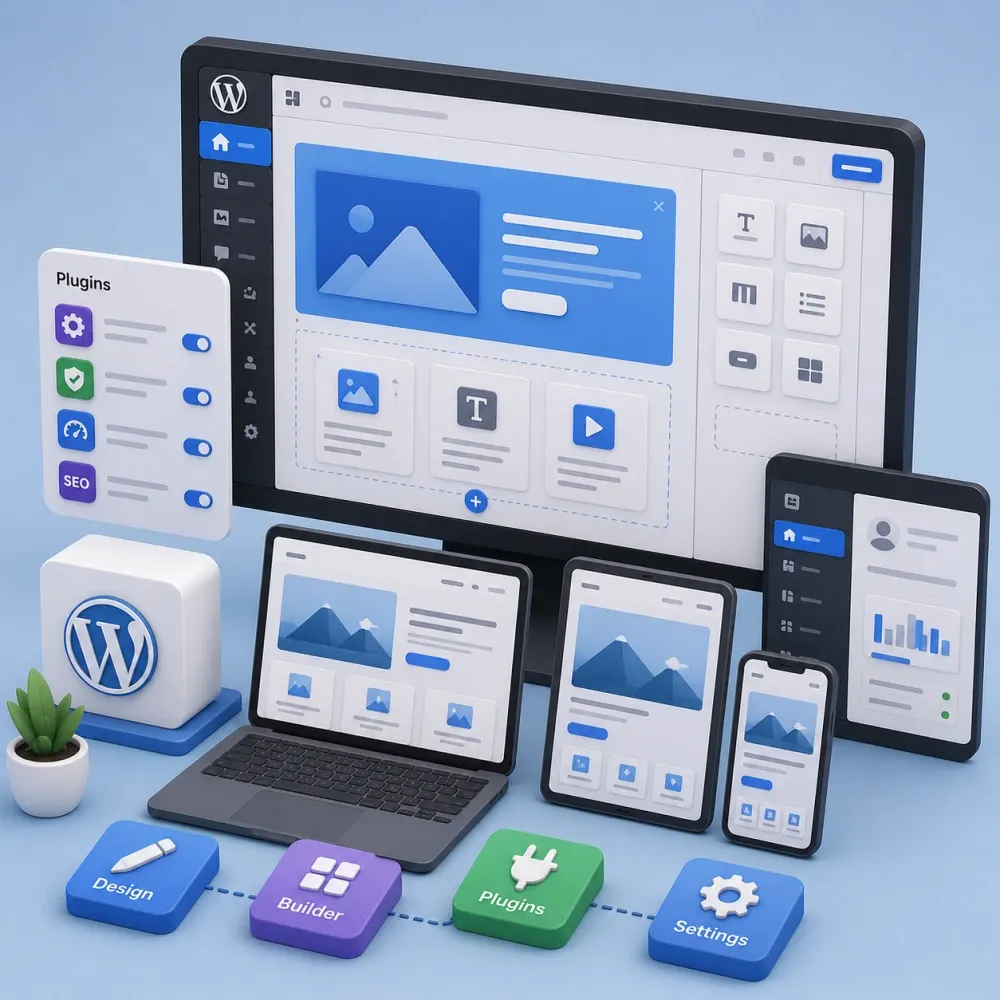
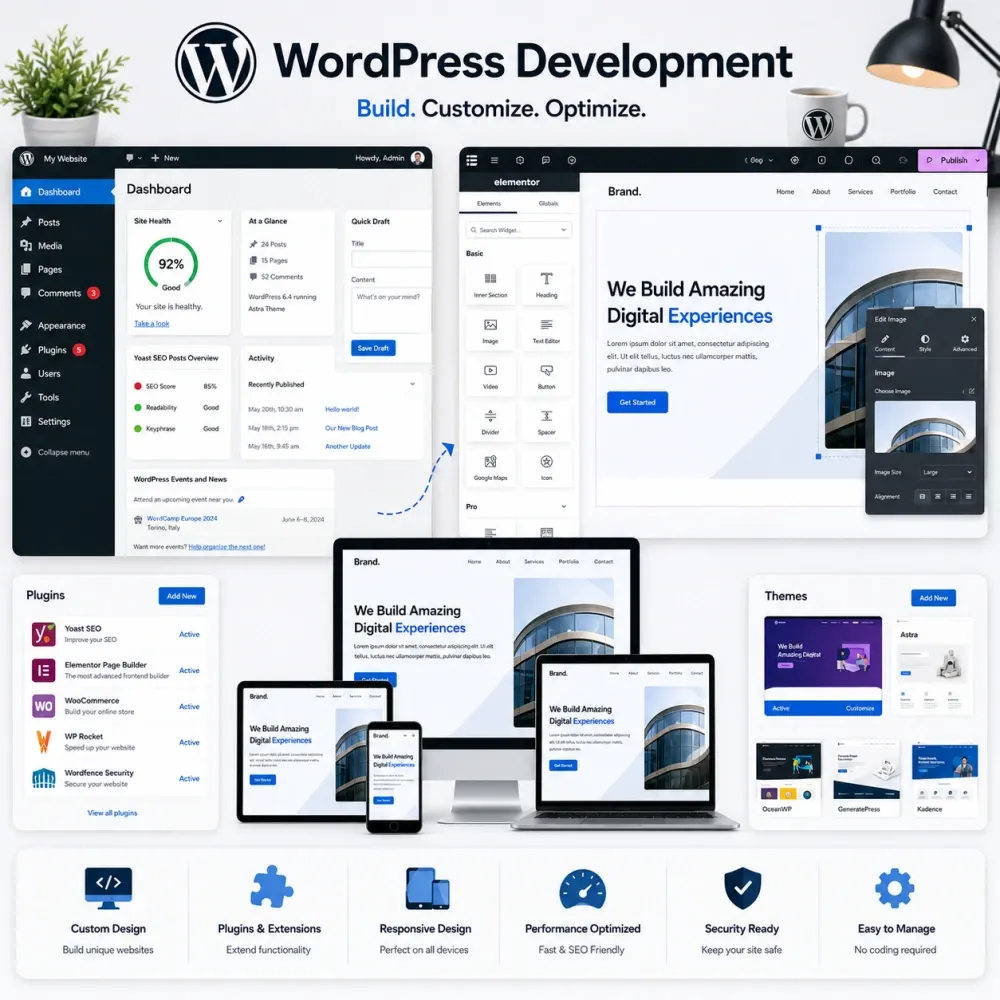
WordPress Development Process

From content structure to a site your team can actually operate.

We organize the project around decisions that affect both the visitor experience and the administrative workflow.

01

Requirements

We identify pages, content types, ecommerce needs, forms, user roles and integrations.

02

Content Model

Repeatable information is mapped into pages, posts, custom post types, fields and taxonomies.

03

Design System

Templates and reusable components are planned around the brand and realistic content.

04

Technical Setup

We select the theme, blocks, builder, plugins and custom development approach required by the scope.

05

Development

Responsive templates, CMS controls, forms and approved functionality are implemented.

06

Content & Migration

Agreed content or data is entered, imported or mapped into the new structure.

07

QA

We test representative templates, editing behavior, forms, integrations and key journeys.

08

Launch & Handoff

Production settings are reviewed and the team receives the agreed admin or maintenance guidance.

WordPress Development Pricing

Starting packages for different levels of WordPress work.

These are starting development fees in USD, intended to give clients a useful budgeting reference. Final pricing is confirmed after we review page templates, content, ecommerce requirements, integrations and any migration or custom functionality.

Focused Business Site

WordPress Launch

$659starting at

For a straightforward service or company website that needs a polished WordPress build and practical editing controls.

  • Up to 5 core pages
  • Theme or Elementor-based implementation
  • Responsive layouts
  • Contact form setup
  • Basic technical SEO foundations
  • Core plugin configuration
  • Launch QA and handoff
Discuss WordPress Launch
Ecommerce / Advanced Build

WooCommerce & Custom

$1,979starting at

For stores and more advanced WordPress builds that need ecommerce, structured content or deeper technical functionality.

  • Up to 15 core pages/templates
  • WooCommerce or advanced custom architecture
  • Product/category template setup
  • Custom fields and content structures
  • Up to 2 standard integrations
  • Payment/shipping setup where applicable
  • Performance and launch testing
  • Technical handoff
Discuss Advanced Build

Common WordPress development starting rates

WordPress / Elementor Landing Page$299+
Small Business WordPress Website$659+
Custom WordPress Theme Development$1,499+
WooCommerce Store Development$1,499+
WordPress Website Migration$299+
WordPress Speed Optimization$249+
Standard API / CRM Integration$399+
Custom WordPress Plugin Development$599+
Ongoing WordPress Maintenance$149+/month

These starting prices cover different levels of WordPress development services, but the quotation is based on the final scope. Pricing note: Hosting, domain registration, premium themes or plugins, paid APIs, third-party subscriptions, commercial licenses, copywriting, large content migrations, specialist security/compliance work and ongoing maintenance are separate unless specifically included in the quotation. Complex custom plugins, marketplaces, membership platforms and large WooCommerce catalogs require a separate technical review.

Possible Deliverables

What a WordPress project can include.

The final list is agreed according to the website rather than automatically adding every possible feature.

Website architecture
Custom theme or builder setup
Responsive templates
Gutenberg patterns
Custom post types
ACF fields
WooCommerce setup
Forms & integrations
Migration support
Technical SEO foundations
Performance review
Deployment support
Admin handoff
Maintenance options
Why DesignBub

The website should still make sense when the development team is not in the room.

Our WordPress development services are organized around that handoff: the site should be understandable after the project is complete, not only while developers are actively working on it.

A WordPress project is eventually handed to people who publish articles, update services, change images, add products or review form submissions. That means backend organization matters almost as much as the frontend.

DesignBub works across design, content and web development, so we can plan the visual system and the CMS structure together. Reusable components are designed with editing in mind. Content types are separated where that reduces duplication. Plugins are selected because they solve a requirement, not because a checklist says a WordPress site should have dozens of them.

We also avoid overengineering. A five-page company website may not need a custom plugin architecture. A WooCommerce store with unusual pricing logic may. The implementation should match the project rather than making every website look technically impressive in a proposal.

WordPress Development FAQs

Questions businesses commonly ask before a WordPress build.

These answers explain scope, platforms, pricing and handoff without promising functionality before the technical requirements are known.

WordPress development services cover planning, design implementation and technical work for websites built on WordPress. Scope can include themes, blocks, page builders, custom post types, plugins, WooCommerce, integrations, migrations, performance work and ongoing development.

Yes. A custom WordPress website can use purpose-built templates, components, content types and functionality based on the approved scope rather than relying only on a pre-built theme demo.

Yes. Custom theme work can include templates, responsive styling, reusable components and integration with WordPress content. Whether a custom theme is necessary depends on the design, editing requirements and budget.

Yes. Elementor can be used when a visual editing workflow suits the project. We can build global styles, reusable templates and dynamic content while keeping the number of widgets and duplicated layouts under control.

Yes. Gutenberg development can include patterns, custom blocks, block themes and controlled Site Editor options. The level of editor flexibility is agreed according to the content workflow.

Yes. ACF can be used for structured content such as services, projects, teams, resources, technical details and reusable template fields where it improves editing clarity.

Yes, when custom functionality is justified. We first check whether WordPress or a reliable maintained plugin already handles the requirement appropriately before recommending a new custom plugin.

Yes. WooCommerce work can include store setup, product and category templates, supported payment or shipping configuration, account features and custom ecommerce functionality according to the project.

Yes. We can review the existing site, preserve useful content and URLs where appropriate, and rebuild or migrate the parts that need a better design, structure or implementation.

Yes. Performance work can review media, caching, scripts, plugins, theme code, database activity and other factors. The exact improvements depend on the current cause of the slowdown, and a specific score is not guaranteed.

Often, yes. Integration depends on the external platform providing a compatible API, webhook, plugin or embed method. Access requirements and third-party limitations are reviewed before implementation is confirmed.

We can implement technical SEO foundations such as metadata support, headings, sitemaps, redirects, canonical handling and structured data where appropriate. Rankings are not guaranteed and broader SEO strategy can be scoped separately.

Our current starting packages are $659 for WordPress Launch, $1,189 for Business WordPress and $1,979 for a WooCommerce or more advanced custom build. Final pricing depends on templates, content structure, ecommerce, integrations, migration and custom functionality. Third-party licenses and ongoing services are separate unless included in the quotation.

Timing depends on design readiness, template count, content, ecommerce requirements, integrations, migration and review cycles. We confirm the schedule after the actual scope and project inputs are understood.

That is normally part of the architecture. We can structure blocks, templates, fields or page-builder components so routine content changes can be handled through WordPress without editing code.

Yes. Ongoing maintenance can be arranged separately for updates, backups, selected fixes and monitoring. New templates, integrations or larger features are normally estimated as additional development.

Build WordPress around the way your team actually works.

DesignBub provides WordPress development services for business websites, ecommerce stores and content-driven platforms that need a clearer technical and editorial structure.

Share the pages, content, ecommerce needs and integrations you need to manage. We can turn those requirements into a WordPress structure that is clear for visitors and practical behind the scenes.