Professional Magazine Design and Layout Services
DesignBub creates editorial systems for magazines that need to hold interviews, features, photography, data, recurring departments and advertising without losing visual continuity. We design print and digital publications around how readers move through a real issue, not around a collection of unrelated page mockups.
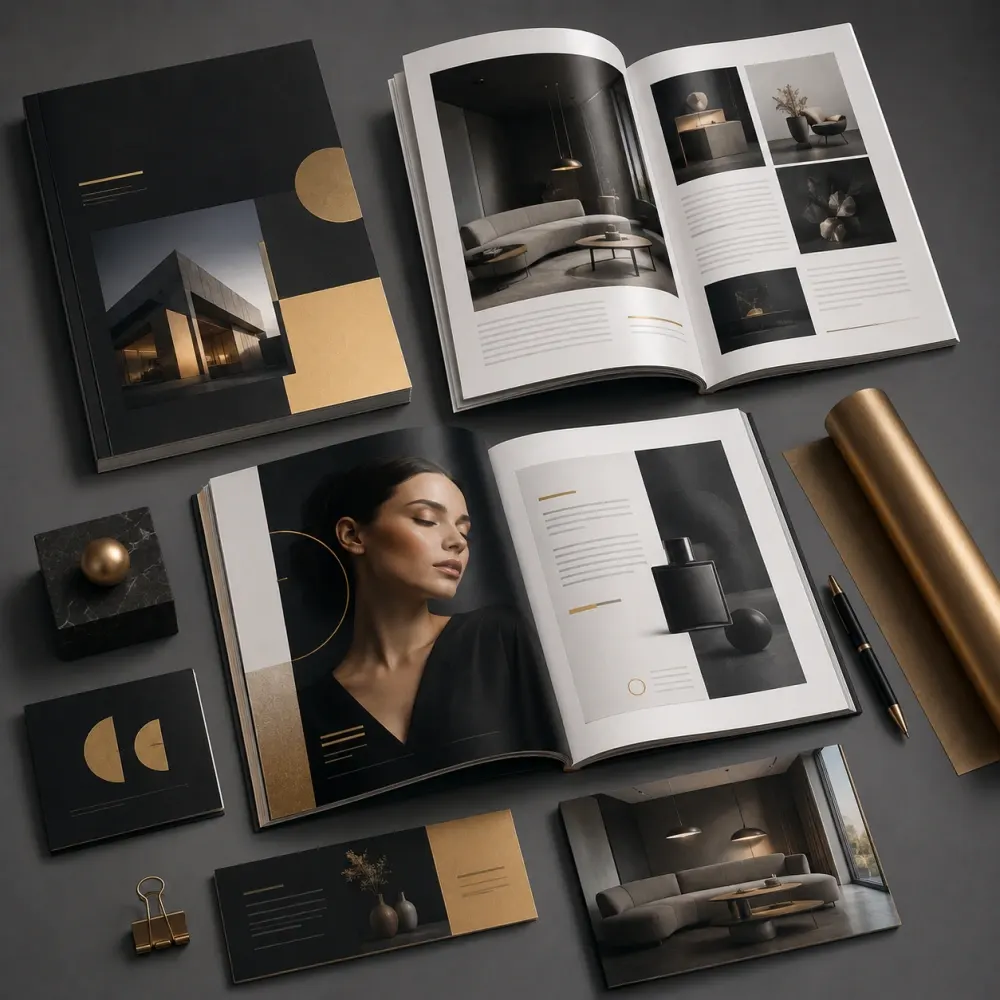
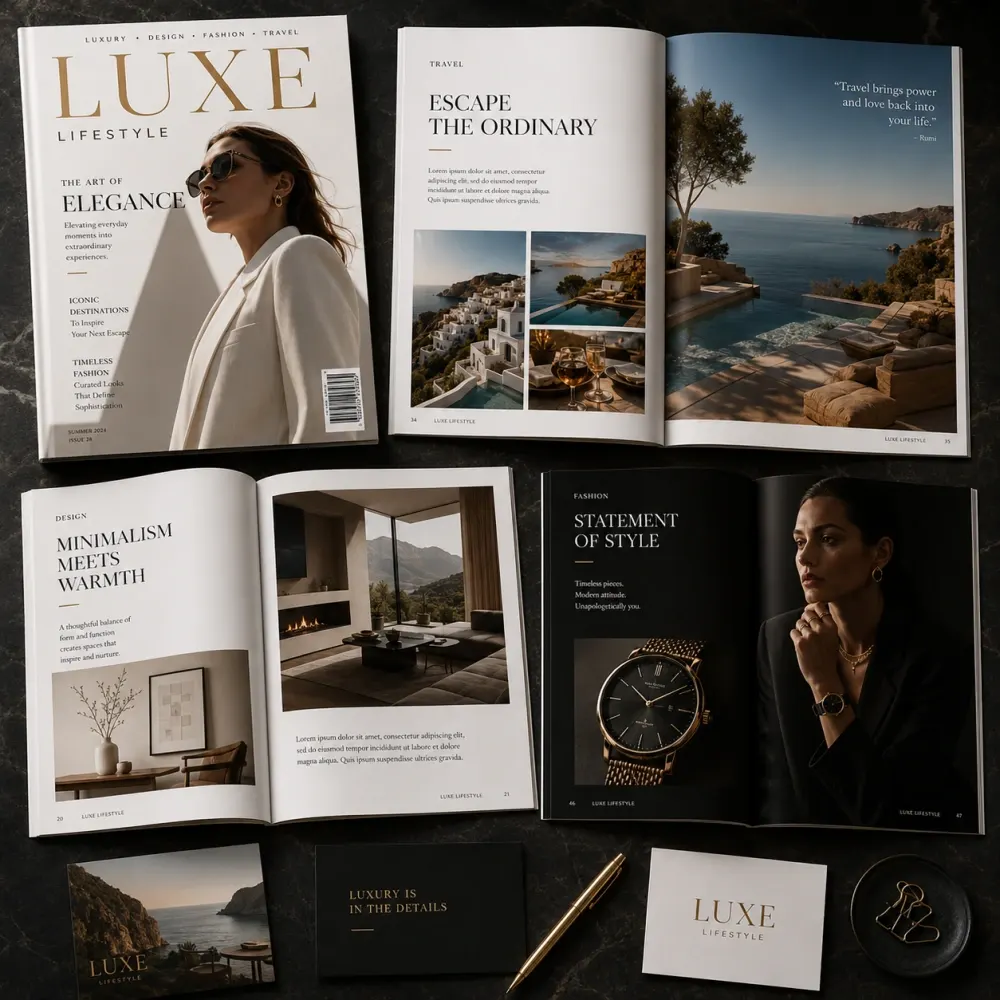
Cover direction, editorial layouts, recurring departments, print-ready production and digital issue files can be planned as one publication system.
A magazine is a sequence of reading decisions, not a stack of decorated pages.
A reader may begin with the cover, skip to the contents, open a feature halfway through the issue, stop at an interview and then return to a short department near the front. The publication needs enough visual consistency that each of those entry points still feels connected. That is why magazine design is less about making every spread impressive and more about creating a dependable editorial language.
DesignBub provides magazine design services for companies, publishers, associations, schools, universities, nonprofits, hospitality brands and internal communication teams. Projects can include corporate magazines, business publications, lifestyle issues, annual editions, internal employee magazines, digital magazines, trade publications and special editorial projects.
Before page styling begins, we look at the issue architecture: article lengths, recurring sections, available photography, ad placements, page count, print method and whether future issues will reuse the system. Those decisions shape the grid and templates that follow.
What professional magazine design services can include.
The right scope depends on whether you are producing a one-off issue, a recurring publication or a full editorial system.
Magazine Cover Design
Cover concepts that establish the issue, balance masthead recognition with the lead story and remain legible at both print size and digital thumbnail scale.
Editorial Layout System
Flexible grids, typography, article openers, body pages, captions, folios and recurring page structures that make the full issue feel connected.
Digital Magazine Design
Screen-friendly PDF editions with practical file size, clickable navigation and links where they add value to the reading experience.
Print Production
Magazine artwork prepared around confirmed trim, bleed, binding and printer requirements instead of treating production as a final export setting.
Different stories can have different personalities without looking like different publications.
Editorial magazines rarely contain one type of page. A feature may need a full-spread opener and long-form body pages. A recurring column may need a smaller recognizable entry point. An interview can use a question-and-answer rhythm. A photo essay can give imagery most of the space. Short news items may need several compact modules on one spread.
Editorial magazine design creates rules that connect those formats. Typography, image treatment, spacing, page furniture and the underlying grid tell the reader that the stories belong to the same publication even when individual layouts change.
The goal is not to surprise the reader on every page. Constant visual reinvention can become tiring across forty or eighty pages. We establish repeatable patterns and reserve stronger layout breaks for features that genuinely need emphasis. That gives the issue rhythm instead of visual noise.
Build the grid so it can handle the real manuscript, not an ideal placeholder page.
Magazine layout design defines the relationship between margins, columns, gutters, image zones, captions, headings and body text. A useful grid has to accommodate variation. One story might contain a 2,000-word article with several photographs. Another may contain 300 words and one portrait. A data feature might require charts, while a recurring department needs compact information blocks.
A rigid template often breaks when real content arrives. An overly loose system, however, makes every page feel unrelated. We design layouts around actual editorial patterns so the publication has structure without becoming mechanical.
Whenever possible, representative pages are created with real article copy and real images. That exposes line-length, caption and image-ratio problems early, before dozens of pages inherit the same weakness.
The cover needs one clear hierarchy before it needs more decoration.
A magazine cover usually contains a masthead, issue information, a lead story and several supporting cover lines. Photography or illustration may already be visually strong before typography is added. Without hierarchy, those elements begin competing with one another.
Magazine cover design establishes what the reader should notice first. The masthead should remain recognizable. The main feature needs enough presence to feel primary. Supporting stories can create depth without becoming equally loud.
Digital distribution also changes how the cover is judged. A cover that looks excellent at full size may become unreadable when shown as a small website or social thumbnail. We consider both conditions when the publication will appear in print and online. For recurring issues, the cover system can remain recognizable while imagery, color and feature treatments change from edition to edition.
Corporate magazine design works best when the publication is allowed to behave like editorial content.
A corporate magazine may contain leadership interviews, project stories, industry commentary, customer features, research, employee profiles and company updates. If every spread is treated as an advertisement, the issue quickly becomes repetitive.
Corporate magazine design uses brand assets without allowing them to overpower every article. A leadership story can be restrained. A project feature may use photography and diagrams. A data section may use a more structured visual language. Internal news can work in shorter recurring modules.
For employee publications, real workplace and team photography can add personality that stock imagery cannot. Recurring departments can also make quarterly or annual issues easier to produce. Where the publication contains financial, legal, technical or regulated information, final factual review remains with the organization or the appropriate qualified reviewer.
Dense information still needs breathing room.
Trade and business publications often carry more detail than consumer lifestyle magazines. Interviews may run long. Charts may need proper labels. Technical features can contain terminology that cannot be simplified purely for visual reasons. Advertisements may also sit between editorial stories.
Business magazine design creates a clear system for those conditions. Long articles can use comfortable columns and subheads. Data can move into charts or callout panels where appropriate. Pull quotes can provide secondary entry points without interrupting the main narrative.
Industry magazines may also require references, tables or technical diagrams. We can organize client-approved information visually, but we do not change technical claims simply to make a spread cleaner. The content remains authoritative only when the publisher and subject-matter experts have reviewed it.
Image-led editorial design still needs a navigation system underneath it.
Lifestyle, travel, food, hospitality and fashion magazines often give photography more space than technical publications. Full-bleed images, generous white space and expressive typography can establish atmosphere before a reader reaches the first paragraph.
A fashion magazine design might use image sequences and large display type, while a hotel publication may combine destination features with property information. Food and travel articles may need practical details such as addresses, captions, credits and recommendations alongside more visual spreads.
These publications can be experimental without becoming inconsistent. Credits, page numbers, recurring departments and article hierarchy still need dependable treatment. The strongest visual pages become more memorable when quieter pages around them give the issue enough contrast.
One issue may contain formal messages, student stories, events and achievements.
School, university and alumni magazines often have one of the widest content mixes. A principal or vice chancellor message may sit near student interviews, sports results, event photography, academic projects and alumni stories.
School magazine design and university editorial design need enough range to support those different tones. Leadership messages can use quieter layouts. Student profiles may feel more personal. Event spreads can use larger image groups. Achievements can be organized as lists, timelines or short modules.
Because educational issues often contain many names, job titles, dates and results, editorial approval is especially important. DesignBub can organize the content into a coherent publication, while the institution remains responsible for confirming factual details before the final file is released.
A magazine does not need a monthly schedule to benefit from an editorial system.
Some publications are annual. Others are created for an anniversary, conference, association event or major company milestone. Those issues can still contain the same variety of features, interviews, photography and structured sections found in a recurring magazine.
An annual magazine may also include archival photographs, historical milestones and timelines. A special conference edition can combine schedules, speaker interviews, sponsor content and event information. An anniversary issue may need both retrospective and forward-looking stories.
The design system should support the issue theme without repeating one decorative motif on every spread. A theme becomes more effective when it influences typography, imagery and pacing subtly rather than being turned into a constant graphic effect.
A digital issue needs to work on a screen instead of behaving like a print file by accident.
Digital magazine design can include a screen-optimized PDF, internal navigation, clickable contents pages and links to websites or resources. The reading environment may be a laptop, tablet or phone, so page size and text scale should be considered before the issue is finished.
Image-heavy publications also need sensible file-size management. Exporting every photograph at unnecessary resolution can make the issue slow to download and difficult to send through email or messaging platforms.
Where one issue needs both print and digital versions, the same editorial identity can be adapted to each output. The digital edition does not need to become a completely separate brand, but it may need different navigation, export settings or selected page adjustments to make screen reading more practical.
Interaction should shorten the route to useful content.
Clickable contents pages can move readers directly to major sections. Product mentions can connect to relevant web pages. Email addresses and calls to action can be linked. A digital company magazine may include navigation back to contents from deeper pages.
Interactive magazine design is most useful when those features support an already clear publication. It should not turn every photograph, icon and headline into a button.
Different PDF readers can support interactive functions differently, so essential information should remain understandable even when a feature is unavailable. We use interaction to reduce navigation friction rather than making the magazine dependent on software-specific behavior.
Binding and production choices affect the layout before export day.
Printed magazines introduce physical constraints. Trim size, bleed, paper stock, binding method and page count all influence the final design. A perfect-bound magazine may need more attention at the inner margin than a short saddle-stitched issue. A photograph crossing the centre spread can also behave differently depending on binding.
Print magazine design should account for those realities from the beginning. We can prepare production files using confirmed printer specifications and suitable image resolution.
Special finishes, unusual stocks and cover treatments should be confirmed with the chosen print vendor. Where color or image reproduction is critical, a physical proof can reveal details that are difficult to judge only from a screen. Printing, delivery and vendor charges are separate unless specifically included in the project scope.
Typography has to remain comfortable after the first attractive spread.
Magazine readers may spend several minutes inside one article. That makes body-text size, line spacing, column width and paragraph treatment more important than they appear in a static mockup.
Display typography can establish personality for features and covers. Body typography has a quieter role. Subheadings help readers return to a long article after a pause. Captions, bylines, folios and credits require smaller styles that remain readable without competing for attention.
A publication can use multiple typefaces, but each should have a defined purpose. Once readers learn the hierarchy, they should not need to relearn it on every new story. Font licensing may also matter when commercial typefaces are embedded in digital files, so licensing requirements should be confirmed as part of the production scope.
The article opener can be dramatic; the pages after it should let people read.
A major feature needs a clear transition from the story before it. That may come through a full-bleed photograph, large headline, portrait or conceptual visual. Once the article begins, however, the design often benefits from becoming calmer.
Long-form magazine layout can use consistent text columns, subheads, pull quotes, sidebars and photography to create natural pauses. A reader should be able to continue through several pages without constantly adjusting to a new text structure.
Not every article needs an oversized opener. If every story begins with the same amount of drama, the issue loses hierarchy. We vary entry points according to the editorial importance and character of each piece while maintaining the underlying magazine system.
The contents page shows the shape of the issue before the reader chooses where to go.
A contents page can distinguish major features from recurring departments and shorter stories. Selected imagery can create visual entry points, but page numbers and section names still need to remain easy to scan.
Longer publications may use section dividers, running headers or subtle page labels to help readers understand their location. Digital editions can add links directly from contents entries.
The table of contents is normally finalized after the page sequence is stable. When stories are moved late in production, contents references and page numbers need to be rechecked. This small operational detail is one reason magazine production benefits from a controlled editorial workflow rather than isolated page design.
Images should support the story and still feel deliberate when several photographers are involved.
Magazine artwork may include portraits, event photography, product images, licensed stock, illustration, charts and infographics. Those sources can have different lighting, aspect ratios and visual quality.
We establish image treatment through cropping, scale, spacing and consistent placement. Basic layout-level adjustment can be included where appropriate. Advanced retouching, image restoration, complex compositing, professional photography or extensive clipping can be quoted separately.
Custom illustration can also be used for covers or feature articles where photography is unavailable or an abstract concept needs a more distinctive visual interpretation. Charts and diagrams should be built from approved information without changing the meaning of the underlying data.
Commercial pages need to fit into the issue without becoming indistinguishable from editorial content.
Magazines that sell advertising should reserve ad positions during flatplanning rather than trying to place them after the editorial pages are complete. Full-page ads, half-page placements and smaller units may each need defined specifications.
Finished advertiser artwork can be placed into the publication when it meets the agreed requirements. DesignBub can also create house advertisements or sponsor layouts as a separate deliverable.
For recurring issues, a simple ad specification sheet can reduce production errors by documenting dimensions, bleed and file requirements. Claims made inside advertiser-supplied content remain the responsibility of the advertiser and publisher. Where sponsored material needs clear identification, the publisher should determine the appropriate editorial labeling policy.
A recurring publication needs a system the second issue can actually reuse.
Magazine template design can establish recurring structures for contents pages, feature openers, interviews, departments, news pages, quotes, captions, contributor pages and advertisements.
The purpose is not to make every issue visually identical. Templates define stable elements while leaving room for story-specific layouts and seasonal variation. This is especially useful for corporate, school, association and internal publications that are produced quarterly or annually.
Editable source delivery can be prepared in the agreed software. We can also organize paragraph styles, master pages and recurring components so future production is easier for an internal team or another designer. The amount of template documentation or training can be included according to the actual workflow.
Refresh the editorial system without throwing away every recognizable element.
An existing publication may have strong content and loyal readers while its typography, page grids or cover system have become dated. A magazine redesign can improve those areas without making the next issue look unrelated to the publication people already know.
We review the masthead, contents structure, recurring departments, feature openers, body typography, image treatment and production workflow. Useful identity cues can remain while weaker patterns are replaced.
Redesign also provides an opportunity to solve operational problems. If every article requires completely custom styling, production may be unnecessarily slow. If templates are too restrictive, editors may keep breaking them. A better system should support both editorial consistency and realistic page-making.
From issue plan to final press and digital files.
We start by reviewing the expected page count, article list, available imagery, recurring departments, advertisements and final delivery formats. This gives the project a flatplan before detailed design begins.
Next, we develop the editorial system: grid, typography, cover direction, article opener styles, body-page rules and recurring components. Representative spreads are created first so the client can approve the visual language before the full issue is laid out.
Once the direction is approved, the remaining stories are flowed into the issue. Photography, captions, pull quotes, charts and ads are integrated according to scope. The complete magazine then goes through review, approved corrections and final checks for contents references, page numbers, image quality and export settings.
Final files are prepared for the agreed print, digital or combined output.
What can be included in a magazine design project.
The exact handoff depends on publication type, page count and whether the issue will be printed, distributed digitally or reused as a template.
Starting prices based on page count and editorial complexity.
These packages are practical starting points for prepared copy and supplied brand assets. Image-heavy features, extensive editorial changes, custom illustration, research, copyediting and complex production requirements can change the final quote.
Magazine Starter
For a focused company, school, association or special-issue publication with a clean editorial system.
- Custom cover direction
- Up to 16 designed pages
- Core typography and grid system
- Article and department layouts
- 3 revision rounds
- Print-ready + screen PDF
Editorial Magazine
For a complete issue with varied features, recurring sections and a stronger print-and-digital editorial system.
- Custom cover + contents design
- Up to 32 designed pages
- Feature, interview and department templates
- Image and caption system
- 4 revision rounds
- Print-ready + digital PDF files
Publication System
For substantial issues or recurring publications that need reusable templates and broader article variation.
- Up to 64 designed pages
- Full editorial design system
- Reusable master templates
- Advertising framework
- 5 revision rounds
- Print, digital + organized source files
Need one part of the publication?
Starting USD fees. Final cost depends on supplied content, revisions, image condition and production requirements.
Scope note: pricing assumes reasonably organized final copy and supplied brand assets. Printing, shipping, copywriting, proofreading, translation, professional photography, premium stock licensing, complex illustration, extensive retouching and third-party publishing-platform fees are separate unless specifically included.
Magazine design has to remain coherent long after the cover has done its job.
A magazine can look impressive for the first six pages and still feel unfinished by page forty. The editorial system has to survive long stories, short stories, image-heavy features, advertisements, quotes and recurring departments without losing its identity.
DesignBub approaches magazine design services as publication design rather than isolated spread creation. We define the recurring rules first and then give individual stories enough freedom to feel distinct.
That approach also helps when another issue follows. A recurring magazine should not need to invent its visual language again every quarter. The strongest parts can become a reusable system while cover themes and feature treatments continue to evolve.
The result is intended to be practical for readers, editors, printers and the team responsible for producing the next edition.
Common questions about magazine design services.
Answers covering print, digital editions, editorial templates, covers, content and production.
Magazine design services cover the visual and editorial layout of multi-page publications. Work can include cover design, typography, article grids, contents pages, photography, advertisements, recurring templates, digital navigation and print-ready production files.
Yes. Print magazine artwork can be prepared around the confirmed page size, binding method, bleed and printer requirements.
Yes. Digital editions can include screen-friendly PDFs, clickable contents pages, internal navigation and approved external links where appropriate.
Yes. One editorial identity can be adapted for both outputs rather than assuming a single export will perform equally well in print and on screens.
Yes. Magazine cover design can include the masthead, cover image, lead-story hierarchy, supporting cover lines and issue information.
Yes. Corporate and internal publications can include leadership stories, company updates, employee profiles, projects, thought leadership and recurring departments.
Yes. We can retain useful recognition while updating typography, page grids, covers, contents, recurring sections and the overall editorial system.
Yes. Reusable templates can be developed for covers, features, interviews, news pages, departments, captions and other recurring page types.
Yes. Supplied advertiser artwork can be placed into the issue, and custom advertisement layouts can be designed when included in the project scope.
The standard scope focuses on design. Full copywriting, proofreading, fact-checking, editorial research or substantial copyediting can be quoted separately.
Editable working files can be included according to the software used and the agreed deliverables.
DesignBub packages start at $399 for up to 16 pages, $749 for up to 32 pages and $1,299 for up to 64 pages. Final pricing depends on page count, article variety, image work, custom graphics, advertisements, revisions and required output formats.
Timing depends on page count, article readiness, image availability, editorial changes and review rounds. A project schedule is confirmed after the issue plan and source material have been reviewed.
Search terms often describe different parts of the same editorial problem.
Projects may be described as professional magazine design, custom magazine design, editorial design services, magazine layout design, magazine cover design, print magazine design, digital magazine design, e-magazine design, corporate magazine design, company magazine design, business magazine design, employee magazine design, industry magazine design, trade magazine design, lifestyle magazine design, fashion magazine design, school magazine design, university magazine design, annual magazine design, publication layout design, magazine template design, interactive magazine design, clickable PDF magazine, magazine redesign services, recurring magazine design or long-form editorial design.
We treat those phrases as different project requirements rather than separate excuses to repeat the same generic service description. The actual scope is defined by the issue, audience, page count, content mix and production method.
Give the next issue a structure that can carry every story inside it.
Send the expected page count, article copy, image folders, advertising requirements and preferred print or digital format. DesignBub can build the editorial system, cover and page layouts around the publication you actually need to release.