">

Professional Brochure Design Services for Businesses

DesignBub creates brochures that organize business information into a clear reading path. We design company brochures, product brochures, sales materials and digital PDFs for print, email, meetings and campaigns.

PrintProduction-Aware Layout
DigitalScreen-Friendly PDF Options
CustomBuilt Around Your Content
Professional brochure design layout
Premium business brochure design
Brochure Design

Clear page order, readable typography, useful visual hierarchy and files prepared for the format you plan to use.

Brochure Design Overview

A brochure has limited space, but the reader still needs a clear path through the information.

A company may need to introduce services, explain products, show projects, list specifications and leave room for contact details. When every item receives the same visual weight, the document becomes difficult to scan. The reader sees information, but does not know what deserves attention first.

DesignBub provides brochure design services for businesses, manufacturers, professional firms, property companies, healthcare brands, schools, retailers, event teams and organizations that need information presented in a controlled visual order.

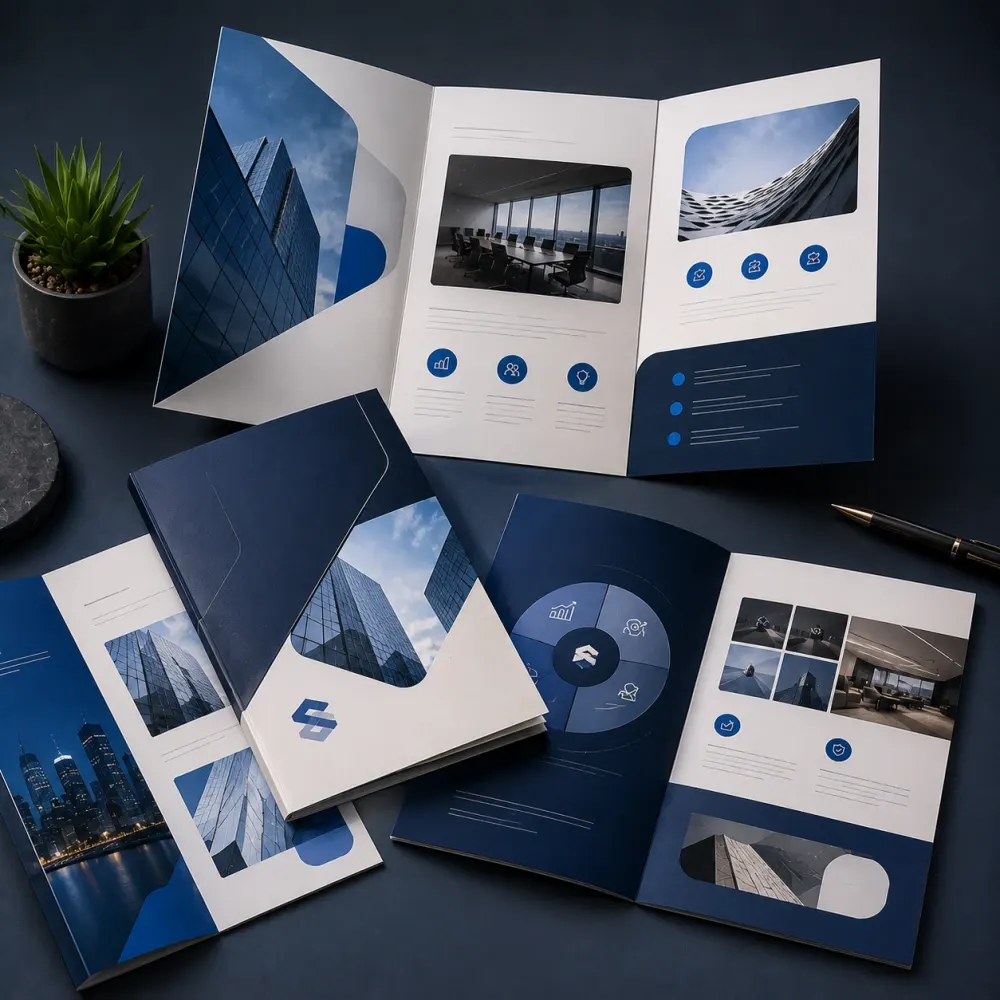
We design company brochures, product brochures, corporate brochures, sales brochures, service brochures, tri-fold brochures, bi-fold brochures, multi-page brochures, digital brochures and print-ready marketing materials.

The work starts with the purpose of the brochure. We look at who will receive it, where they will read it, what they need to understand first and what action should follow. Those answers influence the format, page count, section order, copy length and visual direction.

A useful brochure does not make every sentence compete for attention. It creates a hierarchy that helps the reader understand the main point, move into supporting detail and find the next step without searching for it.
Scope

What brochure design services can include.

Professional brochure design services can include content organization, page planning, visual direction, typography, image placement, icons, charts, tables, product grids, service sections, cover design, call-to-action areas, print setup and digital PDF preparation.

The scope changes with the brochure. A short tri-fold may need one clear message and a compact service overview. A product brochure may need photographs, model differences and technical information. A corporate brochure may need capabilities, sectors, process and selected proof. A technical brochure may require dense tables that still need to remain readable.

We plan around the real content instead of forcing every project into the same panel count or template. When the material is not yet organized, we can help group it into a practical sequence before visual design begins.

01

Company Brochure Design

A company brochure gives readers a compact view of the business. We can organize services, industries, capabilities, process, locations and contact information into a document that supports meetings, proposals and introductions. The brochure should not feel like a website printed on paper. It needs shorter sections, stronger page transitions and a more deliberate reading order.

02

Corporate Brochure Design

Corporate brochure design often needs a formal tone without becoming difficult to read. We build a consistent system for headings, body copy, statistics, project images and section transitions. History, leadership, operations and business units can each receive a clear place instead of being compressed into one long corporate overview.

03

Product Brochure Design

Product brochures help readers understand and compare what is being sold. We create repeatable product blocks for names, key features, images and specifications. The client supplies and approves product claims, prices and technical data, while the design makes those details easier to find and compare.

Planning

Brochure strategy starts before the cover.

A brochure used during a sales meeting can support a conversation, so it may not need to explain every detail by itself. A brochure sent after an inquiry may need more context because nobody is standing beside it. An exhibition handout must communicate quickly because the reader may only look at it for a short time.

We use that context to decide what belongs in the document. Important information receives space. Secondary detail moves into supporting sections. Repeated points are reduced. Long lists may become grouped categories, tables or visual blocks.

This planning gives every page or panel a job. One page may introduce the problem. Another can explain the service. Another can show a product or project. The closing area can make contact information or the next action easy to find.

Strong brochure design is therefore not only about decoration. It is about making a controlled amount of information easier to understand in the order the reader is likely to need it.

04

Service Brochure Design

Service businesses sell expertise rather than a physical item. We organize services by category, audience, problem or process depending on how customers evaluate the offer. Core services can receive more space while supporting capabilities stay compact. Process, deliverables, examples and a direct next step can make an intangible offer easier to understand.

05

Sales Brochure Design

A sales brochure should help a conversation move forward. We identify the main offer, practical benefits, supporting evidence and next action. The document can work during meetings, after sales calls or inside proposal packages. We can also create related versions for different industries without rebuilding the visual system from the beginning.

06

Marketing Brochure Design

Marketing brochures can support launches, events, campaigns and direct outreach. The piece should connect with the campaign while still making sense on its own. We keep the main message visible, use campaign graphics carefully and add QR codes or web links when they help the reader continue the journey online.

Folded Formats

Tri-fold and bi-fold brochure design should follow the way the piece opens.

A tri-fold brochure divides one sheet into six panels. The reader does not normally see all six panels at once, so panel order matters. The cover creates the first impression. The opening panel should lead naturally into the inside spread. The back panel often carries contact details or supporting information.

A bi-fold brochure creates four larger panels. It works well for concise company introductions, premium product presentations, events and focused services. The wider panels give photography and larger headings more room.

We do not shrink typography simply to make too much copy fit. If the content needs more space, a multi-page brochure may provide a better reading experience. For final print files, we use the printer's confirmed fold and bleed specifications because panel widths can vary by production method.

Longer Documents

Multi-page brochure design needs rhythm as well as consistency.

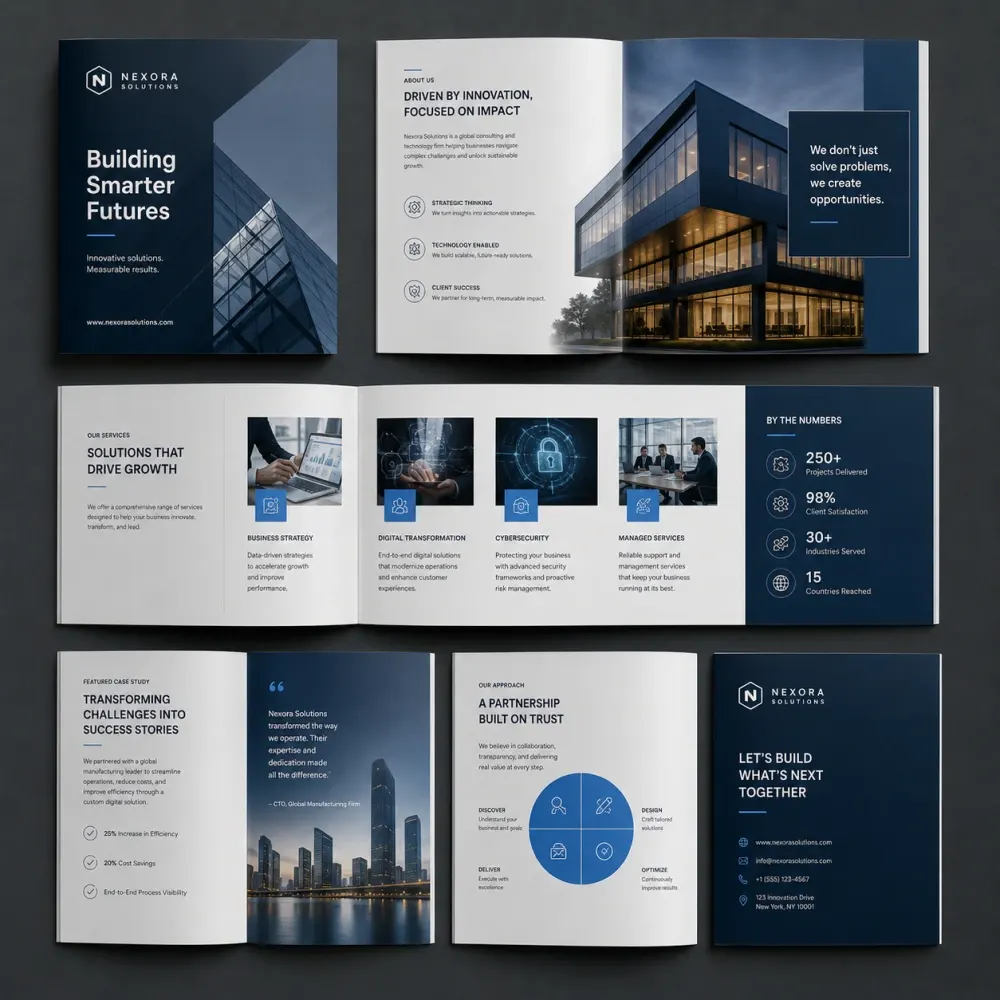
Multi-page brochures give complex businesses more room for services, products, property developments, education programs, healthcare information or technical content. The challenge moves from fitting everything into a small format to keeping the document coherent across several pages.

We create a repeatable grid, heading system, image treatment and section structure. Some pages may use large photographs. Others may rely on structured text, specifications or tables. The document can change pace without looking like several unrelated layouts joined together.

Page numbers, margins, section labels and recurring elements help the reader understand where they are. When the brochure will be saddle stitched or bound, we also consider the final page count and production method before delivery.

07

Digital Brochure Design

Digital brochures may be attached to emails, shared through messaging apps, downloaded from a website or presented on tablets. We can prepare screen-friendly PDFs with clickable links and practical file sizes. A digital version does not always need to copy the print file exactly, because small print text and tall page proportions can feel uncomfortable on a screen.

08

Print Brochure Design

Printed brochures need production-aware design. Trim size, bleed, folds, margins, binding and image resolution all affect the final file. We prepare the artwork around confirmed printer specifications. Paper stock, machine settings, inks and finishing can affect final color, so a digital mockup should not be treated as an exact physical proof.

09

Brochure Redesign

An old brochure may still contain useful information even when the layout no longer represents the business well. We review what can stay, what needs updating and where the information should move. A redesign may preserve familiar brand elements while improving typography, hierarchy, imagery and page consistency.

Reading Experience

Layout and typography decide how quickly the reader understands the page.

Brochure layout creates the path through the information. We use headings, subheadings, body copy, captions, callouts, images and spacing to show which content deserves attention first.

The hierarchy should still work when someone scans rather than reads every sentence. A reader may notice the page title, then a short benefit, then a photograph and finally a specification. We make those levels visually different without filling the document with too many styles.

Typography carries much of this work. Body text needs a comfortable size. Captions should remain readable. Tables need enough spacing to separate rows and values. When content does not fit, editing or another page usually creates a better result than reducing the text until it becomes difficult to read.

Where brand fonts already exist, we use them when licensing and language support allow it. For multilingual brochures, the type system also needs to support the required script and reading direction.

10

Photography and Image Layout

Images can explain products, projects, environments and people faster than long copy. We work with suitable client photography, product renders and licensed stock. We crop around the important subject, keep image treatment consistent and avoid enlarging low-resolution assets beyond a useful size. Advanced retouching, new photography, CGI and premium stock can be scoped separately.

11

Icons, Tables and Infographics

Some information becomes clearer when it moves out of paragraph form. A process can become a short sequence. Specifications can use a table. Selected figures can use simple charts. We use visual tools when they reduce reading effort. The client remains responsible for the accuracy of supplied data, statistics and technical claims.

12

Calls to Action and Contact Details

A brochure should make the next step easy to find. Depending on the purpose, that may be a phone number, website, QR code, email address, showroom location or sales contact. We give the action enough visibility without repeating it so often that every page feels like an advertisement.

Industry Use

Brochure design for manufacturing, construction and information-heavy businesses.

Manufacturing brochures often need to balance commercial presentation with technical detail. The reader may want to know what the company makes, which industries it serves, what equipment it operates and which specifications apply to each product. We can create clear sections for capabilities, product families, processes, quality information and applications.

Construction and property brochures depend heavily on visuals but still need factual clarity. A development brochure may include renders, plans, location information and amenities. A contractor may need services, sectors, project photography and capability information.

Healthcare, education and professional service brochures often carry another kind of complexity: several audiences may read the same material. We can use clear headings and section boundaries so each reader can find the information most relevant to them.

In every case, technical values, project claims, certifications and regulated information should come from approved client material. We organize those facts; we do not invent evidence to make the brochure appear more impressive.

13

Content Readiness and Copy Length

Brochure projects move more smoothly when the content is close to final before detailed layout begins. That does not mean every sentence must be perfect on day one, but major sections, product names, service descriptions and contact details should be known. If copy changes heavily after several pages are designed, text can move across pages and affect images, tables and page count. We can help edit headings, shorten repeated wording and organize supplied material. Full research or copywriting can be quoted separately when the brochure needs new content rather than layout support.

14

Finishes and Production Details

Foil, embossing, spot coating, special stocks and unusual folds can change the way artwork needs to be prepared. We do not assume a printer can produce every finish. When the project includes a special production method, we ask for the supplier specification before final export. The printer should also confirm paper, binding, tolerances and proofing. Our role is to prepare artwork that follows those confirmed requirements and keeps important content away from areas affected by folds, trim or finishing.

15

Multilingual Brochure Layout

A translated brochure often needs more than replacing one paragraph with another. Some languages expand in length, use different scripts or require a different reading direction. We can adapt an approved design for additional languages after the translated text is supplied. We review line lengths, headings, tables and page balance so the second version still feels intentional. Translation itself can be handled separately unless it is included in the agreed project scope.

Final Handoff

Source files, digital PDFs and printer-ready exports should each serve a different purpose.

The file used by a commercial printer may contain bleed, crop requirements, high-resolution images and a color setup that is not ideal for quick email sharing. A digital PDF may need smaller image files, active links and a screen-friendly color space. Editable source files serve another purpose: they allow future layout changes in the design software used for the project.

We confirm which outputs you need before handoff. Where source files include licensed fonts, photography or third-party assets, usage rights still follow the relevant licenses. We can package or link assets when the license allows it, but we do not transfer rights that the original provider does not grant.

This separation helps teams avoid sending a heavy printer file through email or sending a compressed digital document to a print vendor. Good brochure design services include the final-use context, not only the appearance of the pages.

Brochure Design Pricing

Clear starting prices for common brochure formats.

These prices cover design scope, not printing. Final cost can change when a project needs extensive copywriting, custom illustration, advanced image work, complex data visualization, extra languages or unusual production requirements.

Package 1

Folded Brochure

$149starting

Bi-fold or tri-fold brochure for one focused offer, service or campaign.

  • Up to 6 panels
  • Content hierarchy and layout
  • Front and back design
  • Print-ready PDF
  • Screen-friendly PDF
  • 2 revision rounds
Choose Folded Brochure
Package 3

Multi-Page Brochure

$349starting

Longer brochure system for detailed products, capabilities or corporate communication.

  • Up to 16 pages
  • Page planning and section system
  • Custom charts or simple infographics
  • Product/service page templates
  • Print-ready and digital files
  • Editable source file
  • 3 revision rounds
Choose Multi-Page Brochure
Standalone Services

Need one specific brochure task?

Starting prices help with early budgeting. We confirm the final quote after reviewing the file, content and production requirements.

Bi-Fold Brochure Design$179+
Tri-Fold Brochure Design$149+
Additional Brochure Page$39+/page
Brochure Cover Design$99+
Digital PDF Adaptation$79+
Extra Size or Language Adaptation$99+
Simple Infographic$129+
Custom Icon Set$99+
Print Setup for Existing Artwork$79+
Brochure Redesign$149+

Scope note: Printing, paper, finishing, delivery, premium stock assets, translation, extensive copywriting, complex illustration, photography, CGI and third-party production costs are separate unless listed in the quotation.

Process

Our brochure design process keeps content, design and production connected.

We begin by understanding the brochure's job. You share the audience, intended use, preferred format, content, brand assets, images and printer specifications if available.

We review the material and recommend a practical content order. For larger brochures, we create a page plan before detailed design begins. That plan helps confirm the expected length and gives each section a clear place.

Next, we establish the visual direction. We design the cover and representative inside pages so you can review typography, imagery, spacing and the overall style before the complete document is built.

After approval, we extend the system across the remaining pages. You review the brochure and provide consolidated feedback. We refine it within the agreed revision scope.

Before final export, you confirm factual content, contact details, prices, technical values and other information that must be accurate. We then prepare the agreed digital or print-ready files.

Deliverables

What can be included in a brochure design project.

Our brochure design services can cover company brochures, corporate brochures, product brochures, service brochures, sales brochures, marketing brochures, tri-fold brochures, bi-fold brochures, digital brochures and multi-page publications.

Projects can also include cover design, page planning, typography, product tables, icons, simple infographics, image treatment, custom diagrams, editable source files, print-ready PDFs and screen-optimized PDFs.

A six-panel tri-fold brochure needs a different process from a sixteen-page product brochure. A project with finished copy and strong photography also needs less preparation than a document that starts with unorganized notes and mixed-quality assets.

We define the deliverables around those differences before design begins so the brochure is planned for the real output rather than adapted at the last moment.

Why DesignBub

Brochure design should make information easier to use after the file leaves our screen.

DesignBub approaches brochure design services by combining visual design with practical document planning. We look at how the brochure will be used, how much information it needs to carry and which sections deserve the strongest attention.

We keep body text readable instead of shrinking it to force more content onto the page. We use images where they add meaning. We organize services, specifications and company information into repeatable patterns that readers can learn quickly.

When the brochure will be printed, we prepare artwork around confirmed production requirements. When it will be shared digitally, we consider screen reading, file size and clickable actions.

Design can make information clearer and the document more consistent. It cannot guarantee sales, leads, procurement approval or print results that depend on a third-party printer, paper stock, inks, finishing or handling.

Brochure Design FAQs

Questions businesses usually ask before starting.

Clear answers about formats, print files, digital PDFs, source files, content and project scope.

Brochure design services cover the planning, visual layout and production preparation of printed or digital brochures. The work can include page structure, typography, images, tables, icons, cover design and final PDF files.

Yes. We can design company brochures that introduce the business, services, capabilities, industries, process and contact information in a clear document.

Yes. We can develop corporate brochures for business development, meetings, procurement, events and stakeholder communication.

Yes. We can design brochures for one product, a product family or a larger range with images, features and specifications.

Yes. We can organize several services into a clear brochure with descriptions, process sections, supporting proof and contact information.

Yes. We design tri-fold brochures around the correct six-panel reading and folding sequence.

Yes. We can create four-panel bi-fold brochures for company introductions, products, events and focused service information.

Yes. We can create longer brochures with consistent grids, section systems, page numbers, image treatment and content hierarchy.

Yes. We can prepare screen-friendly PDF brochures with suitable page sizes, compressed images and clickable links where required.

Yes. We can prepare print-ready PDF files according to the printer's confirmed trim, bleed, fold and color requirements.

Yes. We can follow approved colors, fonts, logo rules, image direction and other brand standards while adapting them to brochure layout.

Yes. We can update the structure, visual style, typography, imagery and page hierarchy while preserving useful content.

Yes. We can help group and arrange client-supplied information so the brochure follows a clearer reading order.

Copywriting can form part of the project when agreed. Light editing and full brochure copy development require different levels of work, so we confirm the scope before starting.

Yes. Simple custom icons, process graphics, charts and infographics can be included depending on the project scope.

Yes. We can work with suitable client-supplied photography and arrange images according to the brochure structure.

Yes. We can suggest appropriately licensed stock imagery. Premium image costs remain separate unless the quotation includes them.

Editable source files can be included in the selected project scope. We confirm the required software and any third-party font or image licensing conditions before handoff.

Yes. We can work with A4, A5, square, US Letter and custom formats as long as the final production size is confirmed.

Yes. Size and language adaptations usually need layout adjustment rather than simple scaling because text flow, image crops and page balance can change.

Our standard scope focuses on design and production artwork. Printing, paper, finishing, delivery and physical proofing remain separate unless specifically included in the quotation.

Our starting packages begin at $149 for a focused folded brochure, $249 for an up-to-8-page business brochure and $349 for an up-to-16-page multi-page brochure. Final cost depends on content, page count and custom design requirements.

Timing depends on page count, content readiness, review rounds and whether the project needs copywriting, illustration or complex data layouts. We confirm the schedule after reviewing the full material.

Give every page a job before you fill it with information.

DesignBub provides brochure design services for businesses that need to turn products, services and company information into a document people can actually use. Start with finished copy, an old brochure, a Word file or unorganized material. We can structure the content, design the pages and prepare the final files for print or digital sharing.