Social Media Branding

DesignBub builds social media branding for businesses that want their profiles, posts, carousels, stories, covers and campaign graphics to feel like they belong together. We take an existing brand identity and turn it into a practical visual system your team can keep using on the platforms that matter.

IdentityConsistent Visual Direction
TemplatesReusable Content Tools
PlatformsAdapted to Each Channel
Social media branding
Social media branding design
Social Brand System

Profile assets, reusable templates and clear visual rules, built around the content your team genuinely publishes.

Selected Brands & Businesses We Have Designed For
Asset 38 brand logo Asset 4 brand logo Asset 45 brand logo Asset 46 brand logo Asset 47 brand logo Decent Solar logo Dentesthetix logo Gazal Lounge logo GH Landscape logo Asset 38 brand logo Asset 4 brand logo Asset 45 brand logo Asset 46 brand logo Asset 47 brand logo Decent Solar logo Dentesthetix logo Gazal Lounge logo GH Landscape logo
Ghazoor logo Goodluck Trader logo Kingsley logo Lahoris logo MOI logo Naqaa Salt logo Nature Hug logo Netsole logo Ghazoor logo Goodluck Trader logo Kingsley logo Lahoris logo MOI logo Naqaa Salt logo Nature Hug logo Netsole logo
Nexcell Energy logo Roots logo Sheikh logo Shellbee logo Softcore logo Solvac Lifesciences logo Trendex logo Zameenex logo Nexcell Energy logo Roots logo Sheikh logo Shellbee logo Softcore logo Solvac Lifesciences logo Trendex logo Zameenex logo
Social Media Branding

People sense the system even when they only see a single post.

People rarely meet a brand on social media through one neatly arranged mockup. They see a profile picture in a comment, a Story the next day, a carousel shared by someone else, and a campaign graphic weeks later. If those pieces share no visual logic, the account can feel like it belongs to several different businesses.

Our social media branding services exist to solve that continuity problem. We build a visual framework for recurring content, so typography, colour, image treatment, layout habits and supporting graphics work together without forcing every post into the same template. The aim is a system that stays recognisable while still giving the marketing team room to say different things.

A project can start from a mature brand identity, a basic logo and colour palette, or a social presence that has simply grown without clear rules. The work can cover one platform or a broader multi-channel system. We review what already exists, find the content types the business publishes most often, and build the social design around those real requirements.

The Difference

Branding a feed and running an account are two different jobs.

Branding decides how the account looks and how repeated content stays visually connected. Management usually covers publishing, scheduling, captions, community replies, reporting and account administration. A business may need both — but they should never be sold as the same deliverable.

An in-house marketing team may know exactly what to publish yet struggle to keep the graphics consistent. In that case a reusable design system can be more useful than handing over the whole account. Another business may need design plus ongoing content support. We keep those scopes separate, so clients always know whether they are buying a one-time brand system, recurring creative production or broader account management.

Social branding versus a full brand identity

A full brand identity sets the wider visual language of the company. Social branding applies that language to the realities of feeds, Stories, carousels, short-form video covers, company-page banners and campaign assets. If the identity already works, we will not redesign it just to make Instagram graphics. If the underlying identity is too limited for consistent social use, we flag that before building the template system.

Visual Identity for Social

Recognition should come from more than a logo in the corner.

Social Media Visual Identity

A social media visual identity sets the recurring cues people start to associate with a business as they scroll. Colour matters, but recognition usually comes from the mix of typography, spacing, image treatment, graphic shapes, framing, icon style and the way information is arranged.

One brand may lean on large editorial type and restrained photography. Another may use energetic geometry and short promotional messages. A service company may need diagrams, charts and case-study layouts because there is no physical product to photograph. The system should fit the brand and the content — not a generic trend.

Profile Branding

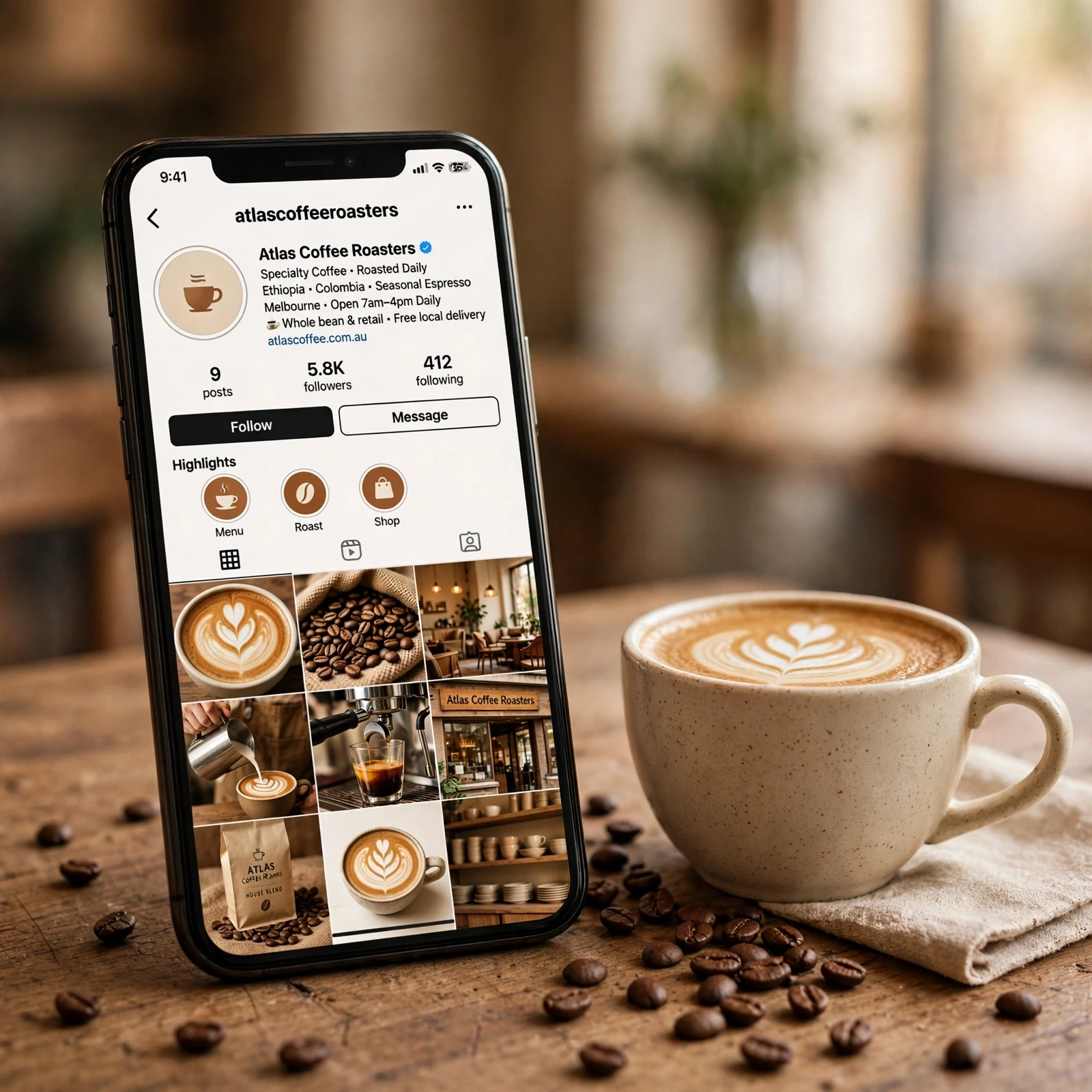
Social media profile branding can cover profile images, cover banners, highlight covers, channel graphics and direction for pinned content. These assets have to work at the sizes people really see them. A detailed logo can turn unreadable inside a small circular avatar, and a banner can lose important text when a platform crops it differently on mobile.

We simplify or reposition assets where needed while keeping the identity intact. The profile should introduce the visual direction before anyone opens a single post.

Template System

Templates should cut repetitive work — not make the feed repetitive.

Templates earn their keep when they give a team a reliable starting point. They are far less useful when every post is squeezed into the same composition, or when editing them demands advanced design skills.

A social media template design system can include layouts for announcements, educational content, product features, offers, testimonials, case studies, quotes, statistics and recurring campaign messages. We usually group templates around the content categories a business uses most often.

How flexible they are depends on who will edit them. A marketing coordinator working in Canva may need clearer boundaries and simpler image swaps. An in-house designer in Figma or Adobe software may benefit from a more flexible component system. We agree the file format and editing expectations before handoff, rather than assuming one tool suits every team.

Branded social media posts

A branded post is more than a logo dropped onto a generic layout. Typography, spacing, image direction, graphic elements and hierarchy should all add to recognition. A useful test: does the design still feel like the brand when the logo is small? That pushes towards a stronger visual language instead of leaving the mark to do all the work.

Instagram Carousel Design

A carousel can explain a process, compare products, summarise research or break a bigger idea into steps. Social media carousel design needs continuity between slides without turning every slide into a copy of the last.

The first frame is the doorway in. Middle slides should keep a clear reading order, with page numbers, repeated markers or quiet navigation cues helping people follow the sequence. The final frame can summarise the idea or point to a relevant next step. We build these patterns into the system so future carousels feel connected even when the topic changes.

Story and Reel Cover Design

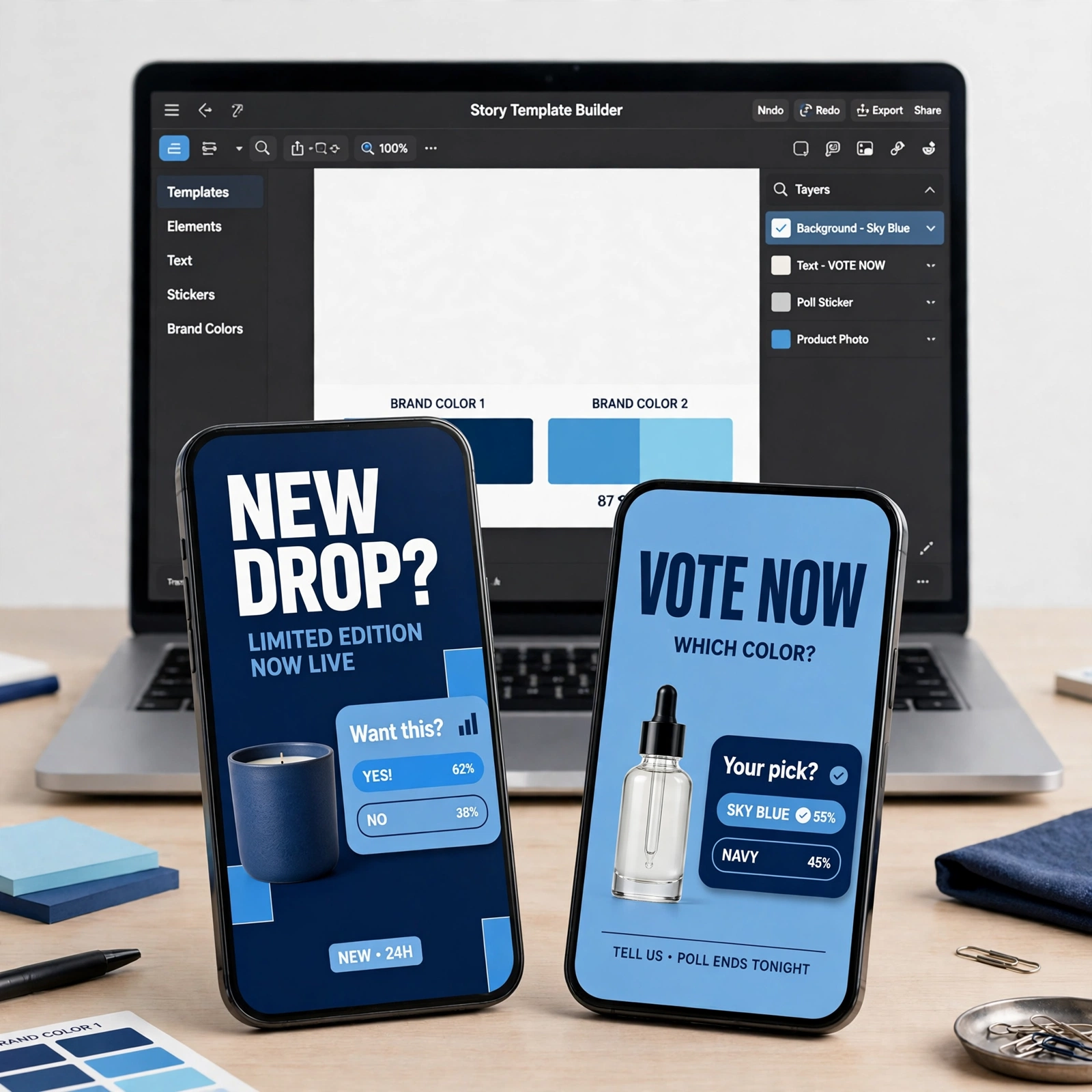
Stories and short-form video covers are glanced at quickly, mostly on phones. Text has to stay readable at small sizes, and templates should leave room for native elements such as links, polls and stickers.

For Reel covers, important titles should sit inside the safe areas that stay visible in profile grids and other placements. A business can also use different cover families for educational videos, products and announcements while keeping one shared typography and colour system.

Campaigns & Content

Everyday posts and campaign posts can feel different — without drifting apart.

Social Media Campaign Branding

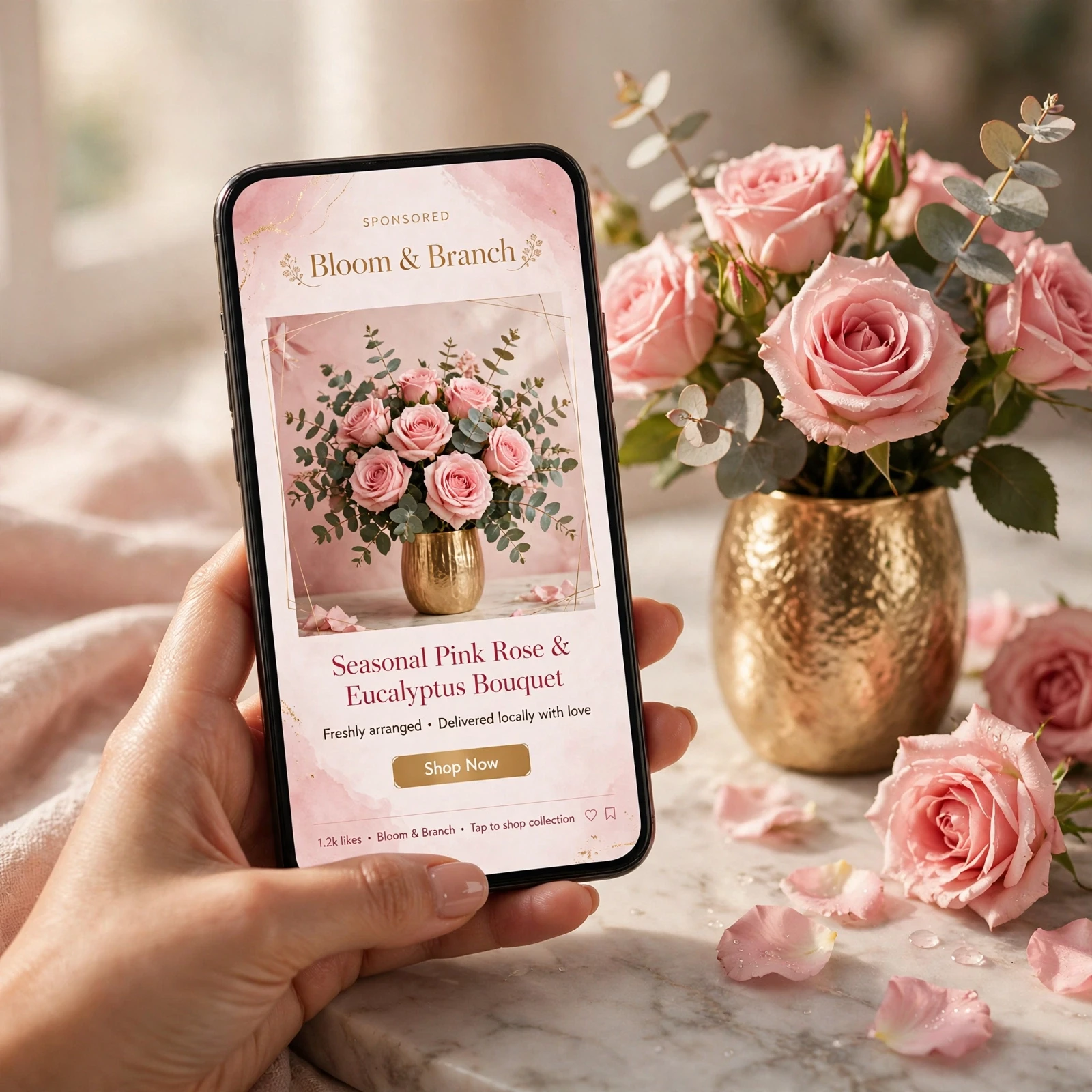
A launch, event, seasonal promotion or limited campaign may need a stronger visual moment than everyday content. Social media campaign branding can introduce a temporary graphic device, a campaign lockup, a colour emphasis or a key visual while staying visibly connected to the parent brand.

Depending on scope, a campaign system may include launch posts, countdown graphics, Story assets, announcement templates, ad creatives and promotional covers. How much variation it gets should reflect the length and importance of the campaign, rather than creating a separate mini-brand for every offer.

Product and Ecommerce Social Design

Product brands often need the social system to work with packaging, product photography and variant colours. The graphics should support the product, not cover it up.

Reusable formats can include product features, comparison graphics, launch teasers, restock notices, ingredient or material callouts and promotional posts. When a range has several variants, the system can define how variant colours or product labels appear while keeping the parent brand intact.

Service Business Social Branding

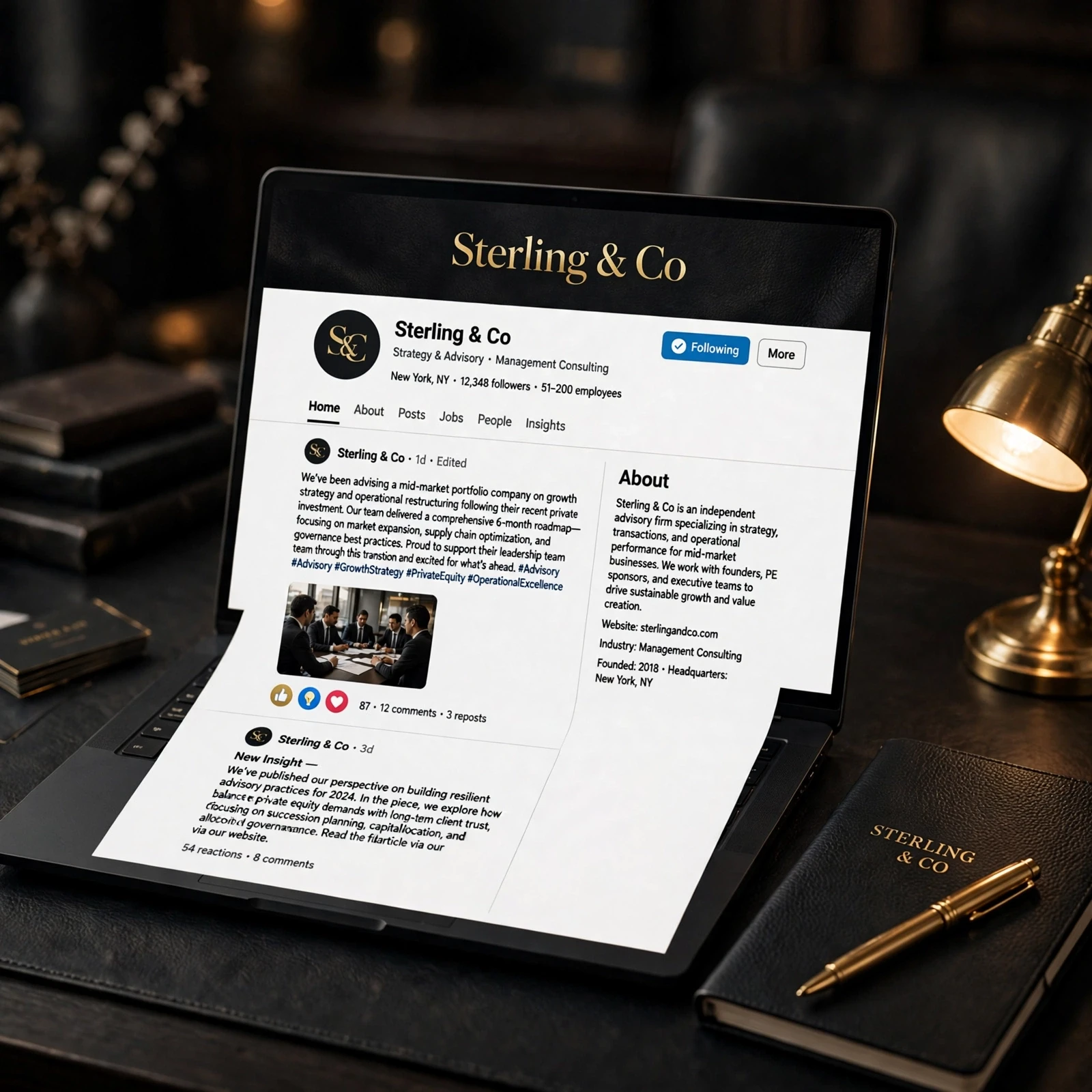
Service companies may have no physical product to photograph, so typography, diagrams, project work, people and information design carry more weight. A consultant may need editorial carousels. A technical company may need process graphics. A creative studio may lean on project details and portfolio material.

The system should make an abstract service easier to understand, without falling back on unrelated stock photography or generic motivational posts.

Personal Brand Social Design

Founders, consultants and creators often need a visual system that frames the person instead of competing with them. Photography, quote layouts, educational carousels and recurring cover styles can build familiarity while leaving room for a more human tone.

Personal brand social media design can be polished without looking like a corporate account. Where the balance sits depends on the audience and how much of the content is personality-led.

Style Guide

Write the rules down, so the design survives handoff.

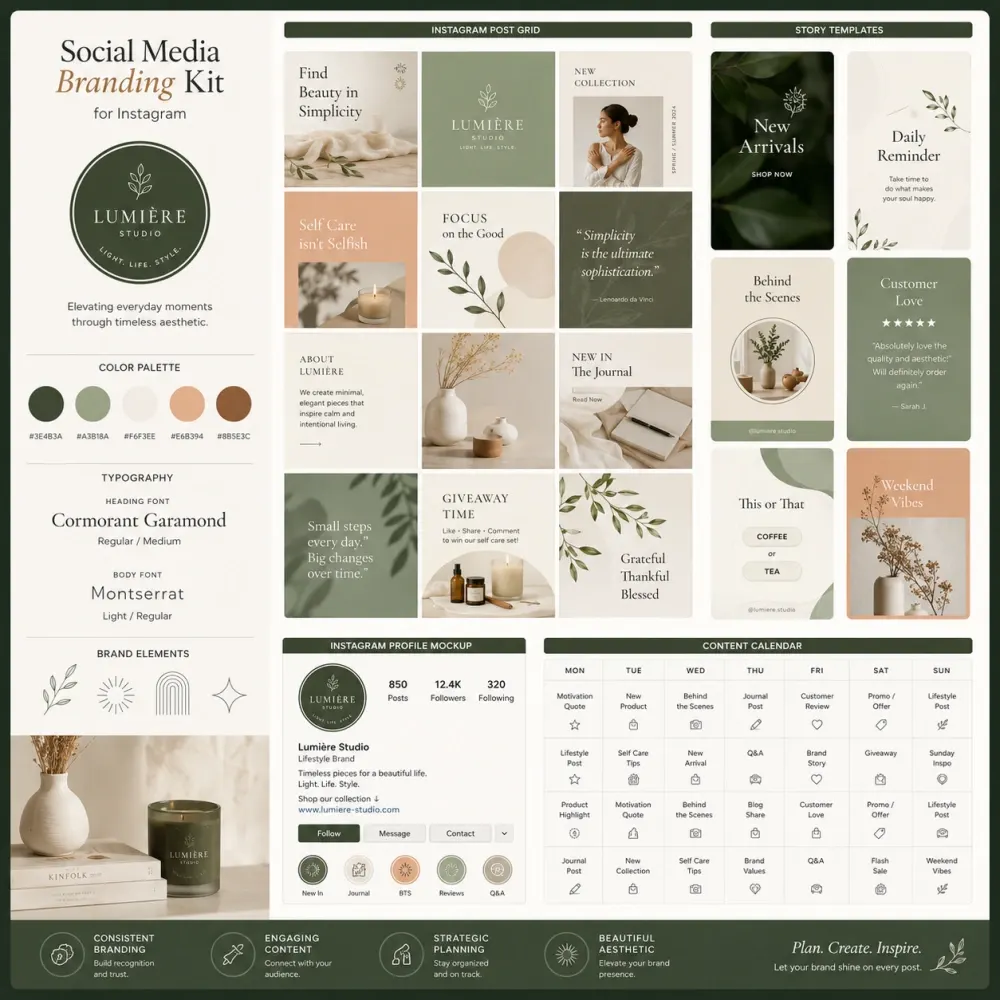
A social media style guide can be compact and practical. It may record the approved colours, typography, logo usage, spacing, image treatment, graphic elements, icon style and examples of the recurring content categories.

For teams working with several designers, freelancers or content creators, this reference cuts out guesswork. It can also show the combinations to avoid — too many type styles, corner radiuses that change from post to post, or unrelated gradients that were never part of the identity.

The guide should set boundaries without stopping the team from making new content. That is one reason social media branding works best when it includes practical usage rules, not only finished graphics. The aim is not to dictate the exact position of every headline for ever — it is to define enough of the visual grammar that new content still feels related.

Photography and image direction

Photography has a big effect on how consistent a feed feels. Even strong templates can look disconnected if every image uses different lighting, crops and background treatment. Where it helps, the social branding system can include image-direction guidance on framing, overlays, product positioning or cropping. Professional photography production itself is a separate service unless specifically included.
Illustration, Icons and Graphic Elements

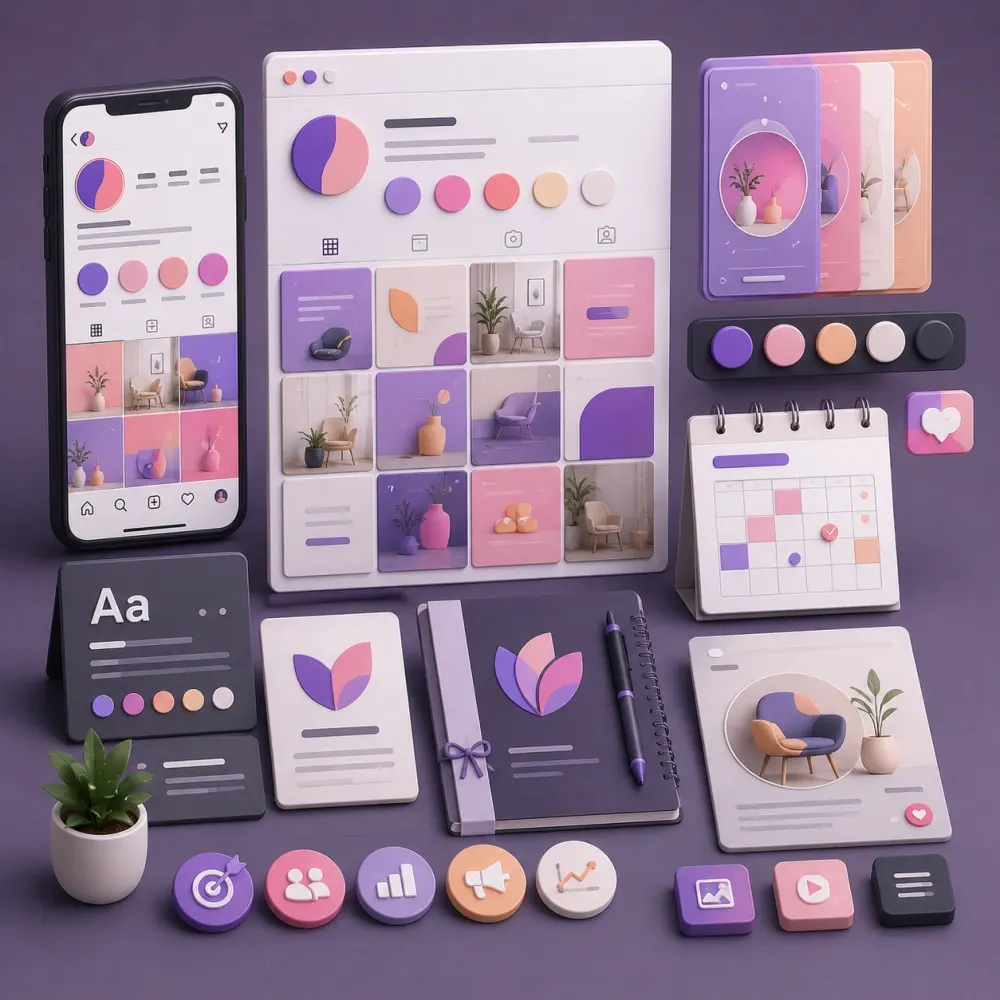
Some brands need more than typography and photography. Illustrations, icons, patterns, frames or graphic shapes can become useful recognition devices when they are used with a clear purpose.

We decide where supporting graphics help and when they should stay out of the way. If every post is packed with decoration, the system turns noisy. If the elements appear too rarely, they never develop a recognisable role.

Mobile-First Social Design

Most social content is seen on a phone, so designs should be judged at realistic viewing sizes. Secondary copy that looks fine on a desktop monitor can turn unreadable in a feed. Detailed charts may need simplifying. Important offer information should never get lost inside decorative elements.

Mobile-first does not mean every post can hold only a few words. It means hierarchy, contrast and spacing should still work in the place where the content is actually consumed.

What We Avoid

A social brand system has to survive real publishing — not just a portfolio mockup.

A perfectly arranged feed grid can look impressive in a presentation, but real accounts change. New products launch, team members join, campaigns interrupt the normal schedule, and some content works better as video than as a static post. A rigid pattern that needs every third tile to carry a particular background quickly becomes hard to maintain.

We prefer recognition that comes from repeatable visual language rather than an artificial grid. That gives the team freedom to publish when needed without breaking the whole design concept.

What social media branding does not guarantee

Consistent design can improve clarity and brand recognition, but it cannot guarantee followers, reach, engagement, leads or sales. Those outcomes depend on the content, audience, distribution, offer, media spend, timing and platform behaviour. We never present a branding package as a guaranteed performance result.

Content Categories Give the System a Practical Structure

A social brand becomes easier to maintain when the business knows which types of content keep reappearing. One account may publish educational advice, customer proof, product announcements and company news. Another may rely on case studies, founder commentary, event promotion and hiring updates. Treating those categories as design problems keeps the system useful long after the launch presentation.

We can give each recurring category its own layout family without stamping the category label on every post. Educational content might use a stronger reading hierarchy, while product content gives more space to photography. Testimonial graphics can put the quote and its source first, while announcements may need a faster headline structure. The connection comes from shared brand rules, not from forcing every topic into the same arrangement.

Design the Handoff for Real Production

A template system is only as good as what happens after delivery. If the internal team regularly changes offers, images and headlines, the files need to make those actions straightforward. If an agency or designer will carry on producing content, the system can allow more advanced components and layout variation.

We confirm the expected workflow before preparing editable files. Font availability, image licensing, platform dimensions and software access can all affect how the final system is packaged. Where a template depends on a paid font, stock image or third-party asset, those licensing requirements should stay visible instead of hiding inside the design. A practical handoff gives the next person enough structure to continue the brand without reverse-engineering the original artwork.

Our Process

From the brand assets you have to a system your team will actually use.

01

Brand Review

We review the logo, colours, typography, current profiles and the visual problems the new system needs to solve.

02

Content Mapping

We identify the recurring content categories, the platforms and the practical editing needs before any template is designed.

03

Visual Direction

We explore typography, image treatment, supporting graphics and layout behaviour around the existing identity.

04

Core Templates

Approved directions become reusable post, carousel, Story or cover families, according to the agreed scope.

05

Platform Adaptation

Assets are adjusted for the channels in the project, instead of stretching one format into another.

06

System Refinement

Feedback is applied to the template family as a whole, so individual assets stay visually compatible.

07

Style Guidance

Key visual rules and practical usage notes are written down when a guide is part of the package.

08

Editable Handoff

Final exports and editable files are organised in the agreed format for the client or internal team.

Deliverables

What a social media branding project can include.

The exact mix depends on the platforms, the content categories, and how the business plans to produce content after handoff.

Social Visual Direction
Profile Image Treatment
Page / Channel Covers
Feed Post Templates
Carousel Templates
Story Templates
Reel Cover System
Highlight Covers
LinkedIn Graphics
YouTube Assets
Campaign Creatives
Social Style Guide
Editable Source Files
Export-Ready Assets
Social Media Branding Pricing

Pick a one-time brand system around the content your team really makes.

These are starting design fees in USD for social media branding — not monthly account management. The final figure can change when the number of platforms, templates, campaign assets or custom illustration needs grows.

Focused social setup

Social Brand Starter

$99starting

For a business that needs a small but consistent visual kit for one primary platform.

  • 1 primary platform
  • Profile image treatment
  • 1 cover/banner where applicable
  • 6 reusable post templates
  • 3 Story or vertical templates
  • Basic color/type usage direction
  • Up to 3 revision rounds
  • Editable source files
Choose Starter →
Expanded multi-platform kit

Multi-Platform Social Identity

$199starting

For teams that need a wider library of branded content tools across several social channels.

  • Up to 5 platforms
  • Profile and channel-cover assets
  • 16 reusable post templates
  • 8 Story / vertical templates
  • 3 carousel layout families
  • Reel / video cover system
  • 5 campaign starter graphics
  • Expanded social style guide
  • Up to 6 revision rounds
  • Organized editable handoff
Choose Multi-Platform →

Pricing note: These packages cover design and the listed deliverables. Copywriting, content calendars, account management, scheduled posting, paid-media management, professional photography, video production, motion graphics, custom illustration, paid stock assets and third-party software are separate unless specifically included in the quotation.

Standalone social design starting prices

ServiceStarting PriceTypical Scope
Profile Branding Kit$149Profile image treatment + one platform cover/banner
5 Social Post Templates$199Five reusable static post layouts
10 Social Post Templates$349Ten reusable layouts for recurring content
Carousel Template Set$199Cover, content and closing slide system
Story / Reel Cover Set$149Five vertical Story or cover layouts
Social Media Style Guide$199Compact visual usage guide for social content
Campaign Visual Set$299Five related static campaign graphics
Why DesignBub

Build the system for the people who will keep using it.

Social content often turns inconsistent because brand guidelines and everyday production are treated as separate problems. The identity may look strong in a brand book, yet nobody has defined how it should behave in a carousel, a Story, a campaign graphic or a video cover.

DesignBub joins those layers through social media branding services that focus on reusable design rather than one-off decoration. We translate the wider brand into repeatable social tools and think about who will use them after delivery. Templates for an in-house designer can allow more creative freedom than templates meant for a founder who only wants to swap text and images.

We also keep the scope visible. Branding, content strategy, account management, paid advertising and motion production can support one another, but they are different services. Clear boundaries make the final package more useful — and future add-ons easier to plan.

Social Media Branding FAQs

What businesses ask before building a reusable social design system.

These answers draw the line between visual branding and account management, and make clear what the packages actually include.

You receive the finished profile and cover assets, the reusable template families agreed in scope, and the editable source files, so your team can keep producing content in the same visual language. Where a style guide is included, it documents the colours, typography, spacing and usage rules behind the system.

Yes, when we know that is who will use them. We agree the editing tool and the skill level of the person doing the work before we build anything, so a founder or marketing coordinator gets clear boundaries and simple image and text swaps rather than a complex component system.

Yes. A focused kit for one primary platform is often the sensible starting point. The system is built so it can grow — the same visual rules can later be extended to other channels without redesigning everything from scratch.

No, the packages on this page are design-focused. Caption writing, content calendars, scheduling and account management are separate services that can be quoted alongside the branding work if you need them.

We flag that before template production begins. Sometimes the existing logo and colours are enough to build a working social system; sometimes the identity needs strengthening first. Either way, you will know before we start designing templates, not after.

Make your next hundred posts feel like one brand.

Start with the platforms you use, the content you publish most often, and the people who will run the system. Our social media branding services can then be shaped around those real production needs — turning them into a practical package instead of a folder of disconnected graphics.

WhatsApp DesignBubChat with us now