Hook-Led Ad Concepts
Several opening angles for one offer, so a campaign can test which line actually stops the scroll.
DesignBub builds short, scroll-stopping AI ad creatives that put your product, your offer and your call to action in front of the right people, in several testable variations, formatted for every placement you run.
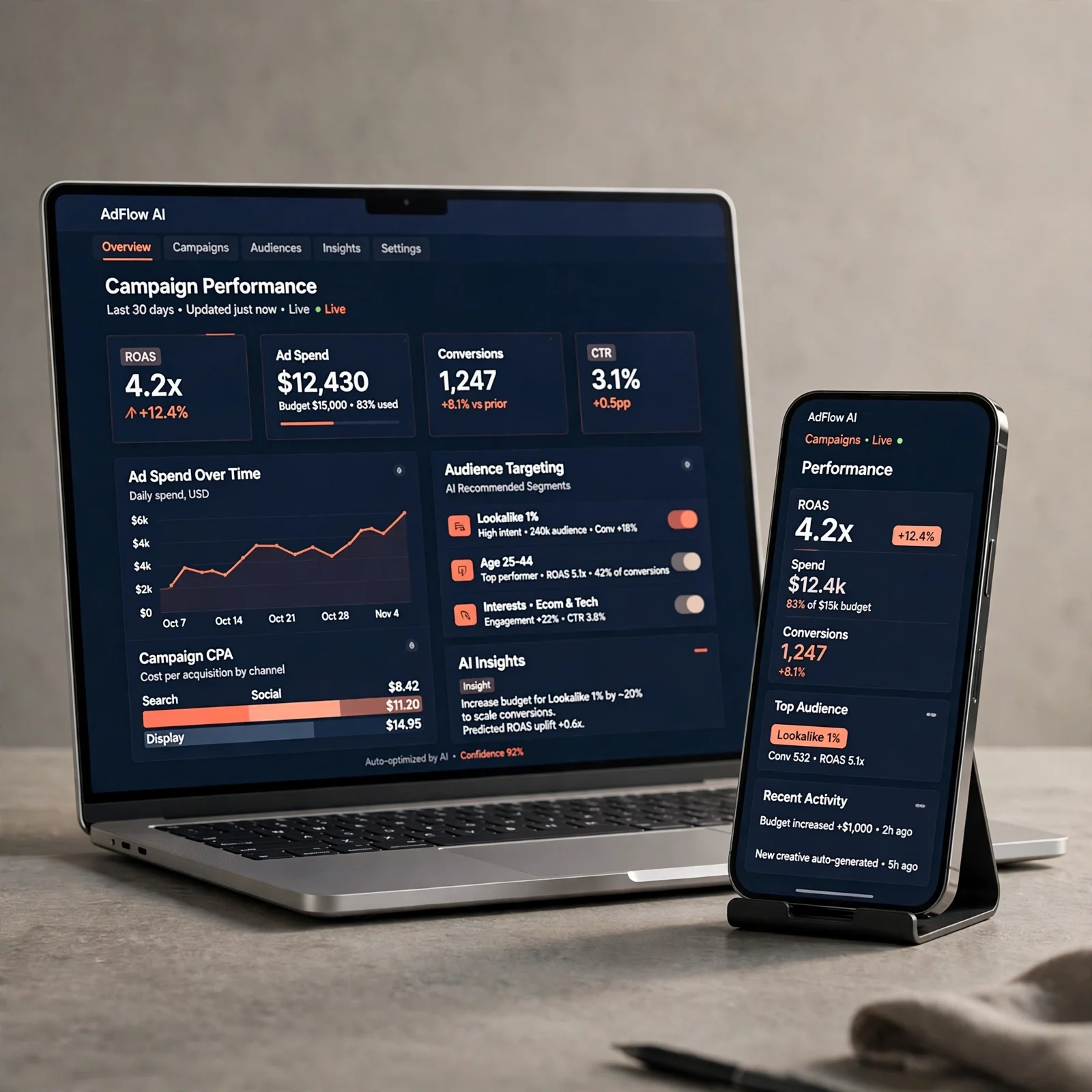
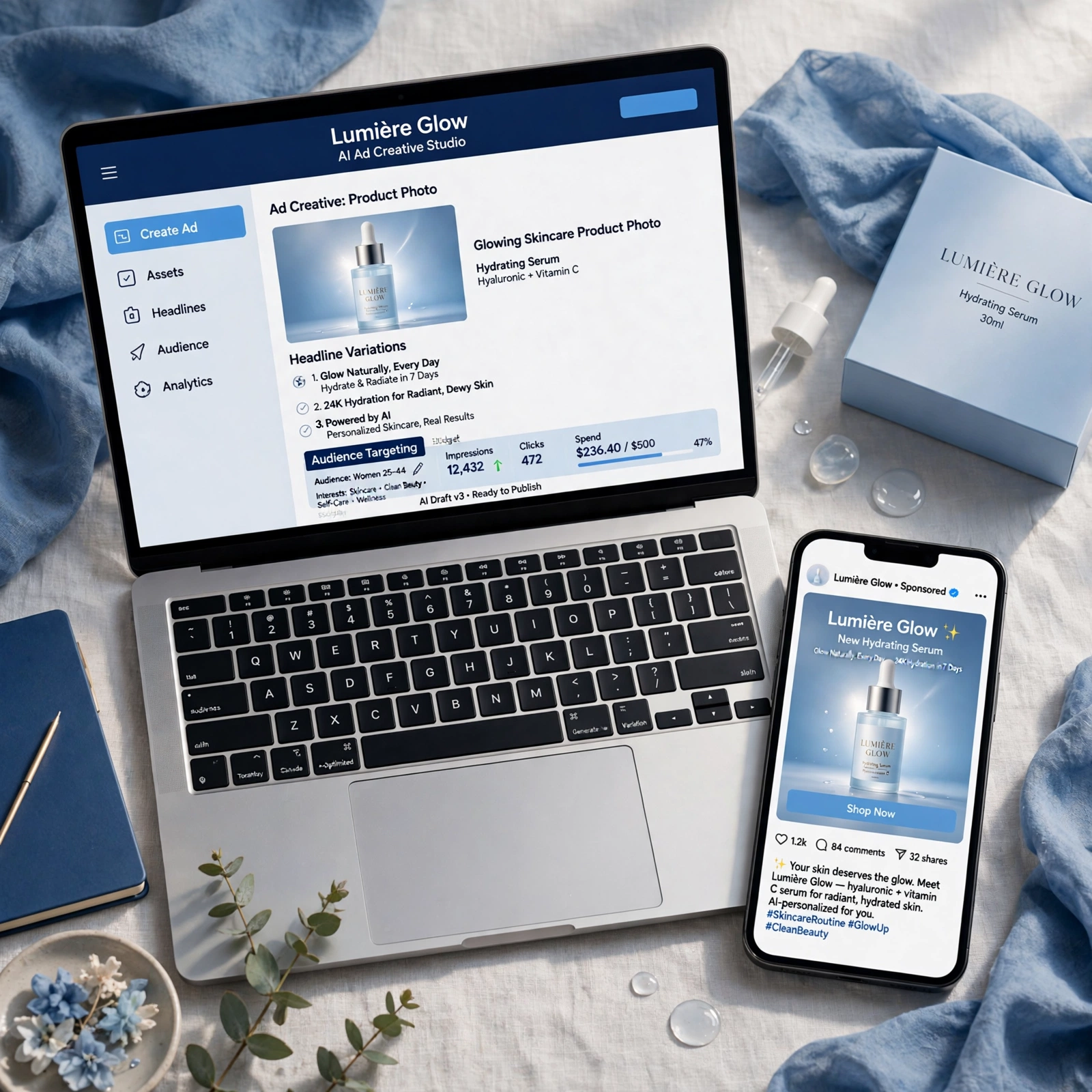
Hook, product shot and call to action, built as a set of variations your campaign can test.
These are sample ad concepts created to show the style and range of our AI ad work, not work for real clients.

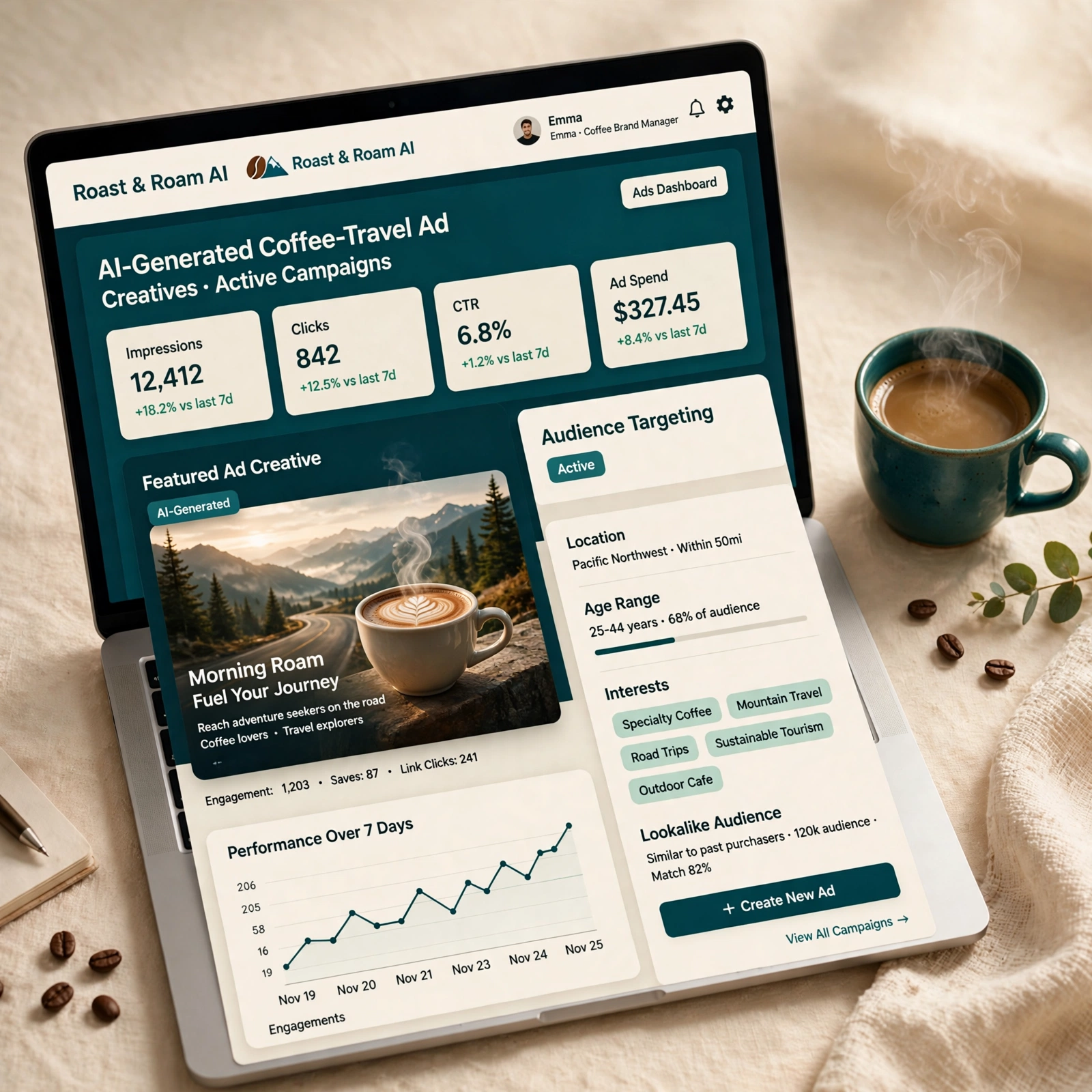
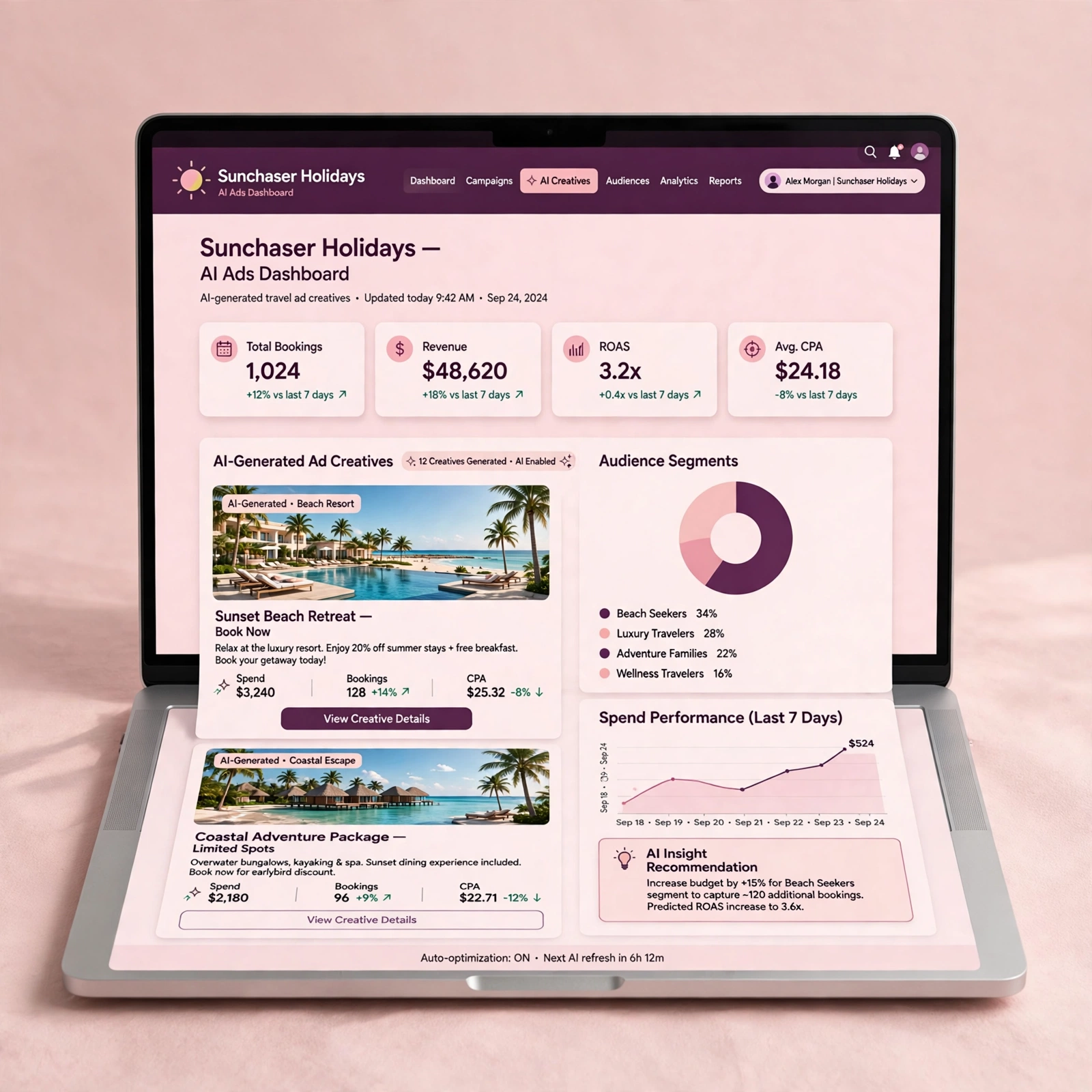
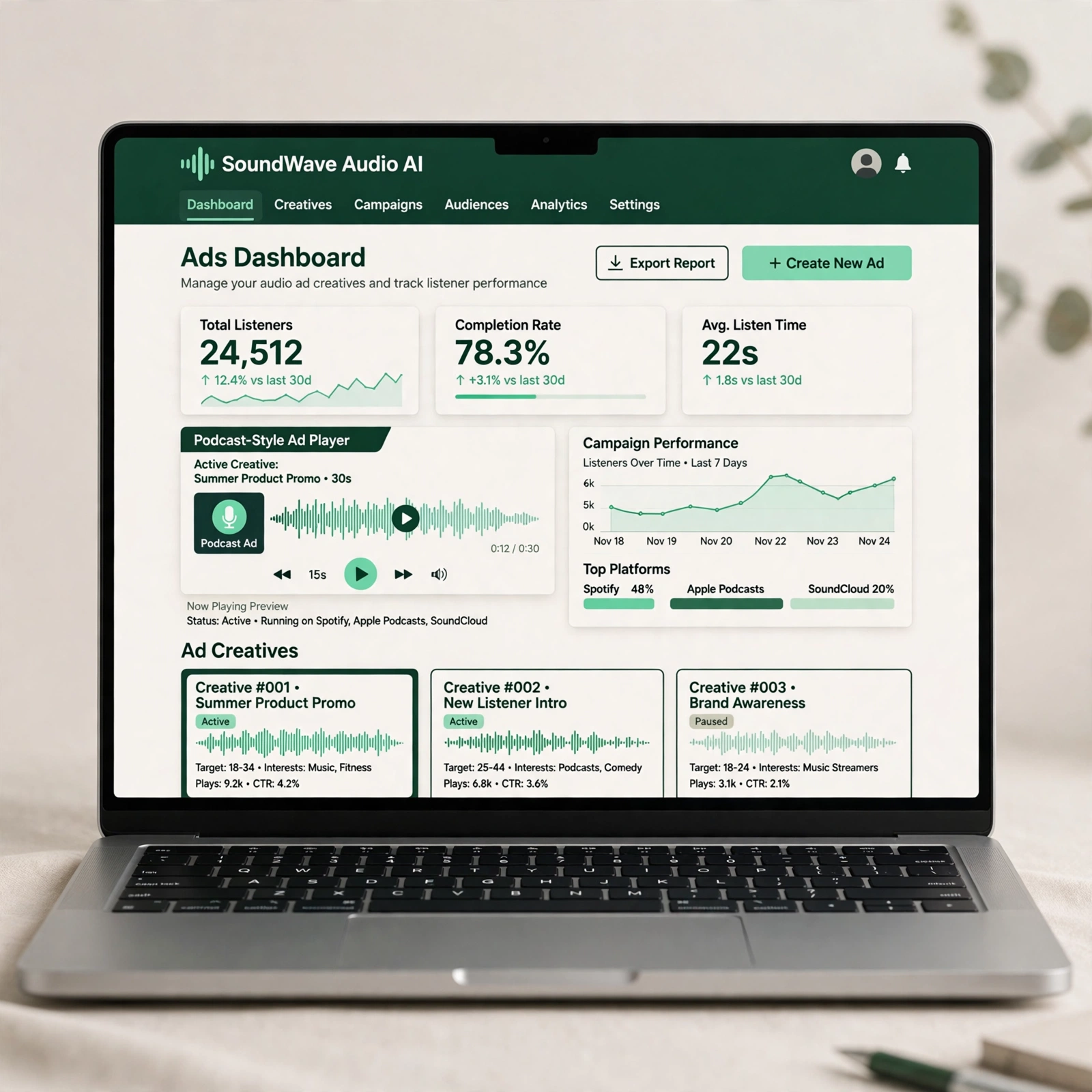























Paid feeds move fast, and most ads are skipped before the product ever appears. That is why an AI ad starts with the opening line, the first image and the reason to keep watching, rather than with a clever visual that arrives too late. We shape the hook around the person you want to reach, the problem they recognise and the offer that makes the next step worth taking.
DesignBub creates AI ad creatives for ecommerce brands, service businesses, apps and startups that need fresh paid creative without booking a full shoot for every idea. We develop the angle, generate the scenes, keep your real product photography at the centre, add captions and a clear call to action, then deliver the ad in the sizes each placement needs.
We stay honest about what creative can and cannot do. A strong ad can earn attention, explain the offer clearly and give people a reason to click. It cannot guarantee clicks, conversions, sales or a return on ad spend, and we would rather say that plainly than promise numbers no designer can control.
No two campaigns need the same ad. A launch needs curiosity and a reveal. A sale needs the offer up front. A retargeting ad needs a reminder, not a re-introduction. We plan each creative around the job it has to do, then choose the scenes, length and format that fit that job.
Our AI ads can cover product launches, limited offers, app installs, lead generation, seasonal promotions, retargeting and awareness. Every ad is built from your brief, your brand assets and the platform rules of the placement it will run in, so the same idea can arrive as a vertical story, a square feed ad and a short search-friendly cut without losing the message.
Several opening angles for one offer, so a campaign can test which line actually stops the scroll.
Ads that keep your real product photography front and centre, with generated scenes and motion built around it.
Vertical, square and landscape versions of one approved ad, reframed for each placement instead of cropped.
Short reminder ads for people who already visited, viewed or added to basket, with a clear reason to come back.
We start with four questions: who is this for, what do they care about, what are we offering, and what should they do next. The answers shape the hook, the visuals and the call to action, and they keep the ad from becoming a pretty clip with no point.
A skincare launch might open on the texture of the product and the feeling of the routine. A fitness app might open on the moment someone decides to start. A coffee subscription might open on the morning it improves. Each angle leads to different scenes, different pacing and different wording, and that is the point: the concept does the selling, the generation just brings it to life.
We write hooks as short, specific lines rather than slogans. A question the viewer has already asked themselves, a problem they recognise, a result they want, or a bold statement about the product, delivered in the first frame with the visual to match. If the hook needs explaining, it is too long.
After the hook, the ad has to deliver on its promise quickly. We show the product, name the benefit in plain words, and close with one clear action. Captions carry the message for viewers watching on mute, and the offer appears early enough that even a three-second view understands what is being sold.
Generated imagery can drift: a label can change spelling, a bottle can change shape, a colour can shift between frames. That drift is a small flaw in a mood film and a real problem in an ad, where the image is the promise. So for accuracy-sensitive ads we anchor every important shot on your genuine product photography, renders or supplied footage.
AI then works around the real asset: a lifestyle background, a soft camera move, steam, light or a supporting scene that makes the product feel alive without redrawing it. The customer sees the true item, and the ad still has the movement and polish that a still image alone cannot give.
A story ad is watched vertically, full-screen, often with sound off, and it disappears in seconds. A feed ad competes with friends, news and other brands in a square or portrait frame. A search or display placement may need a landscape cut with the message readable at a glance. We build the ad for the placement, not for a generic master file.
That means larger type and tighter framing for vertical, a clear product shot for the feed, and a version of the call to action that survives cropping and platform overlays. One approved direction can become a small family of placements, each one composed properly rather than squeezed into the wrong shape.
A subscription, a bundle, a service with a few steps or a product with a feature people misunderstand cannot be sold with a single image. In these ads we use a short, structured sequence: the problem in one line, the product doing its job, the offer in plain numbers, and the next step.
Motion graphics handle prices, steps and feature callouts more reliably than generated text inside a scene, so we keep those elements crisp and on-brand. The generated scenes provide the feeling and the context; the typography provides the facts. The viewer leaves knowing what it costs, what they get and what to do.
For ecommerce we build ads around real use: the serum on a bathroom shelf in morning light, the coffee bag opened at the kitchen table, the meal kit unpacked on a worktop, the headphones worn on a commute. Generated environments give us those moments without a location shoot, while the real product stays recognisable in every frame.
We also plan the ad around the shopping journey. A cold audience needs the product and the promise. Someone who viewed the product page needs the reason to return, perhaps the offer, the guarantee or the review. Someone who abandoned a basket needs a short nudge, not another full introduction. Different moments, different ads, one consistent brand.
Presenter-led ads suit offers that benefit from a human voice: a founder explaining why they made the product, a short demonstration, or a simple message to camera. We write the lines for speaking, keep them short, and pace them so the presenter sounds natural rather than read aloud.
We treat likeness and voice with care. A project that uses a real person's face or voice needs that person's permission, and we do not create ads that pretend a real person endorsed something they did not. When a synthetic presenter is the right choice, we keep the claims modest and the disclosure clear, so the ad earns trust instead of borrowing it.
We break the ad into short shots, each with one job: the hook, the product, the benefit, the offer, the call to action. Each shot gets its own direction for subject, setting, framing and movement, and we generate options for the shots that matter most so we can choose the strongest take.
Working shot by shot also keeps the ad fixable. If one scene feels wrong, we replace that scene instead of regenerating the whole ad. The edit then sets the rhythm: quick cuts for energy, a held shot when the product deserves a moment, and a clean finish on the call to action.
Image-to-video work starts from approved material: a pack shot, a lifestyle photograph, campaign key art or a render. We add a slow camera move, a shift in light, steam, fabric movement or a gentle environmental motion, so a still image gains the life of video without losing the composition you approved.
Subtle movement usually works better than dramatic animation here. A quiet push-in on the product feels premium and keeps labels readable; a wild camera move can distort the very details the customer needs to see. We review every animated frame and reject any clip that changes the product.
We design ad sets so the differences mean something. Change the hook and keep the rest steady, and you learn which opening works. Change the offer framing, and you learn what motivates your audience. Change the length, and you learn how much time the message really needs. Random differences teach nothing.
We keep a simple record of what changed between versions, so the results are readable: which hook, which product shot, which call to action. Creative testing is a slow, honest process, and a good ad set is built to make the next round of ads better, not just to fill a campaign with more files.
We cut ruthlessly. Dead air goes, slow openings go, and any scene that does not move the message forward goes. Captions are timed word by word so a muted viewer follows the argument, the brand typeface stays consistent, and the call to action lands on a clean final frame with room for the platform's own buttons.
Colour treatment pulls separate generations into one consistent look, so a set of variations feels like one campaign rather than a collection of unrelated clips. Sound is shaped the same way: music or voice sits under the message without drowning it, and the mix is checked on a phone, because that is where almost every viewer will meet the ad.
Before generation we set visual rules: the colour mood, the lighting, the lens feel, the framing and the way type and product appear on screen. Reference images and your brand assets reinforce those rules, so each variation keeps the same personality even when the hook or the scene changes.
Consistency is not sameness. Each ad can open differently and show a different moment, but the viewer should recognise the brand in the first second. When a brief needs exact character continuity across many scenes, we say so early and suggest a hybrid approach rather than promising something generation cannot reliably deliver.
Every claim in an ad needs a source: prices, discounts, guarantees, comparisons and results should come from you or from evidence you can stand behind. We write ad copy carefully and flag anything that sounds like a promise the business cannot keep, because an ad that overpromises costs more in refunds and trust than it gains in clicks.
Licensing matters too. Your logos, photography and product imagery should come with the rights to use them in paid placements, and any music, voice or stock we add needs terms that cover commercial advertising. We confirm the terms before production, not after the ad is already running.
We do not make ads that fabricate endorsements, impersonate real people without permission, or present fictional scenes as documented fact. A generated lifestyle moment is fine as illustration; a fake testimonial, a fake review or a fake before-and-after is not, and we will not build one.
If an ad uses a recognisable person or a synthetic voice, the right permissions need to exist, and disclosure should follow the platform's rules. Honest creative is also better creative: customers who feel respected by an ad are far more likely to trust the brand behind it.
Generative models can still shift faces, garble small text, change packaging between frames and ignore physical logic. Long, complex actions are harder to control than short shots, and exact continuity of a person or a product across many scenes is not something to promise lightly.
We plan around those limits: shorter shots, real product assets where accuracy matters, motion graphics for text and prices, and a human review of every frame before delivery. And we do not add AI to a frame just to sound modern. If a simple cut of your real footage sells the product better, we will say so.
First, the brief: your audience, offer, product assets, brand guidelines and the placements you plan to run. We agree the hook angles and the number of variations before any generation begins, so the scope is clear on both sides.
Next, concept and storyboards: short scripts and frame directions for each variation, approved by you. Then generation and selection, where we create options for the key shots, keep the strongest takes, and anchor the product on your real assets. Finally, the edit: captions, call to action, colour, sound and exports in every format the campaign needs, followed by your review and revisions within the agreed scope.
These AI ads packages cover hook development, product-led creative and test-ready variations. Campaigns needing many hooks, exact pack accuracy or licensed music may need a custom quote.
For a focused social clip, teaser or single-message visual concept.
For a polished ad, product promotion or multi-scene campaign asset.
For a longer brand piece, product story or visually connected campaign film.
Starting prices assume a defined brief and usable source assets where accuracy matters.
Pricing note: Standard generation and editing within the agreed scene count are included. Premium stock, paid music, specialist voice or avatar licenses, cloned-voice work, unusually heavy regeneration, 3D production, live filming, paid talent and third-party platform costs are separate when required. Pricing does not include advertising spend and does not guarantee campaign performance.
Depending on the scope, an AI ad project can include hook development, short scripts, storyboard frames, generated scenes, product-led creative, captions, voice or music treatment, logo animation and exports in the aspect ratios your placements need.
You also receive the variation set we agreed: different hooks, lengths or offer framings, each one a complete, upload-ready file. We name the files clearly, note what changed between versions, and keep the source direction on file so a future round of ads can build on what worked.
We treat AI as a production tool, not a selling point. The work that matters is the hook, the product shot, the offer and the call to action, and we judge every scene against those four things before it reaches you.
We also keep the process plain: a clear brief, approved concepts, honest notes about what generation can and cannot do, and files delivered in the formats your campaign actually needs. If an idea will not work as an ad, we would rather reshape it with you than deliver a polished clip that sells nothing.
These answers cover hooks, variations, placements, product accuracy and what ads can realistically achieve.
A finished ad includes the hook and script direction, generated scenes, your real product assets where accuracy matters, captions, on-screen text, a call to action and exports in the formats your placements need. The exact scope, including how many variations, is agreed in the brief.
That depends on the package and the campaign. A typical set includes a few variations of one approved direction, changing the hook, the offer framing or the length so the campaign can test what works. Each variation is a complete ad, not a rough draft.
Yes. We prepare vertical, square and landscape versions for the placements you plan to run, with safe zones, caption placement and call-to-action framing adjusted for each platform rather than simply cropped from one master file.
For accuracy-sensitive products we anchor the important shots on your genuine photography, renders or supplied footage, and use generated scenes around them. Generated imagery alone can drift on labels, proportions and small details, so we do not rely on it where the product must stay exact.
No. Good creative can earn attention, explain the offer clearly and give people a reason to click, but sales depend on the offer, the price, the landing page, the audience and the campaign itself. We design ads to support performance, and we will not promise results no creative team can control.
Send us your product, your offer and the placements you plan to run. DesignBub will shape the hooks, build the variations and deliver ad creatives that are ready to test.