Approved Knowledge
Every answer comes from material your business has signed off: service pages, price lists, policies and FAQs. Nothing is answered from guesswork, and outdated information is removed rather than repeated.
We build chatbots that answer from your approved business information, collect the details you need from each visitor, and hand the conversation to a real person the moment it goes beyond what the bot should handle.
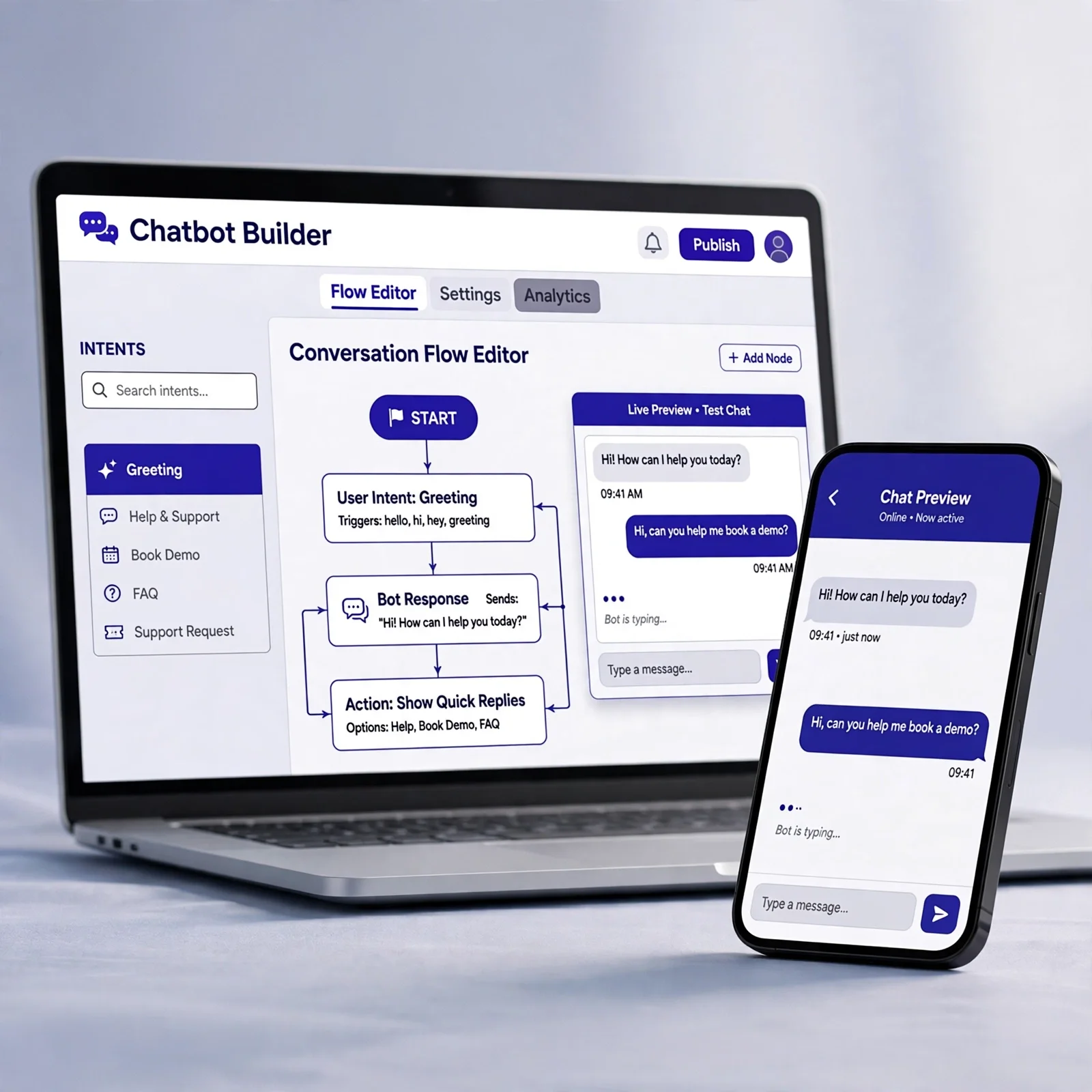

A chatbot trained on your services, prices, policies and FAQs, so visitors get correct answers and your team only steps in where a person is needed.

























A good chatbot is not a novelty sitting in the corner of a website. It is the first conversation a visitor has with your business, and it should answer the way your best team member would: accurately, politely, and only about things the business has actually approved.
DesignBub builds AI chatbot development around your own material — your services, prices, delivery rules, opening hours and frequently asked questions. The chatbot draws its answers from that approved information, so it does not invent offers, promise what you cannot deliver, or guess at policies.
When a visitor asks something the chatbot cannot verify, wants to negotiate, or sounds unhappy, the conversation moves to a person with the full chat history attached. Nobody has to repeat themselves, and nobody is left talking to a machine that has run out of answers.
The result is a website that responds at midnight as helpfully as it does at midday, while your team spends its time on the conversations that genuinely need a human.
Every answer comes from material your business has signed off: service pages, price lists, policies and FAQs. Nothing is answered from guesswork, and outdated information is removed rather than repeated.
Visitors write the way people write — short, misspelled, in full sentences or in fragments. The chatbot interprets the intent behind the message and responds in plain language, instead of forcing people through rigid menus.
When a visitor shows buying intent, the chatbot asks for the details that matter — name, contact, what they need and when — then records them neatly so your team can follow up without chasing a half-finished chat.
Escalation rules decide when a person takes over: uncertainty, complaints, pricing negotiations and anything sensitive. The handover carries the full conversation, so the customer never starts again from the beginning.
Each chatbot is shaped around the questions your visitors ask, the information they need, and the point at which a person should take over.
A chat widget on your website that greets visitors, answers approved questions and guides them towards booking, buying or getting in touch.
WebsiteStructured WhatsApp conversations that collect enquiry details, answer common questions and pass warm leads to your team with the chat history attached.
WhatsAppConversations designed to qualify interest gently — asking the right questions in the right order, then recording complete, usable lead details.
LeadsChatbots that check availability, explain options, collect booking details and confirm appointments without your team answering the same questions all day.
BookingBots that answer where-is-my-order questions, explain delivery options and collect the details needed to resolve an order query quickly.
OrdersA chatbot trained on your frequently asked questions, so routine queries get accurate answers instantly and your inbox stays clear for the unusual ones.
FAQsChatbots that greet and help visitors in more than one language, using approved translations so nothing is lost or invented in translation.
LanguagesA first point of contact that understands the problem, gathers the right context and routes the conversation to the right person or team.
TriageGuided conversations that narrow down your range — asking about needs, budget and preferences, then pointing to the products that genuinely fit.
Guided SellingOngoing refinement of approved answers, new questions and escalation rules, so the chatbot improves as your business and your customers change.
TrainingA chatbot is only as reliable as the information behind it. We build your chatbot’s knowledge from your website, brochures, price lists, policy documents and the answers your team already gives every day. Each approved answer is written in your tone of voice, checked against the real facts, and kept in one place so updates happen once and reach every conversation. When your prices or policies change, the chatbot changes with them — it does not keep repeating last year’s offer.
We also decide what the chatbot must never answer. Anything unapproved, uncertain or commercially sensitive is routed to a person instead of guessed at, which is what keeps visitors trusting the answers they do receive.
Visitors trust a chatbot that says “let me check with the team” far more than one that confidently invents a delivery date. Every answer your chatbot gives is tied to approved material, and anything outside that material triggers a clear, polite handover rather than a made-up reply.
This matters most for prices, availability, guarantees and policies — the four areas where a wrong answer costs a sale or creates a complaint. Your chatbot quotes what you approved, in the words you approved, and stays quiet about the rest.
The moment a conversation needs a person, the chatbot steps aside gracefully. It tells the visitor what is happening, passes the full conversation history to your team, and notes what has already been asked so nobody repeats themselves.
Handover can happen on your website, in WhatsApp or by email notification, depending on how your team works. The visitor keeps one continuous conversation; your team picks it up already knowing the context.
Not every question deserves the same response. A complaint, a refund request, a pricing negotiation or an upset customer should reach a person quickly, while a simple opening-hours question can be answered instantly. We set escalation rules around the topics, words and situations that matter to your business.
Rules can also cover confidence: if the chatbot is unsure what a visitor means, it asks one clarifying question and then escalates, rather than guessing and getting it wrong.
Visitors do not all arrive through your website. Some message on WhatsApp, some on social media, some through a contact form. Your chatbot can work across the channels your customers actually use, with the same approved answers and the same handover rules everywhere.
One knowledge base, several front doors — so a customer gets the same correct answer whether they ask on your website at noon or on WhatsApp at midnight.
A chatbot that chats pleasantly but captures nothing is a missed opportunity. We design each conversation to collect the details your team needs to act: the visitor’s name and contact, what they are looking for, their budget or timeframe, and anything else that turns a chat into a genuine lead.
Details are recorded in a structured format your team can use immediately — no scrolling through transcripts to find a phone number buried in small talk.
Beyond answering questions, a chatbot can move a visitor forward: checking appointment slots, starting an order, or arranging a callback. Each step is confirmed with the visitor before anything is recorded, so nothing is booked or ordered by mistake.
After the conversation, the chatbot can trigger a confirmation message or a follow-up reminder, keeping the visitor informed without adding to your team’s workload.
Before launch, we test the chatbot the way your customers will actually use it: typos, slang, half-finished sentences, unusual questions and the awkward ones nobody planned for. Each test shows where answers need tightening and where handover should happen sooner.
Testing continues after launch too. Real conversations reveal the questions visitors genuinely ask, and the chatbot’s approved answers grow from that evidence — not from guesswork about what people might ask.
A chatbot earns its place by answering the questions each type of visitor actually asks, in the moment they ask them.
Answer delivery, returns and product questions while people are still browsing, and guide them to the right item before they leave the site.
Collect the details behind a quote request — what is needed, when, and where — so your team replies with a useful answer instead of more questions.
Explain availability, prices and what to expect, then collect booking details without phone tag or waiting for office hours.
Help with orders, deliveries and account questions using approved information, and pass anything unusual straight to your team.
Give accurate answers at midnight, on weekends and on bank holidays, and leave a tidy summary for your team to pick up in the morning.
Quote approved prices and explain what is included, so visitors comparing options get a clear, honest answer instead of silence.
Greet and help visitors in their own language, with approved translations that keep prices, policies and promises consistent.
Take the repetitive questions off your team’s plate, so the people answering chats spend their time on conversations that need judgment.
A basic chatbot that answers ten fixed questions can be set up quickly, and for some businesses that is enough. If your visitors ask the same few things and never stray, a simple rule-based bot does the job well.
A trained chatbot becomes worth building when questions arrive in natural language, answers depend on your real prices and policies, and conversations need to end in a booking, an order or a qualified lead. That is where approved knowledge, lead capture and handover rules earn their keep.
Custom does not mean complicated. Your chatbot can start with the twenty questions your team hears most, then grow as real conversations show what visitors actually need.
We recommend the smallest chatbot that genuinely helps your visitors, then extend it only when the evidence says it should do more.
Ask your team which questions arrive again and again — opening hours, prices, delivery, availability, returns. Those are the chatbot’s first approved answers, because they are the ones visitors genuinely need.
Decide what a good chat outcome looks like: a booking made, a lead captured, a question answered, or a clean handover to your team. Defining that outcome shapes every question the chatbot asks.
Price lists, policy pages, service descriptions and the replies your team already sends are the chatbot’s training material. The better that material, the more visitors can trust the answers.
Set the handover moments in advance: agree which topics always go to a person — complaints, refunds, negotiations, anything sensitive — and write the handover wording before launch, so no visitor is left waiting on a bot that has run out of answers.
Visitors abandon chatbots that ask ten questions before helping. We design conversations that answer first and collect details only when they are needed for the next step.
After launch, real conversations show what visitors actually ask and where the chatbot struggles. Regular reviews turn those chats into better answers, new topics and sharper handover rules.
That review habit is what keeps a chatbot useful a year after launch, instead of slowly drifting out of date while your business moves on.
Someone in your business needs to own the chatbot’s knowledge: updating prices, adding new services, removing old offers. We set up that process with you, so keeping answers current is a small regular habit rather than a forgotten chore.
Chatbots also carry running costs — messaging fees and AI usage rise with conversation volume — so we help you plan for the operating cost as well as the build, and keep it proportionate to the value the chatbot creates.
A first version that answers your twenty most-asked questions well is worth more than an ambitious chatbot that answers a hundred questions badly. Launch the small version, learn from real visitors, then add languages, channels and booking flows with confidence.
Each stage is a small, testable step — and each one is judged on real conversations, not on a demo.
We build the chatbot around your real conversations, then test it against the awkward questions before your customers ever meet it.
We gather the questions your team answers most, the information visitors need before buying or booking, and the moments when a person must take over.
Your approved material — services, prices, policies, FAQs — is collected, checked and written into clear answers in your tone of voice.
We map how chats should flow: greetings, clarifying questions, lead capture, booking steps and the exact words used when handing over to a person.
Handover triggers are defined for uncertainty, complaints, negotiations and sensitive topics, so the chatbot knows precisely when to stop.
The chatbot is built and connected to your website and chosen channels, with lead details flowing to your inbox or CRM in a usable format.
We test with typos, slang, half-questions and edge cases, tightening answers and handover points until the chatbot handles real visitors reliably.
After launch we review real conversations, add the questions visitors actually ask, and refine answers so the chatbot keeps improving.
Deliverables are chosen around the conversations your visitors have, not padded with features your chatbot will never use.
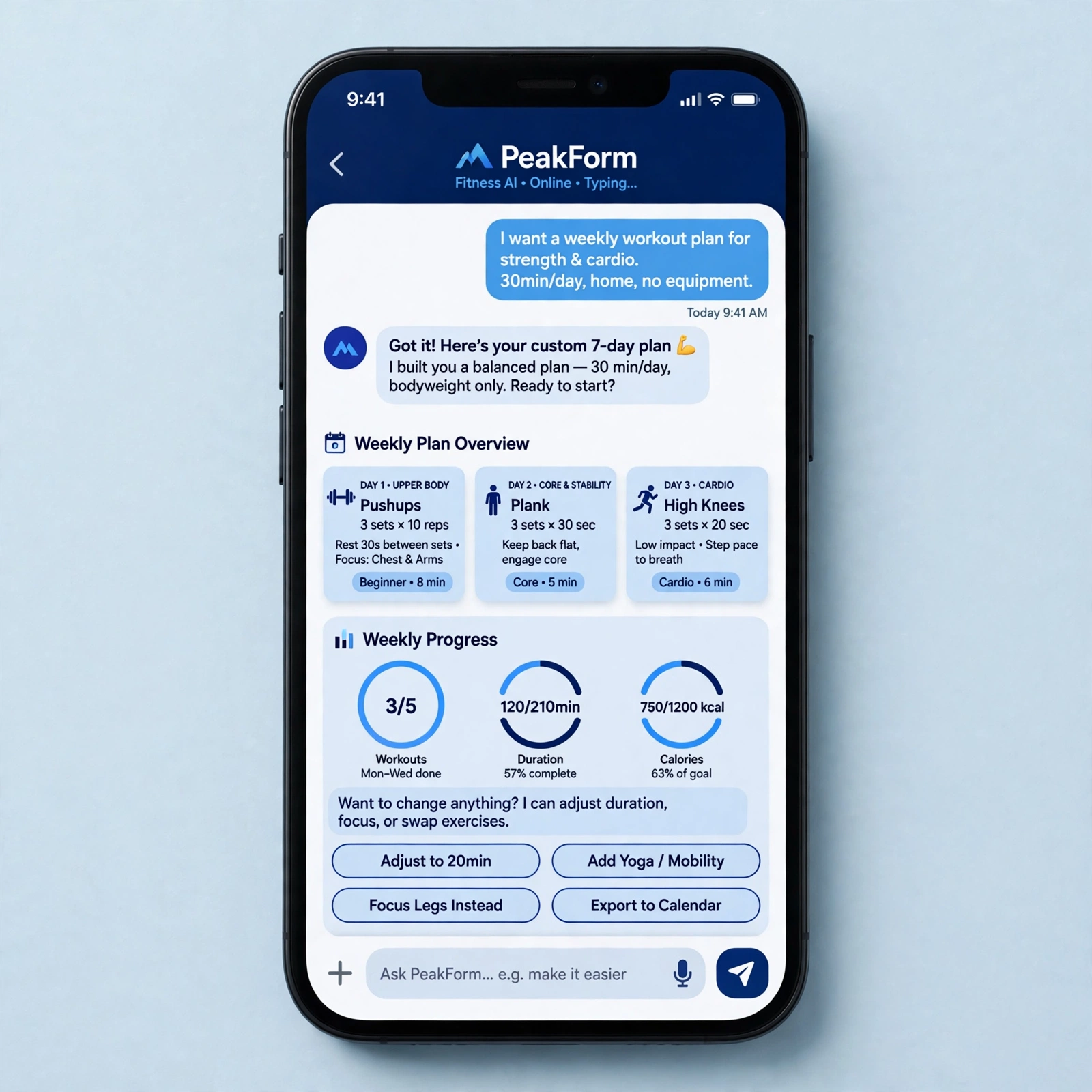
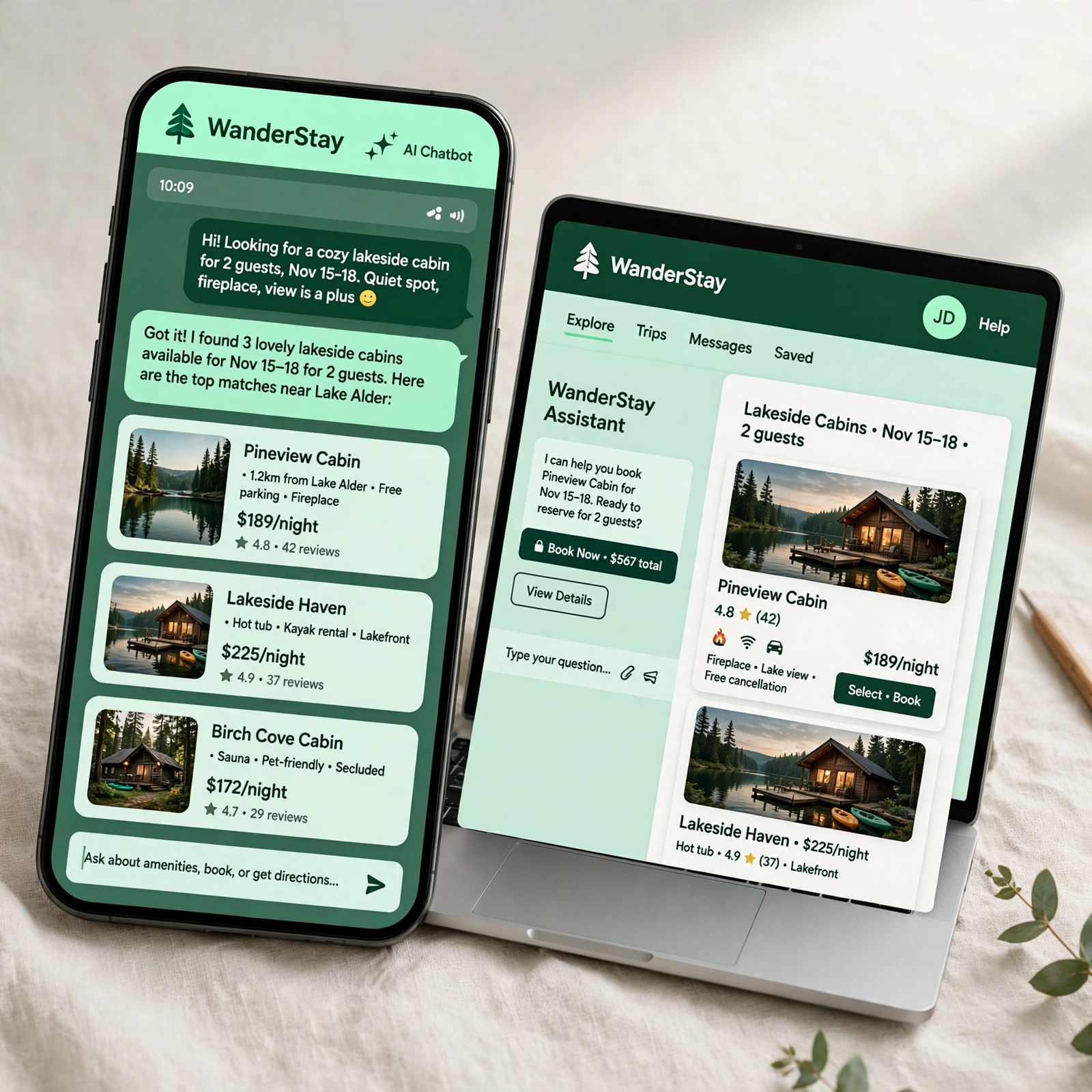
Chatbots we have built for shops, clinics, salons and more — each one designed around how the business works.


A chatbot answers customer questions, so it must never invent prices, promise availability or handle sensitive matters alone. We set clear limits on what it can say, when it must escalate, and what happens when it is unsure — and we design those limits before launch, not after a mistake.
The chatbot answers from material your business has approved, and stays silent on anything outside it.
Visitors are told when a person is taking over, and the full conversation travels with them.
When the chatbot is unsure, it asks one clarifying question — then escalates instead of inventing an answer.
Chat transcripts are kept for review, so answers can be checked, improved and corrected over time.
Chatbot projects start from these packages, and the final scope depends on how many conversations the bot must handle, which channels it works across, and how much approved knowledge it needs to be trained on.
For one chatbot answering a single set of questions — trained on your approved answers, with a human handoff when it reaches its limit.
For businesses whose chatbot has to work across chat, WhatsApp and the CRM, carrying the conversation rather than starting it over each time.
For a chatbot-led operation with AI agents, several integrations and the controls to keep every answer accurate and accountable.
Need one specific automation rather than a full package? They show how common AI chatbot projects are scoped, so you can see what the money covers. How much the AI chatbot finally costs depends on integrations, data access and workflow complexity.
| Automation Type | Starting Price | Typical Scope |
|---|---|---|
| AI Chatbot Setup | From $399 | Your approved knowledge, FAQ handling, lead capture and human escalation, with the website integration planned so the bot answers in your voice. |
| WhatsApp Automation | From $499 | The same enquiry flow, qualification and data capture, carried over WhatsApp and handed to the CRM with follow-up logic. |
| CRM Workflow Automation | From $399 | Leads created and routed from chat, with pipeline actions, reminders, notes, summaries and notifications. |
| Lead Qualification System | From $399 | Chat intake with qualification questions, categorisation, scoring rules and routing to the right salesperson. |
| AI Customer Support Assistant | From $599 | Knowledge-based answers inside the chatbot, with support triage, issue categorisation, escalation and conversation context carried over. |
| Custom AI Agent | From $659 | A multi-step task flow for the chatbot, with connected tools, defined permissions, approval steps and controlled actions. |
| Document Automation | From $599 | Extraction, classification and summarisation from documents the chatbot receives, with optional human verification. |
| Additional API Integration | From $249 | One supported external system connected to the chatbot's existing scope. |
Important: Chatbot package prices cover the agreed implementation scope only — the build we scope together. The AI chatbot price does not include third-party platform subscriptions, CRM fees, hosting, WhatsApp provider charges, messaging costs, AI model/API usage, paid automation tools or other external service fees. If the AI chatbot needs custom software, complex dashboards, compliance-specific architecture or ongoing managed operations, it is quoted separately.
Common questions about chatbot training, approved answers, lead capture, human handover and keeping conversations accurate.
It needs the material behind your answers: services, prices, policies, delivery details, opening hours and your most-asked questions. We help you gather and check that material, then write it into approved answers in your tone of voice. A chatbot trained on thin or outdated information will give thin or outdated answers, so this step matters more than any other.
It says so honestly and hands the conversation to a person, passing along the full chat history. We set escalation rules for uncertainty, complaints, pricing negotiations and sensitive topics, so visitors are never left talking to a bot that has run out of answers.
Yes. When a visitor shows buying intent, the chatbot asks for the details your team needs — name, contact, requirements and timeframe — then records them in a structured format. Your team receives a complete lead instead of a transcript they have to read through.
It can, where the channel supports it. The same approved answers and handover rules can run on your website and WhatsApp, so customers get consistent answers whichever way they reach you. Channel setup depends on the platform’s requirements and provider access.
Approved answers live in one knowledge base, so a price or policy change is updated once and reaches every conversation. We also review real chats after launch to find new questions, correct weak answers and tighten handover rules as your business grows.
Tell us the questions your team answers again and again, and we will build a chatbot that answers them from your approved information and hands over to a person when it matters.