



















">

SaaS Platform Development

Multi-tenant SaaS platforms with accounts, subscriptions, roles and the workflows your product is built around.

Multi-TenantOne product, many organizations
WorkspacesTeams that manage themselves
RolesAccess per job, not per person
SaaS Platform Development by DesignBub
SaaS platforms project preview
SaaS Platform Development

A platform that serves many organizations from one codebase — each customer separate, each team self-sufficient.

Selected Brands & Businesses We Have Designed For
Asset 38 brand logo Asset 4 brand logo Asset 45 brand logo Asset 46 brand logo Asset 47 brand logo Decent Solar logo Dentesthetix logo Gazal Lounge logo GH Landscape logo Asset 38 brand logo Asset 4 brand logo Asset 45 brand logo Asset 46 brand logo Asset 47 brand logo Decent Solar logo Dentesthetix logo Gazal Lounge logo GH Landscape logo
Ghazoor logo Goodluck Trader logo Kingsley logo Lahoris logo MOI logo Naqaa Salt logo Nature Hug logo Netsole logo Ghazoor logo Goodluck Trader logo Kingsley logo Lahoris logo MOI logo Naqaa Salt logo Nature Hug logo Netsole logo
Nexcell Energy logo Roots logo Sheikh logo Shellbee logo Softcore logo Solvac Lifesciences logo Trendex logo Zameenex logo Nexcell Energy logo Roots logo Sheikh logo Shellbee logo Softcore logo Solvac Lifesciences logo Trendex logo Zameenex logo
SaaS Platform Development essentials

The SaaS platform worth investing in

We measure SaaS Platform Development by support tickets per tenant and tenants onboarded, not by how many screens we shipped. Numbers that improve mean the SaaS platform is doing its job; numbers that do not tell us what to fix next. Every platform release carries a question, and the answer decides what comes next.

Security and privacy are designed into SaaS Platform Development from the first week, not audited in the last. Access is limited to those who need it, customer data is handled carefully, and the boring safeguards — backups, logs, updates — are in place before the platform launches, not after a scare.

A SaaS platform is a promise to its users: it will be there, it will work, and it will keep their data safe. We take that promise seriously in SaaS Platform Development, which is why the boring parts — backups, monitoring, updates — are set up from day one.

Where data leaking between tenants is handled

The workflow behind SaaS Platform Development

Your users do not care about Multi-Tenant Architecture or Workspaces. They care whether the SaaS platform lets them finish their task and move on with their day. That stays in mind at every technical decision on the platform.

DesignBub works with businesses serving many customer organizations from one product who need SaaS platforms that actually ship. We keep the platform build in plain sight: regular reviews, working software early, and straight answers about what is and is not ready. You should never have to chase us to find out where your platform stands.

Your audience is businesses serving many customer organizations from one product, and they will judge the SaaS platform in the first minute. If the first task is easy, customers stay; if it confuses them, they leave without explaining why. So we test the first task before polishing anything else on the platform.

The details of SaaS Platform Development

What we refuse to cut corners on in SaaS Platform Development

Every SaaS platform we build starts with the people who will use it. We map what platform users do, where they struggle and the workarounds they have invented — that is where the real platform requirements live. The result is SaaS platforms shaped by actual work, not by a feature list copied from a competitor.

A SaaS platform that is hard to change is a SaaS platform that will be replaced. We build SaaS Platform Development so that new fields, new steps and new reports are small changes, not projects. Your business will change; the platform should keep up.

Support for SaaS Platform Development does not end at launch. We offer ongoing help — fixes, small changes, the next release — because a SaaS platform that is never updated quietly becomes a risk.

SaaS Platform Development overview

The decisions behind SaaS Platform Development

We bring businesses serving many customer organizations from one product into the design of SaaS Platform Development early. A short conversation with a real platform user is worth more than a month of guessing, and it usually changes the plan in useful ways.

We write documentation for SaaS Platform Development that a new team member can actually follow. Setup, data, deployments, common tasks — all written down, because a SaaS platform that only one person understands is a risk to your business.

Communication is part of SaaS Platform Development, not a layer on top of it. You get a named contact, a clear plan, and reviews you can actually attend and shape. Surprises are bad in a platform project; the only acceptable one is finishing early.

SaaS Platform Development for businesses serving many customer organizations from one product

How we approach SaaS Platform Development

Role-Based Access is where most of the visible work happens, and Stripe Billing is where the decisions get made. We keep design and build close together on the platform, so a workflow change does not take a week to reach the screen. That closeness is what makes SaaS Platform Development feel responsive instead of rigid.

The first release of a SaaS platform is a question, not a statement. It asks one question: does the platform solve the problem well enough to be worth using? We build it so the answer is easy to read — in tenants onboarded, in usage, in what users say — and then we act on it.

The SaaS platform we build for businesses serving many customer organizations from one product has to work for the least technical person who will use it. If the least confident user can complete the task unaided, everyone can. That is the standard we test the platform against, and it is stricter than it sounds.

SaaS Platform Development that delivers customers who manage themselves

The questions that shape SaaS Platform Development

The fastest way to waste money on SaaS Platform Development is to build everything at once. We separate the platform's core workflow, which must work on day one, from the features that can wait, and we prove the core first. That is how support tickets per tenant improves without the budget disappearing into nice-to-haves.

The first week of SaaS Platform Development is the most important. We spend the opening weeks understanding the problem, the users and the constraints, before any code is written. A week of understanding saves a month of rebuilding the platform.

Your team will live with this SaaS platform every day, so their opinion matters more than ours. We involve them in SaaS Platform Development from the start — in reviews, in testing, in the small decisions that add up to a tool they actually like using.

SaaS Platform Development, step by step

The SaaS platform that does not get in the way

A good SaaS platform respects the user's time. Screens load fast, forms ask only for what is needed, and the next step is always obvious. We cut steps wherever we can, because every extra click risks losing a customer.

We keep the number of tools in SaaS Platform Development small. Role-Based Access, Stripe Billing, Audit Logs — each chosen because it fits this SaaS platform, each one we can support properly. A long stack is a long list of things that can break across a platform.

Data is the quiet part of SaaS Platform Development. Where platform data comes from, how it is checked and who can see it are decisions made early, written down and tested. A SaaS platform built on messy data will stay messy.

SaaS UI UX dashboard design
The SaaS platform difference

A practical look at SaaS Platform Development

customers who manage themselves is the outcome we design SaaS Platform Development around. Everything else in the platform — screens, features, integrations — exists to serve that outcome. If a feature does not serve it, we challenge it.

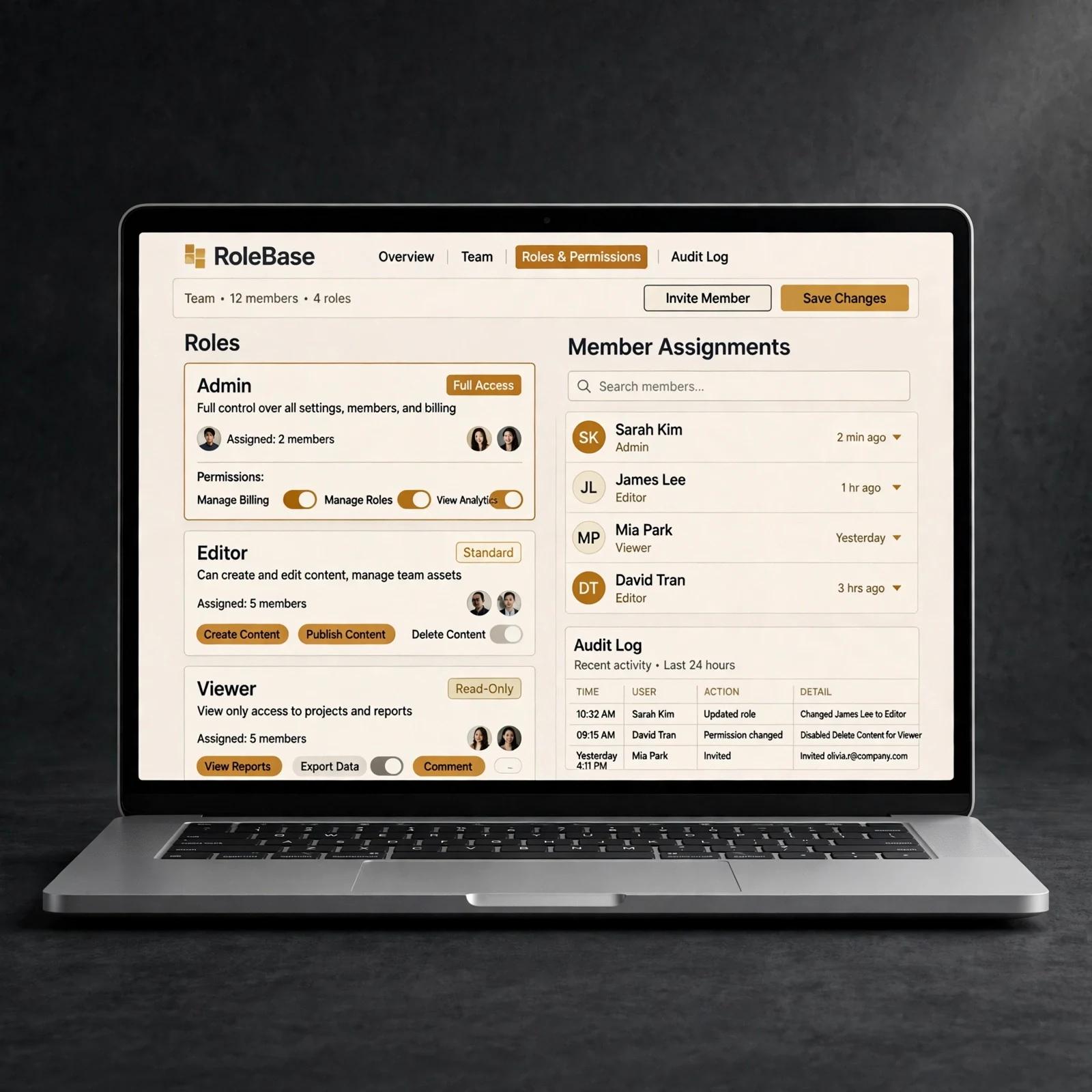
  • Roles enforced on the server
  • Source code and deployment you own
  • Onboarding that scales
  • Iteration based on real usage

Workspaces and Role-Based Access are the tools we reach for most on SaaS Platform Development projects, but the tool is never the point. What matters is whether the SaaS platform does the job your team needs it to do, every day, without fuss. We choose the platform's stack after the workflow is understood, not before.

The way we do SaaS Platform Development

Planning SaaS Platform Development around real work

Every SaaS platform we ship is tested on the devices and browsers your users actually have, not on the newest hardware in our office. Real usage is messy, and a platform has to be ready for that mess.

We are honest about what SaaS Platform Development cannot do. If a requirement does not fit the platform, we say so and suggest what would. A SaaS platform that promises everything delivers nothing.

The interface of SaaS platform should make the right action obvious and the wrong action hard. We think carefully about defaults, confirmations and destructive actions in SaaS Platform Development, because a misclick should never be a disaster.

The REST APIs side of SaaS Platform Development

SaaS Platform Development built around your customers

We do not invent features for SaaS platforms to fill a page. Every feature we propose answers a task platform users actually perform, and we can explain the task it serves. If a feature cannot be tied to real work, it does not get built into the platform.

Workspaces handles the front of the SaaS platform, Role-Based Access the back, and Stripe Billing keeps the data honest. Each has a job, and each is chosen because it fits this particular SaaS platform, not because it is fashionable this year. Boring, proven technology is usually the right call for a platform.

One of the quiet risks in SaaS Platform Development is data leaking between tenants. We design the platform against that risk from the start, because fixing it after launch costs far more than preventing it. Small decisions early — in structure, in access, in data — are what keep a SaaS platform reliable.

SaaS Platform Development for Role-Based Access teams

How SaaS Platform Development grows with your business

We document SaaS Platform Development as we go, not at the end when everyone has forgotten the details. We write decisions, trade-offs and setup steps down while they are still fresh. The team who runs the platform later will be glad we kept those records.

We keep SaaS Platform Development honest about time. If a platform milestone will take three weeks, we say three weeks. Optimistic estimates are how platform projects run late, and we would rather be believed than liked for a day.

A SaaS platform is only as good as its data. Before a single platform screen is drawn, we plan where data comes from, how it is checked, and what happens when it is wrong. Garbage in, garbage out is a project risk for a platform, not a slogan.

How Role-Based Access fits SaaS Platform Development

From first idea to working SaaS platform

We do not disappear after SaaS Platform Development launches. The first month after launch is when the real feedback arrives, and we plan for it: a review, a list of fixes, and the next release. A platform is never finished; it is maintained.

We test SaaS Platform Development on the devices your users actually own. An old Android phone, a slow office laptop, a tablet in a warehouse — that is the real environment, and the SaaS platform has to work there.

SaaS Platform Development in detail

How SaaS Platform Development earns its place

We ask awkward questions at the start of SaaS Platform Development: who will maintain this, what happens when the data is wrong, what does the user do when this fails? An awkward conversation now is better than an expensive platform rebuild later.

The teams that get the most from SaaS Platform Development are the ones that stay involved. We show working software early and often, because feedback on a real platform is worth more than a month of meetings about an imagined one. Your reactions in those reviews shape the platform.

SaaS Platform Development in practice

The details that decide whether SaaS Platform Development succeeds

We have seen SaaS Platform Development projects go wrong in the same few ways, and data leaking between tenants is near the top of the list. Our process is built to catch problems early: a review before the build, a check during it, and a test before the platform launches.

Good SaaS Platform Development is mostly invisible. Screens are clear, steps are few, and nothing on the platform demands attention for its own sake. If users notice the platform, it is usually because something went wrong.

Why self-serve activation matters

Who SaaS Platform Development is for — and who it is not for

A SaaS platform that works for businesses serving many customer organizations from one product has to work on a bad connection, on an old phone, in a hurry. We design for those everyday moments, not for the perfect demo. Real life is the test environment for a platform.

What looks simple in a SaaS platform is usually the hardest part to get right: the empty state, the error message, the moment something goes wrong. We design those moments carefully, because that is when customers decide whether to trust your platform.

SaaS platform essentials

The decisions we make for you in SaaS Platform Development

The best compliment a SaaS platform can get is silence: users who simply get their work done and move on. We aim for that with the platform: software that disappears into the task instead of demanding attention.

Why Multi-Tenant Architecture matters here

We keep the SaaS platform fast. Slow screens lose platform users, and no amount of design fixes a product that makes people wait. Performance is planned into SaaS Platform Development from the first week, not bolted on at the end.

The workflow SaaS Platform Development supports

We treat your budget for SaaS Platform Development with respect. Every pound is accounted for in the platform scope, and we flag anything that would change the price before we do it. An invoice from us should never hold a surprise.

How SaaS Platform Development grows with you

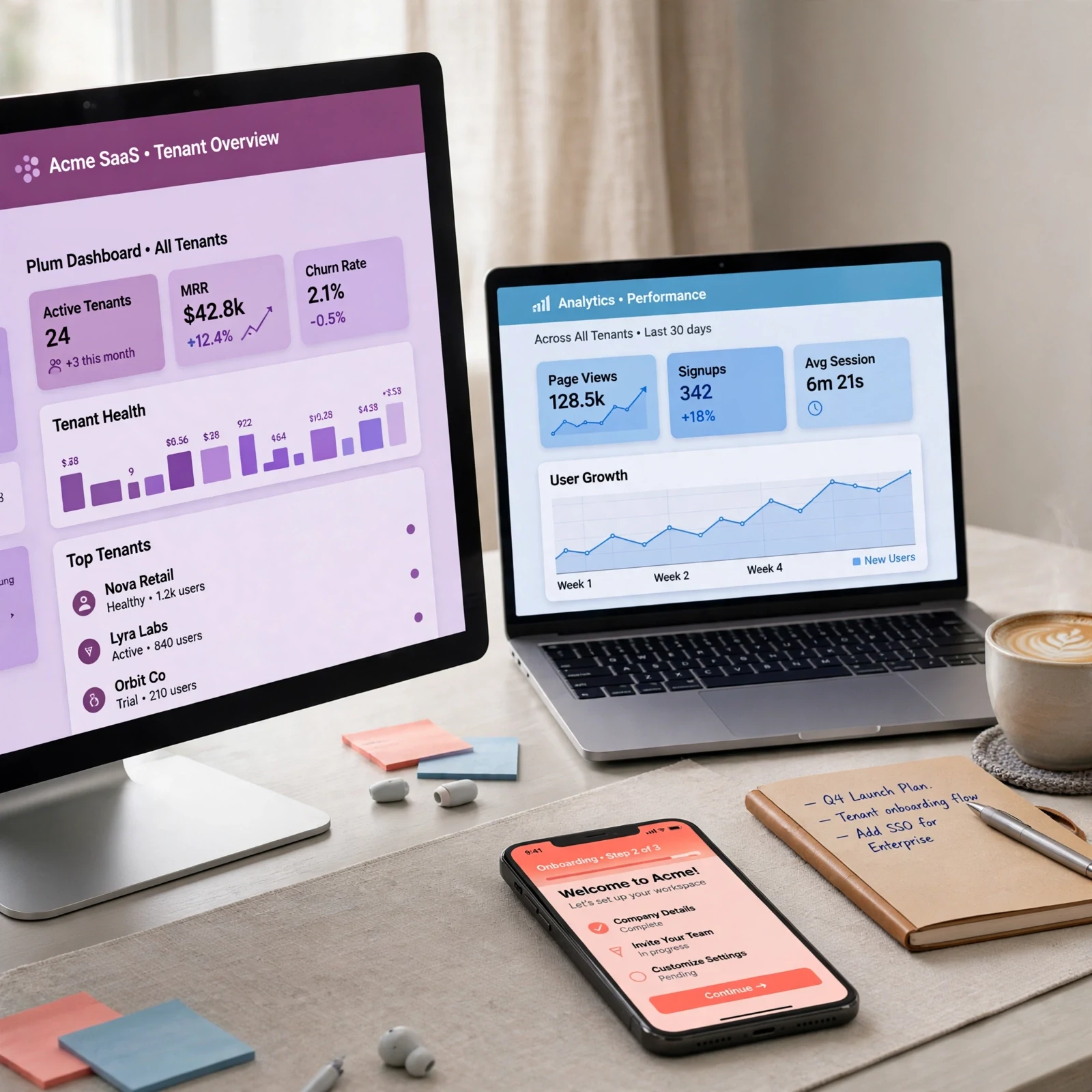
support tickets per tenant is the number we watch most closely on SaaS Platform Development projects, because it tells us whether the SaaS platform is actually being used. A beautiful platform nobody uses is a failure, however polished it looks.

How SaaS Platform Development stays maintainable

We measure the success of SaaS Platform Development in tenants onboarded. If that number improves, the SaaS platform is working. If the platform does not deliver, we find out why and put it right. That is the whole job of a platform build, really.

The Role-Based Access view of SaaS Platform Development

SaaS Platform Development from the user's point of view

The difference between a SaaS platform that works and one that merely exists is usually the second pass. After the first working version of the platform, we watch real people use it, note where they hesitate, and fix the friction. That is unglamorous work, and it is most of the value of the build.

The best SaaS Platform Development projects have a small team and a clear decision-maker on your side. Decisions get made in hours, not weeks, and the SaaS platform moves forward. We will tell you if slow decisions are holding the platform back.

A SaaS platform built for businesses serving many customer organizations from one product should feel like it was made for them, not adapted from someone else's product. We design the platform's workflows around your users' actual jobs, which is why the result looks different from a generic tool.

The SaaS platform approach

The process behind every SaaS platform we build

We price SaaS Platform Development on scope, and we agree the scope with you before work starts. If you want to change the scope mid-project, we agree the cost before doing the work. A surprise invoice pleases nobody, least of all us.

01

Discovery

We review the product model, customer types, workspaces and growth plans.

02

MVP & Feature Scope

The core platform and first-release priorities are separated from later features.

03

Roles & Data

Tenancy, roles and data separation are defined before any building.

04

Flows & Wireframes

Customer and admin workflows are mapped and screens planned.

05

UI/UX Design

Polished interfaces are designed for customers and for your team.

06

Architecture

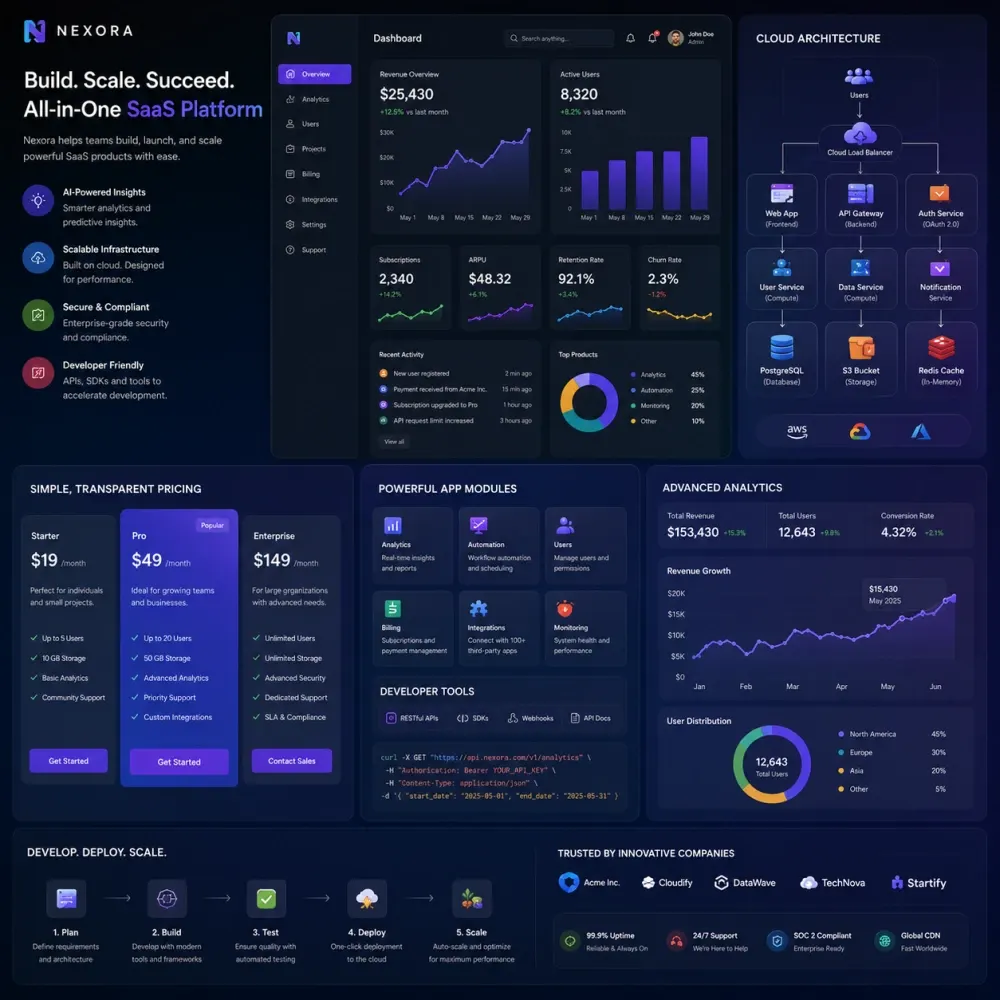
Multi-tenant database, APIs, billing and background jobs are planned.

07

Development

The platform is built in reviewable stages, with working software early.

08

Testing

Tenancy, roles, billing and core workflows are tested before launch.

09

Deployment

The platform is deployed with monitoring, backups and a rollback plan.

10

Iteration

Usage per tenant decides what the next release should contain.

SaaS Development Pricing

Starting packages for different stages of a SaaS product.

These are starting development packages for a platform, not fixed quotes for every product. Platform cost changes with user roles, workflows, billing, integrations, data complexity and the amount of custom engineering required.

Focused first release

SaaS MVP Starter

Starting from$3,500

For founders who need the core platform workflow built first, before expanding into the full product.

  • Product discovery and MVP scope
  • Core SaaS UI/UX design
  • Authentication and onboarding
  • Primary dashboard and core workflow
  • Basic backend and database
  • One primary customer role + admin
  • 1 standard third-party integration
  • Responsive web application
  • QA and deployment support
Choose SaaS MVP Starter ↗
Complex product

Advanced SaaS Product

Starting from$10,500

For large platforms with many modules, deeper workflows, reporting and a wide integration surface.

  • Advanced product and architecture planning
  • Multi-tenant SaaS product structure
  • Up to 5 defined user roles
  • Subscription, seat or plan-access logic
  • Advanced dashboards and admin controls
  • Reporting and structured data workflows
  • Up to 5 standard integrations
  • Scoped AI/API feature allowance where agreed
  • QA, deployment and technical handoff
Discuss Advanced SaaS ↗

Pricing note: Package prices are starting development fees in US dollars. Hosting, cloud usage, payment-provider charges, paid APIs, AI model usage, email/SMS/WhatsApp charges, licensed assets, data migration, third-party subscriptions, taxes and ongoing maintenance are separate from the package unless your quotation specifically includes them. Features outside the listed scope are estimated separately once requirements have been reviewed.

Multi-Tenant Architecture and Workspaces in SaaS Platform Development

What you own at the end of SaaS Platform Development

A SaaS platform that tries to do everything does nothing well. We narrow SaaS Platform Development to the job it must do, and we do that job properly. A focused platform is a feature in itself.

Product Discovery
Tenancy Design
Workspace Model
Roles & Permissions
Stripe Billing
Admin Console
Usage Analytics
Testing
Deployment
Documentation
Product Discovery
Tenancy Design
Workspace Model
Roles & Permissions
Stripe Billing
Admin Console
Inside SaaS Platform Development

SaaS Platform Development that your team can run

Users forgive a SaaS platform that is plain, but they do not forgive one that is confusing. Clarity comes first in SaaS Platform Development: clear labels, clear next steps, clear errors. Clarity comes first on a platform; polish comes after it.

We plan the data model for SaaS Platform Development before the screens, because the screens are easy to change and the data model is not. Getting the platform's structure right early saves months of rework later.

The SaaS Platform Development standard

What success looks like for SaaS Platform Development

The second release of SaaS platform is where SaaS Platform Development starts to pay. The first platform release proves the idea; the second fixes what real use revealed. We plan for that second release from the start, so it stays a small step instead of becoming a rebuild.

The SaaS platform we deliver is tested, documented and deployable. It is no mock-up with a fresh coat of paint. It is working software, ready for your customers.

Avoiding workspaces that confuse users

The questions that come up most about SaaS Platform Development

If workspaces that confuse users is the risk you are worried about, say so early. We would rather design around a known risk than discover it in testing, and most risks in SaaS Platform Development have a boring, proven answer once they are named.

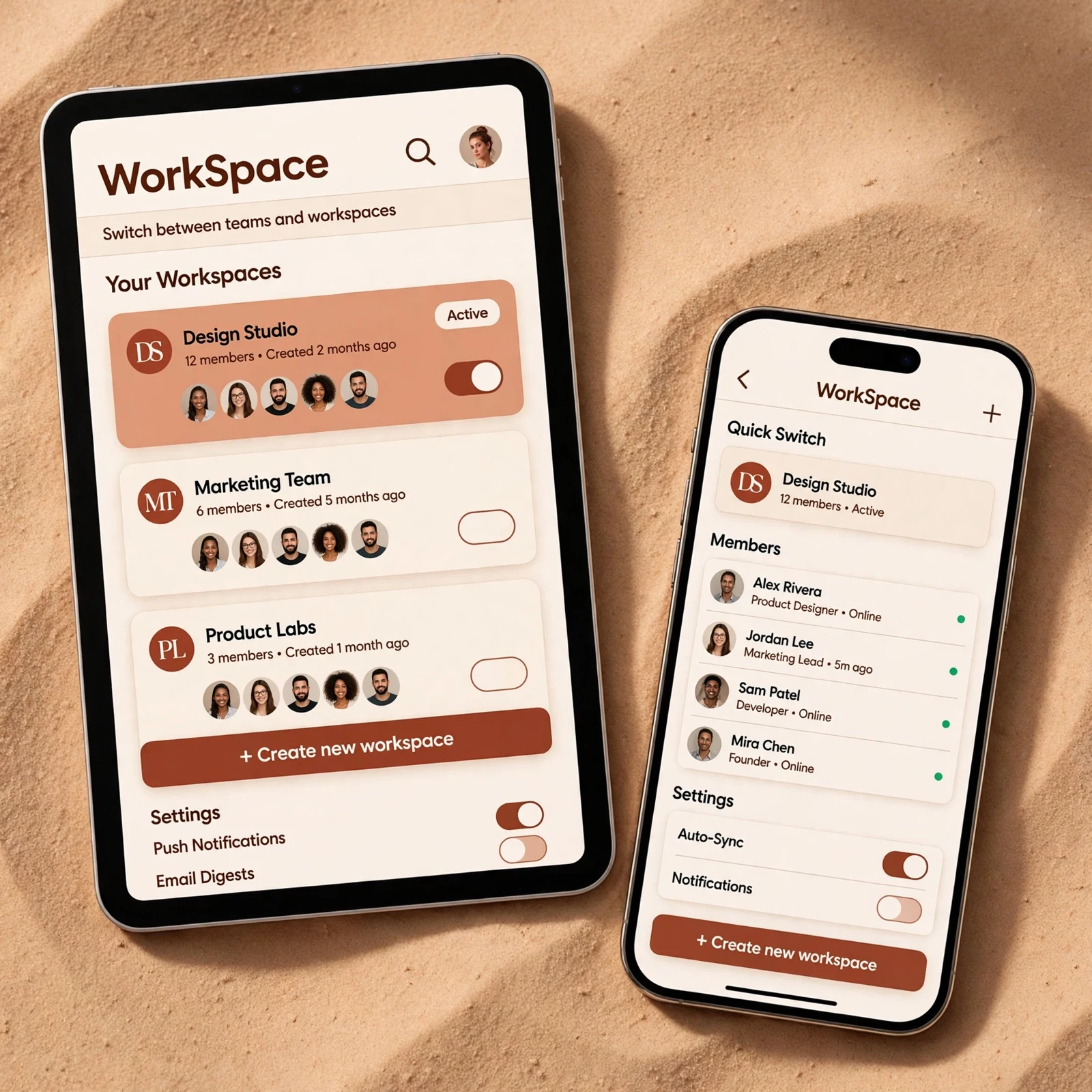
One product, many customers — each customer organization gets its own workspace with its own users, data and settings, kept properly separate. It is how one codebase serves hundreds of customers without a separate install per customer.

At the database and application level, enforced in code and tested explicitly — not by hiding tabs in the interface. We test cross-tenant access as part of QA, because a leak here is the worst kind of bug.

Yes. Workspaces support invitations, roles and permissions, so each customer manages their own people without asking you. Your team keeps an admin view over everything.

Their data is exported or deleted according to your policy, and the workspace is closed cleanly. Offboarding is designed alongside onboarding, not discovered later.

Yes, if tenancy, database and background jobs are designed for it from the start. We design for your growth plan, not only for the first ten customers.

Build a platform that serves your hundredth customer as well as your first.

Multi-tenancy done wrong is a data breach waiting to happen; done right, it is how one product serves hundreds of businesses. Tell us the product and we will design the platform around it.

WhatsApp DesignBubChat with us now